10 Things You Learn Binge Watching Every WWE Raw From 1994
Who would've thought you could compare Raw in '94 to 2020?
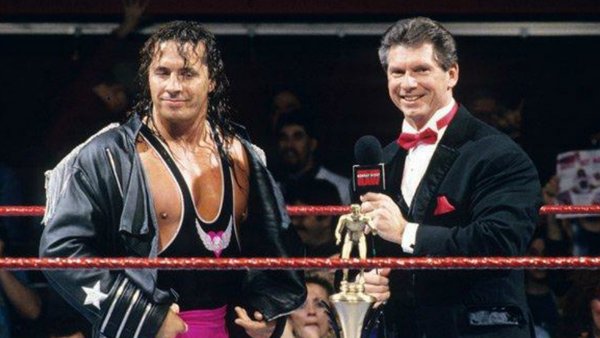
At the tail end of 1993, a beaming Vince McMahon announced on air that Bret Hart was the WWF's 'Superstar Of The Year' and wondered aloud just how much brighter the 'Hitman' could shine in 1994. Privately though, McMahon must've been worrying that he wouldn't be around to see or enjoy it.
The boss had been indicted and would stand trial on steroid distribution charges over the summer. Eventually, he'd be acquitted of all wrongdoing on 22 July, but something else stands out when looking back on Monday Night Raw's 1994: McMahon's very-public trial didn't stop him from trying to convince viewers that they were getting the best WWF action ever.
They weren't.
Across all 47 episodes of the flagship broadcast in '94, the WWF pretended that everything was business as usual and that they were on the up and up. Anyone watching could see that wasn't the case. This was the end of an era in some respects, and the beginning of an early struggle for a show that should've been thankful it didn't have to share Monday nights quite yet...
10. Everything Feels So Small Time
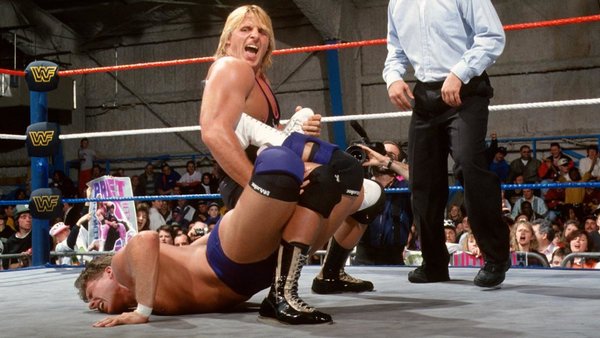
Taking Raw out of the quaint confines of New York's Manhattan Center was one of the best decisions the WWF made in 1993. They continued to tour into '94, but some of the buildings were absolutely atrocious on camera and it often looked like Vince McMahon's organisation had rolled into a local barn.
It's shocking to look back on today.
Raw came out looking like an indy fed's weekly, not a show engineered by the World Wrestling Federation. It was obvious that the company wasn't a hot ticket, and no amount of flashy new TV products could shift briefs to an audience who'd lost interest - only the hardcores remained.
Some of the arenas (if you could call them that) from 1994 didn't seem to be sold out either. There are loads of episodes on the Network that make Raw look more like an in-studio presentation of modern-day NWA... without the intention to look so old-fashioned.
9. The Post-WrestleMania Trend Still Hadn't Caught On
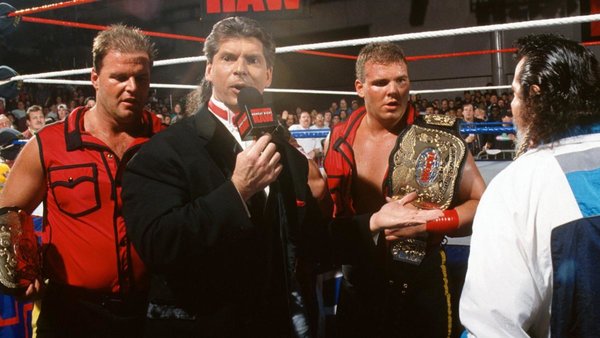
24 hours after WrestleMania X rocked Madison Square Garden, the WWF hosted Raw in Poughkeepsie's Mid-Hudson Civic Center. Much like in 1993 after 'Mania IX, there was a serious lack of pizazz surrounding the entire thing. Raw after 'Mania X was just another episode.
The biggest return of the night was Captain Lou Albano, which sums it up. He made his comeback and tried to find a new tag-team he could manage. Other than that, new WWF Champ Bret Hart gave a bland interview, The Quebecers beat The Bushwhackers, Tatanka beat Chris Hamrick, Diesel beat Ken Lucia and Jeff Jarrett topped Koko B. Ware.
Give it a miss.
There's nothing of note to watch here unless you happen to be the world's biggest Captain Lou fan. The ending sequence (after they'd fought off Jarrett) saw Koko pose with Randy Savage. It was as thrilling as it sounds.
8. Bret Hart's Match With 1-2-3 Kid Is Must-See

Thrilling sums up the 11 July episode's opener.
The 1-2-3 Kid received an unlikely crack at Bret Hart's WWF Title and ended up showing why he deserved that spot. Together, Kid and Hart worked a silky-smooth back and forth bout for 17 wonderful minutes, and it's rightly considered one of the best matches in Raw history.
There's so much to like here. Bret looked commanding, Kid almost caused the upset and the match layout called for so many believable peaks and troughs that one could be forgiven for thinking they were watching a real struggle. It's beautiful when that happens in pro wrestling. This is must-see if you've never had the pleasure.
Both guys mixed in spots fans never really saw in the WWF. They worked strong without hurting one another, used near falls to perfection and both came out of the match looking better than they had going in. Wonderful stuff.
7. But 1 August Had Match Of The Year
Not match of the year though.
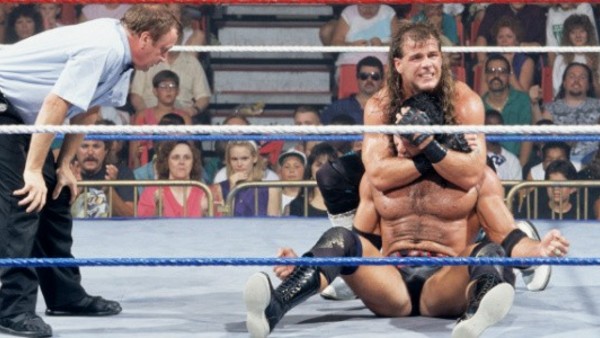
That award would go to Shawn Michaels and Razor Ramon on the 1 August episode. Fans in Youngstown, Ohio (yes, the WWF went to some very random places to tape TV in this era) were treated to a WrestleMania X rematch of sorts - it didn't have the ladder gimmick, but that didn't knacker proceedings.
It wasn't common to see matches this length on free television at the time either. Razor and Shawn went 23 minutes without ad breaks (around 26-27 with them) and produced a different kind of stunner to their 'Mania heroics. This one has slipped under the radar big time over the years, which is a shame.
Unfortunately, some fans in the front row didn't seem all that interested in the slower portions, but they got up for the quicker sections. It's also notable that Michaels was beginning to rally real support from the casuals for the quality of his matches.
6. The Sumo Match Was Weird
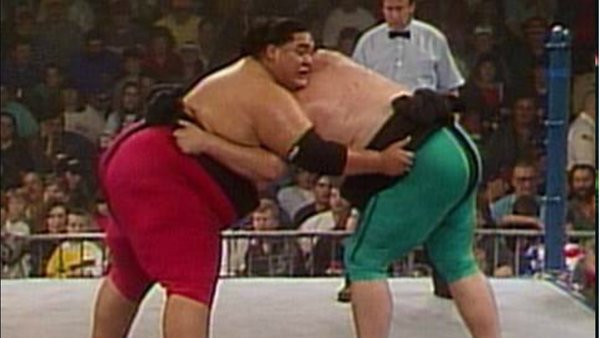
If people had been content to sit on their hands during some of the rest holds in Razor vs. Diesel at SummerSlam '94, then they were almost ready to head on home when the WWF tried a sumo match months earlier. Yokozuna met Earthquake in a "traditional" sumo battle on the 16 May 1994 Raw, and it sucked.
There's no other way to say it.
Earthquake's entire comeback in '94 was a bit weird generally. He was still wearing his old Natural Disasters ring attire, helped Bret Hart fight off Diesel, squashed Adam Bomb and then embarked on a feud with Yoko. Then, post-sumo gig, big John Tenta was kayfabe injured by Yokozuna and replaced in the upcoming King Of The Ring tournament by Doink The Clown.
That'd be a wrap for his attempt at a singles sprint in the mid-'90s. If you happen to be checking out random old episodes of Raw on the Network, skip 16 May. It's unlikely that Bam Bam Bigelow beating 'Sparky' Plugg will make up for the sumo nonsense.
5. Doink's Babyface Run Is Even Worse In Retrospect

The original Doink The Clown is one of this fan's favourite wrestling characters ever. It says everything then, that any time the circus freak appeared on screen when preparing for this write-up, the same fanboy wanted to scream. Matt Bourne, the twisted clown prince under the face paints, had left the company and been replaced.
Doink turned babyface and went from edgy, psychotic heel to defunct, unwanted good guy who buddied with the ever-irritating 'Dink' before briefly introducing 'Pink' and 'Wink' for his Survivor Series feud against Jerry Lawler. Oh man is it ever painful to watch back in retrospect.
The WWF destroyed the clown gimmick completely.
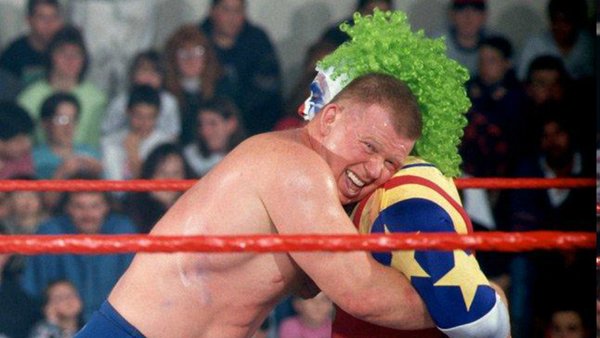
Whether he was working qualifiers for the King Of The Ring tourney, wrestling Bob Backlund, working Jeff Jarrett or giggling away at Lawler, 1994 Doink was ruining the product. He just needed to go away.
4. Programming Really Missed The Undertaker
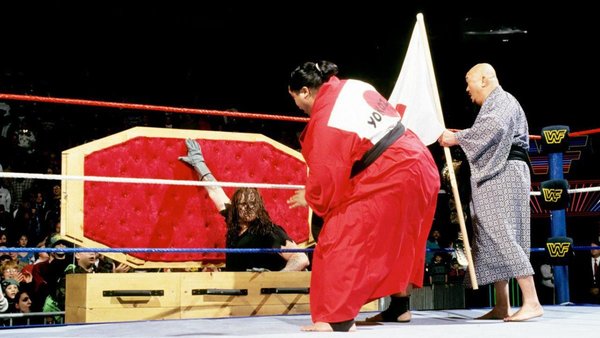
The Undertaker received some well-deserved time off in 1994; he'd been running pretty hard since debuting in 1990 and asked Vince McMahon if he could take a few months to heal up and spend time at home. The boss said yes, and 'Taker was written out in a Casket Match with Yokozuna at the Royal Rumble.
He didn't show back up again until that SummerSlam feud against his doppelgänger, meaning Raw went almost eight months without 'The Deadman' on it. In an era that was lacking in the star power department, that was a bit of a disaster. The WWF needed all the big names they could get, but 'Taker was absent.
That left Bret Hart, Shawn Michaels, Razor Ramon, Lex Luger, Yokozuna and maybe a few others (Owen Hart, Diesel etc) alone to carry the product, and it wasn't enough. Even four years into his run, it was clear that 'Taker was vitally important to the WWF machine.
They still booked him in naff feuds though.
3. The WWF Were Hypocrites

1994 wasn't quite as heavy on the 'New Generation' hype as 1995 was, but McMahon was starting to go all in on the concept of youth. Or, at least, that's what the WWF tried to sell to people. In reality, they were booking Bob Backlund as World Champion and scheduling Roddy Piper vs. Jerry Lawler in pay-per-view main events.
That strategy went against on screen chatter that the WWF was a place for the "future of sports entertainment" (which is something the announcers barked dozens of times across the year's 12 months). Several less-than-subtle digs at Hulk Hogan and Ric Flair's age during the second half of 1994 also didn't sound right when Backlund was champ.
His entire gimmick was that he was old and out of touch.
This hypocritical marketing plop would only ramp up in '95, but it started to become a go-to ploy for the company in '94. The thing is, they did have fresh young talents to boast about. Both Bret Hart and Shawn Michaels were the future.
2. Vince's 'Macho Man' Tribute Is Out Of Place

Hardcore wrestling fans obviously knew that Vince McMahon ran the WWF, but casual viewers must've been very confused when he paused to pay special tribute to Randy Savage on the 7 November Raw. Vince shed his 'I'm only an announcer' guise for a few minutes to play boss and thank 'Macho Man' for his years of service.
Looking back now, it was out of place.
McMahon had worked hard to present himself as the voice of WWF programming and nothing more, so it was strange to see him forget that so he could legitimately praise an outgoing talent. Savage was on his way to WCW, but Vince temporarily ignored that fact to give Randy a big ol' verbal round of applause.
Then, as if by magic, he went right back to being 'just an announcer'. It's so odd to watch in 2020 knowing that McMahon would later instruct his creative crew never to bring Savage's name up again whenever they asked if his WCW deal had elapsed.
1. There Are Parallels To Now
WWE are struggling to make bonafide box office star names in 2020. They've got good workers, but few of them move the needle when it comes to ratings, and nobody really has that must see quality to them every single week. It was the same problem McMahon had back in 1994.
He was crying out for his next hit.
Hulk Hogan was gone, The Undertaker was missing for most of the year and not one wrestler seemed to be catching fire as a ratings grab. Like today, the WWF had awesome wrestlers under contract, but they weren't on the level of a Hogan (in 2020, now John Cena and 'Taker have been phased out, WWE need people to step up).
It's challenging, because everything must be right for a wrestler to get over. They need strong booking, credible opponents, an organic connection with the audience, charisma and more. In 1994, sorta' like today, those workers were at a premium, and that led to a lot of skippable TV.
-
What caught your eye from Raw's second year on the WWE Network? For more like this, check out 10 Things You Learn Binge Watching Every WWE Raw From 1993 and 10 Wrestlers Who Made Insane Demands!