10 Times Wrestling History Repeated Itself
It's deja vu all over again...
The great Mark Twain is reputed to have said, History doesn't repeat itself, but it does rhyme a lot. That's a nice way of putting it. Another way is to suggest that there's nothing new under the sun: everything's a rehash of a Xerox of a reboot of a copy, especially in the cheerfully plagiaristic world of professional wrestling.
Then there's the times that life simply hiccupped and ran the same piece of bad luck all over again, because life's like that sometimes. Or there are the weird coincidences that plague us all like the fact that in the entire state of Ohio in 1895 there were only two motor cars, yet they still managed to hit each other.
Plagiarism, bad luck voodoo, bizarre coincidences - these are the times that, in the screwed up world of pro wrestling, history seems to have repeated itself.
10. The Macho Man And The Spider

Waaay back in the hidden depths of his rookie years, and before he gained the physique that he became famous for, Randy Mario Poffo was playing baseball and wrestling for Eddie Graham in Florida and for Ole Anderson at Georgia Championship Wrestling in the baseball off season. In those days, before he committed to wrestling full time; before Anderson suggested the name change to Savage; and before Poffo's mother Judy came up with the Macho Man nickname, Randy wrestled under a mask as The Spider, inspired by Spider-Man comics he'd read when he was a kid.
Fast forward thirty years and Sam Raimi is casting his first Spider-Man flick, and casts one Randy Savage as Bonesaw McGraw, the wrestler that the newly-empowered Peter Parker faces off against in an effort to win prize money.
Parker hides his true identity under a makeshift Spider-Man costume and mask, and asks to be named The Human Spider.
9. Losing An Ear And Gaining A Rep

Pro wrestler Eric Holmback worked the territories in Canada and North America in the 1940s,1950s and 1960s under the less-than-edifying name of Yukon Eric. Yukon Eric never achieved worldwide fame like some of his contemporaries in fact, his biggest claim to fame came during a match with Wladek Kowalski in 1952. Kowalski screwed up a knee drop, and somehow actually severed Holmback's ear.
It's the incident that inspired Kowalski to call himself Killer thanks to the reputation he gained, Killer Kowalski went on to have a fantastic career as one of wrestlin'gs greatest heels, and would go on to train some of wrestlings greatest heels in turn - including one Paul Levesque, aka, Triple H.
In 1994 at a show in Munich, Germany during a match with feared villain Big Van Vader, a botched spot involving the ring ropes (dubbed the hangman) saw Mick Cactus Jack Foley trap his head for real between the steel cables. Suddenly finding that the ropes were cutting off the blood flow to his head and panicking, Foley wrenched himself free but left an ear behind for his trouble. Just as with Killer Kowalski, the incident cemented Vaders reputation as a pitiless, inhuman monster and helped make his career.
Luckily, unlike Yukon Eric, Cactus Jack was also able to spin the story to benefit him, as it added endlessly to his own reputation for hardcore stunts in wrestling. Yukon Eric died penniless and unhappy by his own hand in 1965: Cactus Jack is still a big name even a decade and a half after (mostly) retiring from the ring.
8. From The Undertaker To Badass Biker

That's Mark Calaway, the man behind the legendary spooky Undertaker gimmick, who repackaged himself as a hardman biker character in 2000 and achieved even more success, before returning to a version of the gimmick that made him famous. Right? Ah, actually were talking about Brian Lee.
Who?
Well, in 1994, Lee was brought to the WWF to be represented by the Million Dollar Man Ted DiBiase as a fake version of the Undertaker. DiBiase, who'd been responsible for bringing the real Undertaker to the WWF in the original storyline, claimed to have found his former protégé (whose character was on hiatus while Calaway recovered from a back injury) and brought him back to the ring. The real Undertaker returned to fight the Underfaker and defeated him in a casket match at Summerslam 1994.
Lee didn't get to reprise the Dead Man gimmick for a lengthy feud: he was one and done, and left for pastures new. However, he'd return to the WWF in 1997 under the name Chainz as a badass biker with sinister, occult imagery, a part of the villainous stable DOA the Disciples Of Apocalypse.
DOA would stick around for two years before quietly dissolving in 1999. Chainz himself left the company again after only one year. In 2000, the real Undertaker returned once again from hiatus caused by injury - this time as a badass biker with sinister, occult imagery. What's good for the goose is good for the gander: Brian Lee stole Mark Calaway's gimmick, so Calaway stole his in return.
7. Next Generation To Legacy
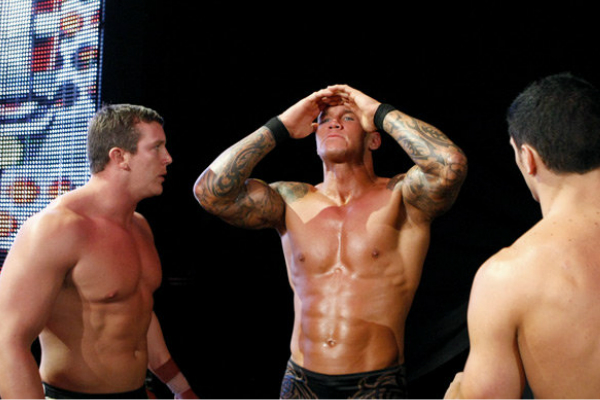
Continuing the theme of gimmick infringement in 2002, while working for TNA, second generation wrestlers Brian Lawler teamed with David Flair and Erik Watts, sons of The Nature Boy Ric Flair and Cowboy Bill Watts, respectively. The recipients of more than a little nepotism over the course of their careers due to their more famous fathers, Lawler, Flair and Watts would trade on this familial connection to form a stable called Next Generation.
The faction didn't make much in the way of waves, even in a second rate promotion like TNA in 2002: Flair and Watts weren't the great talents their fathers were, and Lawler himself, although no slouch, wasn't enough to carry the stable on his own. The gimmick lasted until 2004, and was most famous for its feud with the American Dream Dusty Rhodes.
Spinning on to 2008, and WWE had their own stock of second generation wrestlers on hand. Ted DiBiase was first, attempting to recruit Harry Smith (son of the British Bulldog) and Cody Rhodes before the office decided that the team needed the star power of one Randall Keith Orton. They'd tease the induction of Manu, son of Wild Samoan Afa, and Sim Snuka, son of Jimmy Superfly Snuka, before settling on the three man group of Rhodes, Orton and DiBiase.
The rest is history. The stable would be named The Legacy, and run for three years of high profile storylines within the company. Oddly, around the time of the formation of the concept in WWE, one Dusty Rhodes was feuding with Randy Orton on screen. Coincidence? We're sure it is.
6. Never Hit The Man With The Microphone
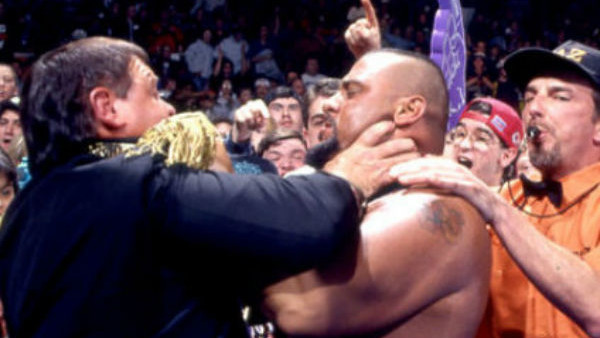
In 2000, ECW alumnus Taz had returned to WWF television from injury a heel, viciously attacking babyface competitors and forcing the voice of the WWF, Jim J.R. Ross to refer to him as a piece of garbage on air. Taz took exception to this, and would become one of the first heels to actually call an announcer to account for the comments made about him on wrestling programming. His bullying of J.R. didnt escape the notice of Ross broadcasting partner Jerry The King Lawler, who had been a notorious heel colour commentator for the company for some years.
Lawler stepped up and confronted Taz, facing him at Summerslam 2000 in defence of Ross, and beginning a babyface turn of his own that would grow to define his career over the next fifteen years.
Funnily enough, similar events had occurred in Mid-Atlantic Championship Wrestling in 1982, when one of wrestling's most celebrated bad guys, Rowdy Roddy Piper stepped in to save legendary announcer Gordon Solie from a beating from Don Muraco, his erstwhile partner.
Like Lawler would eighteen years later, Piper would use the event as a springboard to get over as a proper first-tier babyface (for the first time in his career), before returning to his villainous ways the following year and debuting in the WWF.
In both cases, notorious heels stepping up to defend the honour of legendary ring announcers from fellow bullying heels cemented a babyface turn.
5. The Evil Masked Doppelganger

In 1982, All Japan Pro Wrestling brought in Mark Rollerball Rocco from the UK to play the evil counterpart to Satoru Sayama's Tiger Mask character. The story went that Black Tiger was a Yakuza hitman sent to get revenge on Tiger Mask for turning his back upon them and becoming noble. Many people would play the parts of Tiger Mask and Black Tiger over the years to huge box office success, with the latter always being played by gaijin, or foreigners.
In 2011, WWE's attempts to get the original Sin Cara (Luis Urive, formerly Mexicos biggest lucha libre star Místico) over would lead them to bring in a doppelganger: Sin Cara Negro, played by Jorge Arias. The two feuded to much less success than the more famous Tiger Mask/Black Tiger pairing in Japan, partly because Urive was flopping big time as a high flying babyface: his infamous botching of many moves would lead to the majority of his fame being set as an online viral meme and object of ridicule amongst serious pro wrestling fans.
When Urive was finally sacked in 2013, Arias (who'd been kept on in a smaller role as Hunico), assumed the mask once again: this time taking over from Urive for real and playing the babyface Sin Cara, a role he continues in to this day.
Incidentally, the connection between Urive and Arias actually goes back further, to Mexico in the early 2000s. Arias was wrestling under the name Mistico when Urive debuted under the name: but Urive had the might of lucha libre promotion CMLL behind him, who obtained the legal rights to the name, forcing Arias to change his persona.
They'd use this real life history as a storyline point in their 2011 feud as rival Sin Caras, but the history was quickly dropped once it became apparent that no one really cared one way or the other. Still, Arias seems to have had the last laugh
4. McMahon, Part One: Thats Karma For You
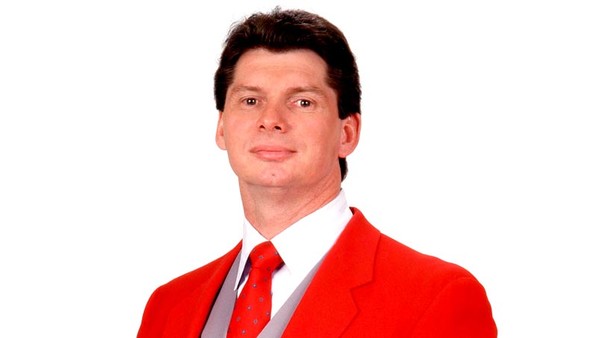
In the early 1980s, shortly after purchasing the World Wrestling Federation from his dad, Vince McMahon Jnr. began to reshape his vision for the company: he'd been considering serious expansion, expansion that would require him to fly in the face of the respect-driven yet politically toxic territorial system that the National Wrestling Alliance had going on in North America.
He knew what he'd have to do without fear or favour, he would need to screw his rivals into the ground. He stepped on handshake agreements his father had made, spitting on the etiquette and old school rules concerning territory boundaries. He began to place WWF programming on syndicated television across the entire of the USA, and toured the same places with impunity, hiring his opponents' best wrestlers out from under them to work for the WWF.
Some say he stole the idea for Wrestlemania from the NWA's own Starrcade event, which debuted over a year before and was similarly a big success for the organisation. He almost ran his own company into the ground in doing it, but when the dust had settled, the WWF was the country's first national wrestling promotion, and Vince McMahon certainly ran plenty of others out of business but succeeded in his aim, becoming the chairman of America's first national wrestling promotion.
In 1995, all the chickens came home to roost. Eric Bischoff had just become the new boss at the last big NWA promotion World Championship Wrestling, and the ambitious young hotshot knew that he'd need to take down the big dog in the yard if he wanted WCW and Eric Bischoff to make names for themselves. He'd been poor and he hadnt liked it: like McMahon before him, Bischoff ripped up the rulebook, took risks, signed his rivals talent away from him, and ruthlessly went head to head with them in the television market, setting up Monday Nitro as a live television spectacular against the WWF's dull, listless part-taped Monday Night RAW.
That was the beginning of the Monday Night War. Bischoff wasn't above being underhanded where necessary and often where not necessary. He used the same tactics as McMahon had a decade earlier, but with the advantage of billionaire Ted Turners deep pockets, trying his hardest to build up his company at the expense of McMahons own, just as McMahon himself had done to the NWA territories a dozen years earlier.
3. McMahon, Part Two: Hulkamania And The Yes! Movement
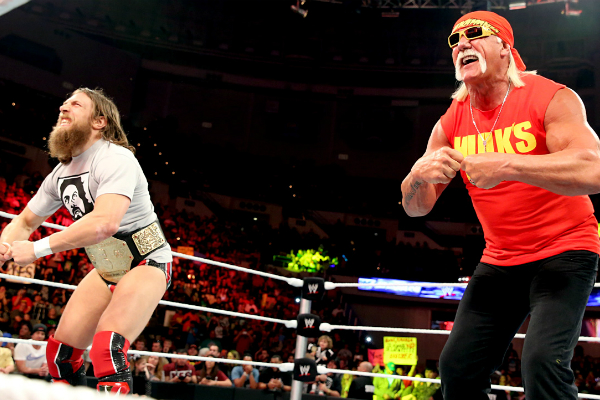
Its strange, but the man Hulk Hogan should probably identify the most with is wrestling babyface phenomenon Daniel Bryan. Both men went through the same issues with the office, but thirty-one years apart.
In 1982, Hogan was with the American Wrestling Alliance in Minnesota, under wrestling legend Verne Gagne. Gagne was the oldest of old school, despising the new showbiz side to pro wrestling and preferring his promotion to run as it had when hed been a full time in-ring performer: realistic, flawless technical work produced by proper wrestlers, not this all style, no substance nonsense. Hogan had just finished working on Rocky III with Stallone, and was courting mainstream celebrity. He was over with the crowd, big time but his boss refused to take him seriously and give him the push that his popularity deserved.
Gagne was no fool - he saw dollar signs when he looked at Hogan, but he remained convinced that the way forward was highly skilled, uncharismatic workers like his protégé Nick Bockwinkel, not limited workers with huge muscles and Hollywood connections like Hogan. He booked Hogan as a perennial underdog, forever chasing the title, until Hogan had enough of the runaround and left to go to Vince McMahon and the WWF, who knew how to take his schtick to the next level. That next level was Hulkamania, and the rest was history.
In 2013, Daniel Bryan had much the same problem with Vince McMahon and his WWE. A vastly popular and highly skilled proper wrestler delivering realistic, flawless technical work, he forever found himself playing second fiddle to McMahons desire for all style, no substance nonsense and mainstream attention. Oh, McMahon was no fool - he saw dollar signs when he looked at Bryan, but he remained convinced that the way forward was the same hugely muscled men and showbiz that had made his fortune in the 1980s. He booked Bryan as a perennial underdog, forever chasing the title, until WWE fans had had enough, and were so vocal in their protests that plans changed, and Daniel Bryan was finally pushed to the top of the mountain, headlining Wrestlemania XXX and becoming the WWE champion for real.
2. McMahon, Part Three: Stolen Belts And Screwjobs

Part of the reason that Vince McMahon panicked so badly at the thought of Bret The Hitman Hart leaving the WWF with the WWF championship in 1997 was because he'd already been through it on a smaller scale before: two years earlier, WWF women's champion Alundra Blayze had skipped to WCW while still holding McMahons belt, and been persuaded by Eric Bischoff to drop it in the trash on live television. He'd let Blayze go without dropping the belt first - he wouldnt make that mistake again, but it was Bischoff's cavalier ruthlessness that was the problem.
McMahon had, of course, conveniently forgotten that he'd done exactly the same thing himself four years earlier with Ric Flair, taking advantage of WCW boss Jim Herd's stupid decision to let the NWA world champion go while he was still holding the belt, and parading the NWA/WCW world title belt around WWF television while promoting the arrival of Flair on his programming. His paranoia over having Hart and Bischoff do to him what Blayze and Bischoff had done to him (and what he'd done to Jim Herd with Flair) led him to the events of the Montreal Screwjob, where he made damn sure that Hart would do what was right for the WWF.
Ironically, it was Montreal that would help save his business: he parlayed his sudden personal notoriety into the creation of the evil boss, Mr. McMahon, and the subsequent feuds with new rebel star Stone Cold Steve Austin caused a sharp upturn in trade, one that eventually saw him come out on top as WCW faltered and failed. He didn't learn his lesson about looking after his champions, though two years later, Jeff Jarrett managed to hold up the WWF for hundreds of thousands of dollars after his contract expired shortly before he was due to make a highly publicised and promoted Intercontinental title defence against Chyna.
His hand forced, he used the money hed squeezed out of McMahon to help him set up a little NWA promotion he could be the main event star of: one he decided to call Total Nonstop Action
1. The Piledriver's Revenge

When Stone Cold Steve Austin fought Owen Hart at Summerslam in August 1997, he would be seriously injured in a botched piledriver reversal spot. As planned, Hart countered Austin's attempt at the move, reversing it into his own piledriver and sitting down into it, broke Austin's neck, temporarily paralysing him.
Somehow, Austin was able to finish the match, and in time, his style amended to compensate for the injury, he continued in his meteoric rise to the top of the industry, becoming the biggest star pro wrestling had ever seen. The incident took years off his career, though he'd be forced to retire early in 2003, almost as a direct consequence of Hart's mistake.
Scuttlebutt (like gossip with a premonition of doom) says that Austin had asked Hart to try the tombstone variation of the piledriver, where he would drop to his knees instead. Hart refused, airily convinced that his usual sitout version was perfectly safe. There was a reason that Austin was worried, however you see, in 1992 he'd been wrestling for New Japan Pro Wrestling as part of a WCW talent exchange initiative, and while wrestling Masahiro Chono, he'd run a piledriver reversal spot eerily similar to the one hed later attempt with Owen Hart, sitting down into it and breaking Chonos neck.
Five years later, the wheel would turn once more, and it would be Austin whod have his neck broken while on the receiving end of a botched sitout piledriver following a reversal spot. Creepy, but true.