10 Times WWE Ripped Off WCW And Nobody Noticed
Randy Orton "4 life", The Undertaker's "Flock", WWE Raw goes WCW Nitro and more.

Eric Bischoff has gone on record (via his '83 Weeks' podcast) to say that pro wrestling's current formula owes loads to WCW. Indeed, WWE and AEW still borrow a ton of ideas from the extinct giant - one need only look at the three hour slog that is Raw or the old-school feel of Dynamite on TNT to see that.
Not every influence is obvious though, especially in WWE.
Vince McMahon's juggernaut was ripping WCW off long before the company became a hollow shell of itself that he could plunder and monetise for his own gain. Bischoff's Nitro changed the Monday night game in the mid-to-late-90s. It's well-known that Raw followed suit by ditching a by-weekly pre-taped format and going live, but did you know that McMahon's product once went one step further and tried to be more Nitro than Nitro?
That's here, and so are all the other ways WWE has subtly mimicked WCW. Not a lot of people watching noticed these tricks at the time though, and that only makes them more compelling to look back on years/decades later...
10. An “International” Championship

Generally, WCW did a poor job of presenting themselves as a global wrestling company. The WWF dominated most international markets outside of North America, and that meant WCW rarely ventured outside the country for worldwide tours in Europe or elsewhere.
That didn't mean they couldn't pretend to be all-encompassing.
WCW changed the name of its World Title in 1993 (after withdrawing from the NWA) to the "International World Heavyweight Championship". Years later, the WWF promoted a brand new belt called the European Title - they crowned Davey Boy Smith the first champ in Germany, and claimed all future titleholders would represent the continent.
Much like WCW's "International" boast, this was a lie. Over time, the Euro belt became little more than another undercard prop, but it's nonetheless true that the idea to give a championship worldwide representation began in Atlanta rather than Stamford.
9. Raw Roulette

"Spin the wheel, make the deal!".
That was a line spewed on WCW programming several times in the early-90s. The gist was that wrestlers would rotate a giant circular-saw blade-like mechanism that'd decide what kind of match type they'd have on pay-per-view. Sound familiar? It should if you remember WWE's own 'Raw Roulette'.
WWE introduced the gimmick for the 7 October 2002 episode of Raw. Their wheel was more elaborate and busy than WCW's version, but it was still a rip off of something that had been done before; the promotion has gone on to bring 'Roulette' out of storage whenever they're stuck for a special edition of Raw that might pop a rating.
NXT also brought the wheel-spinning fun back for last October's Halloween Havoc revival. That probably won't be the last time fans see this WCW take off on WWE programming over the next few years. It's an easy way to add drama.
8. Velveteen Dream Is ‘The Artist’

In 2017, formerly mild-mannered Tough Enough entrant Patrick strutted into view as the dazzling Velveteen Dream. The gimmick was obviously inspired by pop star extraordinaire Prince, and it earned rave reviews over the next couple of years.
Nobody spared a thought for poor old Prince Iaukea.
'The Artist' was pro wrestling's original Prince imitation. He pranced around on WCW television (often with his valet Paisley), but didn't really get over - it turned out that fans watching in 2000 weren't ready for some Prince action to (purple) rain down on their pro wrestling. WWE had more success approx 17 years later.
You won't hear many wrestling enthusiasts pointing to WCW when they talk about Dream though. The fact that Velveteen is a second attempt at Prince-related magic is lost on most, and it's not like WWE will acknowledge that those fools over in 'Dubya-C-Dubya' came up with the idea first.
7. ‘Mr. Ass’ Isn’t The First Booty Man

The same could be said of this.
Billy Gunn turned heads during the 'Attitude' era for nicknaming himself 'Mr. Ass' and shaking his goods any time he was on camera. That character became a stalwart of the time, and eventually led to a huge singles push for the guy. It failed, much like WCW's earlier experiment with Ed Leslie.
The former Brutus Beefcake became 'Booty Man'. His role was to comedically (or so they thought) reference his own tush any chance he got, and his finisher a high knee (or heinie). It was doomed to fail from the start, which means Gunn's own arse-obsessed persona remains wrestling's most famous.
A dubious honour, to say the least.
The 'Mr. Ass' character was such a popular addition to the New Age Outlaws/D-Generation X package that Leslie's own anal fixation didn't come up amongst fans. There had to be at least some inspiration hidden in there for Gunn though. Surely.
6. Full-Priced Monthly Pay-Per-Views

Note the wording there. The WWF started running monthly pay-per-views with the In Your House series back in 1995; that year, if one includes the Collision In Korea special, both WCW and Vinnie Mac's crew produced a total of 10 supershows apiece. By '96, the WWF's number jumped to 12 (WCW still ran 10).
It'd be a lie to suggest that WCW did 12 monthly specials per year first then, but they did run full-priced ones before McMahon. Bruce Prichard revealed on his podcast that someone backstage pointed out that the company were charging less for IYH events. They cost $14.95, and that wasn't raised (to $19.95) until the fifth event.
By IYH: Ground Zero in September '97, the WWF had decided to up the runtime of these two-hour shows to three hours and begin charging full price ($29.95) for them. That was a response to what WCW were doing, and it'd give the illusion of added value to the In Your House brand.
WCW's pay-per-views all clocked in at a standard price point, and had done for years.
5. Vince McMahon Mimics Eric Bischoff

The Mr. McMahon character is roundly regarded as the prototypical evil authority figure in pro wrestling. It was so successful that anyone in a similar role is immediately compared to McMahon. Sadly, this means the idea usually feels watered down and played out before those cast even have a chance to settle in.
What's unfair about that? Well, technically, Eric Bischoff beat Vince to the punch there.
He became part of the nWo storyline starting on the 18 November 1996 episode. Think about this: McMahon didn't actually become the "evil owner" until after he'd screwed Bret Hart at Survivor Series '97 almost a full year later. In short, WCW set the template for the tyrannical boss gig, not WWE.
People were so swept up McMahon's feud with Steve Austin at the time that they didn't stop to credit Bischoff for effectively handing his competition a winning blueprint. In fairness, Vince was also seriously good at playing heel authority.
4. Hell In A War Games

This is another concept that was so fresh and exciting that folks didn't stop to think of the past.
In 1997, the WWF debuted the fearsome Hell In A Cell structure. It was much larger than the standard steel cage, and came armed with a roof that'd (theoretically) stop anyone from escaping. What does that sound like? Why it's the NWA/WCW's ancient War Games match!
OK, so War Games had two cages, but that intimidating size was the same kind of appeal that HIAC had when it was introduced. From a distance, both cages looked very much alike, and it's clear that there was some WCW inspo coursing through Titan Towers when McMahon's organisation were dreaming up a new match type.
The WWF had never used a cage that looked anything like War Games before. Their structures had always been garish, blue-barred classics that contrasted vividly with the mesh preferred elsewhere. Hell In A Cell was a departure from the norm influenced by WCW traditions.
3. The Undertaker Has A Flock Of His Own

This writer would challenge anyone to go back, watch some of Raven's WCW work between 1997-1998 and say he wasn't one of the best characters in the biz. The fact he and his 'Flock' even got any house room on cards dominated by the nWo angle is remarkable enough, but Raven was on fire as a DDP and Chris Benoit rival back then.
Where does The Undertaker come into things though?
Raven and his hangers-on were grunge rock types, no question. Over in the WWF, the increasingly-satanic 'Taker started to surround himself with his own gang of goths, vampires and other creeps in the Ministry Of Darkness. Both groups had their own identifiable fashion, but they were more comparable than some might expect.
'Taker and Raven acted as the God-like centrepieces, and they relied on strength in numbers to overpower their foes. Also, the Ministry lads were treated like scum by their leader - Raven regularly abused his 'Flock' over in WCW too. Tenuous? Sure. Similar storytelling? Absolutely.
It's totally possible that the Ministry was a Flock rip off.
2. Randy Orton Is New World Order

Randy Orton's nWo-style shirt is likely worth a pretty penny now.
Most will have forgotten that Orton ripped off the WCW faction during his feud with The Undertaker back in 2005. He only wore this tee for a short while before moving on to new designs, but it was definitely a nod back towards Hollywood Hogan, Kevin Nash, Scott Hall and the gang.
The lettering was printed in exactly the same font as the New World Order classic. Instead of nWo, Randy had "rko" in lower case font on his shirt, and "Randy Orton" in smaller text just beneath that. This was during his 'Legend Killer' phase, so it's rather curious that Orton paid homage to one of the most iconic stables ever when his character was so-blatantly anti-legend.
That nWo shirt is one of the best wrestling has ever spat out, so nobody can blame Randy for jumping on the bandwagon. It's unclear if this was a WWE idea or one of his own too.
1. Thursday Raw Thursday

For reference, this was the regular Monday Night Raw logo in February 1997. That'd change to the timeless 'Raw Is War' variant later in the year, but not before the company dabbled with some distinctly WCW-ish designs for a special Thursday edition of the flagship TV show.
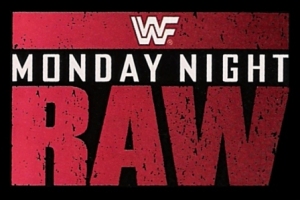
On 13 Feb '97, the WWF presented 'Thursday Raw Thursday'. Look at the logo for the broadcast side-to-side with Monday Nitro's graphic and you'll clearly see what Vinnie Mac was trying here - each word is stacked on top of the other like on WCW's logo, and the WWF proudly displayed the word "Live!" right at the bottom.
Hmm.
Nitro had started regularly kicking Raw's ass in the ratings by early-1997, so this could've been a McMahon ploy to steal back some of the shine from WCW and borrow their 'lively' vibe. Keep in mind that Raw was routinely pre-taped during this era. That's presumably why the WWF made such a huge deal over the "live" thing.
These logos are too samey for that to be coincidental.
When else did WWE rip off WCW but nobody really noticed? For more wrestling, check out 18 Things You Probably Missed From WWE Raw (March 29) and 10 Wrestlers Who Got TERRIBLE Advice From WWE!