10 Totally Ridiculous WCW Contracts You Won’t Believe
P*ssing money up against the wall.
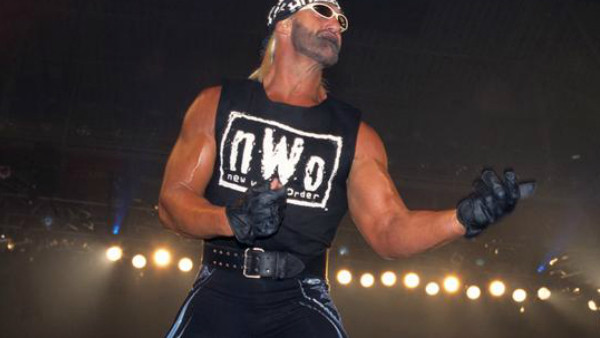
Despite 83 consecutive weeks spent spanking the WWF in the ratings war, millions of dollars in revenue from hot gimmicks like the nWo rolling into company tills and a wealth of top stars, WCW went to the wall in 2001. The remnants of a once-proud promotion were then picked clean by Vince McMahon.
Pretty much everyone blamed Vince Russo.
Why? Well, some of Russo's booking between late-1999 until WCW's demise was truly horrible. Popular books like the RD Reynolds and Bryan Alvarez collaboration, "The Death Of WCW" have pinned blame on Russo's shoulders. They also claimed that Eric Bischoff, Hulk Hogan, Kevin Nash and others were responsible for plundering the money well until it was bone dry and making stupid decisions aplenty.
Sure, Hulk's incredible demands did put a strain on things during WCW's peak, but he was one of wrestling's biggest stars and had helped turn things around years earlier. Besides, there were much more alarming figures on the organisation's pay roll that Messrs Reynolds and Alvarez should have been questioning.
Prepare to be amazed by some of the numbers on WCW's talent contract database...
10. Bill Goldberg

Absolutely nobody should suggest that Bill Goldberg wasn't a top, top name by 2001. He was, and he was inarguably the hottest prospect WCW pushed from 1997 onwards. A supposed shoe-in to join the WWF post-WCW, he instead decided to sit at home and collect on his giant AOL/Time Warner contract.
Why wouldn't he? The guy was earning $2.5m per year, and that was set to skyrocket up to $3.5m in the fourth year of his deal.
That's a mind-blowing amount of money for someone who was, for all intents and purposes, still a relative rookie next to some of WCW's other major stars. During this stretch, Goldberg stood to earn a whopping $11m from his agreement, and that's before taking into account other pay-per-view bonuses.
Those, as the contract sheet says, were separate from his core deal. Not even the much-maligned Kevin Nash was earning as much as Goldberg here; his core salary was $1.45m in 1999 and $1.625m in 2000-2001. There was a "booking service" bonus of 200k on top of that, but he didn't come close to Goldberg's contract.
So much for favoured nations.
9. Bret Hart

WCW would never see the best of Bret Hart. Injuries took their toll, and booking was often rubbish, but Hart's (ahem) heart just didn't seem in it following the controversy of his WWF departure and fall out with Vince McMahon. Performance didn't matter though, because Bret was on guaranteed money.
Hart's contract was to the tune of $2.5m. Above that, he pocketed $8,500 per live event, and was guaranteed over 125 dates per year.
Then, there was the subject of Bret's "reimbursement for disability". That clause ensured the Canadian legend would get a pay out of $100k to cover any problems incurred outside the ring. Wow. There was some serious thought put into his deal, perhaps more so than anybody not named Hulk Hogan.
Breaking down the 125 dates at the $8,500 number, that's an extra total of over $1m. Keep in mind that's also a minimum amount, not necessarily the final fee. In fairness, Bret didn't wrestle as much as that come 2000, because he'd already been booted in the head by Goldberg at Starrcade 1999.
8. Roddy Piper
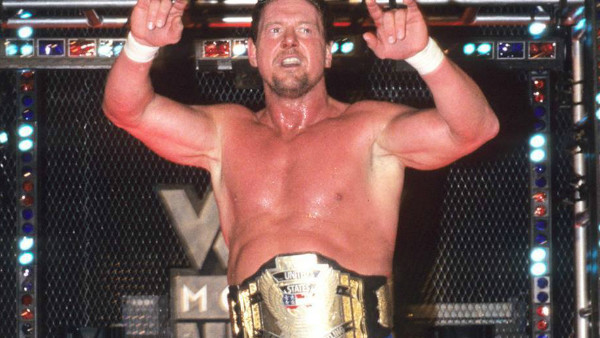
Roddy Piper's last match for WCW occurred on the 13 December 1999 Nitro against Curt Hennig. After that, his appearances were sparse and limited to special referee gigs or cutting promos. Again, it didn't matter. Piper's deal wasn't terminated until July 2000, meaning he sat on the sidelines collecting a huge pay check for doing nothing.
From 1999 onwards, Piper's contract allowed him $750,000 per year. Before he was released, that was eventually supposed to rise to $800,000 in 2001. Though he wouldn't get that far, Roddy was able to take advantage of some other contractual perks.
If WCW wanted to use Piper, for anything, they had to give him 60 days notice before that date.
Further, he was only contracted to work a maximum of six pay-per-view events and a mere 45 other dates sprinkled throughout the rest of the year. That wasn't exclusive to TV either, as it included any live event showings.
7. Horace Hogan

Until now, you might be thinking that all of the names mentioned here were at least big stars. You're right, they were, and they did (at some point, albeit rarely towards the end of WCW's lifespan) contribute heavily to the promotion's success. Horace Hogan, someone who never looked comfortable in a wrestling ring, didn't.
Nah, he got by simply because he happened to be Hulk's real-life nephew.
Apparently, that was worth at least $225,000 to WCW's top brass. By 2000, that had risen to $250k, meaning Horace wrestled on episodes of Worldwide and jobbed out on Nitro for quite the sum. Making things even more shocking, he made more than double what talented workers like Chris Candido ($104,000) and Norman Smiley ($120,000) were paid.
Yes, Horace raked in $130k more than one of the current, respected trainers at WWE's Performance Center in the year 2000. It pays to be related to the golden goose, it seems.
6. Alex Wright

There was a time when fresh-faced German kid Alex Wright looked like a blue chip prospect that could possibly be turned into a major player with the right booking. By the late-90s, that promise had faded and Alex was turned into the mohawk-sporting Berlyn.
The fact that didn't get over couldn't stop him from earning a cool $395,000 for his final year in WCW.
Wright's original deal (inked in early-1999) was for $375k. For some reason, likely because they expected the new gimmick to tear the house down, management agreed to a raise in the second year of their one-time dancing wunderkind's new contract. When Berlyn failed to catch fire, WCW still had to part with the cash.
Keep in mind that Wright's Berlyn gimmick didn't debut until May '99. That means he sat at home for close to half a year earning around 32 grand per month before WCW decided to bring him back. Then, the writers lost faith in his new character and paid him a hefty amount to job out on TV and house shows.
5. Ernest Miller
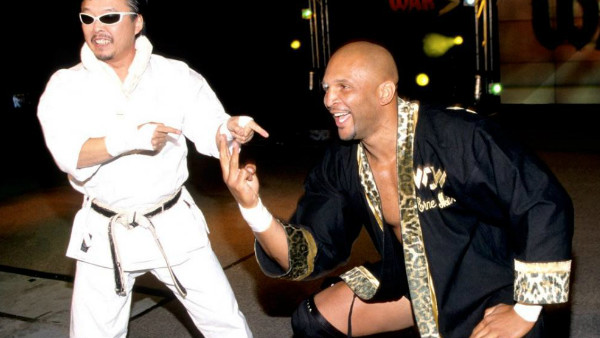
Give it up for Ernest "The Cat" Miller.
Not only was the guy one hell of a dancer who loved him some James Brown, he was also one heck of a negotiator when it came time to talk money too. How else could WCW's decision to green light a contract worth $400,000 in 1999 be explained? That wasn't the end of it either.
Had WCW stayed in business beyond 2001, Miller's deal called for him to get a 50k raise up to $450,000. As he was never realistically going to become a headliner on a roster still packed with marquee names, that made The Cat one of the higher earners on the jam-packed mid card glut.
The investment wasn't worth it.
Feuds against Jerry Flynn and a gig as WCW Commissioner in 2000 that was played for laughs failed to justify such a huge contract during a time when the company was leaking funds. Hey, at least he got to dance with James at SuperBrawl 2000.
4. Scott Hall

Scott Hall didn't do a whole lot of wrestling between 1999-2000. According to database site Cagematch.net, he worked just 32 matches across those two years. Here's the bit you're used to by now: it didn't matter. Hall still collected on his pay and was one of WCW's highest earners towards the end.
In Scott's defence, he was going through a ton of personal problems (including alcohol and drug addictions) at the time. It was cool of WCW to stick by him, and it's obviously great that he's in a much better place these days than he was back then.
Even so, his raise from $1.45m to $1.625m in 2000 seems a bit ridiculous considering how little he worked for the company.
Hall's contract had a maximum number of 180 dates written in. As he worked just 26 matches in 1999, he was barely scraping 15% of that figure; it was worse in 2000. Hall wrestled a mere six matches throughout the whole year, and that was barely 3% of the 180-date max.
3. Jeff Farmer
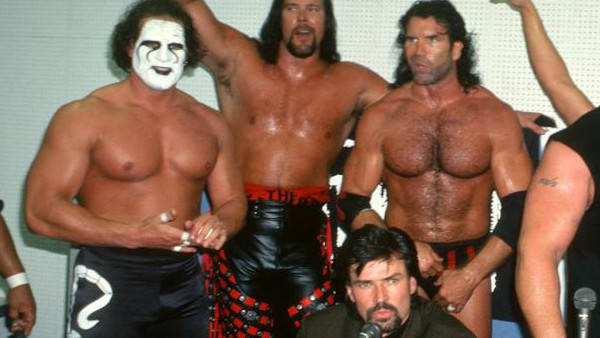
Older fans will recall the nWo Sting character played by Jeff Farmer between 1996-98. Originally, the gimmick was supposed to fool fans into thinking their heroic babyface had shunned WCW to join the dark side. That wasn't the case, although Sting would become nWo Wolfpac later on.
In total, wearing the make up, Farmer made just one appearance under the guise from 1998 onwards.
Farmer, who also played Cobra and Super J in WCW, signed a new contract on 15 June '99 worth $150,000 per annum yet never wrestled that entire year. He did log just under 100 matches for New Japan Pro Wrestling, so maybe WCW had brokered a deal there. Whatever, the 150k is on their contract database, not New Japan's.
In effect, Farmer was paid $150,000 between 1999-2000 to not play the nWo Sting character. He wasn't released until the summer of 2000, and he only wrestled one more time (on the 17 January 2000 episode of Nitro) for the promotion before leaving.
2. Ralphus
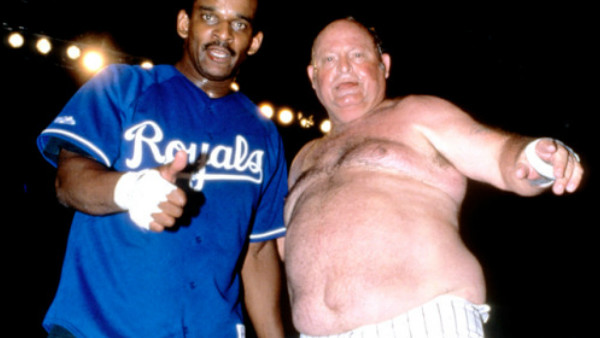
This writer has already marvelled at the idea of Ralphus, Chris Jericho and Norman Smiley's former "personal security" guard, getting an actual contract in WCW. It can't be left off this list however, not when it's so damn bizarre and a glaring example of the promotion's problems.
Armed with his shiny new $78,000 deal, here are some of the names the grossly overweight Ralphus earned more than annually: Crowbar ($75k), Sean O'Haire and Mark Jindrak ($31,200 for their trainee contracts), Johnny The Bull ($75k), Stacy Keibler ($15k), Shannon Moore ($75k), Daffney ($52k rising to $76k) and The Wall (again, $75k).
On top of that sweet amount, Ralphus also bagged himself a $750 appearance fee, and a guarantee that he'd get at least two per week out of WCW. In other words, the bumbling dude who had his ass crack showing during Smiley's hardcore matches earned a further $1,500 for making towns.
In 2000, Ralphus raked in close to $80k for doing next-to-nothing.
1. Tank Abbott
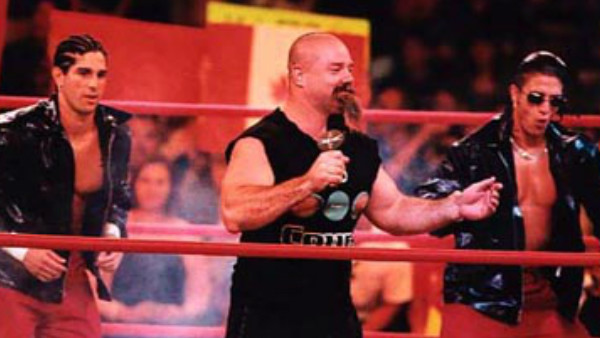
Right at the top of WCW's contract database, there's one name and one number that outlines everything wrong with the organisation in 2000.
Ex-UFC bad ass and all-round MMA wrecking machine Tank Abbott was someone Vince Russo had high hopes for when the gruff fighter traded martial arts for pro wrestling in 1999. That's fine, because Abbott had a legit reputation and had gained some popularity in UFC. Giving him a contract worth $850,000? That wasn't fine.
WCW did it anyway, then proceeded to do precisely nothing besides book Tank in silly gimmick matches. The one he had against fellow martial artist turned wrestling flop Jerry Flynn at Souled Out 2000 summed it up. Fans, rightly, didn't want to see "shoot fights" on their wrestling pay-per-views.
Things reached a new low when $850k Tank became a super fan of phoney boy band 3 Count, then started a new dancing gimmick. As preposterous as it sounds, WCW were paying this man almost $1m to goof around and ruin his credibility.
-
What do you make of these WCW contracts? Let us know your thoughts down in the comments section below!