10 Unfinished WWE Storylines That Remain A Mystery
Not every story gets the ending it deserves.

Professional wrestling is a soap opera framed around athletic competition. It’s been that way for years, and whether you watch it for the engaging storylines, bold characters, or exciting in-ring action, it’s hard to argue that WWE have continually pushed the sport towards drama, and away from its grappling routes.
WWE’s current rosters are packed with some of the world’s most exciting athletes capable of producing weekly in-ring clinics, but storylines remain their bread and butter. The stories and characters are what frame the action, draw viewers in, and give the wrestlers purpose and direction. An engaging storyline can turn a good match into a great match, and while WWE haven’t always been the most creative or original storytellers, things are heading in the right direction with the New Era.
What use is a good storyline if the conclusion’s not up to scratch, though? Every feud needs a big pay-off, and every tale needs a satisfying conclusion, or it’s all been for nothing. There’s one thing worse than a story that ends on a whimper, however: one that simply doesn’t end at all.
WWE history is scattered with a shockingly large number of storylines that went unfinished and quietly vanished into the ether. The company have been abandoning stories at all levels of the card for decades, and given some of the recent examples, it doesn’t look like this trend’s going to die anytime soon.
Here are 10 WWE storylines that were abandoned and never finished.
10. Adam Rose's Bunny

Adam Rose and gang of merry Rosebuds never ascended beyond “novelty act” status in WWE, but the company looked to be adding some intrigue to his story through the Bunny, his harem’s most popular member.
Described by Rose as a “highly athletic individual in a rabbit suit”, the Bunny started getting involved with Rose’s pre and post-match shenanigans, often taunting, teasing and even attacking rose’s opponents. Rose and the Bunny teamed together at one point, but tension started building between the two when R-Truth suggested that the Bunny was upstaging Rose.
The Bunny cost Rose a match one week, and his bitter master beat him down and left him beaten in the ring. Further shenanigans followed over the coming months, before Rose finally snapped and brutalised the Bunny after a December loss to Truth. This was the last time the Bunny would appear on WWE television and, after months of teasing, his identity was never revealed.
WWE were clearly building towards something with the Bunny, who was capable of pulling-off a wide array of impressive high-flying moves. Quite why they decided to pull the plug on the reveal story is anyone’s guess. At one point, Sami Zayn was rumoured to be behind the costume, but Justin Gabriel later revealed that he’d been playing the Bunny all along.
9. Kane Vs. Fake Kane

Whether working as Jesse’s brain-dead tag team partner, Festus, a member of the Straight Edge Society or alongside AJ Styles and Karl Anderson in The Club, Luke Gallows’ WWE career has been nothing if not eventful. He was signed by WWE in 2005 and made his first televised appearance in 2006, while still serving time with the Deep South Wrestling developmental territory.
He didn’t appear as Gallows or Festus, though. Instead, he appeared on Raw as an Kane imposter. Wearing The Big Red Machine's original mask and ring attire, he emerged from the back and chokeslammed the actual Kane during an Intercontinental Title match with Shelton Benjamin. Subsequent weeks saw him attack Kane during and after matches, and the two finally met in the ring at June’s Vengeance PPV.
The match saw Fake Kane take the win, but the story came to an abrupt end the following night on Raw. Real Kane attacked the imposter, tore his mask off and kicked him out of the building. The imposter’s identity was never officially revealed, and what happened to Fake Kane remains a mystery to this date.
In the end, it wound up being a purposeless angle for Kane and Gallows went back to developmental for the time being.
8. Just Joe

Joe E. Legend had amassed a credible reputation on the Canadian and European independent circuits prior to signing with WWE in 2000. While never the most exciting in-ring performer, he was a steady all-around worker who should’ve slotted effortlessly into the WWE midcard, but he rarely got a chance to shine.
He debuted as “Just Joe”, a pot-stirring miscreant who appeared in various backstage segments to pass on fabricated messages and instigate feuds and arguments between other wrestlers. Appearing primarily on Sunday Night Heat and Jakked, Joe would poke, prod and generally do his best to create chaos around the backstage area. Sometimes it worked, and Joe’s lies were successful in building bad blood between other wrestlers, but other times? Not so much.
Joe pushed WWE Light Heavyweight Champion Dean Malenko a little too far on a 2000 episode of Heat, and was soundly defeated by the technical wizard. Following shows saw him gain little traction against wrestlers like Essa Rios and Gangrel, and Joe was eventually released from his WWE contract in 2001.
It was heavily suggested that there was a reason behind Joe’s actions, and that he was working towards a concrete goal with what he was doing. Unfortunately for Joe, the angle was dropped without a trace shortly after the Malenko loss, and Joe became just another face on Heat & Jakked.
7. The McMahon Lockbox

Nothing about Shane McMahon’s ascent to the position of SmackDown’s Commissioner makes sense. It started prior to this year’s WrestleMania, but didn’t start going off the rails until shortly after.
Shane made a headline-topping return to Monday Night Raw and demanded that his father Vince let him run WWE’s flagship show. Shane’s trump card was a secretive lockbox that he’d apparently held onto for years, and if the contents were revealed to the world, some of Vince’s deepest, darkest secrets would be exposed and the Chairman would be besmirched.
Seemingly worried about the box’s contents, Vince made a compromise: defeat an opponent of my choosing at WrestleMania and you can run Raw, but the lockbox must go unopened. Shane was defeated by The Undertaker but rather bizarrely given an authority figure role in spite of that fact, but what happened to the lockbox of secrets?
Nothing, apparently.
Shane’s loss meant that it was never likely to be opened anyway, but WWE seemingly buried it without as much as a post-WrestleMania mention. The lockbox was a vital storytelling device when it came to booking Shane in the match (and his current role) in the first place, yet it was completely cast aside during the angle’s illogical conclusion.
When you play up the contents as something so important that Vince was willing to put control of his top TV show on the line, you have to pay it off, but WWE completely failed to do so.
6. GTV

GTV was one of WWE’s biggest storylines in 1999, and a big talking point throughout the Attitude Era.
A series of grainy, blurry vignettes started appearing on WWE programming, displaying candid backstage moments featuring “unaware” superstars going about their business. The security cam-style footage persisted over a number of years, so the story wasn’t a flash in the pan like most on this list, but it died before the man behind it was ever revealed.
There are a number of reports going around as to whom the intended perpetrator was. Goldust was pegged as the original voyeur, which made sense given his strange, off-kilter ways, but he was released halfway through the angle and WWE chose to abandon GTV rather than switch it to another wrestler.
Oddly, Chris Jericho later suggested that comedian and entertainer Tom Green was supposed to be behind GTV. It also makes sense, given Green’s history with prank-based hidden camera shows, but Jericho states that Vince McMahon saw Green’s work before GTV was supposed to finish, decided he wasn’t funny and canned the angle.
Whatever the case, GTV has been forever lost to the annals of time.
5. Hade Vansen's Prophecy

Hade Vansen was a well-travelled British independent wrestler who earn a 2007 WWE tryout through his friendship with Katie Lea Burchill.
There was talk of WWE expanding their offices into the UK at the time, and the company were looking to increase exposure on the British Isles by bringing in a number of UK talents. Drew McIntyre, Wade Barrett and Sheamus all attended the same tryout as Vansen, but Hade was the only one picked up at first glance, and he signed with the company shortly after.
Vansen endured a long spell with the FCW developmental territory, before eventually appearing on a December 2008 edition of SmackDown to cut a sinister, cerebral promo. Claiming that he’d “dedicated his life to studying the darkness” and that he was coming to WWE “to fulfil his prophecy”, Vansen was being set-up as an eery cult-leader figure, but it never got off the ground.
WWE abandoned the storyline two weeks later, Vansen never appeared on WWE television again, and he was released from his contract shortly after.
This particular angle barely got started, let alone finished. Perhaps it’s better that way, though: Vansen has since claimed that the story would’ve involved him pitting a series of “X-Men like mutants” against The Undertaker on a weekly basis, before eventually wrestling the Deadman himself at WrestleMania XXV.
4. Million Dollar Mania
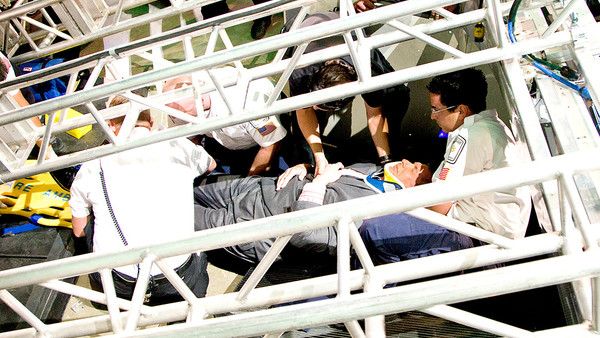
Vince McMahon came-up with a number of whacky ideas to revitalise Raw’s product in 2008, and Million Dollar Mania remains a head-scratcher to this day. On a June episode of the Monday night flagship, Vince announced that starting the following week, he’d be giving away one million dollars shared between a group of fans on a weekly basis.
Fans were encouraged to sign-up online, and a handful of lucky winners would earn a chunk of the money. Quite what WWE aimed to achieve by turning Raw into a low-rent lottery show for a few minutes every week remains to be seen, because Million Dollar Mania fell apart within three weeks. McMahon had just given $500k away when a series of explosions tore through the Raw stage, causing it to tumble down and fall on Vince himself.
The incident kept McMahon off WWE television for six months, but Million Dollar mania was never revisited. Perhaps Million Dollar Mania had a clearly-defined outcome that went awry before WWE could reach its conclusion, but there’s a strong possibility that Vince got tired and swept it under the rug. Fans weren’t connecting with the story, and the whole affair was more baffling -and costly - than anything else.
3. Who Raised The Briefcase?

As the likes of Billy Gunn, Ken Shamrock and Kane competed for the right to be called King of the Ring, the 1999 pay-per-view saw Vince McMahon, Shane McMahon and Stone Cold Steve Austin fight for a more valuable prize.
A key moment in the era-defining Austin/McMahon story that minted Austin as an anti-hero and Vince as the ultimate evil authority figure, the handicap ladder match saw a contract for a controlling stake in WWE sealed in a briefcase, then hung above the ring.
Stone Cold, who’d made his name raging against authority, looked to have sealed victory by downing both McMahons and scaling the ladder, but the briefcase rose away from Austin’s grasp before he could take hold of it.
This gave Shane and Vince the time they needed to recover and win the match, closing the PPV in dramatic fashion. Who had raised the briefcase and cheated Stone Cold of victory, and why had they done it?
The reveal should’ve been a huge moment in the Austin vs. McMahon feud, but it never came to pass. Whomever did it had to be McMahon-sponsored, as they allowed them to win the match. It was originally pegged to be Big Boss Man, but these rumours were quickly denied and the issue was never resolved.
It seems insane that WWE could let such a huge issue pass without explanation, but that was the Attitude Era for you! Still, the perpetrator's identity has WWE fans scratching their heads to this day.
2. The Anonymous Raw General Manager
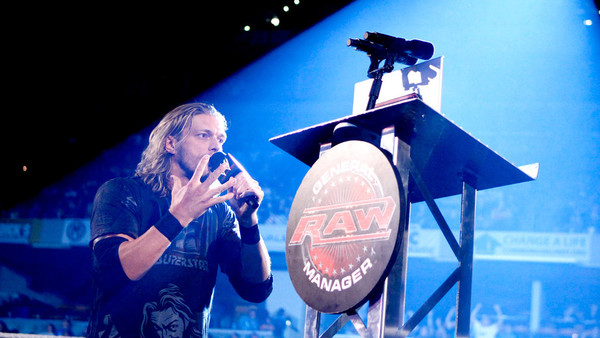
WWE’s anonymous Raw General Manager angle started with intrigue, and ended with tedium. It was June 2010, and Bret Hart had just been fired as GM. Vince McMahon unveiled a new anonymous GM with Michael Cole acting as his or her spokesman, and communicating the GM’s decisions to the live audience and wrestlers alike.
The angle ran for over a year, with the anonymous GM often dropping hints to his or her identity by using the catchphrases of numerous popular superstars. These were found to be red herrings, however, and the anonymous General Manager was phased-out in favour of Triple H and John Laurinaitis in 2011.
The anonymous GM made a couple of fleeting returns in 2012 and 2014, but nothing stuck. On Raw 1000, WWE laughably claimed that Hornswoggle was behind the whole thing, but this was quickly written-off as a joke, and nobody bought into it. If Hornswoggle truly was the anonymous General Manager, WWE would’ve paid it off a long time ago instead of waiting several years.
Instead, the storyline fizzled out, faded away and disappeared from television without resolution.
It was a huge missed opportunity, as a number of compelling storylines would have blossomed had someone like Triple H, Shane McMahon or Vickie Guerrero been found culpable. Instead, WWE attempted to cover their tracks by shrugging their shoulders and rendering the whole affair one giant waste of time.
1. The Nexus

The Nexus angle provided not just one of the most explosive wrestling debuts of all-time, but also one of the most egregious wastes of talent in WWE history. Arriving as a pack of dangerous and disgruntled NXT rookies in 2010, Wade Barrett and his gang of miscreants shook the wrestling world by literally tearing ringside apart and destroying everyone in the surrounding area.
This, Barrett said, was the Nexus standing-up and seizing the opportunities they felt they deserved. Their presence added an unpredictable new edge to WWE television, and they got off to a hot start with various group members fighting those roster members who remained loyal to the WWE.
At its peak, the Nexus vs. WWE storyline was as compelling as any “invasion” angle in the sport’s history, but things reached a screeching halt when the group ran afoul of John Cena.
Cena has a penchant for derailing promising young wrestling careers, and that’s exactly what he did to Wade Barrett and the Nexus. Barrett was soundly destroyed by Cena on PPV, thus ending any hope he ever had of making it as a WWE main eventer, and CM Punk was installed as the group’s new leader.
Multiple personnel changes followed, but Punk’s singles success greatly eclipsed the stable’s momentum, and The New Nexus was effectively dead in the water. Punk would go on to defeat Cena, leave the company, then come back again, but the story was completely forgotten about by this point. The Nexus seemingly died with Punk’s first departure, and the wrestlers went their separate ways.
The Nexus was one of the most exciting storylines that WWE have ever destroyed. Their effectiveness as a group was completely neutered by John Cena, and the success of Punk’s famous “pipebomb” promo allowed WWE to quietly dismiss the story without resolution.