10 Wackiest Wrestling Gimmicks That Actually Worked

Mick Foley's childhood creation actually made the big time...
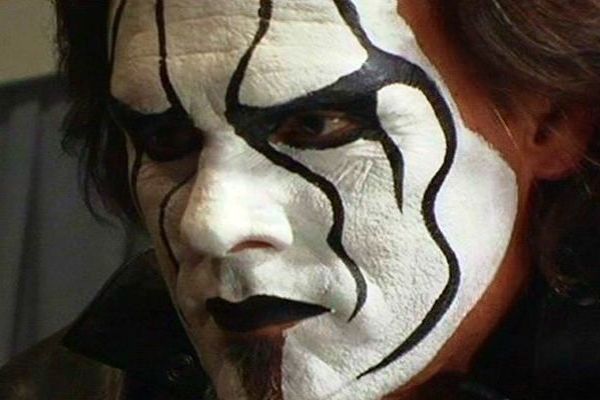
Professional wrestling is a haven for the weird and wonderful. During the recent Sting Q&A shows in the UK, it was fascinating to stand and watch as grown men and women posed with the face-painted character. The glee on people's faces was evident, even though they were effectively meeting another adult male posing in Halloween costume. This isn't an isolated case, the likes of Ax and Smash of Demolition still routinely appear in public wearing their trademark face paint. This is symptomatic of everything that's right with the industry. Even with everything that the core fan base now knows about wrestling, fans do still enjoy meeting their favourites and seeing them dress the way they remember from years gone by. Characters such as Demolition were awesome first time around, but there was some degree of risk involved. After all, what might have happened to the careers of Bill Eadie and Barry Darsow had the gimmick failed to get over? It was strange after all, and it's not the only one. This article is all about those wacky characters and gimmicks that perhaps had no right to be as successful as they were. Incredibly, they were wildly popular. This list examines why that was the case, and explores what each gimmick meant to the pro wrestling world at large, as well as the people playing them.

10. George 'The Animal' Steele

Making his in-ring debut way back in 1962, George Steele was effective in the art of the pro wrestling promo. Dubbed 'The Animal', Vince McMahon Jr didn't want eloquence from his employee, he wanted sheer lunacy. Therefore, that's exactly what Steele decided to give him, sacrificing his verbal abilities to be a gibbering wreck who made little sense during interviews. The character was a smash hit, and actually led to a lengthy babyface run for the man. One of Steele's most infamous feuds came against 'Macho Man' Randy Savage in the 1980's. The child-like Steele was obsessed with the beauty of Miss. Elizabeth, something which horrified the pompous Savage. An angle was built around Randy's need to keep Steele away from his woman, despite her gentle nature wishing to care for George. Fans lapped the rivalry up, cheering for the mentally deranged 'Animal' in the process. Steele's bald head, menacing look and hairy upper body should have made him perfect to portray a heel, but something about his turnbuckle-munching ways captivated fans. Even to this day, the man behind the character - William Myers - still can't explain what made it so successful.

9. The Godfather

Charles Wright made his first appearances in the then-WWF as Sir Charles in the early-90'. Friends behind the scenes with The Undertaker, Wright later developed the character of Papa Shango. The shaman witch doctor was a spooky sight, but it didn't have the success that many were banking on. By 1993, Shango was low down on the WWF pecking order, and it was clear a change was needed. From there, the 'Supreme Fighting Machine' Kama was introduced, to similar apathy. Incredibly, it wasn't until Wright started playing a slick-talking pimp that wrestling fans really started to pay attention. Re-dubbed The Godfather in 1998, he left The Nation Of Domination and launched a successful singles career. People lapped up the promiscuous ways of the gimmick. It was perfect timing for Wright, playing the character during the height of the 'Attitude Era' in the WWF. The persona was controversially accompanied by a slew of women, known as his 'hos'. For at least a few years, The Godfather were extremely popular, and it's still Wright's most memorable and cherished gimmick.

8. The Honky Tonk Man

Elvis Presley isn't the most obvious inspiration for a wrestling gimmick, but it was one used effectively for years by Roy Wayne Ferris. Coming into his own upon joining the WWF in 1986, Ferris started calling himself The Honky Tonk Man. Using many mannerisms of the infamous rock n' roll singer, the wrestler became an overbearing heel. Fans delighted in seeing Honky lose. That was the beauty of the character, the WWF made the people wait to see that happen. Despite never being a stand out between the ropes, The Honky Tonk Man held the WWF Intercontinental Title for an incredible 454 days, the longest in history. In fact, that's still a record that remains in tact to this day. When The Ultimate Warrior rolled over Honky Tonk at SummerSlam 1988, the crowd popped in huge fashion. This is what folks had been waiting for, to see the smug smile wiped clean off the face of the posturing phony. It's likely that Ferris would have floundered as a straight up wrestler, so it was genius to cast him as The Honky Tonk Man. Few others could have played the character so brilliantly, and that deserves credit.

7. 'Loose Cannon' Brian Pillman

During his appearance on Ric Flair's podcast recently, Eric Bischoff remained virtually clueless over whether or not Brian Pillman worked him back during the mid-1990's. Convincing Bischoff to release him from his WCW contract, Pillman wanted to travel around and cultivate a personality known as 'Loose Cannon'. The madcap character would then return to WCW as a bigger star. That didn't happen. After a brief period in ECW, Pillman signed for the WWF and resumed his career there. The 'Loose Cannon' gimmick didn't become a main event star, but it certainly worked in shunting Pillman up the wrestling ladder. In the WWF, he was part of the revamped Hart Foundation, an angle which saw a lot of success. Tragically, the man would pass away in late-1997 before he could really come into his own under the persona. Nonetheless, it was such a huge departure from his previous gimmick that it was impossible not to pay attention to the man. Nobody watching could ever forget his short-but-sweet feud against Steve Austin, whereby Pillman threatened to shoot Austin after the latter decided to break and enter his family home. It was a controversial angle, one that showed the potential the character had.

6. 'Crow' Sting

According to Sting himself, it was a massive risk to completely change his character in 1996. Influenced by Brandon Lee's 'The Crow' movie, Steve Borden took the advice of Scott Hall and changed up his look drastically. Gone was the spiky, bleach-blonde hair and the garish, colourful outfits. In their place sat long, black locks and a monochrome style that was instantly striking. Conceived as retaliation to what the New World Order had done to his beloved WCW, this new 'Crow' Sting was immediately vibrant despite the lack of colour. Often seen hanging around in the rafters of arenas around North America, Sting would wait an awful long time to strike out at the leader of the nWo, Hollywood Hogan. The angle was tremendous, and the gimmick change worked out for the better. Even so, it was a huge gamble for Borden. As the 'surfer' version of Sting, he had been a staple at the top of WCW cards for years. There was no guarantee this new vigilante-style gimmick would connect with the core audience, but it did. In stunning fashion, that fresh incarnation of the character has become the most fondly-remembered of the Sting guises.

5. The Undertaker

It's been said that had anyone else been chosen to play the gimmick of The Undertaker, the character may not still be around today. Mark Calaway has constantly tweaked the famous persona, keeping it relevant even as he nears the end of his active in-ring career. Even at 50 years of age, Calaway is still a vital part of the WWE product, and it's unimaginable to picture the company without him. Absolutely nobody could have predicted the success the gimmick would have when it first appeared way back in 1990. Moving slowly, like he was walking through treacle, The Undertaker's matches were far from exciting. Instead, it was the visual horror that 'Taker carried with him, and the sheer mystical force of the gimmick itself. Actual wrestling wasn't what Undertaker was all about in the early years. In the mid-90's, Calaway made the decision to quicken the pace, and it proved to be a shrewd move. The zombie-like movements had grown tiresome, and things needed to go in a different direction if The Undertaker was going to survive. More so than in-ring performances, Calaway's biggest achievement has been ensuring Undertaker appeals to each passing generation of wrestling fan.

4. The Hurricane

Shane Helms was one of the WCW contracts swallowed up by the WWF when the latter company purchased their main competition in March, 2001. A celebrated part of the WCW Cruiserweight division, Helms surely must have wondered where he'd fit in on the WWF roster, which was bursting at the seams with new talent. Some outside the box thinking was needed. After a few brief appearances as himself, Helms made the decision to change things up entirely. In August, 2001, the character of 'The Hurricane' was born. Claiming to be a superhero, Hurricane was popular from the very start. Helms played the gimmick perfectly, and put everything he had into the goofy persona. That resonated with the audience, who started to enjoy his performances. In late-2005, Helms was booked to move away from the gimmick. That proved to be a mistake, because he'd been far more effective in the faux-superhero guise. Fans struggled to really embrace 'Gregory' Helms, even though the man did have a lengthy run with the WWE Cruiserweight Title. It's as The Hurricane that the man is best-remembered, and for good reason.

3. Doink The Clown

Apparently, it was Road Warrior Hawk who first came up with the idea of a pro wrestling clown. Of course, many people have an irrational fear of circus clowns, feeling them to be amongst the most creepy characters around. Matt Osborne used this to his advantage when he made his debut as Doink The Clown in 1992. Immediately, fans around ringside were terrified of the gimmick. It had serious potential, potential which was ruined when Vince McMahon decided to turn the character babyface in 1993. Osborne left the company shortly thereafter, and the gimmick was taken up by the likes of Steve Lombardi and Ray Apollo. Doink would never be as effective as a babyface, the guise was far better as a nefarious villain playing on the fears of fans. After Osborne left, Doink fell by the way side. Nobody played it as well as he did, because his facial expressions and promos were utterly bonkers. There was something seedy about the entire gimmick, and it should have been much more than it ended up. For what it's worth, for at least a brief period, Doink The Clown was one of the best characters in the WWF.

2. Goldust

Dustin Runnels likes to recant the story of when the Goldust character was first pitched to him. Unbelievably, the incoming WWF talent thought Vince McMahon was playing an elaborate rib at his expense in 1995, but the patriarch of the WWF system was entirely serious. The androgynous weirdo would be a smash hit if handled correctly, McMahon reasoned. That certainly turned out to be the case, and there was nobody who could have played it like Runnels. Embracing the odd nature of the character, Runnels enlisted everything from homophobia to Hollywood in order to make the gimmick stand out. So convincing was the man under the gold paint and outfit that even Scott Hall - as Razor Ramon - had trepidation about working with him. In late-1995, the World Wrestling Federation was not a hotbed of creativity. The character of Goldust arguably remains the most brilliant thing the promotion did during that 12 month stretch. Everything clicked into place, and it's no accident that Runnels has managed to continue making a living from the guise even in the modern era.

1. Dude Love

As a teenager, Mick Foley dreamed about becoming a professional wrestling superstar. Coming up with his own stories and characters, the youngster envisioned a man known as 'Dude Love'. The hip, slick star would be a real ladies man, and the envy of all the guys around him. Girls would want to be with him, and guys would want to be him, at least in Foley's mind. When the man eventually joined the WWF in 1996, there's no way he could have foreseen bringing his childhood creation to the promotion. Experiencing success as both Mankind and Cactus Jack, Foley informed Vince McMahon of his Dude Love character. McMahon loved the idea of it, and it was introduced to WWF screens for the first time in 1997. Fans loved it, and it was clear that Mick himself was having a blast. Mick Foley was an unlikely success story in the image-obsessed World Wrestling Federation. Standing out due to his passion, hard work inside the ring and willingness to put his body through hell, Foley was also a great talker. Whether as Mankind, Cactus Jack or the ridiculous Dude Love, he was able to connect with fans. People adored the idea of Dude Love going from back yards to Raw. What other wacky characters can you think of that surprisingly worked? What are your memories of the gimmicks listed here? Let us know your thoughts down in the comments section below!

In this post: 
Mankind
 
Posted On: 
Contributor

Lifelong wrestling, video game, music and sports obsessive who has been writing about his passions since childhood. Jamie started writing for WhatCulture in 2013, and has contributed thousands of articles and YouTube videos since then. He cut his teeth penning published pieces for top UK and European wrestling read Fighting Spirit Magazine (FSM), and also has extensive experience working within the wrestling biz as a manager and commentator for promotions like ICW on WWE Network and WCPW/Defiant since 2010. Further, Jamie also hosted the old Ministry Of Slam podcast, and has interviewed everyone from Steve Austin and Shawn Michaels to Bret Hart and Trish Stratus.