10 Ways Wrestling Was Just BETTER In The '90s
Those ways in which the '90s wrestling scene was just so much better than what we have in 2023.

For those of us who lived through it, it's utterly terrifying to realise that the '90s somehow came to a close a whopping 23 years ago. Regardless of how old that will make some of you feel, there's still clearly so much to appreciate about that decade, particularly if you were a wrestling fan.
Of course, the 1990s represented a huge boom period for the wrestling business, bringing in unfathomable TV ratings, insane merchandise numbers, and making the antics of the WWF and WCW the cool talking point of people who would previously give pro wrestling a side-eye of disdain and mockery.
Here in 2023, the industry is in a place where it can only gaze enviously at certain facets of the '90s. And no, obviously such longing glances aren't reserved for exploiting Road Warrior Hawk's real-life addiction struggles, for the Fingerpoke of Doom, or for conducting a live interview with Brian Pillman's poor widow Melanie just one day after her husband's tragic passing.
Still, the '90s is a decade that offered up so many positives for fans when compared to the current landscape of the wrestling world.
10. It Was Less Time Consuming

If you want to fully keep up with WWE these days, you need to make yourself available for at least five hours every single week. Why 'at least'? Well, that's because there are Premium Live Events that can run anywhere between three-to-five hours, there's two days of WrestleMania each year, and there's also the small matter of whether you wish to bother with NXT, too.
We're all wrestling fans here, but it can become a chore just to keep abreast with the current product. And that's solely if you watch WWE. Want to be along for the ride with AEW? That's another five hours of your week. How about IMPACT Wrestling? That'll be two more hours. Again, that's discounting PPVs or promotions such as NJPW, NOAH, AAA, CMLL, ROH, and the NWA. Which in itself is discounting the countless independent promotions who run weekly shows through the likes of FITE and the Premier Streaming Network.
To take WWE's weekly five hours as an example, large parts of the '90s consisted of just one single hour of WWF Raw, before that show was bumped up to two hours, and obviously before WWF SmackDown was introduced mid-way through 1999.
Of course, there were supplemental shows such as WWF Superstars, Wrestling Challenge and later Shotgun Saturday Night, but they were largely the equivalent of what WWE Main Event is these days - as in, not required, must-see viewing to keep atop of major developments.
9. No Crazy Online Fandom

Yes, the internet is clearly a fantastic tool in a wide variety of ways. For wrestling fans, we now have the ability to watch essentially any promotion of note from the comfort of our own homes, there's digital newsletters and magazines at our fingertips, and the entire history of the entire wrestling industry can be dipped into at a moment's notice.
While all of those are huge positives, we of course nowadays also have the ever-fun world of online fandom.
That's not to say all online fandom is a cesspool, but so much of it obviously is. Have something nice to say about a wrestler? Be prepared to have a whole bunch of people wish heinous, horrible things on you. Have something nice to say about a wrestling promotion? Be prepared to have a whole bunch of people wish heinous, horrible things on your family.
It's a strange old world we live in here in 2023; a world where a certain corner of wrestling fandom revels in being awful without any real accountability.
Back in the '90s, though? In the pre-internet and early online days, you and your buddies could shoot the breeze about wrestling without having a bunch of strangers screaming obscenities at you in the background. There'd be nobody wishing death on you simply because you got a kick out of Tatanka vs. Damien DeMento on a September '93 edition of WWF Superstars.
8. Numerous Great Managers

The concept of a manager is something that hasn't entirely left the wrestling business, but these days there's not just a shortage of great managers; there's a shortage of managers, period.
Yes, Paul Heyman is one of the all-time greats. Yes, Don Callis gets nuclear heat. Yes, Maria Kanellis is great when allowed the opportunity. And yes, Prince Nana is currently clicking nicely with Swerve Strickland and the Mogul Embassy.
No slight on these names, but do the likes of Karen Jarrett, Alex Abrahantes, Jose the Assistant, Mr. Stone, and Scarlett Bordeaux really stand out as game-changers who audiences are fully invested in? Clearly not.
In the '90s, there were so many legendary managers who played such an important role in the career of a talent and in the wider reaches of the wrestling product. Bobby Heenan, Jim Cornette, Sensational Sherri, Miss Elizabeth, Jimmy Hart, Paul E. Dangerously, Woman, Paul Ellering, Marlena, Theodore R. Long, Harley Race, Sunny, Ted DiBiase, the Genius, the Sinister Minister, Colonel Robert Parker, Bill Alfonso, and Debra are just some of the names who spring to mind - with several of those being easily in the conversation for the top ten managers of all-time.
7. Spoiler Free

While WWE ushered in live weekly programming with the launch of Monday Night Raw back in 1993, the early '90s was a time when so much wrestling output was pre-taped ahead of time.
Nowadays, pre-taped shows means spoilers are everywhere. Back in the '90s, though, that decade was so often spoiler-free. If somebody had attended a TV taping, they might have chance to let their pals know what was about to go down, but that was about it.
Nowadays, people are forever wanting to know what's about to happen, what's up next, who's going to win, who's going to lose, who may win a title. While that same appetite may have been there somewhat in the '90s, there simply wasn't the means, for the most part, to have those spoilers available to you.
Yes, outlets like PW Torch and the Wrestling Observer were a thing, but they were print publications that only the true 'smart' fans were aware of. Instead, the vast majority of fans only knew what was happening in wrestling by, y'know, tuning in to watch wrestling.
Even towards the end of the decade, with the internet starting to become more prevalent, hard spoilers still weren't really a thing. Sure, there may be the odd whispers or slices of speculation, but cold, factual spoilers weren't available to the masses - making it all the more brilliant when you'd get caught off-guard by something shocking happening on your screen.
Did we know that the Ultimate Warrior was returning at the close of WrestleMania VIII? Did we know that Lex Luger would shock the world by appearing on the first ever WCW Nitro? Did we know that Hulk Hogan would be the third man and kickstart the nWo? No, we didn't, and that was part of what made those moments so special at the time.
6. The Genuine Shock Value

To follow on from the wider spoiler topic, the '90s was brimming with shock value.
Here in 2023, it was common knowledge that Jade Cargill was WWE-bound several weeks before it was formally announced. Likewise, we all knew that Edge's WWE deal was expiring and he'd not agreed a renewal. Add to that, recent reports of Eddie Kingston penning a new AEW contract, or those stories of Brian Pillman Jr. being spotted at the WWE Performance Center well before his NXT vignettes started up.
Remove those reports and stories, and you've got some major shocks right there. Jade randomly turning up at WWE Fastlane? That'd be nuts. Edge catching us all off-guard by appearing at the end of AEW WrestleDream? That'd be even more insane. And Brian Pillman Jr. surprising us all by being featured in an NXT vignette? Not as major as the other events, but it would still have been a welcome surprise from out of left-field.
In the '90s, such movements were from out of left-field. That Lex Luger return to WCW? Unthinkable. Those initial appearances of 'Razor Ramon' and 'Diesel' on WCW Nitro? Jaw-dropping. D-Generation X unveiling 'Ravishing' Rick Rude as their insurance policy? Implausible. The Giant turning up as Paul Wight at St. Valentine's Day Massacre? Monumental. The Triple H-led DX later bringing Sean Waltman back into the fold as X-Pac? Another huge shocker.
If any of those things happened today, we'd have all been aware of them several weeks, if not months, before they took place.
5. Legitimate Head-To-Head Competition

Firstly, it's great to have AEW around these days, offering up some of the best pro wrestling on the planet. But to say AEW is genuine competition to WWE is a bit of a stretch.
This isn't a slight on AEW, for WWE simply has had a huge head start on Tony Khan's promotion. As such, WWE has more history, has reached more homes for a vastly longer time period, and is a household name across the planet. To highlight the disparity between the two organisations - as per Gerweck.net - the highest viewership for AEW Dynamite in 2023 so far has been 1,028,000, whereas Raw's highest is 2,344,000 and SmackDown has hit a 2,647,000 high.
Again, this isn't indicative of the quality of the AEW product; WWE as a brand is simply far bigger and far more storied. AEW is minor competition with the potential for further growth, but we're far from seeing the then-WWF and WCW pushing each other's buttons on a weekly basis and bringing in mammoth ratings.
We saw how stacked NXT and AEW Dynamite were when going head-to-head recently, and how much interest and hype there was for both shows. Back in the '90s, that interest and hype was there for all to see as the WWF and WCW went directly up against one another on Monday nights.
That head-to-head competition keeps all parties on their toes, means shows can't simply be phoned-in, and pushes all involved to be better with their creative.
4. It Was Destination Television

Of course, viewing habits are vastly different today when compared to the 1990s, and there is clearly such a wider array of channels and services at play, but it's hard to fully appreciate how much wrestling became 'destination television' in the second half of the decade.
When WCW Nitro launched in September 1994, both that show and WWF Raw would bounce around the 2.5 million mark in their ratings. Skip ahead just 18 months, and it was commonplace to see both shows' viewership simultaneously hitting 4.5 million. There were freak weeks - such as Raw pulling in 7.1 million - but the Monday Night Wars got to a point where Nitro and Raw would often share over 10 million viewers between them.
Wrestling will never hit those ratings highs ever again, but that clearly doesn't mean that there can't be improvement in the sheer number of people watching and watching on a live basis. In the '90s, wrestling became must-see TV on a Monday night, with the antics at play becoming immediate watercooler talk or the chatter of college campuses and schoolyards.
Capturing the zeitgeist of the unique time period of the late '90s, WWF and WCW attracted in non-wrestling fans, had a far broader appeal, and suddenly became cool to those who had often poked fun at the industry. Granted, some of the car-crash booking or more questionable content of that time rightly wouldn't fly today, and it's not everyday you wind up with a white-hot Steve Austin, a game-changing nWo, or a freak specimen like Goldberg.
Regardless, Austin, the nWo, Goldberg, and the energetic, crazy twists and turns of wrestling programming pushed the business to a place in the mainstream consciousness that's nowadays unthinkable.
3. A Rotating WWF Main Event Scene
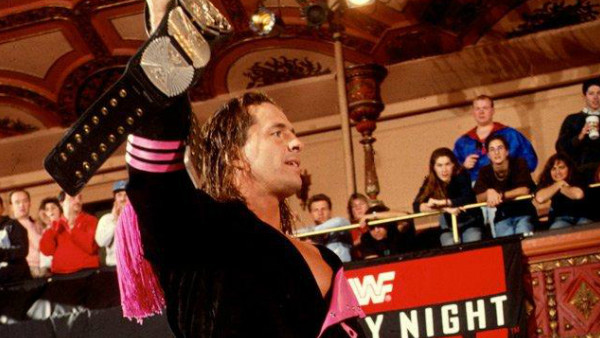
Hulk Hogan had famously headlined seven of the first eight WrestleManias; eight of the first nine if you count that forehead-slapping conclusion to WrestleMania IX. And even the one 'Mania where he wasn't wrestling in the main event, Hogan still managed to more than hog poor Randy Savage's spotlight during the close of WrestleMania IV.
While not quite as stale and stagnant as the Hulkster's latter WWF days on top, that Roman Reigns has headlined seven of the past nine WrestleManias - one of which he missed due to the global pandemic - paints quite the telling picture. Plus, three of those seven have been against Brock Lesnar.
In the '90s, though, there was a freshness to the main event scene, particularly in the WWF. The decade started with Hogan, Ultimate Warrior, and Randy Savage, with the Undertaker getting his first taste at the top of the card. Ric Flair came and went, before Bret Hart got the opportunity to lead a new charge that would see Yokozuna, Shawn Michaels, Diesel, and Sycho Sid all headline major PPVs and win World Championships.
Of course, then came along the Attitude Era, where 'Stone Cold' Steve Austin was the first to break into the main event picture. The Texas Redneck would soon be followed by the Rock, Triple H, Kane, and eventually the Big Show, whilst Mick Foley was another who by this point had been cemented as a top guy. And throughout all of this, the Phenom was still clearly kicking around as a significant player.
Even over in WCW, the main event scene was a relatively rotating one. Yes, Sting was forever Mr. WCW, and yes, Hulk Hogan was always around the World Title picture once he joined the company, but that decade saw Vader, Ron Simmons, Ricky Steamboat, Sid Vicious, Ric Flair, 'Ravishing' Rick Rude, Lex Luger, Randy Savage, the Giant, Roddy Piper, Kevin Nash, Goldberg, Bret Hart, and DDP on headlining duties.
2. Early '90s WCW Banged Hard

When wrestling fans think of the '90s, the first thing that comes to mind is a WWF of Steve Austin, the Rock, Undertaker et al going head-to-head with a WCW of the nWo, Sting, Goldberg and Co. Other than that, there's memories of Bret Hart and Shawn Michaels heading up the New Generation as Vince McMahon's promotion boldly ventured into a fresh era.
What often gets overlooked, though, is just how damn great WCW was at the start of the decade, prior to Hulk Hogan arriving in 1994 and way before Kevin Nash and Scott Hall rocked up in '96.
In Sting, WCW had an energetic, exciting, authentic babyface who made for the perfect poster boy. With such a wide variety of heels to play off - be that the genuinely terrifying Vader, the unhinged Cactus Jack, the Rolls-Royce sheen of Rick Rude, or frankly just anything to do with the Dangerous Alliance - it was so easy for the Stinger to draw sympathy from an audience.
Away from those names, you had an utterly stacked roster of legitimate top singles stars like Ricky Steamboat, Barry Windham, Nikita Koloff, Paul Orndorff, Ron Simmons, and - between WWF stints - Ric Flair, Sid Vicious, Davey Boy Smith and Lex Luger. Throw in rising stars such as 'Stunning' Steve Austin, Brian Pillman, 2 Cold Scorpio, Dustin Rhodes, Lord Steven Regal, Johnny B. Badd, and Marcus Alexander Bagwell (yes, really), and there was so much to be excited about in WCW during that time.
While the singles ranks provided so much brilliant action, it would be utterly remiss to not make mention of the similarly stacked tag team ranks of early '90s WCW, with heavy hitters such as the Steiner Brothers, Harlem Heat, the Road Warriors, Doom, the Midnight Express, the Rock 'n' Roll Express, the Fabulous Freebirds, the Enforcers, the Nasty Boys, Terry Gordy & Steve Williams, and the Hollywood Blonds all getting their time to shine.
Early '90s WCW, man; forever an overlooked period of glorious pro wrestling.
1. Those Stage Sets

Sure, WWE goes hard for WresteMania each year, and there is the occasional gem such as this year's Backlash from Puerto Rico, but the stage setup in wrestling right now largely feels just so formulaic.
In a WWE sense, Raw, SmackDown, and the bulk of PPVs are all the exact same set-up, just with varied colour schemes at play. Over in AEW, there's such a generic, bland approach to the stage and entrance way of the promotion's shows. The Double or Nothing stack of giant poker chips was fun, but everything else has mainly been utterly dull.
Great wrestling sets weren't exclusive to the 1990s, of course, but that decade had so many more exciting, unique set-ups when compared to the landscape of today, particularly during the second half of the '90s. Think of WCW's Bash at the Beaches, Halloween Havocs, and the unique outdoor settings of those Hog/Road Wilds. Heck, think the electric design of WCW Nitro or even those 'futuristic' sets of WCW Saturday Night.
Over in the WWF, there was that totally badass Armageddon '99 set, there was the devilish SummerSlam '98 design, there was the famed In Your House sets, there was Fully Loaded '99, and your writer will always die on the particular hill that WrestleMania IX looked absolutely stunning. Again, that's not taking into account the various re-designs that Monday Night Raw underwent throughout the decade, or how mesmerising that first SmackDown stage was.