10 Ways WWE Can Maintain Their Current Business Success
10. Drop WWE Studios
 The WWE Studios/WWE Films has been a bust. At every conference call there are discussion of reforms and promises that better times lie ahead. Honestly, financial burden and poor performance from the WWE Studios project isn't the biggest game changer, but it's the most glaring item on the segment breakdown. The project has cost the company $54M in impairment charges which are awkwardly reported each year as the imagined revenues from their theatrical releases and straight-to-DVD fail to materialized. WWE has spent $132M in Production Costs (net of the associated benefit of production incentives) on released "films" yet they've only grossed a total of $107.1M in revenue. In other words, WWE has discovered a very elaborate way to lose $36.3M in profit. It's a boondoggle and remains an agitating point among investors. Early on, they had a hit in the original Marine film (released way back in October 2006). That film ended up earning the company +$15.4M in profit. However, since then, all of WWE's victories have been on a much smaller scale. The Marine made ten times more all of their other "profitable" films combined (Christmas Bounty, The Call, The Day, No Holds Barred, Marine 2, Behind Enemy Lines 3 Columbia). It's been nearly a decade-long debacle and it's time to cut the cord.
9. Bring The Financial Benefits Of The TV Deals To The Bottom Line
 The hope for WWE's new domestic TV rights fees is that the company will retain a sizable cash cushion. Should they succeed in doubling TV rights, that would represent an increase of more than $100M annually. It's important they do not foolishly spend it. They've been stream-lining costs for several years, and they need to ensure that they don't start over-spending on television just because they can. It's cheaper now to produce Smackdown as a taped show on Tuesday nights. Moving Smackdown to a live show would increase costs. Running PPVs that are run more like TV tapings (and shown on the network) are going to be cheaper. They have a vast library of footage they can use; original programming for Network should not be subsidized by the out-sized WWE TV contracts. This is going to be a delicate balance because whomever is paying the top dollar for the WWE contracts (NBCU, Viacom, Fox, ???) wants to feel they're getting bang for their buck. Unless it's explicitly in the deal, there's no reason that television should substantially cost more to produce with this new contract. For a company that only registered $2.8M in Net Income last year, they'll eyeing a deal that could be nearly 20% boost to the annual revenue with very little added cost. The key here is to "prevent unnecessary spending" and pay down long-term debt. It's not a sexy solution, but it's something that would please the investors.
8. Run More International Tours
7. Raise The Price Of The WWE Network
6. Licensing
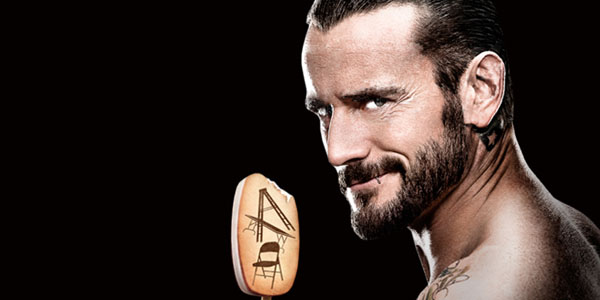 In 2013, WWE revenue from Licensing was only $46.4M. That's down 15% from three years ago. The video game license bankruptcy was a mess and hurt potential revenues. Hopefully, things have smoothed out and WWE can return to some banner licensing revenues generated by Video Game. Also, consider that with PPV bonuses in limbo (current contracts don't call for royalty payments for WWE Network appearances), licensing is one of the best ways that Superstars can get paid. A strong licensing division will keep high morale among the top stars. WWE could be doing more a lot more. There's a huge opportunity for t hem to work with "life-style merchandising" brands (think Mitchell & Ness) to improve the quality of their clothing designs. With more than half of the WWE Universe older than 35, it's time to look beyond the t-shirt market, and take a more sophisticated look. There's a need and demand for more fashionable sports clothing. Looking at the NFL, they've seen huge growth by marketing retro jerseys and women's apparel. Wrestling apparel doesn't have to look like it was just made for 12 year old boys. And yes, it's time to bring back to the ice cream bars.
5. Return Wrestlemania To PPV Only
4. Advertising & Cross-Marketing
 The reason that WWE is paid only a fraction of the price that legitimate live sporting events like NASCAR, NHL and NBA receive is because advertising rates for WWE stink. In the jargon of advertising, WWE shows get lousy CPMs ("the advertisers' cost to deliver 1,000 viewer exposures to a commercial"). WWE needs to change the way they're fundamentally viewed by the major consumer brands. That's one of the reasons they've pursued the "PG" rating on all of their television programming. Since WWE no longer directly sells advertising, you may think that this is problem is the TV Network's (currently USA/SyFy). That's the wrong way to think about. Until WWE can convince major consumer product advertisers that their fan base's eyeballs are worth advertising for, WWE will remain cheap entertainment. It's in WWE's interest to reform that opinion and craft evidence that they make a difference. It would be good to see a greater internal focus within WWE where they combine advertising experience and Nielsen experience to create a new narrative about the potential power of the WWE Audience. One of the most interesting elements of the NBCU's "radical overhaul" of their advertising department was the decision to try and "cluster sales efforts for its broadcast and cable networks along demographic and thematic lines rather than the traditional network-centric approach." In particular WWE programming was called out alongside the entire USA/SyFy networks as one of the biggest revenue generators. If a network can figure out how to improve the rates for ads during professional wrestling, that will go a long way to proving why WWE deserves inflated television rights fees. Additionally, WWE programming has historically struggled to provide meaningful "halo" effects for the rest of the network's line-up. There's been exceptions - most notably, the enormous cross-over audience that fueled Spike's The Ultimate Fighter, and spawned the ascension of UFC - but those are few. Wrestling helps power USA's bragging rights that they're "the top network on Cable", but they need to do more. They may have to investigate how they could better integrate network programing alongside wrestling. Still, that's a strategy that can be messy, at best. For instance, back in January 1997, Turner's World Championship Wrestling tried to entice Monday Nitro audience to watch stick around and watch TNT's The New Adventures of Robin Hood! just so wrestling fans could see how Hogan versus The Giant ended.
3. Consider A Brand Split
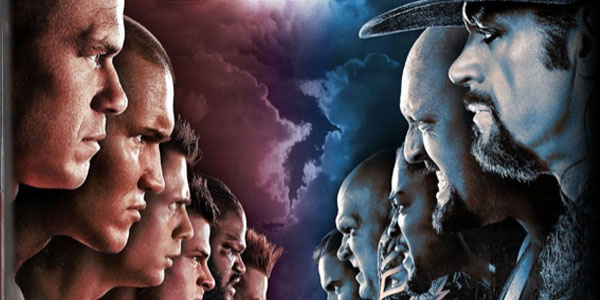 The key feature to a successful brand split is actually treating the shows like separate, but important entities. I can't use the word "equal" because realistically, whichever brand is on the flagship show, Monday Night Raw, is going to be perceived as the major one. This is a tough reform to implement because WWE just went through another round of belt consolidation (December's TLC 2013 with Orton/Cena). However, there's still a superfluity of championships (US Title and IC Title?). A decade ago, WWE was able to pop ratings for events such as the draft. They could build storylines around Smackdown versus Raw feuds. They were able to create different touring entities and vastly grew the Live Events revenue. There's much to be learned from the failed ECW brand launch which was built too heavily as being a third brand with too little top star power and running the fumes of nostalgia. Instead, there's a lot of advantages around running the brands as separate companies. It can revitalize a show like Smackdown which has continued to be relegated to an afterthought. Utilizing separate creative talent on each show will prevent breakout and train additional people in the company. It expands the size of the basic roster so that more wrestlers have an opportunity to break out and keeps the matchups more fresh. It also opens up more potential for targeting specific markets with each show and more merchandising options. Now that the developmental show is more heavily featured (NXT), there is more potential for creating rivalries around where new talent goes (which brand?). Instead of devoting upwards of six hours of weekly television (Raw/Main Event/Smackdown) programming to the same top storylines (which is probably an excessive amount), different aspects of wrestling and different creative arcs can be explored. Furthermore, this can be used to reinforce the importance of the monthly "PPV" event - a time where the two brands come together. In time where WWE lacks true national wrestling competition (neither ROH or TNA qualify), the best bet WWE has for creating a true rivalry and elevating quality is to essential launch their own competitive brand.
2. Stop Funding Pet Projects
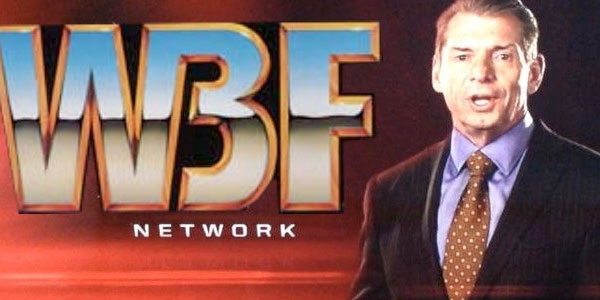 WWE has a nasty habit of investing in one-off adventures which rarely turn out great. Early boondoggles ranged from World Bodybuilding Federation/ICOPRO supplements/Bodybuilding Lifestyles Magazine/Bodystars television show to Attitude-era flops Times Square World Restaurant and XFL Football League. Also, in there was the No Holds Barred movie, Sugar Ray Leonard Boxing PPVs, the World Wrestling Federation Casino (a $11M real estate risk that they barely broke even on), Stephanie Music recording label and investing in the social media video service Tout. Most recently they revealed that WWE put money into Hero Ventures ("an ambitious touring property featuring Marvel Entertainment's Universe"). Why did they choose that specific project? Most likely because WWE Board of Director member Basil DeVito Jr. (and former president of the XFL) is on the Hero Ventures Board of Directors. They don't seem to be choosing these projects with a clear head. WWE is constantly searching for that golden opportunity that proves they are an Entertainment Company and not just a wrestling company. The problem is, they're really good at being a wrestling company, and average (at best) when they go into other people's bailiwicks. The current WWE Studios boondoggle demonstrates that instead of ejecting an idea that isn't working, they get caught up with year-after-year of "refining the distribution model". They need to insulate the entire company from impairment charges and embarrassing theatrical releases. In the past, some of WWE's most expensive failures luckily coincided with enormous Attitude Era wrestling profits. But they can't count on luck to carry them through forever.
1. Decentralization
