10 Worst Workers In WWE History

Everyone's got a favourite wrestler to slag off. Who's yours?

One of the perennial questions that wrestling fans will debate over and over is not who screwed Bret, or whether CM Punk€™s coming back, or whether Triple H is still lawful evil or more of a neutral good these days€ no, it€™s the much more basic question of €˜work€™. That€™s €˜work€™ as in the verb, not the noun: the physical business of actually working the match. While all of professional wrestling is a work, and all pro wrestlers are workers, some work more often and harder than others - that€™s a given. The question is, what constitutes hard work? And, more to the point: although most people can agree on who the best workers in the business are, exactly who is it that can€™t work? Who are the worst workers in professional wrestling? With its emphasis on story and a continuing, evolving narrative €“ a wrestling Universe, if you will €“ the former World Wrestling Federation, now World Wrestling Entertainment has employed its fair share of people who, through inexperience or through inability, were terrible workers. Vincent Kennedy McMahon€™s obsession with hiring football players, bodybuilders and models to wrestle for him has sometimes paid off, with the individual being able to pick up the weird and abusive business of professional wrestling €“ the WWE way €“ fast enough to not make a fool of themselves in the ring. More often though, they€™ve crapped the bed with it. Let€™s face it €“ professional wrestling is hard work. For this, we€™re selecting people who had or who still have a decent run at the business, not your Luther Reigns and Nathan Jones types who lasted long enough to grab a cup of coffee. With that in mind, and knowing how much of a minefield this is, let€™s talk. Who are the worst workers in WWE history?

10. John Cena

As ever, the most polarising figure in the history of wrestling divides people when it comes to the subject of his in-ring abilities. Some protest that we€™ve seen classic matches involving WWE bobblehead John Cena, that he€™s capable of great work when he€™s not phoning it in. Others point to the fact that a classic babyface doesn€™t need great mat skills or technical ability to do his job: Cena€™s character lends itself best to simple stories, good versus evil, hero versus monster, unstoppable force versus immoveable object. The former point can generally be shot down by pointing out how much better Cena is when his limitations are protected by working with a ring general capable of hiding them €“ CM Punk€™s a good example, as were Edge and Chris Jericho in their time. The latter is absolutely true, as far as it goes. The problem is that Cena is clumsier than a pianist in boxing gloves, brawls like a crying child and looks like a rank amateur when performing his own moveset. His STF hasn€™t even got the pretence of pressure applied to it €“ it looks as though he€™s trying to massage his opponent€™s ears with his elbows. When he tries to add new moves to his repertoire (dropkick and hurricanrana, anyone?) it literally looks like an angry kid threw an action figure into the air in a massive strop. All of which takes the educated audience completely out of the game when it comes to suspending our disbelief. One of Cena€™s strengths is that he€™s capable of believable selling€ but so inconsistently that he might as well not bother. There€™s no point perfectly selling a beatdown for a third of the match if, one Superman comeback and a pinfall later, you show no ill effect whatsoever. Cena€™s a throwback €“ a pre-Attitude Era wrestler sitting at the top of a post-Attitude Era roster. Every feud he€™s involved in brings his opponent down to that unrealistic cartoon level of performance, which is why he buries people without really meaning to: when your opponent suddenly no-sells all of your realistic and dramatic offence and half an hour of supposed punishing moves to bounce back like he has springs in his shoes and take you down with a tried and testing finishing combo that€™s telegraphed a mile off, and then celebrates with a huge grin and a swagger in his step, it doesn€™t matter how good you looked two minutes ago. You look like crap now.

9. Sid Eudy

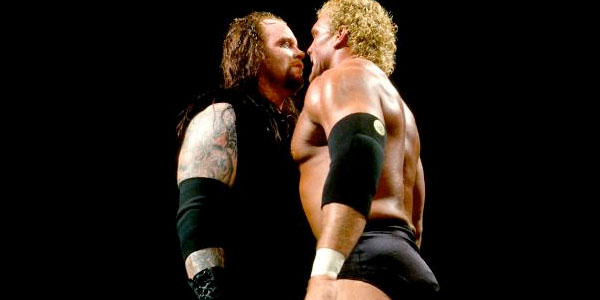
The artist formerly known as Vicious/Justice/Sycho, Sid Eudy had the look, the charisma, the size, the intensity, the €˜it€™ factor €“ everything you needed to be a main event player. He was even half decent on the mic. There was only one thing missing, really€ some quality ring skills. Sid wasn€™t the greatest wrestler of all time. In fact, even working a traditional €˜big man€™ style, he was pretty bad. Most of the problem is timing and perception. In the late eighties and early nineties, in a business filled with big men doing big moves and little else, Sid stood out as one of the biggest and baddest. He left WCW in mid-1991 despite the promise of a run with the world title to work in the WWF, and had he succeeded at that point, that could have been it for him. Sadly, shortly before Wrestlemania VIII Sid would fail a drug test: in those days, with the spectre of Dr. George Zahorian€™s steroid conviction looming, Vince McMahon couldn€™t afford to take any chances, and Eudy left rather than serve the mandatory suspension, still having not had his shot at the big time. In his second chance at WCW a year later, the infamous fight with Arn Anderson in a Blackpool hotel on a UK tour (both men would stab each other with scissors) caused his expulsion from WCW before he even got a chance to shake off the ring rust. It was upon his return to WWF in February 1995 that Sid Eudy finally got his chance to shine€ but the era of the charismatic but technically limited big man was over for the moment. Sid was competing with WWF€™s €˜New Generation€™, comprised of (amongst others) Bret €˜The Hitman€™ Hart and Shawn Michaels, two extraordinarily gifted smaller men, and the phenomenon of €˜Stone Cold€™ Steve Austin was waiting in the wings. While Sid would finally achieve a measure of the success he deserved during this second run with the WWF, he was competing against wrestlers with genuine skill: quality workers who exposed his shortcomings in the ring simply through being better. The run he was most famous for (during which he had the most television exposure and two short runs as WWF champion) would see his significant limitations in the ring revealed over and over again. Returning to WCW in 1999, Sid was lost in the shuffle with the ridiculous antics going on, and would finally suffer the horrendous injury that would end his career as a potential headlining act when attempting to perform an aerial move that he knew he couldn€™t pull off properly. The office was trying to beef up his moveset with some of the stuff that €˜the kids€™ were doing these days, and poor old Sid just wasn€™t up to it.

8. The Honky Tonk Man

Possibly the laziest professional wrestler to ever achieve recognition in a major promotion, or to have a long run with the title: Jerry Lawler€™s cousin Roy Wayne Farris, the longest reigning Intercontinental champion in history (454 days) was one of the worst in-ring wrestlers in WWE history. Farris isn€™t a nice guy. He€™s probably had more personal feuds than he has professional ones, which is saying something for a man with a career spanning nearly forty years. However, the Dynamite Kid is far worse a human being, and was one of the greatest workers of all time. Being a creep is how Farris held onto the IC title so long, though €“ by wheedling and complaining that losing the strap was bad for business and worse for his character, like the carny he is. To this day, the Honky Tonk Man still wrestles using the same gimmick, and does as little work as humanly possible in the ring: only these days, off television and working the indie circuit, €˜as little work as possible€™ means bringing about a fifth of the effort that everyone else does, keeping matches down to as short a time as possible, and avoiding bumping as much as he can. The theatrics that came with the character, something Farris was and still is genuinely good at, are still being used liberally €“ these days, to buy time in the ring where he doesn€™t have to wrestle. It€™s probably a blessing for fans in attendance. The Honky Tonk Man was a terrible worker when he was a young man, and hasn€™t gotten any better.

7. Hulk Hogan

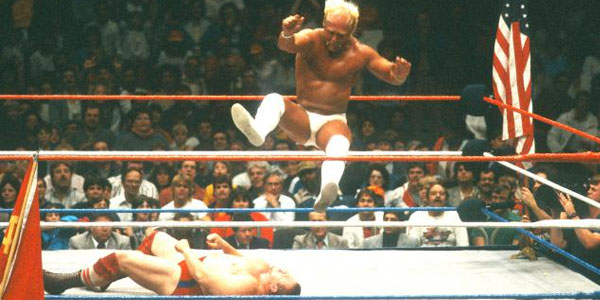
Ex-body builder Terry Gene Bollea was never that good a wrestler even in his prime, although he€™s far and away the most famous professional wrestler in the western world €“ maybe the entire world. €˜Stone Cold€™ Steve Austin may have been bigger in his time, and John Cena may have been on top in WWE longer, but no one€™s a household name like Hulk Hogan. But then Hogan came up in an era where you didn€™t have to be a great wrestler to be a great professional wrestler. National television was kicking off for the WWF. Pay-per-views €“ including the monolithic Wrestlemania €“ were becoming the new business model, the territories were being bought off, and a massive babyface champion didn€™t need to work sixty minute Iron Man matches anymore to get over. Hogan was a cartoon character on television in an age of cartoon characters on television, slotting comfortably in at the top of the card, and he had the connection with the audience that the role needed above anything else €“ above the look, above the promo ability, and certainly far more than the wrestling ability. No one in the history of the business has been able to work a crowd so well with so little actual wrestling. It€™s not exactly a controversial opinion to state that, when it came to the ability to work a match, the Hulkster was more limited than a forklift truck in Formula One. His finish was a basic leg drop, people. A leg drop. Bollea managed to finagle his way into the more technical world of the late nineties through a carefully managed heel turn in WCW and the most protected booking strategy in history, but the turkeys he was responsible for in the ring are legendary. As time has gone on, repeated back problems have slowed the sloth-like Hogan down still further. Aside from a nostalgia pop once a year, there€™s very little the Hulkster has left to offer the world of professional wrestling in 2014.

6. The Ultimate Warrior

Hogan€™s stablemate at both WWF and WCW and the man with whom he shared the top spot in WWF during the early nineties was a wrestler even more limited than he was, the Ultimate Warrior. Protected like Goldberg after him with the €˜undefeated€™ angle, squashing jobber after jobber in exciting but formulaic squash matches with the same formula over and over again, for two months you could only have told the difference between Warrior€™s matches by who he was facing. A poor worker with an extremely limited moveset, Warrior was also clumsy in the ring, often sloppy, something the equally limited Hogan could never have been accused of. The quick matches were a blessing for the Ultimate Warrior as well as the fans: he was carrying a lot of steroid-inflated muscle, and his high-energy entrance, sprinting down the ramp to the ring, leaping inside and frantically shaking the ropes, would often blow him up so much that he€™d be winded before his match started. Never blessed with Hogan€™s shrewd mind or instinctive ability to connect with the audience and work a crowd, Warrior€™s appeal would never last as long. The car crash that awaited the pair of them at WCW€™s Halloween Havoc in 1998, when they attempted a rematch from their superior outing at Wrestlemania VI eight years earlier is proof positive as to the worthlessness of both men in the ring together. When you argue over which was better, HBK or Taker at Wrestlemania XXV or XXVI, you€™re debating over two long, technical and dramatic bouts that are rightly considered classics. When you discuss Hogan versus Warrior, you€™re really just talking about which one was least bad.

5. Ashley Massaro

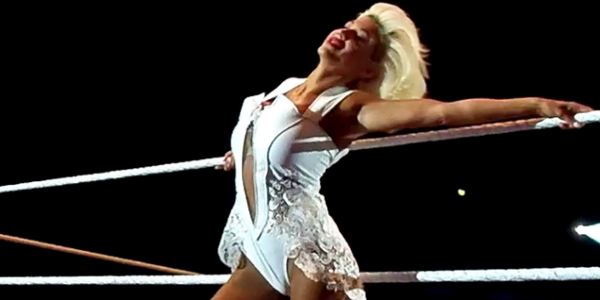
Not quite the worst female wrestler in WWE history, 2005 Diva Search winner Ashley Massaro was still pretty damn bad, managing to make wince-inducing models-turned-wrestlers like Kelly Kelly and the Bella Twins look like Bull Nakano. In fairness to Massaro, she tried to improve, unlike some. The WWE willfully threw the former swimsuit model into actual wrestling matches, and she€™d throw herself around as well€ just not in an entertaining, coordinated manner. But constant botching doesn€™t make for quality wrestling. The company tried to convert her into the new Lita, after the old one was out of full time wrestling €“ a punk diva with attitude and skimpy sk8r grrl gear €“ but there€™s no making a gold crown out of a straw hat. When your own announce team are calling your work €˜bowling shoe ugly€™, it€™s time to consider giving it up. Again, in fairness to her she gave it three years before finally retiring, citing a need to put her daughter€™s needs first. Her last match, after three years at or near the top in the biggest wrestling promotion in the world, was just as clumsy and sloppy as her first.

4. The Boogeyman

Marty €˜Boogeyman€™ Wright was, at one point, literally only famous because he€™d lied about his age to enter the fourth season of Tough Enough in October 2004. He was forty, not thirty as he€™d told them he was. Given that the age limit for the competition was supposed to be thirty-five, he was cut from the programme. Given Wright€™s size and look, he was given the opportunity to try out off camera in WWE€™s developmental promotion, Ohio Valley Wrestling, and the Boogeyman gimmick was slowly brought in. As time went on, it became clear that Wright couldn€™t work. Not in the slightest. The character, however, was actually getting over. The Boogeyman was that rarest of creatures, the monster babyface: he€™d appear to €˜get you€™ when you€™d done something wrong. He€™d only ever have five-minute matches or so, not enough to properly expose his complete inability to wrestle, but still managed to injure himself twice in the process €“ despite the majority of his act featuring him messing around with some worms, hitting himself in the face with an oversized alarm clock, and violently twerking in amongst some dry ice. Unlike poor Sid Eudy, barely anyone could tell that Wright couldn€™t work because his character was heavily protected. Still, it wasn€™t enough to save his career. His lack of ability, combined with his propensity for injury and his advancing age, would see him released several times before WWE finally gave up on The Boogeyman.

3. Rosa Mendes

It seems almost unfair to have two divas on this list: WWE has spent so long throwing money at models trying to turn them into wrestlers that there are almost too many to speak of. But we need to give a special mention here for sheer, gobsmacking incompetence. The weakest member of the Total Divas roster is one of the least talented divas that WWE have ever signed. Milena €˜Rosa Mendes€™ Roucka has spent the majority of her career signed to World Wrestling Entertainment in a managerial role, or as a storyline girlfriend or gal pal of genuine wrestlers. That€™s not so rare, it happens all the time with models turned divas€ except that we€™re talking eight years here €“ the first two or three of which were spent in developmental as they tried to make a convincing wrestler out of her. To this day, and despite all of that time spent upon her, Milena Roucka cannot work. Not in the slightest. She will do anything to avoid taking any form of bump, usually taking a punch, falling to her knees and then toppling sideways to the mat. She can€™t run the ropes. She can€™t throw hands, or execute the simplest wrestling move smoothly or even with conviction.

2. Jorge Gonzales

Whether wrestling as El Gigante in WCW or as the woefully costumed Giant Gonzales in his mercifully short run in the WWF in 1993, the late Jorge Gonzales was one of the worst wrestlers ever to set foot in the squared circle. Genuine giants like Andre The Giant and the Big Show, for all their occasional faults as performers, at least understood how to play the game. They got professional wrestling: the character work, the way to play the audience, the concept of selling, the drama and pace, as well as the mechanical aspects of how to work. Giants don€™t need to be able to throw a perfect dropkick, or climb to the top. They don€™t need a moveset as vast as Daniel Bryan €“ they don€™t necessarily need to be able to run the ropes, or even move that fast. But, like all pro wrestlers, they need to make what they do and say appear convincing, to allow that first rule of storytelling, the willing suspension of disbelief, to come into play. Billed at eight foot tall, but probably closer to just over 7 foot 7 inches, Gonzales looked clumsy, like he didn€™t know what he was doing next. Most giants can be accused of lumbering without taking anything away from their ability €“ lumbering is, after all, what good giants do. Gonzales mostly just stood in one position and made monster poses, slowly walking from one position to another €“ usually the wrong ones. Whether in shorts versus Ric Flair as El Gigante or in a ridiculous furry bodysuit with airbrushed muscles (to make up for his lack of muscle tone) versus the Undertaker as Giant Gonzales, the Argentian giant moved like a sleepy sack of potatoes, and had the timing of a broken wristwatch.

1. The Great Khali

A dismal failure from the very beginning, Dalip €˜The Great Khali€™ Singh should have been one of the company€™s greatest coups €“ a genuine pituitary giant with a fantastic, intimidating look and a mysterious foreign background to throw at the Undertaker, John Cena and any other unstoppable babyface characters loitering around the locker room. Instead, he€™s become a comedy pratfall of a wrestler, someone that can be easily pinned by Heath Slater or Damian Sandow. Part of Khali€™s issue has always been his health. Andre The Giant once said to his Princess Bride co-star Billy Crystal, €œwe do not live long, the big and the small€. Increasing issues with his back and his knees have rendered the 42 year old giant a shadow of his already lethargic self, and the simple fact is that, even as a man in his late twenties in New Japan Pro Wrestling, Dali Singh was never any good in the ring. Giants may not need to be able to pull off a moonsault or an exploder suplex, but they do need to look convincing pulling off the few moves they can. By the time he debuted on WWE television as a monstrous challenger to the Undertaker in 2006, Khali was already beginning to suffer the physical decline that comes with being a sufferer of acromegaly. He€™d had surgery to remove the tumour on the pituitary gland that causes the condition, but only three years ago, meaning that his body was continuing to swell and deform until very recently. Paul €˜Big Show€™ Wight had his surgery in the 1990s €“ hence the lack of deformation, and consequently longer life expectancy and less likelihood of disability. It isn€™t just his physical health, however €“ or the language barrier. Singh is a terrible wrestler, lacking some of the simplest basics a professional wrestler needs in order to perform, like understanding of what his moves mean and when to perform them. WWE matches today are, generally speaking, scripted and laid out in detail, especially when a performer can€™t be expected to work on the fly, and yet The Great Khali regularly looks like a lost child out there, searching for someone to take his hand and show him where to go and what to do next. It€™s likely that, with well-adjusted genuine giants so few and far between, and with the Indian market a sizeable one, Vince McMahon simply can€™t bear to cut his losses and let Khali go. The worst workers perform the best botches, and occasionally, even the Best In The World has an off night. We know you€™re bound to have your own opinions. Who do you think is the worst worker in WWE history?

Contributor
Contributor

Professional writer, punk werewolf and nesting place for starfish. Obsessed with squid, spirals and story. I publish short weird fiction online at desincarne.com, and tweet nonsense under the name Jack The Bodiless. You can follow me all you like, just don't touch my stuff.