10 Wrestlers Who Appeared In WWE, WCW, AEW And IMPACT!
And some who worked for ECW and Ring Of Honor too…
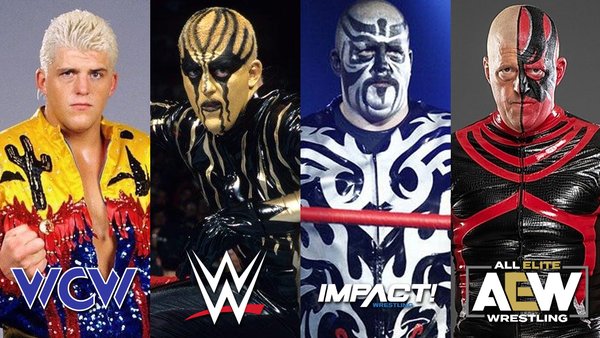
There was once a notable period in wrestling where talent would continuously change territories or swap promotions for new horizons. Particularly in the Monday Night Wars, when wrestlers would commonly jump from WWF to WCW or vice versa on a weekly basis, not to mention ECW too.
This was down to the WWF and WCW being somewhat equal in ratings, pay-per-view buy rates and attendance - if a wrestler wasn’t happy with their spot or felt they were monetarily worth more in one company, they’d change allegiances. It was the norm back then – it wasn’t out of the ordinary ever since Lex Luger, eight days after appearing at SummerSlam and only one night after competing at a WWF house show, walked down the ramp on the debut edition of WCW Monday Nitro.
Cut to recent times where AJ Styles gambled on himself after TNA asked him to take a pay cut, so he left and revitalized himself in Japan to later sign with WWE, making him a much bigger star than at any point in his career. Or Dean Ambrose being so fed-up in WWE with their general direction and overproducing of him he let his contract run out to join AEW and be reborn as Jon Moxley.
Some wrestlers are journeymen who’ve seen everything when it comes to modern pro wrestling and we’ll celebrate them in this list.
10. Jerry Lynn

Jerry Lynn is criminally underrated, ever since he competed as a cruiserweight in WCW (1995–1997) where he’d alternate from wrestling under his real name to wrestling under a mask as his alter-ego Mr. J.L. He gained some momentum as ‘The New F'N Show’ in ECW (1997-2001) taking on Rob Van Dam in their fantastic feud and winning his first world title with the ECW World Heavyweight Championship against Justin Credible at Anarchy Rulz in 2000.
His status declined in his time with WWE (2001–2002) when he became a glorified enhancement talent who spent most of his time wasting away on Sunday Night Heat - the only thing of note he did there being winning the Light Heavyweight Championship. He climbed back up the ranks in TNA (2002–2007) and reminded fans how good he was when he became an X Division regular and wrestled/guided new talent in the ring and backstage as an agent like AJ Styles, Amazing Red and Chris Sabin.
He had some monumental matches in his ROH runs (2008–2011, 2012, 2014–2019), like his battle with Nigel McGuinness at Supercard of Honor IV to win his first ROH world title, or wrestling a young Seth Rollins. Lynn now works for AEW (2019-present) as a coach and producer, further demonstrating his journeyman career in wrestling in North America.
9. Jake Roberts

Jake 'The Snake' Roberts will go down in the history books as a master of psychology and a storied heel. It’s been said he never won a world championship in all his time spent in the business and varied promotions simply because he didn’t need it – he was that good at getting over already without it.
He debuted for the WWF in 1986, which is where he’d pioneer his DDT finisher, have his snake legitimately bite Macho Man Randy Savage and display intense physicality in his rivalry with Ricky Steamboat. After falling out with Vince McMahon, Jake moved onto WCW (1992) where he’d initially gain some momentum by attacking Sting at a Main Event taping but then wrestle him at Halloween Havoc in the infamously awful Coal Miner’s Glove match.
His stint in WCW was short-lived. He bounced around in various promotions afterwards like AAA and Smoky Mountain Wrestling, and even returned to the WWF for a small run with a born-again Christian gimmick. He arrived in ECW (1997-1998) when the arena lights darkened in a match between Jerry Lawler and Tommy Dreamer and attacked both of them, going on to work a tag match with Tommy Dreamer against Justin Credible and Jack Victory at November to Remember.
He toiled away on the independents for years afterwards only to pop up in TNA (2006, 2008) to referee a Monster's Ball match and be a guest of "Black Machismo" Jay Lethal and SoCal Val's storyline wedding at Slammiversary. And this year Jake returned to the mainstream in AEW, revealing Lance Archer as his new client to manage and remind everyone in wrestling how genius of a performer he can be.
8. Taz
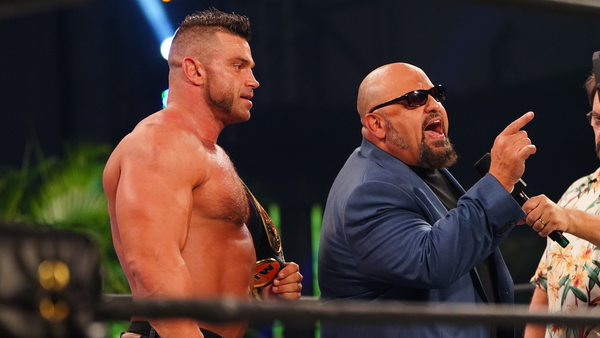
Brooklyn brawler Taz was a major player in wrestling in the '90s with his MMA-like intensity/moveset, and in the '00s/'10s as a superb commentator, turning up at one point in all the major promotions.
He made one appearance for WCW (1993) as ‘The Tazmaniac’ in a dark match at a Saturday Night taping. It was in ECW where he made a name for himself, though (1993-2000), in its early years when it was still known as Eastern Championship Wrestling all the way through its transition with Paul Heyman at the helm to Extreme Championship Wrestling.
Taz became the ‘Human Suplex Machine’ and dominated the competition in his time with ECW, having first-rate matches with Sabu and Bam Bam Bigelow, becoming World Champ twice, Television Champ twice, Tag Champ three times and brandished his own FTW Championship (twice). He accepted an offer from the WWF (2000-2009) where he debuted big at the Royal Rumble and picked up a clean submission win over Olympic gold medallist Kurt Angle in under four minutes.
Despondently, he was then relegated to Hardcore matches and a fruitless feud with full-time commentator Jerry Lawler. Luckily he found his niche in WWE, transitioning from wrestler to SmackDown! announcer. He moved on from WWE and took his commentating to TNA (2009–2015), after first debuting there as Samoa Joe's on-screen adviser.
On 15 April 2015, Taz departed TNA and left mainstream wrestling behind to concentrate on radio and his own podcast. Luckily for fans, after making a one-off appearance for them, he signed a multi-year deal with AEW (2019-present) to commentate and have an onscreen role – he’s currently managing Brian Cage, offering up the FTW championship to him at Fyter Fest.
7. Tully Blanchard

Tully Blanchard was a pivotal member of one of the most dominant stables of all time in the Four Horsemen alongside Ric Flair and Arn and Ole Anderson. They were known for their brash promos and technical mat work in the ring when in NWA Jim Crockett Promotions.
After having a disagreement regarding their pay, Tully and Arn debuted for the WWF (1988-1989) and were labelled as ‘The Brain Busters’ on account of their manager Bobby "The Brain" Heenan. They’d go on to end Demolition's historic first reign of 478 days with the tag belts when they defeated them on Saturday Night's Main Event. Tully’s only WCW (1994) appearance was at Slamboree, wrestling Terry Funk to a double disqualification.
He later materialised in ECW (1995) on a few occasions wrestling against ECW World Heavyweight Champion Shane Douglas each time. Tully retired from active competition in 2007 though this didn’t stop him from appearing in big league wrestling companies. In a backstage video he showed up for IMPACT! (2019), embracing his daughter Tessa Blanchard after she wrestled and defeated Gail Kim at their Rebellion event. And last year he signed with AEW (2019-present) as an exclusive adviser to Shawn Spears and feuded with his old Four Horsemen teammate Arn Anderson.
6. Billy Gunn

Billy Gunn has seen it all in his 35 year career in pro wrestling. He’s gone by many monikers including Billy G, KIP, Cute Kip, Mr. Ass, The Outlaw and Rockabilly. After a spell as a professional bull rider, he trained to be a pro wrestler, working as an as enhancement talent for WCW before getting his big break with the WWF (1996-2004). There, he’d have a Hall of Fame career with D-Generation X in the midst of the Attitude Era and would win the Tag Team Championships an astonishing 11 times with numerous partners (The Smoking Gunns, The New Age Outlaws and Billy and Chuck).
After being released from WWE, he showed up in TNA (2005–2009) where he’d partner with Jeff Jarrett and Monty Brown as ‘Planet Jarrett’, reunite with Brian James (Road Dogg) in The James Gang/Voodoo Kin Mafia, and acted as the ‘Image Consultant’ for The Beautiful People.
When that run was over, he returned to WWE as a wrestler/producer for a number of years, worked the indies, and even wrestled Hiroshi Tanahashi in New Japan Pro-Wrestling. At the moment he’s rounded off his career in AEW (2019-present) to produce and occasionally wrestle alongside his son Austin Gunn.
5. Christopher Daniels
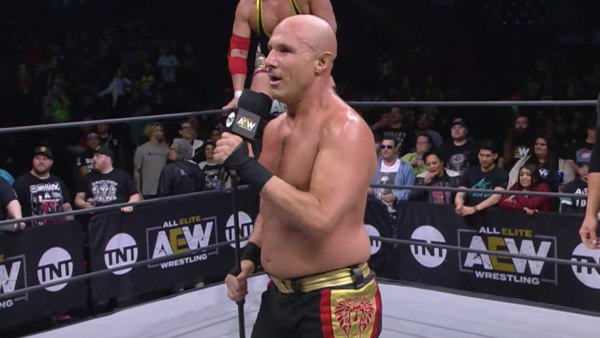
Another undervalued talent, Christopher Daniels has wrestled and travelled Japan, across Europe and near everywhere in the US for nearly 30 years now – he’s notorious as ‘The King of Indies’ for his work with independent companies worldwide.
He’s wrestled as The Fallen Angel, Curry Man and Suicide at different stages in his career. After making his debut in ’93, it finally looked like he was going to get that big break in WWF (1998-2001) when he signed a developmental deal. At one point, he was meant to be Vince McMahon’s ‘Higher Power’, responsible for being the overlord of The Undertaker/Ministry of Darkness and instructing them to torment Steve Austin, until Vince McMahon reportedly thought he was far too small and overlooked him for the role.
Moving on, he showed up in ECW (1999) in a losing effort to Rhino, and worked jobber matches for the WWF on Sunday Night Heat before getting a try-out match with WCW (2000). Officials were initially high on him, planning on having him work as ‘Syndrome’, the dark master of Vampiro, even filming a vignette. As with most things with WCW at that time, plans didn’t pan out. He moved on again to Ring of Honor (2002–2007, 2010–2011, 2014–2019) where he’d make a name for himself in incredible matches against Low Ki and Bryan Danielson, and later won the ROH World Championship by defeating Adam Cole in the main event of ROH’s 15th Anniversary Show.
He was a feature player for TNA (2002–2007, 2011-2014), having incredible matches with AJ Styles and Samoa Joe. Daniels now works for AEW (2019-present) as a wrestler with SCU (Frankie Kazarian & Scorpio Sky) and serves as head of Talent Relations too.
4. Dustin Rhodes

Dustin Rhodes has gone from town to town in plenty of companies, multiple times in many cases, in his five different decades of wrestling. No wrestler with his stature has swapped major companies as much as he has.
It can be complicated figuring out what company he worked for dependent upon the year but here goes: he made his debut in 1988 before signing a contract with WCW (1988−1989), only lasting a few months before exiting shortly after his father Dusty Rhodes did. He then made a few appearances for the WWF (1990–1991), defeating Ted DiBiase in a 10-minute challenge match and teaming with Dusty to lose to Ted DiBiase and Virgil at the Royal Rumble. He then went back to WCW (1991-1995) as ‘The Natural’ and even beat Ricky Steamboat to win his first United States Championship.
Then, after being fired for going against corporate policy for blading in a match at the 1995 WCW Uncensored pay-per-view, he returned to the WWF (1995-1999) as Goldust, which is the role he’d become most famous for in wrestling. He returned once more to WCW (1999–2001) originally as ‘Seven’. That was quickly dropped after Standards and Practices at WCW thought he could easily be interpreted as a child abductor in the vignette WCW released for the character, so he wrestled under ‘The American Nightmare’ moniker instead.
He had his third stint in WWE (2002-2003) where he teamed with Booker T in a bizarrely great tag team. After being let go, he debuted for TNA (2004-2005) before returning to WWE for a fourth time (2005-2006). It was back to TNA again (2007–2008), then WWE for a fifth time (2008-2012), only to be let go and work the independents before concluding his WWE association with a sixth, six-year run (2013–2019). Dustin now works for AEW (2019-present) alongside his brother Cody. You can only imagine how long his employment history is on paper.
3. Tony Schiavone

The voice of most fans’ childhoods, Tony Schiavone’s commentary led to him being one of the best play-by-plays in the business. If you watched wrestling in the '90s, Jim Ross was the voice of WWF, whilst Tony was that of rivals WCW.
After getting his break in Jim Crockett Promotions, Tony signed with the WWF (1989–1990) where he’d quickly rise to be the lead announcer on SummerSlam 1989 and Royal Rumble 1990 with Jesse "The Body" Ventura. After they offered him a pay rise, Tony moved over to WCW (1990–2001), something he’s gone on record as saying it’s the biggest mistake he made in his entire career. Regardless he was the voice of Nitro when it debuted in 1995 until it ended in 2001, working alongside Bobby Heenan and Larry Zbyszko.
When WWE bought out WCW in 2001, his contract wasn’t picked up and he moved into a career calling baseball/football. Mind, that didn’t stop him from making a one-time appearance for TNA (2003) in their early weekly Wednesday pay-per-view era in a worked shoot with Mike Tenay. A large number of fans clamoured for his return to broadcast mainstream wrestling, getting their wish when he signed with AEW (2019-present), after turning down a WWE contract offered to him at the same time - believing AEW was the wiser choice.
2. Chris Jericho

Chris Jericho is wrestling’s true troubadour for his versatility and working on top for as long as he has. He’s reinvented himself countless times in his career, with fans having vastly different opinions on what their favourite Jericho period in wrestling is.
After first working for Frontier Martial-Arts Wrestling, numerous Mexico promotions, Smoky Mountain Wrestling and WAR, he joined ECW (1995-1996) where he’d win the ECW World Television Championship and wrestle future legends like Cactus Jack, Rob Van Dam and Sabu. He’d move on to WCW (1996-1999), making a name for himself in their popularized cruiserweight division.
Growing frustrated with his position in the company, highlighted by WCW refusing to book an angle with him and Goldberg when he already did all the groundwork for it, he left for the WWF (1999-2018) where he laid out a Hall of Fame career as the first Undisputed Champion and participated in classic bouts against the likes of Shawn Michaels and Chris Benoit. In one of his hiatuses from WWE, Jericho actually appeared for TNA at their Bound for Glory pay-per-view in 2006 – just not as a wrestler, but as a singer with his band Fozzy. After a run in NJPW where he reinvented himself once more with his ‘Painmaker’ character, he signed with AEW (2019-present) in a colossal announcement and is a regular on their weekly Dynamite show.
1. DDP
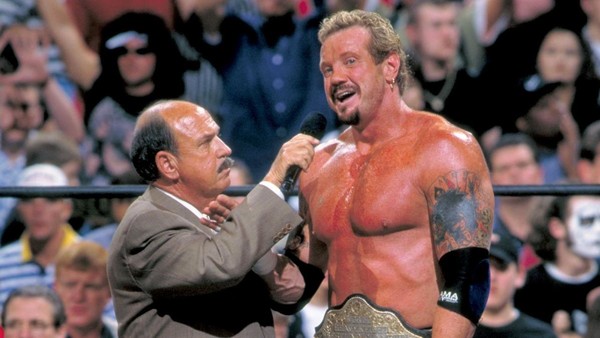
Before he was changing careers for wrestlers outside of the ring with DDPY, Diamond Dallas Page was fighting them in rings. Dallas is widely-travelled in numerous promotions in various roles. He managed a nightclub before starting to manage talent in the AWA in the late '80s and even drove Rhythm and Blues (The Honky Tonk Man and Greg Valentine) to the ring in a pink Cadillac at WrestleMania VI.
DDP debuted with WCW (1991-2001), managing the Freebirds. At 35 years old he started training at the WCW Power Plant to become a wrestler himself though, going onto win every major WCW championship and was looked at by fans as the original people's champ. When WCW ended in 2001, he accepted a buyout of his contract to immediately sign with WWF (2001-2002) where he was sadly underappreciated, being buried by The Undertaker and spending most of his time in the mid-card.
He then went to TNA (2004-2005) and helped establish the promotion to a mainstream audience. Over the last year, Dallas started making various appearances for AEW (2019-present), even going so far at the ripe age of 63 (but still in phenomenal shape) to wrestle in a six-man with Dustin Rhodes and QT Marshall against MJF and The Butcher and The Blade at Bash at the Beach on 15 January 2020.