10 Wrestlers Who Reward You For Paying Attention
Premium fan service.

Bret Hart was fantastic at rewarding fan investment.
He drove his entire approach around working towards the ultra-dedicated, crediting them with the intelligence to grasp, for example, that he wasn't a cartoonish heel when overshadowing Owen Hart. He truly believed himself to be the best, and capable of winning a match his younger, less experienced brother could not. In performances of exceptional balance, he created a source of resentment without that resentment spiralling out to his fanbase.
The All Japan Four Pillars spent a near-decade of pristine world-building to infuse every match they worked together with almost profound meaning. Kenta Kobashi worked as the fiery, impassioned babyface with such unreal nuance that his ascent to Pro Wrestling NOAH Ace was realised as a mega-drawing run that elevated virtually everybody as a credible threat. He was convincing, and formidable, but those years of big match vulnerability powered every last one of his GHC Heavyweight Title defences.
The very best professional wrestlers make phenomenal use of what is a very difficult challenge. Wrestling never, ever stops. There is no off-season, and yet these generational talents are capable of staying on all of the time.
As for this current generation...
10. Hiroshi Tanahashi

Hiroshi Tanahashi uses a signature move to unbelievably dramatic effect.
His dragon screw is phenomenal because he uses it repeatedly in every match, it always makes perfect strategic sense, and you still never see it coming. It draws a gasp of fist-pumping triumph every damn time, and "every damn time" has spanned well over a decade of high-profile output in lengthy, main event classics. It is a perfectly safe pro wrestling manoeuvre, almost the antithesis of a high spot, and he positions it with such ingenious working nous that it invariably generates the rush of adrenaline that we are all here for.
Tanahashi is exceptional, and he's so exceptional that he gets even better the more his body falls apart. Those invested in the performer - and they are legion, for this is a babyface so incredible that he almost singlehandedly restored a dying promotion to prominence - are rewarded with an undying attachment.
That phrases accurately describes his application of the dragon screw to Jay White at the Best of the Super Juniors Final last year. He used both arms to twist the knee - one has been battered into oblivion in recent years - and he cut an almost pitiable sight.
His physical decline informs his constant psychological genius. He's long since lost Ace status, but there's a reason why he will forever go by the nickname.
9. Johnny Gargano

Johnny Gargano hates wheels.
I know that.
You know that.
Everybody knows that.
What began as a beautifully absurd gag that underscored Gargano's new, ultra-deluded character - why would anybody, much less everybody, know this incredibly specific information? - was actually paid off by stunning professional wrestling. Gargano expressed his disdain not towards the circumstances but the vehicle behind those circumstances: spin the wheel, make the deal was the cause of his torment, not the actual physical prop.
Great heel pouting, but also something more: Gargano sprang around the actual wheel to drop Damien Priest with a DDT and capture the NXT North American Title at his expense. Suddenly, Gargano loved wheels. He was all about wheels. Wheels have so many uses. They're actually very important, when you come to think of it.
In words your writer never, ever expected to pen - Gargano took part in the positively laughable One Final Beat this year, the most po-faced f*cking bore pro wrestling has ever yielded - Gargano made a mundane word really, really funny, in a way not unlike that of It's Always Sunny In Philadelphia.
This Gargano run is a relentlessly funny and thoughtful formula of mundane detail/rip-roaring payoff. He has contrived to elevate the barely episodic NXT show into something endlessly rewarding and legitimately amusing.
He has made the inessential almost essential by, and imagine this, not just desperately thinking of match graphics that might deliver a ***3/4 affair.
8. Jon Moxley
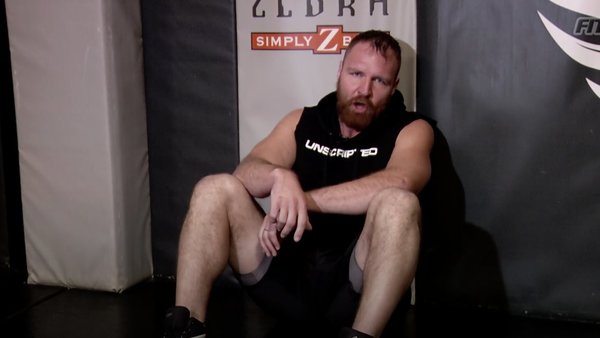
In his awesome, badass promos, that are infinitely better because they are two minutes long and he writes them, Jon Moxley tells you the finish of his matches before he ends his opponents.
He told Brian Cage that he was going to rip the bicep from his bone, and he would have, following an expert submission frenzy, had Taz not thrown in the towel. He warned Eddie Kingston to protect his neck. In the main event of Full Gear, he wrapped barbed wire around his arm and tried to puncture his throat with it.
This is phenomenal babyface work because what Jon Moxley is doing is expressing abundant confidence and building trust in his fans. He is a babyface you can believe in, but he doesn't scream histrionic promises. He tells you, measuredly, what he's going to do. And he's more than enough of an ass-kicker to do it.
And it's never predictable, and he never loses his killer aura by sacrificing too much of it in his matches. The balance of the act is just unbelievable: he can sell like a motherf*cker, but it makes sense when he fights back mostly because you really want him to fight back.
Moxley rewards you for paying attention and for believing in him. He's the greatest babyface in the game, and all he had to do was be the opposite of Dean Ambrose.
7. The Young Bucks

Full Gear's World Tag Team Championship match told a phenomenal story of how FTR had to gradually accept the evolution of a genre they have spent a career attempting to restore. It was a masterpiece, and yet FTR didn't kick out of the Meltzer Driver. The Young Bucks didn't kick out of the Goodnight Express.
Both teams told an exquisitely layered and realised story, and there's still so much ground left to cover because the Bucks are so out-of-this-world fantastic that they can pen five star-rated first chapters.
The Bucks are incredible storytellers because they utilise the form of professional wrestling to tell their stories. They recognise that the modern pro wrestling fan has eaten so much sh*t for decades, but they aren't going anywhere. They trust the ultra-hardcores to pay attention and extract the most from their near-unprecedented use of the long-term form.
As an example: when the Bucks faced Private Party on the second-ever Dynamite, Matt, acutely aware of how a bum back can mess you up, applied his past to his present and targeted his aerial disciple Isiah Kassidy.
Selling a body part so incredibly is reward enough; thinking deeper, to a level that punishes the next generation with the lessons he learned, is why the Bucks are the greatest tag team ever.
6. Kazuchika Okada

Kazuchika Okada will make you pop by unveiling new entrance gear. He is a special performer, very, very close to the greatest ever.
There are few better at selling the gravity of the win and the loss. Following his landmark defeat to Kenny Omega at Dominion 2018, he descended into a sort of madness all the better for its absurdity. He didn't lean on melodrama; he modified his aesthetic and played with balloons to disassociate himself - and crucially, the fans - from his megastar playboy act. He reverted back to it at Wrestle Kingdom 13, wearing the old iconic trunks. This was genius; he lost his match to Jay White as the best version of himself, visually, informing the heft of Jay's subsequent IWGP Heavyweight Title win. Jay White didn't just defeat Kazuchika Okada; he defeated the Kazuchika Okada.
Okada was on fire throughout this year's G1 Climax when, and this was masterful, he was at a low professional ebb. Okada preserved the genius of his Ace character by deliberately entering middling performances. He has adopted, by design, a new finisher that isn't as effective as the Rainmaker. He is rewarding you now with the payoff to come.
Okada will one day smash somebody with the fully restored Rainmaker, and you are going to pop as if he hasn't used it repeatedly for eight years on top.
5. Tomohiro Ishii

A man who doesn't benefit from what great episodic wrestling television at its best affords as a platform, Tomohiro Ishii relies on pure in-ring to cast his spell. And there's not a great deal of long-term vision to it - Ishii is never rewarded for his brilliance on New Japan's grandest stage - but there are very few better in the guts of a match at rewarding emotional investment.
His fans live and die with Ishii in those moments, lost within his magic. If pro wrestling reduced is the art of suspending the disbelief of the audience, Ishii's brilliance distills that essence.
The detail Ishii applies to his selling is exceptional. When he absorbs a blow, he doesn't just sell the point of impact; the pain courses through his body, as pain does. And because Ishii is so hermetic, so convincing in his approach, his selling rewards and informs his glorious comebacks. He is awesome at putting over the idea that he is operating out of pure resolve through the pain, only to die once again.
It's genuinely deflating, when Ishii crumples, his body weaker than his heart. You fall when he falls. You scream when he rises. Those crowds scream for Ishii, in 2020, when they're not allowed and otherwise observant of the rule.
The crowds pay so much attention to him that they forget themselves.
4. Sasha Banks & Bayley

The Sasha Banks Vs. Bayley storyline is as much an indictment of WWE as it is celebration of the creative process.
Road Dogg's infamous quote from his After The Bell podcast appearance - they "don't trust" certain talents to cut promos "yet" - stifles the company as much as those contracted to make them money. Sasha Banks and Bayley were always fantastic and meticulous storytellers. They crafted a modern masterclass of a programme throughout 2015. But they were only permitted to put together something uniquely their own years into their main roster runs. By the time Banks and Bayley had earned that "trust", WWE had eroded the trust of the audience.
Their 2020 feud is an outlier, but through this cynical, numbed lens, it's almost more impressive that it happened. It revealed itself very subtly; with every glance cast towards Bayley's title, it became clear that this relationship wasn't quite as symbiotic as the champion would like. There was a glorious symmetry to the physical work that conveyed just how closely they were matched, and just how close Banks was to capturing the title.
They folded the crux of their first programme into the second with the poetry of a proverb - Don't bite the hand that feeds - in the fantastic culmination of something WWE, being WWE, waited far too long to execute.
3. Cody
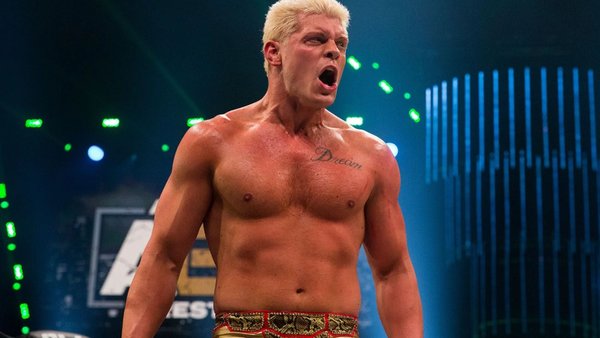
Cody is a more fitful but no less effective storyteller than many on this list.
He will veer across the range of his personality - bleeding heart passion to the exacting standards of his clinical ambition - to play a nuanced and situational pro wrestling character. He'll fight from underneath against a Mr. Brodie Lee, and play the obnoxious bully demanding that Darby Allin finally get on his level.
His alignment will change, but his consistency as a character does not. He is a fantastic long-term storyteller who never loses focus of what matters.
His angle with Darby spanned over a year and told a very detailed tale: Cody had spent so long luxuriating in his superior record that he failed, to the ultimate cost, of recognising that his number was up. In storylines, he didn't pay attention to Darby's progressively improving technique, but the storyline encouraged you to do precisely that. Darby was always error-prone. Cody relied on that and grew complacent. He was outsmarted by the very weight belt he had spent too long focusing on. It was never about Allin's size.
The true brilliance of their simmering rivalry is that there remains scope to revisit it, down the line, with Cody using newfound respect to drive their next match.
2. Hangman Page

Before All Out, Hangman Page cost the Young Bucks their shot at an AEW World Tag Team Title rematch.
As Nick Jackson was about to spring for the Meltzer Driver, the camera panned to Hangman Page almost pitifully clutching his leg. He wore an expression of remorse directed away from his friend because he could not stand to look at him.
At All Out, in tremendous use of symmetry, Page clutched at the leg of Cash Wheeler just as he was about to deliver a superplex to Kenny Omega. This was an act of visual contrition that doubled as an in-match strategy: just ingenious storytelling that perfectly encapsulated Page's seminal, future-paving AEW character arc.
Hangman Page is telling a story of what it means to have anxiety in this hellscape of a modern day. His self-depreciation even extends to his lower third graphic Easter eggs, on which he endears himself to his fans without recognising that he has already earned their support. He is the most relatable and nuanced wrestling character of his generation. Cowboy Sh*t has so much more strength than the empty flex of the alpha male, but the agonising pathos here is that the character doesn't yet grasp it.
One day, at the culmination of this masterpiece of a storyline, he will.
1. Kenny Omega

Kenny Omega is the most detailed professional wrestler ever.
If you aren't familiar with the career he curates with unprecedented continuity, it doesn't diminish his work because he is also the most exciting and among the most physical pro wrestlers ever, one more than capable of crafting compelling intra-match stories.
To use an apt video game analogy, Omega is as much pick up and play as he is an unlockable lost level.
If you are familiar with his career - particularly his relationship with former Golden Lover teammate Kota Ibushi - Omega rewards you with additional subtext to further enrich the deep stories he tells. His failure to execute the Phoenix Splash at Full Gear 2019 underscored how far away he was from his individual best (in storylines). His decision to use the Kamigoye in the Iron Man Match with PAC - and not his current partner's Buckshot - revealed before the turn who was the real hero in their saga. His decision not to use anything from Kota's arsenal at Full Gear 2020, in stunning contrast, conveyed the idea that he has now become a complete singles wrestler unto himself.
He's the best wrestler in the world: so good that he can turn that off and on like a faucet to serve his storylines.