10 Wrestling Bookers Who Made Themselves World Champion
If you have the pencil, you might as well have the gold.
One of the many qualities that makes pro wrestling a unique industry in the entertainment sphere is the blurred line between what happens behind the camera and what happens in front. For decades, owners of wrestling companies have positioned themselves as on-screen antagonists or protagonists, and (for far longer) grapplers running their own promotions have booked themselves to be main attractions.
Those developments aren't always bad - when Vince McMahon made himself the hottest heel in WWE history in the late 1990s, not only had he booked a feud that saved his company, but he had also created a star that he knew would never jump ship to a rival organization.
Likewise, many wrestlers-turned-indy promoters - Combat Zone Wrestling's John Zandig, for instance - know that by giving themselves their group's top title, they don't have to worry about a champion abandoning the organization for a better payday.
The other side of the coin shows itself when bookers' self-interest is detrimental to the health of the promotion for which they compete. These men, seeking to line their own pockets or stroke their egos rather than bring success to their organization as a whole, have ended up damaging their legacies and even crippling the wrestling business itself.
10. Giant Baba

A pupil of Japanese wrestling hero Rikidozan, Shohei "Giant" Baba soon became a legend in his own right. After Rikidozan's murder and the subsequent decline of the Japan Wrestling Association, Baba formed his own outfit, All Japan Pro Wrestling.
AJPW joined New Japan Pro Wrestling (both formed in 1972) as one of the two major promotions in the country. Baba, a proven star who challenged for both the NWA and WWE World Titles in the U.S., was a clear choice to hold All Japan's top title, the Pacific Wrestling Federation World Heavyweight Championship.
Not only was Baba the inaugural champion, but he would hold the belt another three times (for a total of more than 10 cumulative years) in the '70s and '80s. Baba's self-confidence was not misplaced, as the NWA also made him their World Champion three times during the same period.
9. Orville Brown

When a group of regional promoters came together to recognize a single world champion in 1948, their choice was Midwest Wrestling Association champion Orville Brown. Brown had captured several titles and beaten many respected competitors, making him a prime choice for the first National Wrestling Alliance World Heavyweight Champion.
Of course, the fact that he was one of the group of promoters didn't hurt. Brown continued to unify the NWA title with others around the country, including the original AWA Championship. By the time Brown was forced to forfeit the belt (he had sustained career-ending injuries in a car accident), it was considered one of the world's major wrestling championships.
8. Mitsuharu Misawa

When Giant Baba died in early 1999, the position of All Japan Pro Wrestling president fell to the company's top star, Mitsuharu Misawa. As Misawa was a four time Triple Crown Heavyweight Champion and one of the most talented wrestlers to ever set foot in a ring, his feud with Vader and subsequent fifth title win wasn't questioned - in fact, it helped revitalize Vader as a draw in Japan.
Friction with new All Japan owner (and Baba's widow) Motoko Baba led Misawa and the bulk of All Japan's roster to leave the company the following year and form a new league, Pro Wrestling NOAH. Though several huge names - like Kenta Kobashi, Akira Taue, and Jun Akiyama - made the jump with Misawa, the legendary champion was still NOAH's best-known star. He won the company's newly-created Global Honored Crown Heavyweight Championship, establishing the prestige of the belt before he dropped it to Akiyama. He would hold two more times, re-capturing it when business began to slump.
7. Vince McMahon

It's common knowledge that Vince McMahon 'saved' his own company by casting himself as WWE's top villain in the wake of the Montreal Screwjob, then feuding with everyman champion Steve Austin. Unfortunately, the McMahon character was never quite as resonant when facing off with anybody besides Austin, and so when the WWE Chairman turned babyface in late 1999, decision-makers started trying to come up with a new role for him.
The result was a feud between McMahon and new WWE Champion Triple H, and getting one over on 'The Game' meant that McMahon defeated him for the title on an episode of SmackDown (with, in a baffling development, a bit of help from Austin).
Vince as WWE Champion was a brief curiosity - he relinquished the belt the following week, and it was put up for grabs in a "Six-Pack Challenge" match, which HHH won. All in all, McMahon's reign did little except devalue a still-relevant championship.
6. Jeff Jarrett

When WWE purchased WCW in 2001, many wrestlers were concerned about their future business prospects - none more so than Jeff Jarrett, who had left WWE under acrimonious circumstances two years earlier.
Though opinions varied as to who was in the right regarding the Jarrett-Vince McMahon conflict, it didn't matter when Vince was running the sole business in town. Jarrett's options were limited, so he and his father, promoter Jerry, started a new company - Total Nonstop Action.
Initially, it seemed like Jarrett was willing to take a back seat - Ken Shamrock and Ron "R-Truth" Killings were the group's first two champions. Before long, though, Jarrett was on top as champ, and that was the promotion's status quo for much of the next four years. To many would-be fans who didn't view Jarrett as a true superstar, his prominent position was a turn-off.
5. Vince Russo

Vince Russo's two separate tenures as head booker of WCW are among the most maligned creative runs in wrestling history, and (among other transgressions) he broke a rule than he had once set for himself about never appearing on camera. In fact, he shattered it, becoming an obnoxious "New Yawk" version of Vince McMahon's heel boss character.
Russo's on-screen presence turned off as many people as his booking, especially in a ridiculous feud with Ric Flair. Russo didn't stop there, though. On the 25 September 2000 episode of Monday Nitro, Russo faced WCW World Heavyweight Champion Booker T in a steel cage match. Booker T seemed to have the match won when he escaped the cage, but Goldberg - whom Russo had antagonized for weeks - speared the challenger through the cage wall, and the WCW booker hit the ground first, becoming the new WCW Champion.
Like McMahon, Russo relinquished the World Title days later, but unlike McMahon, Russo's company wasn't strong enough to weather the asinine decision.
4. Ric Flair
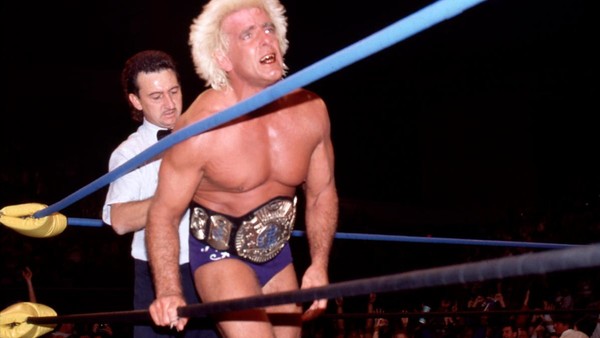
Ric Flair is roundly considered one of the best wrestlers of all time, but his tenure as booker of WCW is more polarizing. Flair is rumored to have had a hand in booking his legendary programs with Ricky Steamboat and Terry Funk in 1989, and he was given creative control of WCW outright in 1994. That tenure didn't last long, but Flair - who was already World Champion - continued to hold the title until the summer, feuding with Steamboat once more.
Flair's creative contributions to the undercard - which continued after he lost control of the main event - were less popular. Mick Foley, who as Cactus Jack experienced Flair's tenure firsthand, criticized him in his first autobiography, famously stating, "Flair was every bit as bad on the booking side of things as he was great on the wrestling side of it." Still, Flair's own feuds and title reigns are remembered fondly, by and large.
3. Verne Gagne

After a dispute with the NWA in 1960, Minnesota-based wrestling star Verne Gagne and promoter Wally Karbo founded the American Wrestling Association. Gagne, a serious, accomplished mat technician, was declared the first champion of the new group, and would spend the next twenty years as the promotion's top draw.
In 1980, the 54-year-old Gagne retired as AWA World Heavyweight Champion, marking the end of his tenth reign with the title. Though Gagne was a great talent and a legitimate superstar to his core audience, it can be argued that he overstayed his welcome - from 1960 to 1980, Gagne spent 4,677 days as world champion, a record that stretches across all of wrestling.
The AWA fizzled out in the late 1980s after Vince McMahon poached the company's top talent - to be fair to Gagne, he never had to worry about that when he was champion.
2. Triple H

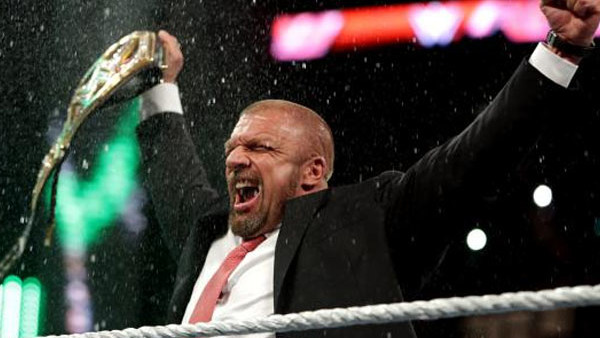
To be fair, Triple H has never been in the position of head booker for a company in which he's competed (he currently holds the slot in NXT). He has, as a result of his friendships and romantic relationships, found himself with a great deal of backstage influence.
Just how much of Triple H's success is due to his familial relationship with Stephanie and Vince McMahon will always be debated. Even to the uninitiated eye, though, "The Game" has clearly spent a decade and a half as a focal point of WWE TV, often at the expense of more popular superstars.
Since 2013, Triple H has settled into a position as a flip-flopping heel authority figure, but those who closed the book on his time as champion were sorely mistaken. In 2016, Triple H won the Royal Rumble, capturing his 14th world title in the process.
1. Kevin Nash

Sometimes, when booker/wrestlers put the title on themselves, it's a good decision. Sometimes, it's questionable. Other times, it's Kevin Nash.
Kevin Nash became booker of WCW in early 1999, but even before then, the wheels were in motion for him to take the reigns and he was wielding creative influence. In November of 1998, he won the 60-man, three-ring battle royal known as World War 3, and the following month, he pinned Bill Goldberg to win the WCW World Heavyweight Championship.
Goldberg, who was still undefeated until the Nash match, had been WCW's biggest draw throughout 1998. After losing, he was still WCW's biggest draw, but that didn't carry the same weight that it once did - he was no longer able to keep the company in contention with WWE. Nash killed WCW's golden goose to line his and his friends' pockets, and it was one of the largest nails in what would become WCW's coffin.