10 Wrestling Debuts That Changed Everything
Game changers. Industry shakers.

"They" say first impressions (as in life) are everything in pro wrestling, and "they're" right, but what if those first impressions also have ripple effects beyond the actual person debuting? What if they were so revolutionary, so ahead of their time and so impactful that they changed everything in their path, smashed the wrestling compass to bits and charted a new course for others to follow?
It's happened way more than you might think in pro wrestling's annals.
Everyone loves a good debut. If the character has credibility coming in, the hype has been well-worked beforehand and that actual first appearance proves to be memorable, then it can totally shake up a promotion anyway. Add some tasty consequences around that debut and you're onto a winner.
The sign of a good debut is impact. The sign of a great one is the emergence of other events because of it, and that's the case for every single one detailed here. These are the game changers, even if they didn't know they'd be called that at the time.
First impressions with lasting after effects are the best...
10. The Four Horsemen

Anyone who has ever purchased an nWo t-shirt, crotch-chopped their way to suspension in school or generally acted like a rebellious heel group with friends owes a ton to The Four Horsemen. It was they who set the template for what a 'bad guy stable' should look like in pro wrestling.
Without them, the nWo and D-Generation X wouldn't even exist.
Ric Flair, Arn and Ole Anderson, Tully Blanchard and J.J Dillon were revolutionaries who pioneered what it meant to be a cocky, cheating, babyface-bashing collective who looked good and wrestled even better. They exuded anti-authority before that was even in vogue in wrestling circles.
When The Horsemen debuted in 1985, they were right on time to give the NWA that core gathering of credible heels it needed. Others watched, and others borrowed from their template religiously - what were the New World Order and DX if not modern updates on that original formula?
9. Mankind
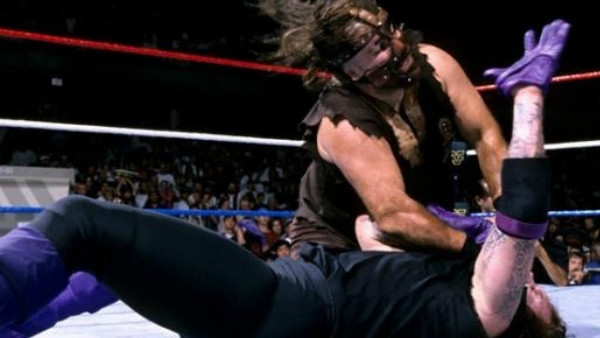
Jim Ross knew what he was getting from Mick Foley when he ignored Vince McMahon's talk of 'getting his heart broken by a talent' and signed the former Cactus Jack in 1996. Ross wanted fresh opponents on house shows for The Undertaker, and he knew that Foley's dedication to a big-bump style would bring out something new in 'The Deadman'.
That ol' cowboy was absolutely right.
Foley, as the deranged Mankind, fit the bill of that almost-supernatural monster persona the WWF liked to program 'Taker with. At the same time, Mick's more athletic working style (at least when compared to plodding oafs like King Kong Bundy and Giant González that had come before) brought out the best in his peer and allowed 'Taker to remould his own approach to matches.
It's no accident that Mankind's association with The Undertaker changed the latter's style permanently; 'Taker was able to kick up the pace of his once-zombified ring speed and shed the limiting aspects of his character for good. He was never the same.
8. The Radicalz

The appearance of four cherished WCW workhorses on WWF television in January 2000 told fans who enjoyed both products that 'Dubya-C-Dubya' was finished.
When Chris Benoit, Eddie Guerrero, Perry Saturn and Dean Malenko walked out on WCW, signed for Vince McMahon and showed up together as 'The Radicalz', it was a sign of how aimless things were in Atlanta. How the f*ck could an already-directionless company let four prime pieces of talents stroll out the door and onto Raw?
There was no going back for some after that. This fan alone recalls hearing a friend at high school say he'd never watch Nitro or Thunder again. Why would he when his favourite parts of that show (the Cruiserweight division and overlooked undercard pack) had been plundered so heavily in one fell swoop?
Guys like Benoit and Guerrero, once considered the future of WCW, were now WWF guys. Plus, Benoit's direct dismissal of the significance of being WCW World Champ told the world that Ted Turner's operation was yesterday's news, at least when it came to developing talent.
7. Mike Tyson

"Tyson and Austin! Tyson and Austin!"
That one gravelly-voiced call from Jim Ross was iconic, complemented the importance of the WWF hiring Mike Tyson and put Steve Austin on par with the 'Baddest Man On The Planet'. The boxer had already been paraded on pay-per-view before stepping into Austin's domain 24 hours after the 1998 Royal Rumble on Raw, but this was a different level of celebrity usage.
There, the pair of aggressive warriors got in one another's faces, worked a shoving match and had to be pulled apart by staff as Vince McMahon blew a gasket. It was powerful television, and it succeeded in three things: Austin was cemented as wrestling's hard nut by daring to square up to Tyson, the celebrity rub McMahon so loved was achieved and WCW's Eric Bischoff was powerless to respond.
Bischoff has told on his '83 Weeks' podcast that he knew the gig was up when the WWF signed Tyson. He couldn't compete with the kind of drama that came with matching such a controversial mainstream name up against the cult-hero-like 'Stone Cold'.
6. Jon Moxley

There was a time when leaving WWE seemed like career suicide. The company had monopolised pro wrestling in North America to the point that willingly tearing up a deal meant Japan (which wasn't always as trendy as it is now) or toiling on the indy scene. Most couldn't be arsed with that kind of hard graft, so they stayed put.
Not Jon Moxley. He wanted out, and that was true even before AEW's creation.
The advent of All Elite was a game changer for Mox though, and it was a mutually beneficial relationship when he bounced out on the group's first pay-per-view and shocked the world. By debuting at Double Or Nothing, Moxley instantly transferred his renegade street cred over onto AEW. They were the alternative, and they were willing to make noise.
His leap of faith put AEW on the map as a viable escape plan for disgruntled WWE stars who previously had nowhere else to ply their trade. It was also probably the catalyst for Vinnie Mac's recent talent hoarding strategy and reluctance to let unhappy workers out of their contracts.
5. Lex Luger

Almost 25 years earlier, Lex Luger forced McMahon's hand too.
Luger stunned the entire wrestling community when he showed up unannounced at WCW's very first live Nitro show on 4 September 1995. It was a shockwave that sent worried glances back towards Vince, and it gave Eric Bischoff the right to smugly claim his company was where "the big boys" played.
The WWF had overlooked Lex's overall apathy towards company life for months and totally ignored the fact that his contract had ticked down to zero. Now he was free to do so, Luger hastily thrashed out terms on a fresh deal with Bischoff and agreed to make the jump to WCW without telling anybody in the WWF.
McMahon, reeling over seeing an upper-midcard act like Lex choose WCW over his federation, implemented guaranteed deals for the first time after this. Without Luger's shocking departure, he might never have bothered, or at least wouldn't have rethought his attitude towards talent pledges for years.
4. WCW On Raw

It's hard to imagine now given how they've buried the organisation in heavy propaganda pieces since, but the WWF were all in on WCW at one point. Vince McMahon was reportedly so high on the idea of owning his own competition and running it as a kayfabe opponent that he was willing to change flagship show Raw to a strict WCW product.
That all changed as soon as Buff Bagwell vs. Booker T concluded on the 2 July 2001 edition.
The match received a horrible reaction from fans in Tacoma, Washington, and that's when Vince threw up his hands on the WCW project as a standalone entity. If WCW was going to survive, the party line came, then it'd need serious help from the vastly more over WWF stars. Turner's old boys wouldn't cut it solo.
Plans to turn Raw into a WCW weekly were changed without a second thought, and the WWF killed WCW as a brand four months later at Survivor Series. After that, they went with the softer approach and booked a split between Raw and SmackDown instead.
Everything disappeared in a Buff of smoke (sorry).
3. Chris Jericho

Chris Jericho wasn't just a big acquisition from rival WCW when he signed in the summer of 1999 - he was so much more. Bruce Prichard has told on his 'Something To Wrestle With' show that the WWF tried something new when Jericho joined. For the first time ever, they wanted to steal some of the thunder from outlets like Dave Meltzer's Wrestling Observer.
That's why the company proudly trumpeted Jericho's arrival on WWF.com. The crafty sods.
To their shared amazement, those people surfing 'dat 'World Wide Web' flocked in their droves to the WWF's official online home and created huge traffic for the website. According to Prichard, this totally altered how the promotion dealt with big debuts and announcements on the internet forever.
They'd traditionally tried to keep things under wraps, but someone had pointed out that Meltzer leaked the news anyway. So, why not leak it first, get the jump on the 'dirt sheets' and sweep up that online euphoria over some 'Monday Night Jericho'?
2. Sasha Banks, Becky Lynch & Charlotte Flair
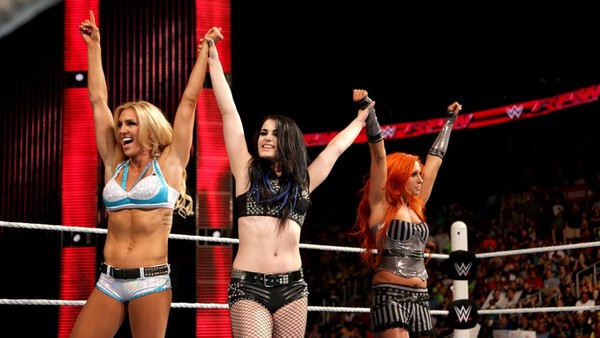
It took a while for WWE to establish what buzz-phrases like "Divas Revolution" and "Women's Evolution" actually meant. Proper, non-gratuitous female wrestling didn't come easy to the company, but at least they were trying when they introduced some new names on the 13 July 2015 episode of Raw.
That's where Becky Lynch, Charlotte Flair and Sasha Banks made their main roster debuts. All three of them would go on to become linchpins for the women's movement over the next five years, and they're all still huge personalities today. The whole thing acted like some sort of hard reset point for women in WWE.
As duff as 'Team PCB' (Paige, Charlotte and Becky) and Team B.A.D undoubtedly were, they did get the ball rolling on a trio of workers who'd go on to reshape how women were treated in a typically male-obsessed industry. Think about this: Becky and Charlotte headlined WrestleMania 1,364 days after this slightly-awkward-if-admittedly-promising debut.
That's nothing after decades of failed attempts to convince the McMahons that women could be as valuable as the dudes.
1. Scott Hall

Some might point to Hulk Hogan's WCW debut as a watershed moment for the organisation; it definitely was, though it didn't quite come with that cutting edge cool the company hoped. They didn't become must-see because of Hulk, but instead another place for the big orange chap to prolong his babyface run.
Then, "Hey yo".
Scott Hall's unadvertised debut on the 27 May 1996 Nitro was markedly different from vignette-laden intros of the time. By showing up in street clothes, coming in through the crowd, not immediately attacking anyone in WCW and making his intentions known, Hall birthed that nWo cool fans would come to know and love.
By the time Kevin Nash followed suit and the pair joined forces with Hogan, the ante had been seriously upped for WCW as a WWF competitor. Nothing would ever be the same again. WCW became hot sh*t, and Vince McMahon was forced to admit that the cartoonish tripe his WWF was serving up needed an overhaul.
Hall's debut shouldn't be overlooked as a game-changing, industry-defining moment.
-
What other wrestling debuts changed things permanently? For more like this, check out 7 WWE WrestleMania Endings That Were Botched and 10 Legends WWE Dumped In Awful Feuds!