10 WWE Flops Who Nearly Got Massive Pushes

WWE's closest calls with their "projects."

We all know about the meteoric rises to fame of Stone Cold Steve Austin, The Rock, and Triple H. Each man suffered his share of setbacks -- injuries, punishments, trouble getting over -- but in the end, they persevered to become three of the top stars in WWE history. In fact, it's like that with most superstars -- one only needs to look at the histories of Ric Flair, Bret Hart, and dozens more to understand that lesser men in their shoes would have simply given up in the face of all that adversity. But just as those men had to overcome the odds, there are a lucky few who were marked for success from the start. Goldberg and The Big Show are just a couple of the stars who received massive pushes from day one. Usually, it's because of size or charisma -- guys are deemed "can't miss" prospects, and are hurried along the path to superstardom. Sometimes, it works out great. Other times, it doesn't. Some of the men in this article worked for years to get to WWE. Others were earmarked as stars with little to no effort. In every case, though, something about them appealed to WWE's bookers and writers, and they were scheduled for big programs€ and in every case, it quickly fell apart. Here are 10 former WWE superstars who didn't make it, but were nearly household names.

10. Sin Cara

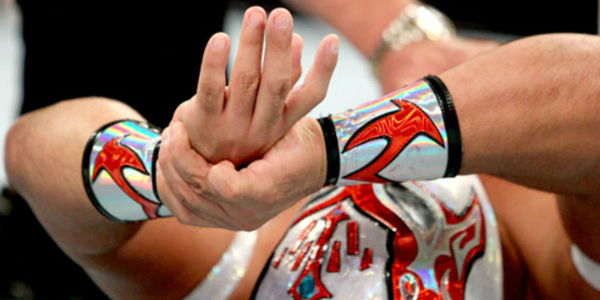
Mistico was the biggest star in Mexican wrestling in a generation, so his WWE signing (the first major talent acquisition by new Executive Vice President Triple H) was the talk of the wrestling world. While Mistico's home promotion, CMLL, was devastated by the loss, the hope was that making WWE a larger entity in Mexico would strengthen wrestling around the globe. Sin Cara, as he was now called, debuted in April of 2011 and, within weeks, tagged with John Cena on Raw, forming a "superteam" of epic proportions. Unfortunately, things weren't going so well backstage. Sin Cara reportedly refused to learn English or acclimate himself to WWE's wrestling style, gaining many detractors in the process. Still, he was Triple H's pet project, so he had a long leash. Problems started showing up on television, as Sin Cara's matches were often bad and filled with botched spots. He was suspended in 2011 for a drug test failure, then hurt his knee badly. Upon his return in spring of 2012, he continued to be more trouble than he was worth, so WWE all but abandoned plans to push him. Injuries and incidents kept stacking up, and when his contract expired in 2014, he was released.

9. Lord Tensai

Matt Bloom had a good career in WWE, first as Albert, then as A-Train. When he was released in 2004, he kept at his craft, heading to Japan -- first to All Japan Pro Wrestling, then to their primary competitor, New Japan Pro Wrestling. In New Japan, Albert -- now known as Giant Bernard -- began experiencing real growth. He won the New Japan Cup in 2006, and would go on to challenge for all three of the country's major wrestling championships. Eventually, he settled into a tag team with Karl Anderson, Bad Intentions, which set records with their IWGP Tag Team Championship reign. In March of 2012, word broke that he had signed with WWE once again. Immediately, vignettes began airing on Raw promoting the debut of Lord Tensai. When he made his in-ring return the night after WrestleMania XXVIII, announcers acknowledged that the man had been a WWE Superstar in the past, but an excursion to Japan had brought out the true competitor in him. He squashed Alex Riley, looking primed for what was rumored to be a main-event program with John Cena. Plans quickly changed when Tensai failed to get over -- matches with Cena and CM Punk were ugly, and the only reaction he received were chants of "Albert." The Big Show received Tensai's push, and by the summer, he was losing matches to Tyson Kidd. He ended up forming an undercard comedy tag team with Brodus Clay, then transitioning to a role as an announcer when the team was split up.

8. Kharma

There was a palpable excitement surrounding Kharma's WWE debut and signing -- perhaps, fans hoped, this represented a sea change for the Divas' division, wherein wrestling skill was valued more than WWE's concept of sex appeal. Perhaps a return to the golden days of WWE's women's wrestling -- where Trish Stratus, Victoria, Molly Holly, and more battled for championship gold -- was upon us. She debuted in April of 2011, and initially, her arrival was booked perfectly -- she attacked the other competitors in the division one by one, cementing herself as a force to be feared. Then, one week on Raw, she broke down crying when confronted by those she attacked. What had happened? The next week on Raw, Kharma revealed the reason for her attitude change -- she was pregnant. The Bellas came out to taunt her, but, in a well-executed face turn, she vowed to get revenge on them when she came back. She made a triumphant return in the 2012 Royal Rumble -- eliminating Dolph Ziggler -- but that was her last appearance on TV. She was released in July. The story behind her release is sad and a bit confusing. Prior to her return to the company in January, she claimed she had given birth to a healthy baby, but she later revealed that she miscarried and didn't feel emotionally ready to share the news. She also said that she requested her release, as she didn't feel ready to perform yet. Hopefully, she can make her way back to WWE and we can see what her push would have looked like.

7. Mordecai

Kevin Fertig had been doing an occult-style gimmick for years in Ohio Valley Wrestling before he was called up to the main roster in the spring of 2004. His new character was Mordecai, a religious zealot dressed in all white (including his hair and beard). He made references to ridding WWE of sinners, including veiled allusion to The Undertaker himself. As with most debuts, though, Mordecai started off slowly. His first feuds were with Scotty 2 Hotty and Hardcore Holly, whom he defeated at Judgment Day and The Great American Bash, respectively. The matches were terrible, and the following month, Mordecai was released. Fertig claimed in an interview that the reason for his firing was a bar fight in which he was involved, and WWE's subsequent chastisement. He was given a second chance two years later -- as Kevin Thorn, ECW's vampire -- but he never received close to the level of push for which he was earmarked as Mordecai. Had circumstances not been different, it's interesting to think where he might be today.

6. Russ McCullough

https://www.youtube.com/watch?v=e8bCWDhtaVQ#t=227 Today, there's not much information to be found about Russ McCullough. He was big (that was his nickname, in fact), he had a WWE developmental deal in the early 2000s, and he never made it up to the main roster. In 2001, however, he came inches from being WWE's next big thing. Immediately following WrestleMania XVII, WWE was under siege from the Two-Man Power Trip, Steve Austin and Triple H. The first two men to stand up to them were The Undertaker and Kane, and what followed was a feud that didn't exactly capture imaginations -- in fact, it helped slow WWE's momentum even further in the very beginnings of the post-Attitude lull. During this time, there were constant rumors that McCullough was imminently (think "this Monday's Raw") going to be brought up as Undertaker and Kane's third brother. Where there's smoke, there's usually fire, and there was quite a bit of smoke. As we all know, it never happened. Perhaps WWE thought the Undertaker-Kane history was complicated enough, or perhaps they figured McCullough wasn't at the level where he could hang with the two veterans. One known fact is that his matches in development were roundly criticized, and considering some of the big guys who have made it to the main roster over the years, that paints an ugly picture. He seems to have left the business in 2002, and today, is simply a footnote.

5. Steve Williams

"Dr. Death" Steve Williams achieved success in wrestling around the globe -- he dominated the UWF in the 80s, then went on to WCW, where he captured the World Tag Team Titles twice and challenged for the World Heavyweight Championship. His greatest achievements, however, came in Japan -- as one of the most successful gaijin in Japanese wrestling history, Williams captured eight tag team championships in All Japan Pro Wrestling, as well as the company's world title, the Triple Crown Championship. Williams had a reputation as a great worker and a legitimate tough guy, so when he signed with WWE in 1998, the company figured they could get a little innovative when it came to building him up. WWE assembled the first (and only) Brawl for All tournament, a wrestling/boxing hybrid shootfighting competition featuring the baddest of WWE's bad asses. The tournament was set up to get Williams over, building him into a contender for Stone Cold Steve Austin's WWE Title in the process. Unfortunately, WWE soon learned that you can't control the outcomes of real fights. In the second round, Steve Williams was knocked out by eventual winner Bart Gunn, and injured severely in the process. When he finally returned, his aura was gone, as far as WWE was concerned. He was released from the company in 1999, had a brief spell in WCW, and drifted around for a bit before returning to Japan.

4. Kenzo Suzuki

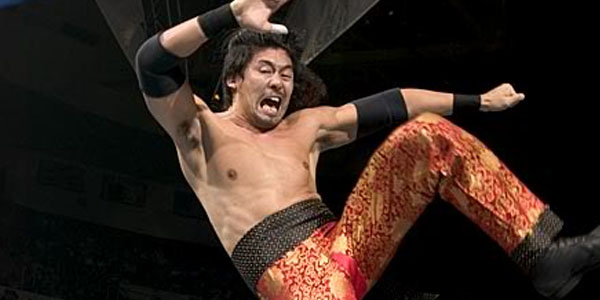
In 2004, WWE decided that they wanted all of their top babyfaces to to hail from American cities -- Chris Jericho was billed from Manhasset, NY, while World Heavyweight Champion Chris Benoit was announced as "now residing in Atlanta, Georgia." The reason for this? A barely-aborted (and nearly very messy) U.S. versus Japan angle that would have taken over the top of the card in 2004. Kenzo Suzuki was a New Japan Pro Wrestling Dojo graduate who came to the U.S. in 2003 on a learning excursion. Though he did not have a reputation as a competent worker, WWE signed him in early 2004. In the spring, vignettes for his debut began to air on Raw, giving him the name Hirohito. Suzuki was supposed to be either a supporter or descendant of the same-named Japanese emperor, who authorized war crimes during World War II (such as toxic gas attacks on China). Within a couple of weeks, the vignettes began promoting him by his real name. He debuted in July and spent a year on the roster as a generic midcard anti-American heel. Why the change? It seems that cooler heads prevailed. Higher-ups in WWE listened to reason (according to some rumors, from Suzuki himself), and accepted that a wrestler named Hirohito would do them no favors in the public relations department, especially in Japan. With the momentum of his debut sapped -- and as WWE quickly realized he lacked the skill for a big push -- Suzuki didn't last long.

3. Dan Rodimer

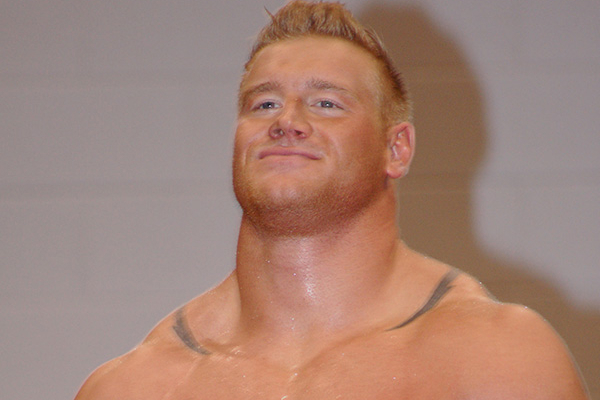
Smackdown's 2004 Tough Enough contest is primarily famous for introducing The Miz to WWE and televising Daniel Puder getting the better of Kurt Angle in a legitimate sparring encounter. There was another finalist, though, who came very close to being a notable part of the season -- former Arena Football League player Dan Rodimer. Tall, muscular, and blonde, Rodimer had the look WWE wanted. He reported to Deep South Wrestling in 2006, then was shifted over to Ohio Valley Wrestling in 2007. He also worked WWE house shows during this period, taking the name Dan Rodman. Rumors began to swirl during this period that Stephanie McMahon was particularly high on Rodimer, and that a debut as the bodyguard for Rated-RKO (Edge and Randy Orton's short-lived tandem) was imminent. He even challenged John Cena for the WWE Championship at a house show in June of 2007. Apparently, though, Stephanie McMahon was the only person who really saw anything in the rookie, and though her word goes a long way, it isn't the be-all and end-all. Vince McMahon allegedly got wind of agents' reports that Rodimer wasn't ready for prime time, and was quite angry. Stephanie decided to abandon his push, and after he suffered a couple of losses on Heat, Rodimer was canned.

2. Hade Vansen

Unless you're familiar with the British wrestling scene, you've probably never heard of Hade Vansen. The Alex Shane trainee cut his teeth in the Frontier Wrestling Alliance, but picked up worldwide experience -- he competed around Europe and in Puerto Rico -- before being signed to WWE. He began training in Florida Championship Wrestling in 2007, but a knee injury caused him to miss almost all of 2008. When he made his comeback in December, though, big things were planned. On the December 12, 2008 episode of Smackdown, a vignette for Vansen's upcoming debut was aired. Unlike most vignettes, this wasn't a slick clip package designed to showcase a wrestler -- it was a promo, plain and simple, from a man who could carry himself on the microphone. He mentioned a "darkness" in WWE, and while he never referred to the Phenom by name, it was very clear that this newcomer was coming for The Undertaker. No mention of him was ever made again. Why were plans dropped? According to rumor, the feud with The Undertaker (set to culminate at WrestleMania 25) was the brainchild of former creative team member Freddie Prinze, Jr. Vince McMahon himself caught wind of the idea and scrapped it, though (some say it was over Vansen's size, some say it was his rookie status), and the next month, he was released from the company.

1. Tom Magee

Tom Magee Believe it or not, in 1986, Vince McMahon was already looking for the man who would be the next Hulk Hogan. He thought he had found him in "MegaMan" Tom Magee, a former bodybuilder with amazing athleticism and quite the pedigree (he was trained by Stu Hart and made his pro debut in the main event of an All Japan Pro Wrestling show). Even Dave Meltzer's Wrestling Observer Newsletter lauded Magee, saying, "He was the greatest combination of strength and agility the business had ever seen." Magee wrestled Bret Hart in a dark match that drew rave reviews€”according to Hart's autobiography, after the match, Tom "Dynamite Kid" Billington told him that Vince screamed "That's my next champion!" as he watched on the monitor. The wheels were in motion. Magee was put up against a series of jobbers for squash matches, but it wasn't the same as the match with Hart -- these bouts were terrible, getting progressively worse. Though the fervor surrounding Magee led to him finishing third in PWI's Rookie of the Year voting, WWE began to realize they would have to cut bait. By 1988, he was wrestling awful matches in Japan, and a return to WWE in 1989 saw him lose cleanly to Tim Horner and Barry Horowitz. After that, Magee retired from wrestling altogether, an inauspicious ending to a strange career.

In this post: 
Mordecai
 
Posted On: 
Contributor
Contributor

Scott Fried is a Slammy Award-winning* writer living and working in New York City. He has been following/writing about professional wrestling for many years and is a graduate of Lance Storm's Storm Wrestling Academy. Follow him on Twitter at https://twitter.com/scottfried. *Best Crowd of the Year, 2013