100 Best Wrestling Moves EVER
61. Triple H | Pedigree
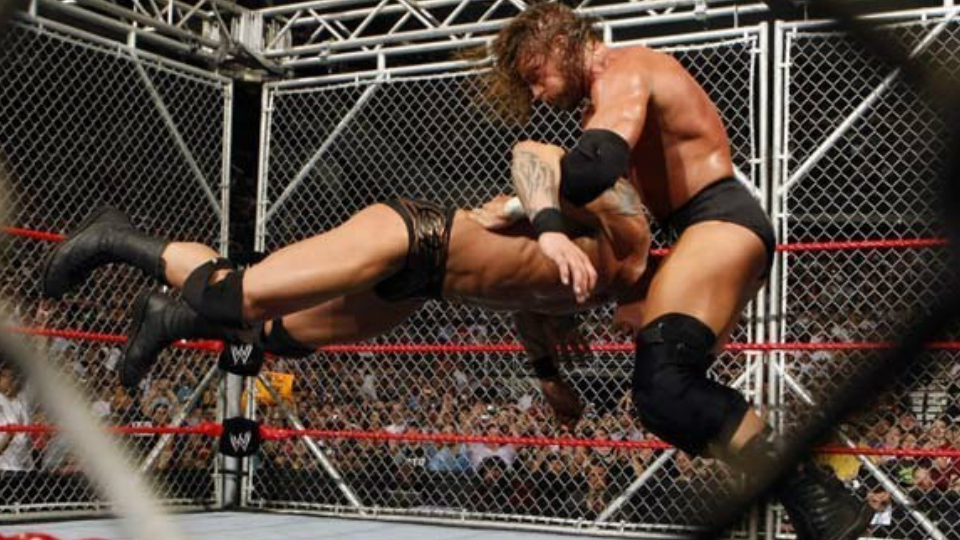
Originally, ol' Hunter Hearst Helmsley (whatever happened to that guy?) used a version of the cutter as his WWF finish upon joining the roster in 1995. His pal Diamond Dallas Page looked on from WCW, then called Triple H up with a humble request. 'Please stop doing that move and come up with something else, because I'm trying to get the Diamond Cutter over as a big deal and build my career'.
Some would've told Page where to go, but Helmsley acquiesced and started looking for another finish. That's when he recalled something he'd seen guys do at Killer Kowalski's training school years before. It was a standard neck-jarring move that involved putting someone's head between your legs then jumping and, in theory, hurting their neck. Hunter thought it looked crap, but he couldn't quite figure out a way to improve the thing by dropping to his knees without potentially breaking someone's face.
The WWF liked a rough run through of the soon-to-be Pedigree in '95, and it was actually Michael Hayes who named the thing shortly thereafter. Triple H appreciated that. He was also over the moon to be safe from further DDP phone calls. Also, best of all, he now had an identifiable trademark move to call his own. Nobody else on the roster had anything like it.
Trips has always pointed out similarities to both the DDT and the piledriver. It's a sort of mish-mash of both, and the Pedigree remains one of the most iconic moves in the industry. It's so great that even Seth Rollins started using it for a while!
60. Claudio Castagnoli | Big Swing
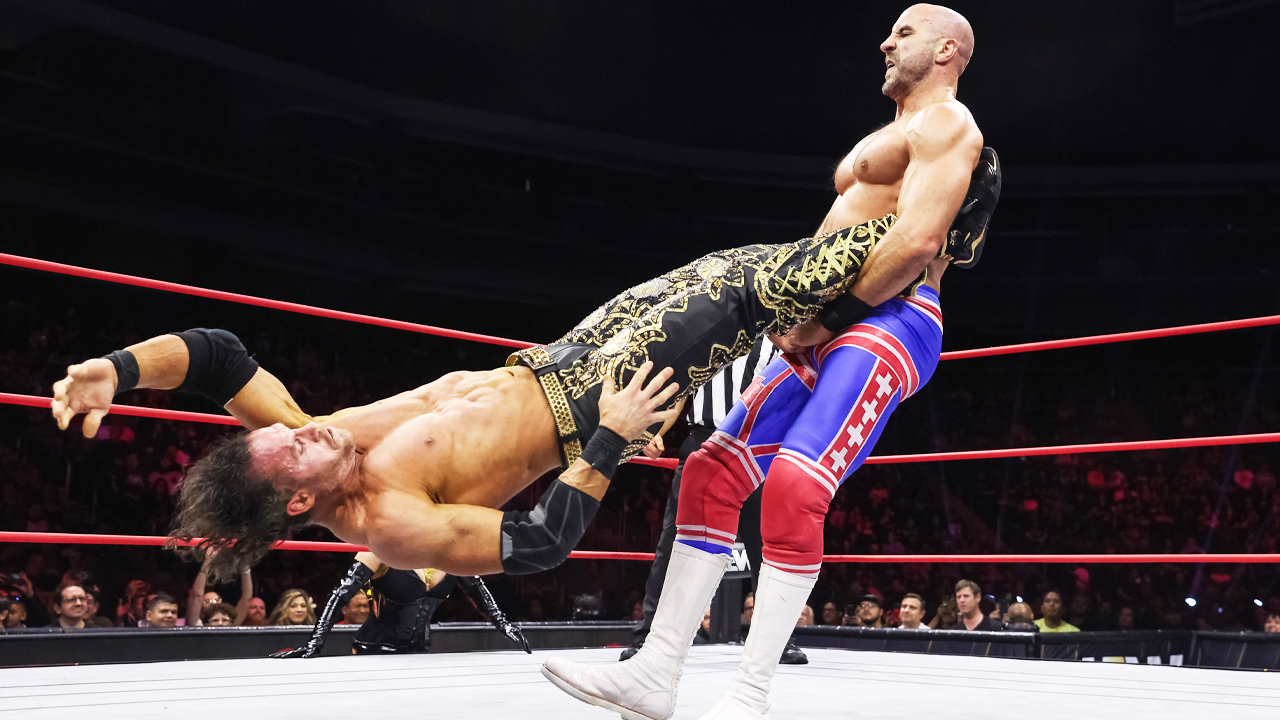
John Cena once called Claudio Castagnoli (who was working in WWE as Cesaro at the time) one of the strongest wrestlers he'd ever met. Claudio is a workhorse in the gym. He's never had bulging biceps like The Ultimate Warrior or insanely puffed out muscles like monsters from the 1980s generally, but Castagnoli is far from small. In fact, he's a big dude who favours strength and performance over pure aesthetics.
Again, that's not to say the ex-Cesaro has never taken pride in his appearance. His muscles pop, but he's a different kind of strong to the raw-boned power of some others. It takes almost superhuman strength, balance and care to perform his Big Swing effectively. Even watching the thing is enough to make most fans dizzy, but Castagnoli rotates his way through spin after spin whilst keeping an eye trained on his opponent's safety.
Their part is protecting their head lest the move drift eerily close to the ropes. Do that (and post up a little with a strong core) well enough, and Claudio will take care of the rest. He's been able to use this move on some big lads who'd take some lifting. Momentum is everything for the swing, but getting it started? Ooft, that has to be difficult.
Even WWE fell in love with what's effectively an old-school move. It's become synonymous with Castagnoli. Think of Claudio and you automatically think of this hold. Next time you see him do it, pay close attention to his footwork. That poise, along with the sheer power involved, is undoubtedly impressive.
What a wrestler.
59. Sting | Stinger Splash
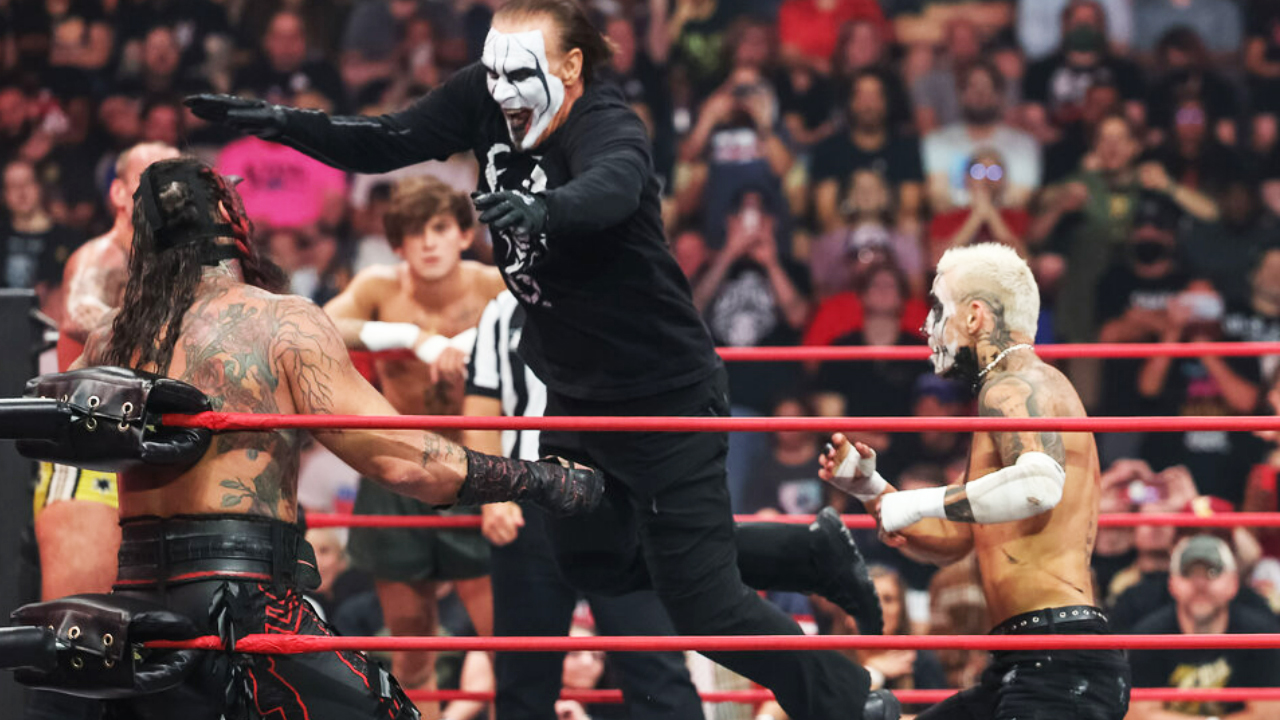
Nobody accompanies the hurtling speed of a Stinger Splash with the giddy, childlike delight of Tony Schiavone. Marking out for all things Stings is kinda his thing, and it has been since AEW realised NWA/WCW nostalgia was a cute addition to programming. In fairness, the Stinger Splash has always been one of pro wrestling's best (and most simple) moves.
It takes minimal effort from both parties, is easy to sell, and it always gets a reaction from crowds. What's not to love? Seeing the face painted icon back up into an opposite corner then wing his way towards a rival is great. Here's the thing: Countless wrestlers throughout history have performed corner splashes or other such moves, but none elicit the same sort of fun from it as Sting. Perhaps nobody ever will.
The corner splash is his move. Godfather's running chest bump variation, be damned!
WCW didn't get everything right, especially nearer the end of the promotion's run, but they did understand the need for corner cams looking over the shoulder of victims. That way, viewers back home would get the full experience. Sting screeched across the mat like he was trying to break some sprinting records, then he'd leap into the air around three quarters of the way. Finally, he'd smack into his rivals like they owed him money. It's still so satisfying to relive some of the best Stinger Splashes in matches against Ric Flair, Hulk Hogan, DDP, The Young Bucks and more.
Again, the sweetest thing about Sting's corner crunch is that it probably felt like a cuddle. However, on screen, it looked for all the world like he'd just wrecked his opponents and set them up beautifully for a Stinger Death Drop or Scorpion Death Lock.
58. Kurt Angle | Triple German Suplexes
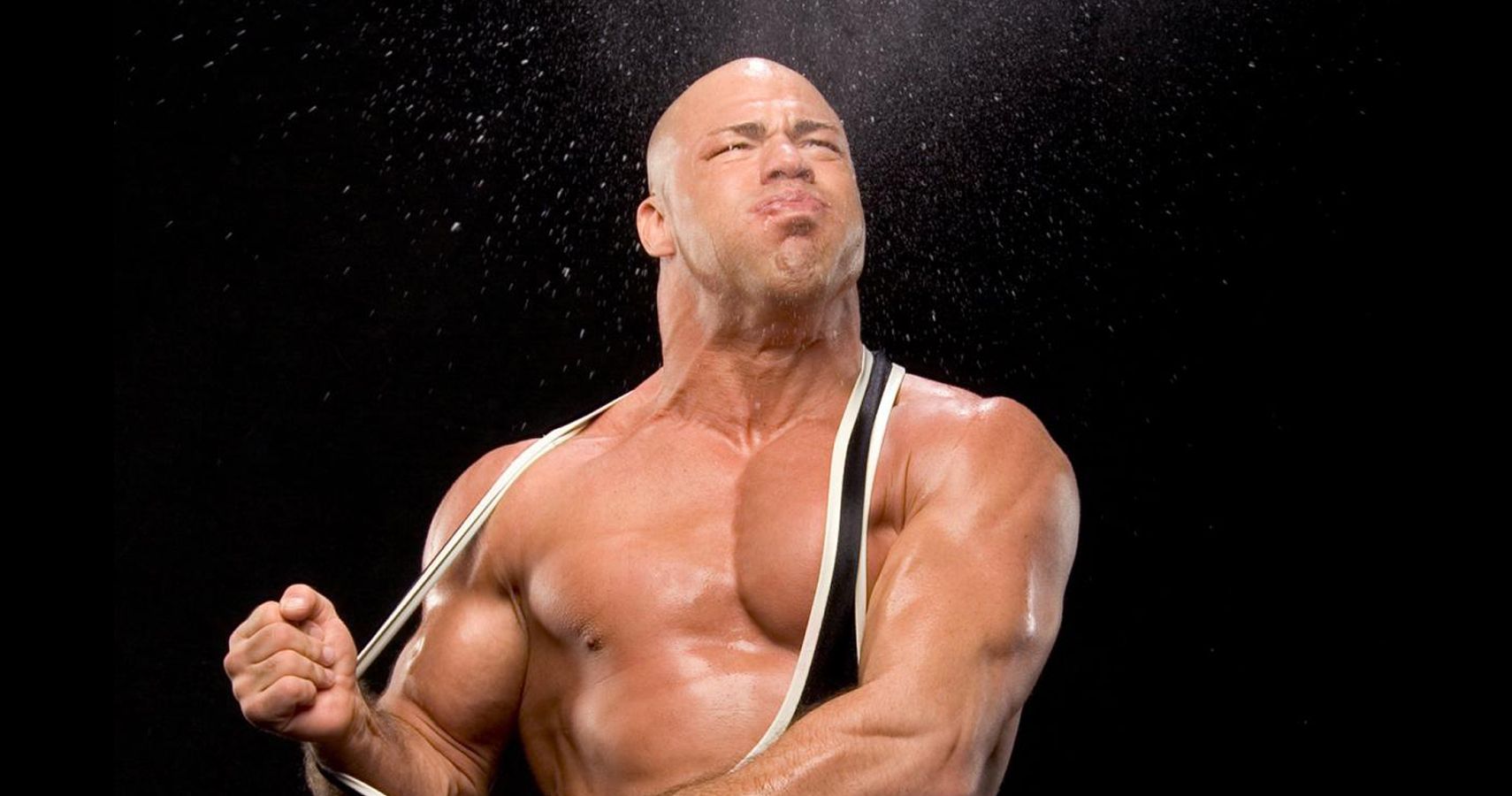
Watch WWE telly today and you'll surely see one Chad Gable hitting back-to-back-to-back German Suplexes on some unsuspecting wrestler. The arch Gable gets on those suplexes is something to behold, and it's reason #1,872 on the list of why so many modern fans compare him to an Olympic great. Kurt Angle was rather fond of hitting the trio of Germans himself, and he was a true master when it came to pacing and spacing.
Here's an in-depth explanation of that latter point.
Any bevy of suplexes should be deliberately stacked in such a fashion that fans have ample time to react to each one individually. Going too quickly lessens the impact each bump has, and Angle understood that better than anyone could've expected from a very-real wrestler coming into a worked industry. There was an exhausting pause between each suplex, almost as though Kurt was letting pain sink in before popping his hips and sending a weary wrestler straight to hell for a second or third time.
Smartly, Angle also maintained his grip by keeping his arms locked around the waists of those taking the suplex series. That way, announcers like Jim Ross, Michael Cole and others could point out how draining it'd be to have an athletic brute like Kurt squeeze the life out of you right before hitting each German in succession. It was sensational to watch.
Others, like Chris Benoit and the aforementioned Gable, also made/make great use of the 'Triple German' spot, but nobody hit each beat better than Angle. His aggression, pacing and in-game patience was stunning.
57. Booker T | Harlem Side Kick
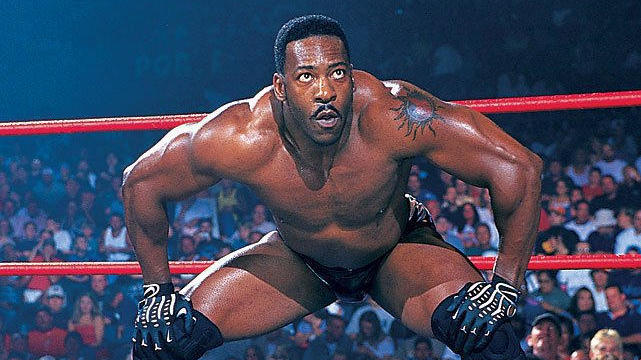
Ready for perhaps the oddest of odd references? OK, so maybe it's not that weird. Wrestling move enthusiasts who also dabble in video games likely spent hours in the creation suites of various WWE titles - that'd be true long before Create-A-Move became a thing. There was a unique pleasure in sifting through move menus to pick out the ideal moveset/signatures/finishers for your created superstar in even the earliest SmackDown games.
In 2002's SmackDown: Shut Your Mouth, Booker T made his PS2 debut and was one of the most fun wrestlers to play as. Sure, spamming his spinarooni taunt was always some laugh, and his axe kick finish looked ace, but there are few things more rewarding in SYM than repeatedly hitting a Harlem Side Kick on opponents and watching them bump like Curt Hennig in his prime over and over again.
That kick looked photorealistic to the one Book would hit on episodes of Raw and SmackDown too. Stretch back a little further than that to WCW Nitro and Thunder to see some of the most visually pleasing versions of the signature strike. This was the Jerry Lawler or Bret Hart punch of the kicking world, no doubt. That's how well-worked each one was.
Booker's Harlem Side Kick blended a spinning heel kick, a superkick and even elements of the traditional big boot. Imagine Sheamus going for a Brogue Kick, but using the side of his leg rather than the sole of his shoe. So, there you go, this strike was killer in reality and in the video game world.
Don't hate the player, hate the game? Nah, love the game for enhancing this signature gem.
56. Kevin Owens | Pop-Up Powerbomb
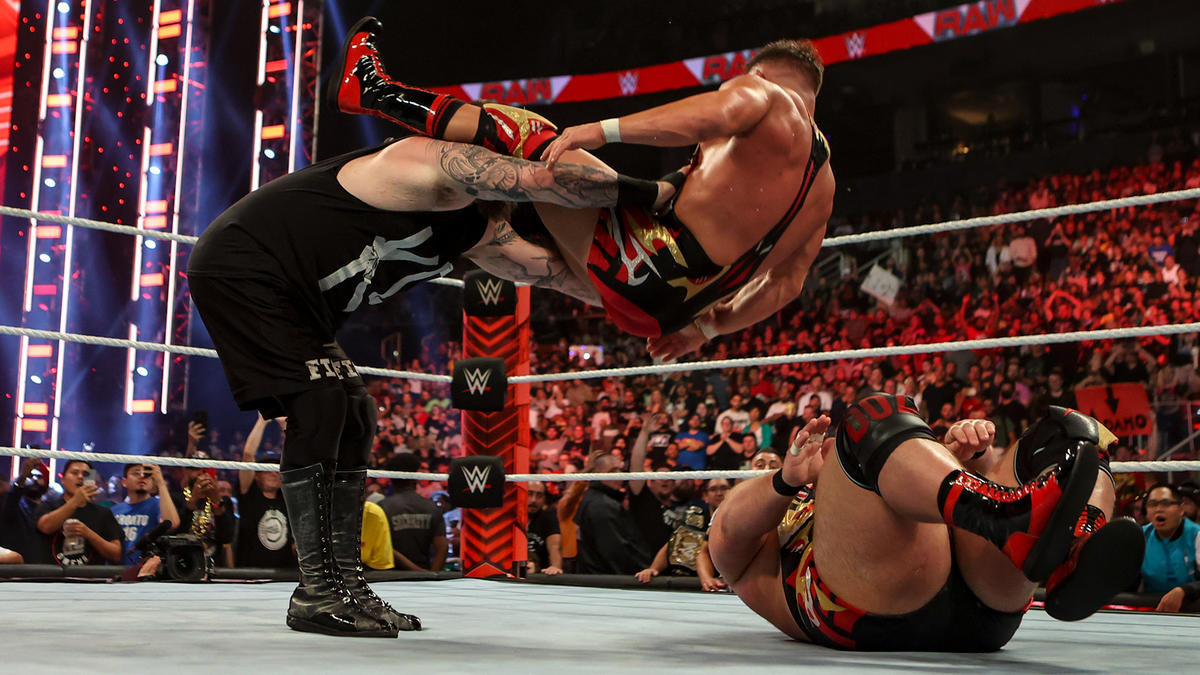
Speed and sheer impact are the hallmarks of moves perfect for either ending matches or luring people in with a crowd-fooling near fall. Kevin Owens understood that when looking for an easy way to lace his bouts with a move that could achieve both. Sometimes, he's won major matches with the Pop-Up Powerbomb. Other times, it's little more than another tease-heavy spot that convinces most a wrestler sustaining it is toast. '1...2...he-got-him-no-he-didn't' vibes.
KO uses Steve Austin's classic Stunner a lot of the time, which is fine. That finisher is over with fans as a legacy move, and it'll always get a pop because of the suddenness of it all. The Pop-Up Powerbomb has the same kind of air, although there's a bit more time for fans to settle in and prepare due to Owens firing opponents off the ropes before hitting it.
On that: Kev sporadically hits his Powerbomb to cut off an offensive bid from someone else. For example, he might duck a clothesline then meet enemies bouncing back off the opposite ropes. It's the fact that everything happens in the blink of an eye that makes the move so aesthetically cool. High fives all round in the stands when KO goes Pop-Up, basically.
Variations on the Pop-Up Powerbomb include one Owens nails on the ring apron. That always looks gnarly, and has been deployed to great effect when running injury angles, turns or the like with workers like Bryan Danielson/Daniel Bryan or Sami Zayn. Once again, the evil speed of the move helps there.
55. Keiji Muto | Shining Wizard
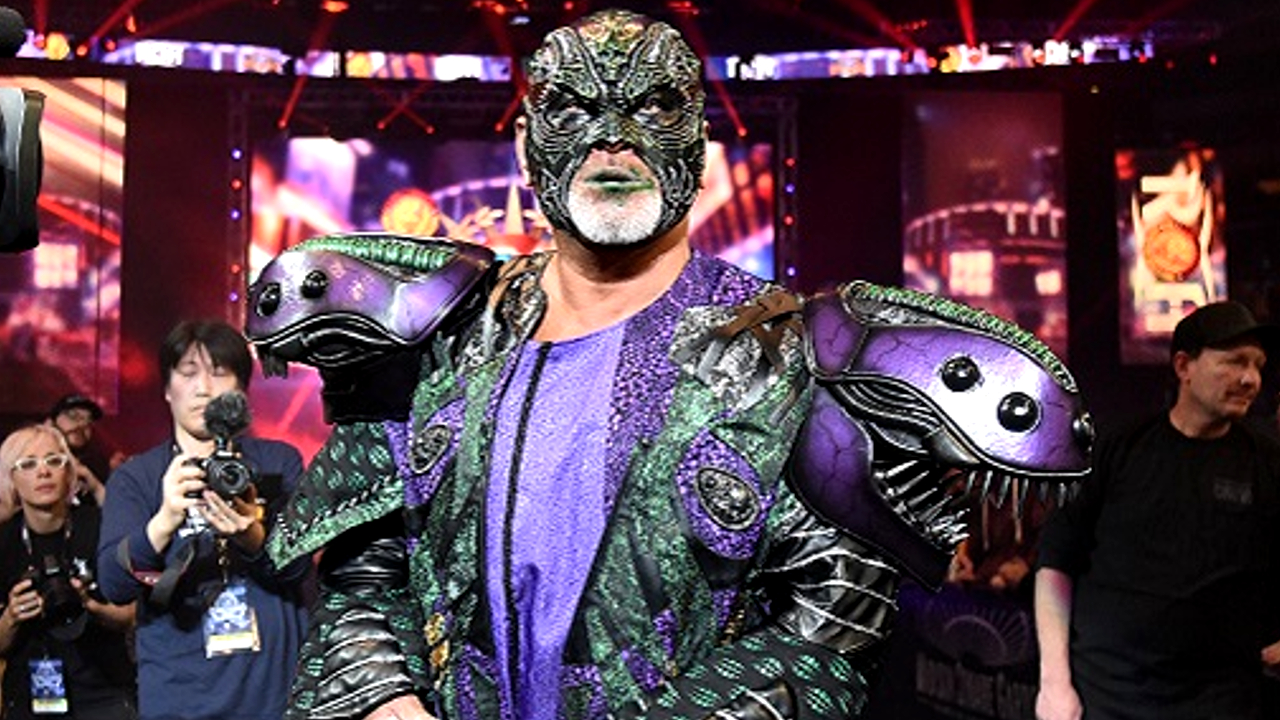
The Great Muta is rightly regarded as one of the best and most creative pro wrestlers of all time. As he grew older, Keiji Muto sought ways to keep his moveset hard-hitting and memorable without having to rely on moonsaults or other aerial attacks that'd put unnecessary stress on his knees and joints. That's why he came up with the fantastic Shining Wizard knee strike.
Hundreds of wrestlers have adapted the move and turned it into either their finisher or a high spot, but Muto performed it flawlessly. His Shining Wizard had some beef behind it, and it often looked like he'd taken an opponent's head clean off his shoulders. Before hitting the move, Keiji would get someone down on one knee so he could sprint towards them for the knockout blow.
One leg screw or sweep then...BOOM!
Arguably the finest compliment one could pay to Muto's knee strike is that it looked impossible to counter. Even wrestlers who managed to get a hand up (few did, because blocking the Shining Wizard outright was rarely part of the match) could be realistically cleaned out by the brute force of a big knee flying right at their chins. It's still one of the most satisfying moves ever when done correctly.
Another quality the Shining Wizard has? Versatility. Muto was able to hit it in the centre of the ring, right by the ropes, in the corner, or outside on the floor. He even used weapons like steel chairs to springboard from and add extra oomph over the years here or there, Sabu-style.
54. Scott Hall | Fall Away Slam
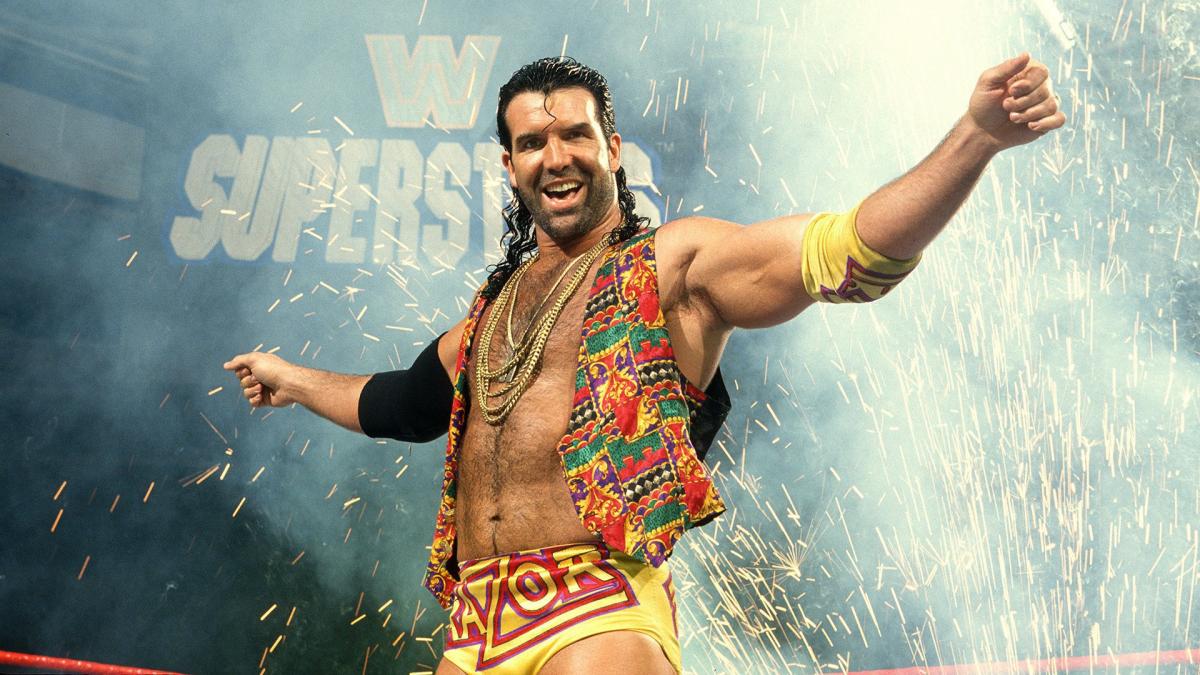
News flash: Scott Hall was a deceptively big dude. Hanging around with an even bigger lad like Kevin Nash for most of his career tricked some into thinking the ex-Razor Ramon was mid-sized. No, he was massive. Realising that all over again makes some of his matches against Bret Hart, Ted DiBiase, The 1-2-3 Kid, Jeff Jarrett, Diesel, Goldberg and others even more impressive.
'Big' Scott Hall hit his fall away slam on pretty much all of 'em, and he did so with ease.
There's something appealing about a move like this. Seeing one wrestler manhandle another, and hold him comfortably without the need for kicking legs ('you're not going anywhere!') or screaming, before dumping him overhead and doing the hand slap taunt after a job well done is rather cool. Hall was the best at it. His fall away was little more than a rudimentary back bump for him, but it looked killer for those taking the other half of the move.
They'd spin over Scott's head and land on their back (ideally) in a heap. Those who wanted to make things seem a little fancier might tumble again so they reached the ropes and did that weirdly-sweet 'fly caught in a spider's web' sell after landing awkwardly. That'd be juxtaposed with Hall casually showing out to the audience and acting like he'd done something as basic as taking the bins out.
Variations on the theme include a fall away slam from the middle turnbuckle, which always looks mighty. It speaks volumes about Razor's size and power that even his ground-based original matched that sort of fall.
53. Eddie Guerrero | Three Amigos Suplexes
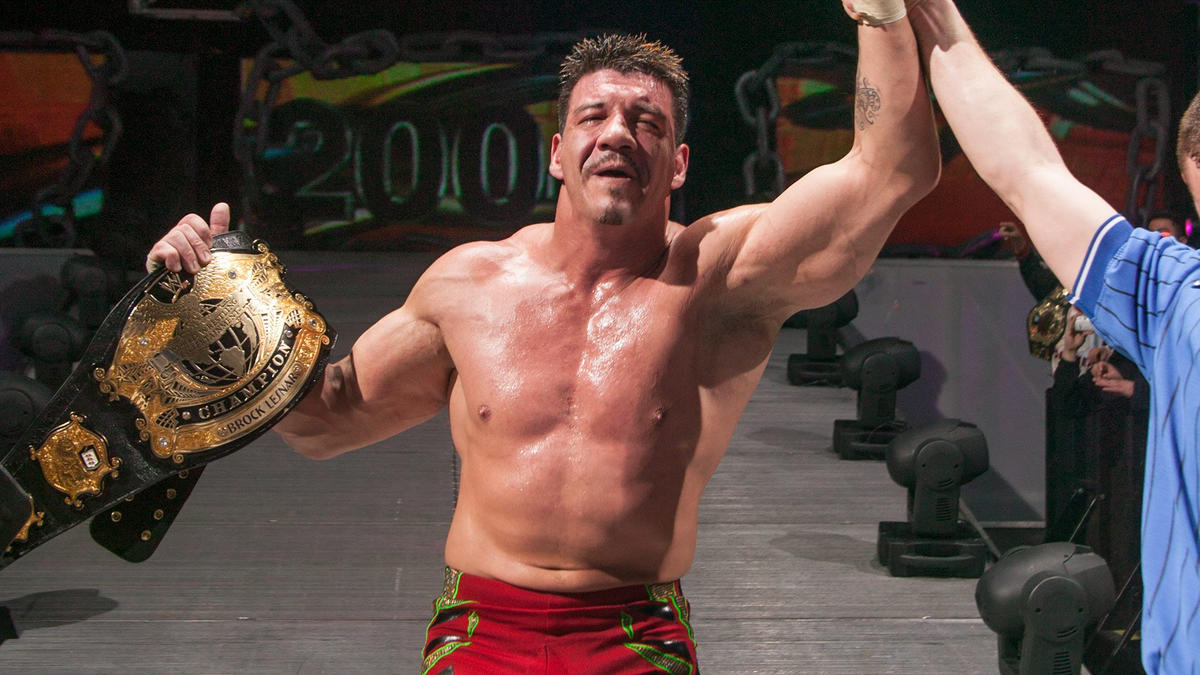
Ask anyone who worked with the man to describe Eddie Guerrero and you'll get various words thrown back at you. Amongst other things, Guerrero was technically brilliant, charismatic, tempestuous and passionate about wrestling. One word normally echoes no matter who's asked to talk about 'Latino Heat' though. He was so, so smooth between the ropes.
Eddie made everything look so effortless. It wasn't, of course, but producing great matches came naturally to somebody who'd been around the game his whole life. "Smooth" was never more accurate than when Guerrero landed three sweet consecutive suplexes that involved a float over so slick you'd swear someone had sprayed WD-40 on his joints before going through the curtain that night.
The "Three Amigos", as they became known, should've been a basic (or even slightly dull) routine brought out during matches when the great man was fresh out of ideas or needed a breather. Nope. Eddie didn't operate that way. He turned something apparently everyday into a spot that had people jumping up out of their seats to cheer him on. Or boo him when he was playing heel.
This tri-pronged suplex series had range.
Each suplex was delivered with a sweet snap to it as well. That enabled Guerrero to keep hold of someone, spin his hips around, then position them for the next move. All three were usually identical too - that's how crisp Eddie was in-ring. A lot of modern day WWE stars use the Three Amigos as a tribute spot to one of their favourites. No-one does it quite as well as Guerrero did.
52. Baron Corbin | Deep Six
You might not have expected to see the name Baron Corbin here. After all, Corbs sickened everyone to their stomachs by working a frankly rotten retirement match vs. Kurt Angle at WrestleMania 35, and he was oft-called a Vince McMahon pet project nobody asked for. That doesn't tell the whole story. Baron had some value, but the way he was shoved down fan throats was a tad forced.
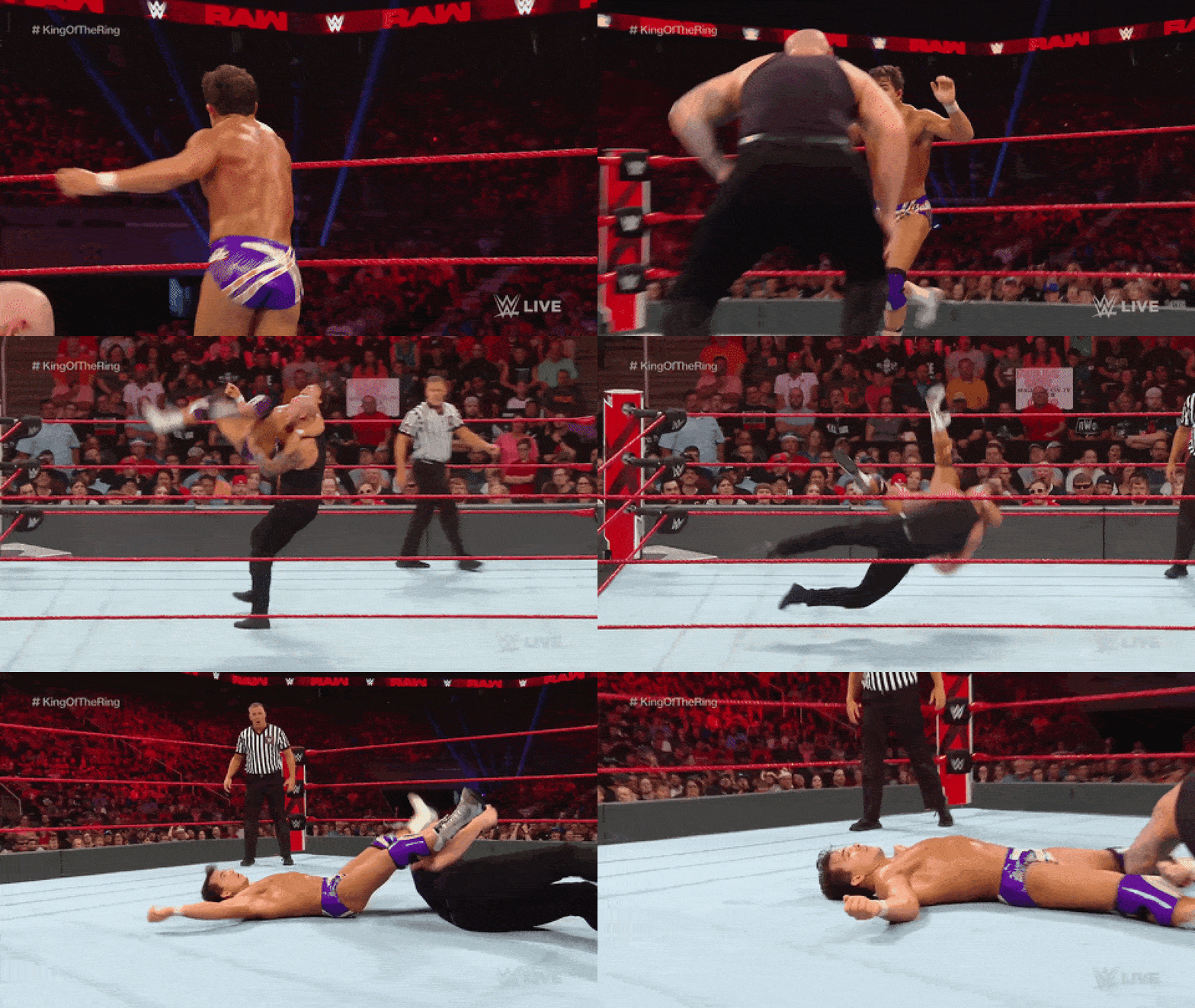
Slick moves like that dash around the ringpost before coming in for a clothesline, his finishing End Of Days, and the Deep Six explored here all had merit. The latter was particularly awesome. One could watch Corbin hit that move on Dolph Ziggler endlessly; few knew how to perform the spinning wildly out of control sell better than Dolph, and he was ideal for the Deep Six.
At heart, the Deep Six is akin to that sidewalk-style deep slam Big Boss Man hit in his heyday. There was always a bit more flamboyance to it, however. Corbin sent opponents off into the ropes, then positioned his body just to the side so he'd be well placed to spin them around and around before landing wrestlers flat on their back. At once, it seemed he'd sent them neck/back of the head first into the mat.
Nah, they landed safely enough. That danger was part of the illusion.
On heavier workers, the Deep Six looked a bit like The Rock's famous Rock Bottom (or Booker T's Book End if you're a WCW hardcore). On lighter or more agile ones, it was more akin to something you'd see at an AAA show.