100 Best Wrestling Moves EVER
51. AJ Styles | Pele Kick
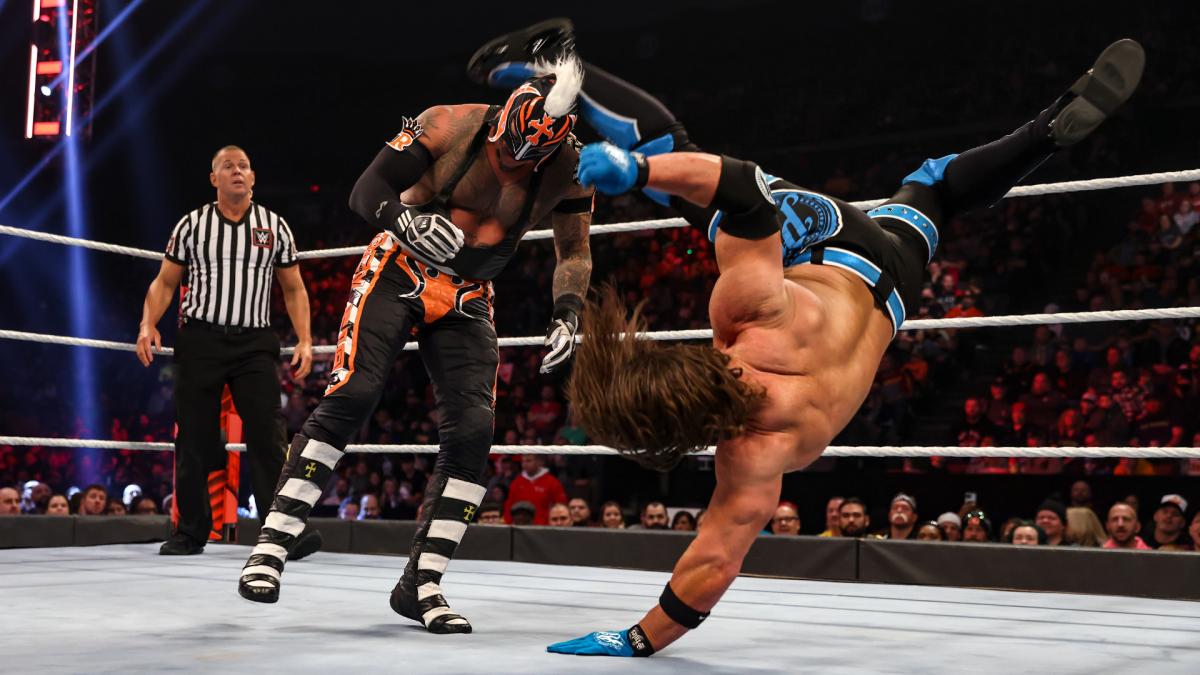
There are countless kick variations in pro wrestling. Big boots, spinning heels, superkicks (lots of them!), axe kicks, stomps, straight thumps to the gut and more. One of the best has to be the Pele Kick one AJ Styles has used to great effect over the years. It's so good, in fact, that many workers across different promotions have copied his homework.
AJ's kick sees him start a backflip before stopping short of a full rotation and sending his foot/shin into the face of unsuspecting victims. Cleverly, most on the receiving end lean into the strike so it looks like Styles knocked their block off. Without that early lean, there's a chance AJ would miss his target and the spot would look flaky as a result. Someone as celebrated and skilled as Styles couldn't have that - he has a reputation to maintain, after all.
The Pele Kick normally occurs deep into a match when the 'Phenomenal One' needs a quick comeback or at least something to halt his foe's momentum. The Pele is either followed by a smart double down in the match, or it leads to a quickfire assault from AJ that swings that momentum in his favour. It's a really, really useful tool for him as a worker.
Styles was one of the more inventive names during TNA's early days. His X Division choice cuts vs. everyone from Amazing Red and Jerry Lynn had everyone talking for the right reasons, and he's never looked back.
50. Jeff Hardy | Whisper In The Wind
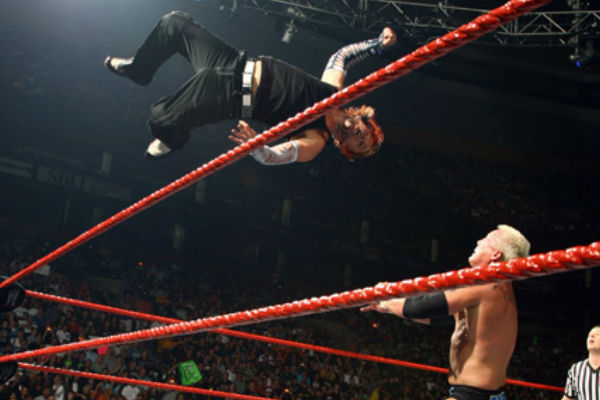
The subject of inventive and creative wrestlers couldn't pass without mentioning human pinball Jeff Hardy. That dude has put his body through the wringer over the past couple of decades. It's actually a minor miracle Jeff can walk at all, never mind still hit Swanton Bombs or other trademark pieces of aerial artistry he's become known for. Enter the stupidly great Whisper In The Wind.
On the surface, it's a fabulously simple high flying move that swings each match Hardy's way and lets commentary teams gush with praise for his balance and skills. Nowadays, Jeff is more likely to slowly climb the turnbuckles to set up for a WITW, but that wasn't always the case. Previously, he'd literally run up the ropes like a parkour king before seamlessly spinning into an attack that'd make anyone creating moves in WWE 2K games proud.
Everything about the sequence flowed beautifully.
Arguably, Whisper In The Wind (and that springboard double leg he'd do after leaping from his brother Matt's back) could be considered more impressive than the finishing Swanton. Sure, that Bomb has given Hardy's career multiple Hall Of Fame moments. He's hit it from the top of terrifyingly high ladders through tables, for example, and those memories will live forever.
However, Whisper has a subtle grace to it that should never be overlooked when talking about Jeff's best contributions to the industry. His dash up the turnbuckles was very Sean Waltman, and had more than a splash of lucha flair about it too. Fans watching the WWF's product in 1999 didn't see a ton of this sort of thing.
They'd soon get used to it. Hardy made sure of that.
49. Tajiri | Tarantula Stretch
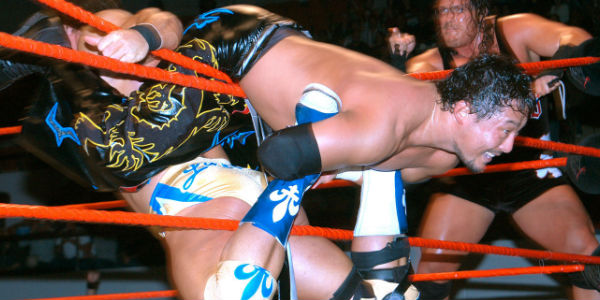
Yoshihiro Tajiri isn't the only pro wrestler to make use of the agony-inducing (but not really, of course!) Tarantula hold, but his exploits inside WWE and ECW rings made the move more famous in front of a casual audience. Technically, unless he was working a 'No DQ' match or something like that, William Regal's favourite couldn't win bouts with the submission. Referees had to start a five count because both he and an opponent were tangled up in the ropes.
That meant the Tarantula couldn't stay locked on for very long. In truth, this only added to its mystique. On the whole, commentators like Joey Styles, Jim Ross, Michael Cole and others did a damn fine job selling the idea that opponents wouldn't survive being held that way for longer than a few short seconds anyway. Without the ref's mercy, they'd be cooked.
Fundamentally, the Tarantula was a hanging Boston Crab-style move with some spicy extras. Tajiri heightened the painful-looking hold by mugging for the cameras with some tremendous facial expressions. Meanwhile, he cranked back on someone's legs and used his own pins to arch back their shoulders and back. It was a torturous visual, one made even better if the Cruiserweight star's mouth was drooling black mist.
Someone mainstream needs to bring this one back in a hurry. It pops up occasionally, but nowhere near enough. If producers are switched on, they'll switch to a camera angle showing the victim screaming their way through it too. That, combined with Tajiri's expertise, made this one a true winner.
48. Scott Steiner | Frankensteiner
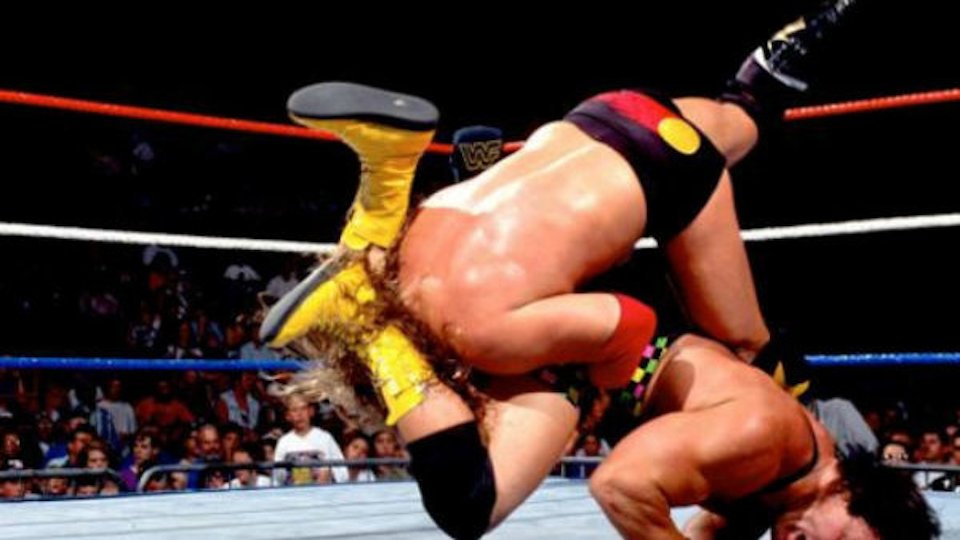
Wrestling fans tuning into WCW back in the early-1990s couldn't believe their eyes when they witnessed athletic freak Scott Steiner flying around the place like he was half the size. Well-muscled and known for hitting sweet sit-out powerbombs and a variety of suplexes, Scotty also had one hell of a party trick: His finishing Frankensteiner was one of a kind, especially for somebody with his bulk and upper body.
Truthfully, unless the person taking it was switched on, the move could be dangerous. Sure, that could be said for pretty much every wrestling move out there, but this was a 270lbs monster with thighs that'd crush steel effectively spiking someone else's head into the mat. It took some serious flexibility and precision for opposing wrestlers to make the bump look gnarly without taking a post-match trip to the hospital for concussion checks/facial injuries.
Check out the bump one of The Beverly Brothers took at the 1993 Royal Rumble over on the WWF side, if you want to see how menacing the Frankensteiner could look. In years to come, Steiner took umbrage when people started calling his move a hurricanrana or something else - to him, it was always the Frankensteiner or nothing. Holla' if you hear that!
Scott's agility for someone who'd packed on so much muscle was undoubtedly impressive. Of course, he'd use the move less and less as the years rolled on and he got even bigger, but it was legit one of the industry's most eye-popping finishes during the late-80s and into the early-to-mid-90s.
Nobody was kicking out.
47. Sheamus | 10 Beats Of The Bodhran
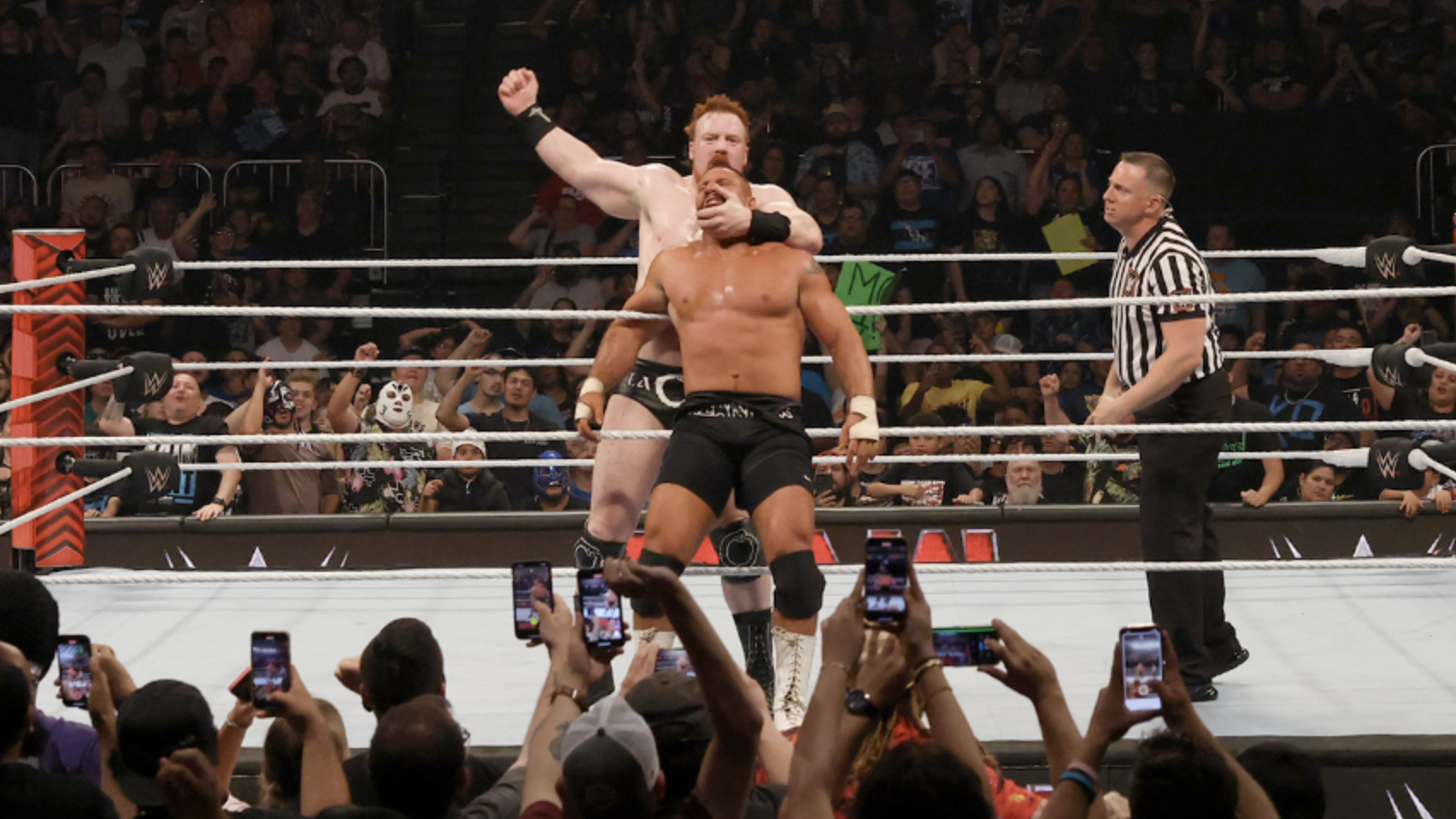
What is it that's so pleasing about hearing a rowdy wrestling crowd collectively count to 10? The old double digits punches in the corner spot is a classic, but so is the '10 Beats Of The Bodhran' routine Sheamus has popularised during his lengthy stint in WWE. Everyone sees it coming, and yet nobody can resist the urge to prove they can count by chanting along with each thumping strike.
This is actually something Sheamus initially used as a heel. The 10 beats were supposed to hammer (ahem) home his vile superiority over hapless foes. The spot was never designed knowing sold out audiences would look forward to it; it was meant to be something they dreaded as they helplessly looked on at their heroes being clubbed to dust.
Smartly, Sheamus turned something so evil to his advantage once he went babyface in 2011. Since then, even when playing the role of villain, he's embraced the singalong aspect of the sequence. It's become a more visceral version of the aforementioned turnbuckle punches. No Sheamus match feels complete without it.
Other Sheamer favourites include White Noise (effectively a lower Samoan Drop) and his Irish Curse back breaker. Both, like 10 beats, are signatures complementing his finishing Brogue Kick, and they rarely win matches. Unlike those though, the bodhran bashing doesn't lead to a near fall. Nah, it exclusively exists for the counting thing and to break someone's spirit mid-match.
Sheamus doesn't hold back either. He's managed to blend crowd interaction with visibly painful strikes. Match made in heaven - or hell, if you're the wrestler on the receiving end.
46. Mick Foley | Stump Piledriver
Not all piledrivers are created equal.
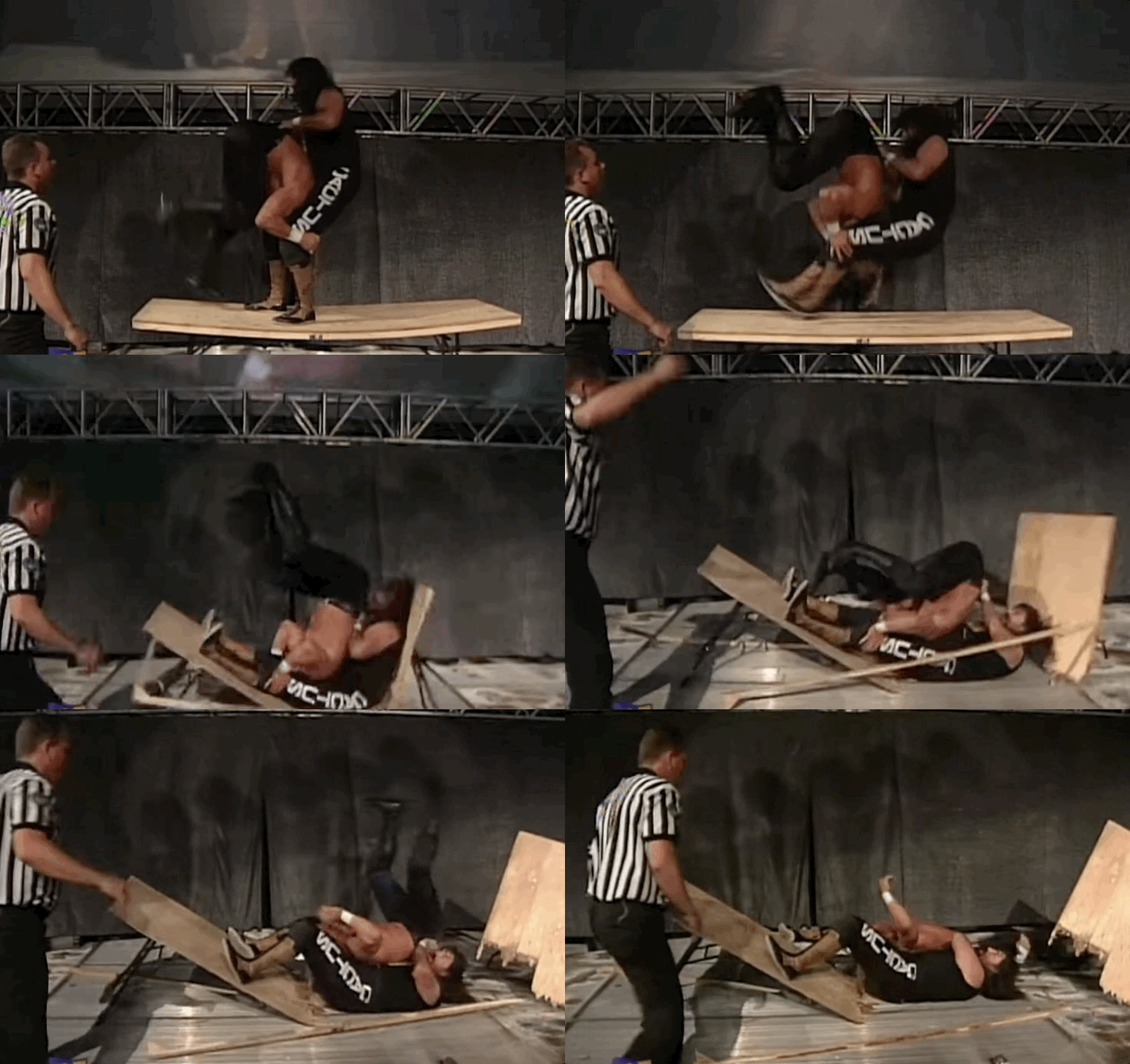
The Undertaker's Tombstone variant is a firm favourite of many fans watching from the 1990s onwards, whereas Jerry Lawler's classic style is burned into the memories of anyone who grew up watching the Memphis great do his thing long before that. Then, there's the stump/pulling one Mick Foley used to great effect whether he was himself, Mankind, Cactus Jack or Dude Love.
If you want to get really in-depth, then consider this: Mick performed the stump piledriver slightly differently when Mankind. There was an almost lazy or clumsy quality to it when he donned the mask (deliberately so). If that sounds super-weird, then check out his match vs. Shawn Michaels from late-1996 compared to how he'd hit it on Triple H when playing Cactus a few years later.
It's so subtle, but Mankind almost stumbled into the move rather than hitting it with precision. He'd haul at his foe's ring attire and use that to gain momentum. As Jack, he was much more likely to hoist them up by the waist like someone normally would when using the piledriver. That, fellow wrestling fans, is the kind of tiny attention to detail that made Foley one of the best to ever pull on a pair of boots.
The guy rewarded those who looked beyond the obvious.
Further, whilst someone like Lawler simply sat down to execute the move, Mick kicked his legs out from underneath to give the piledriver a more vicious snap. That, when teamed with the fact he was clawing and scratching at someone's tights/trunks, made broken necks seem like a given.
45. Hiroshi Tanahashi | Dragon Screw
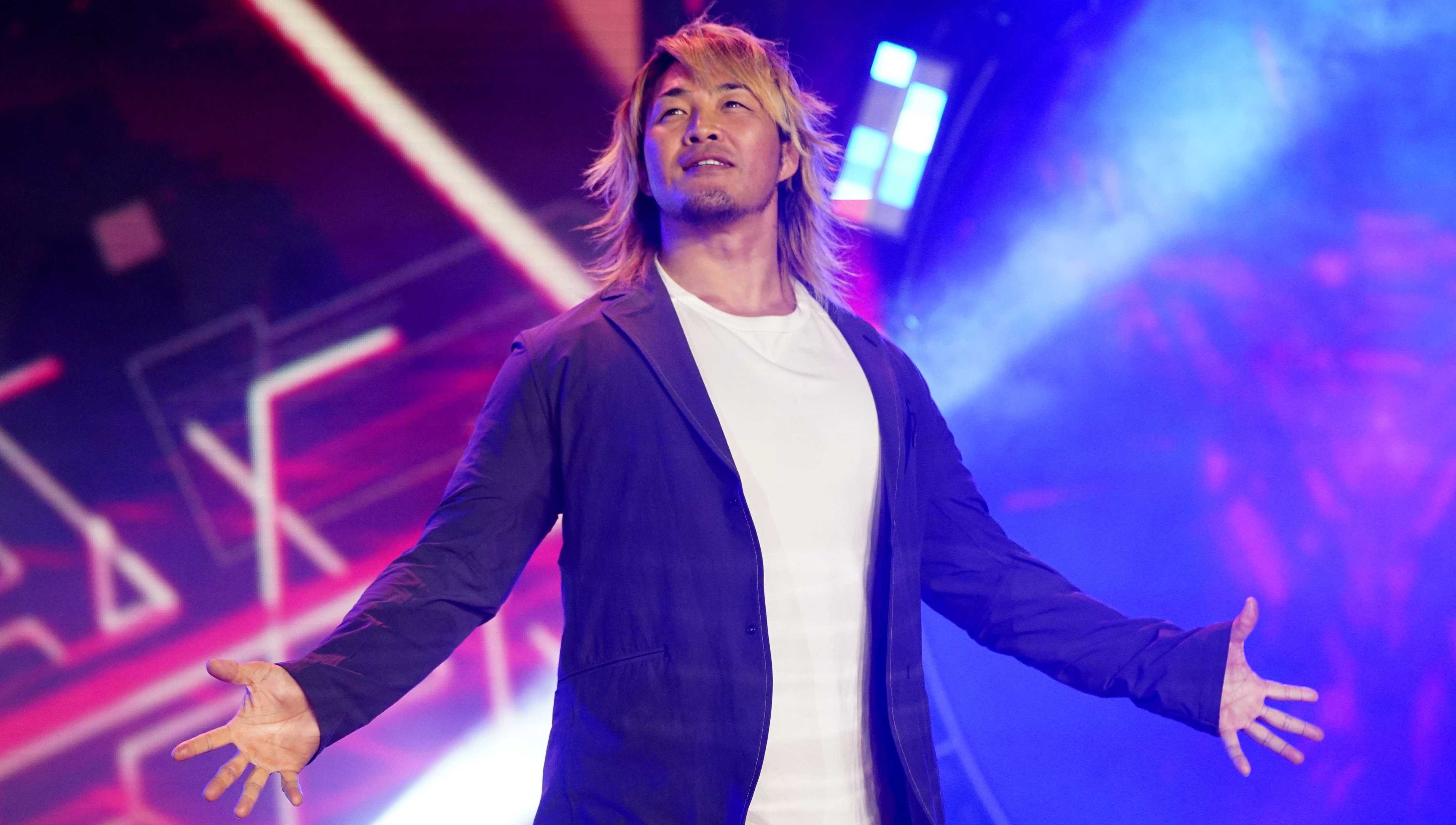
A basic move is better than a spectacular move, provided it is executed at the ideal time for full dramatic effect. The best illustration of this principle is Hiroshi Tanahashi’s dragon screw leg whip.
Now, the move itself is excellent. Tanahashi executed it with a ferocious snap in his prime. The person on the receiving end did their bit, selling as if their knee ligaments had been shredded. At its best, the dragon screw was incredible; any fans of legit sports knows that the specific way in which the knee bends is often a season-ender of an injury. The dragon screw epitomised the core concept of suspension of disbelief.
Tanahashi was a genius who grasped the principle of the “when” as well as any wrestler ever. He executed the dragon screw in every single match, but, every single time, he inserted it when it made the most sense and when you least expected it, all at once. Whenever he’d convinced the crowd that he was done for, he’d bust out his reliable signature to alter the momentum of a match thought lost.
In one awesome tweak, at his most desperate, he once used two arms to clutch at Jay White’s leg and take him down.
Informing his work with a sense of pathos, post-prime Tana was better than most wrestlers operating at the peak of their powers.
44. Mr. Perfect | Perfectplex
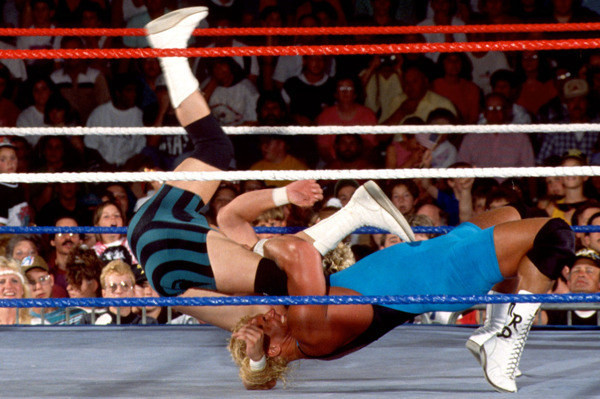
Generally speaking, Curt Hennig was better known for selling than he was for hitting moves himself. The exception to that rule? His Perfectplex. It was a wonder of the biz once he started using it, and that remained true even when he was a heel in the WWF. People loved to hate Mr. Perfect, yes, but everyone high-fived their pals when Curt slapped on his finish.
The fisherman's-style suplex is nothing outlandish in modern terms. Watch any number of matches across majors like WWE or AEW and you'll definitely see a couple of similar moves. No-one arched their back and pulled opponents over with the stunning mix of grace and power that Hennig did though. His fisherman's was fittingly perfect.
Perfect.
Older WCW superfans will recall jaws hitting the floor when Curt performed the move on The Giant/Big Show/Paul Wight like he was Rey Mysterio. Hennig's technique was incredible, so much so that this particular Perfectplex earned a standing ovation from fans around ringside at Monday Nitro. Everyone was impressed by how flawlessly Hennig snapped into the move despite Wight's gargantuan physical size. That cannot have been an easy feat, but Perfect made it look like it was.
Any bridged suplex with a pinning combination relies on stillness post-impact. It wouldn't do, if a wrestler flopped over and collapsed instead of keeping the bridge strong mid-pin. Hennig understood that assignment, and he arched his back the same way every single time.
His 2-3 second pause before nailing the move also added to the anticipation of what was about to happen.
43. Barry Windham | Float Over Superplex
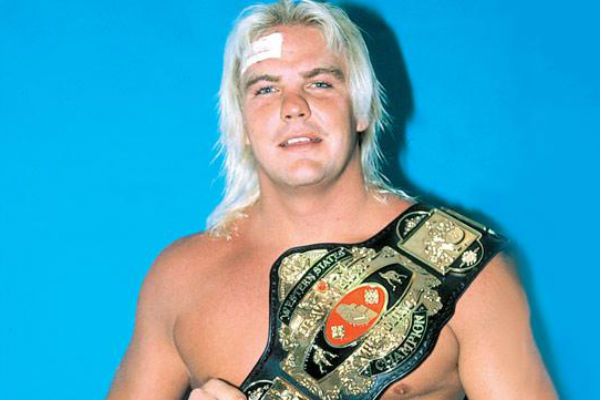
Watching Barry Windham's third run in the WWF between 1996-1998 was kinda sad. The ex-NWA and WCW stalwart was a pale shadow of the wrestler he'd been a decade or so prior. For proof, just look at the difference between Barry hitting a sweet float over superplex in the mid-90s compared to how he'd do it earlier in his career. There's footage on YouTube showing the differences between them.
Windham always got terrific height on his superplexes. He'd rarely bend forwards and lessen the visual. Instead, he'd pull his peers directly overhead and stand straight up to increase the distance both he and another worker tumbled before crashing to the mat. Then, in a quite cunning example of using natural momentum to one's advantage, Barry would wait until he'd bumped onto his shoulders/back to effortlessly glide over into a pin.
When he got it right, it was one of the best moves in wrestling history - Windham could be pinning his victim within one second of them taking his superplex, and that meant commentary teams could put over how switched on a wrestler he was. Inevitably, age and injuries would catch up with Baz and stop him from hitting the float over so fluidly from the mid-90s onwards.
In his pomp, the float over superplex ranked amongst wrestling's finest finishers. Barry's strength, height (those taking the move had a long trip to the canvas), and agility made it so special. Windham was someone who truly understood the art of the superplex. It wasn't a routine high spot for him, that's for sure.
42. Trish Stratus | Stratusfaction Bulldog
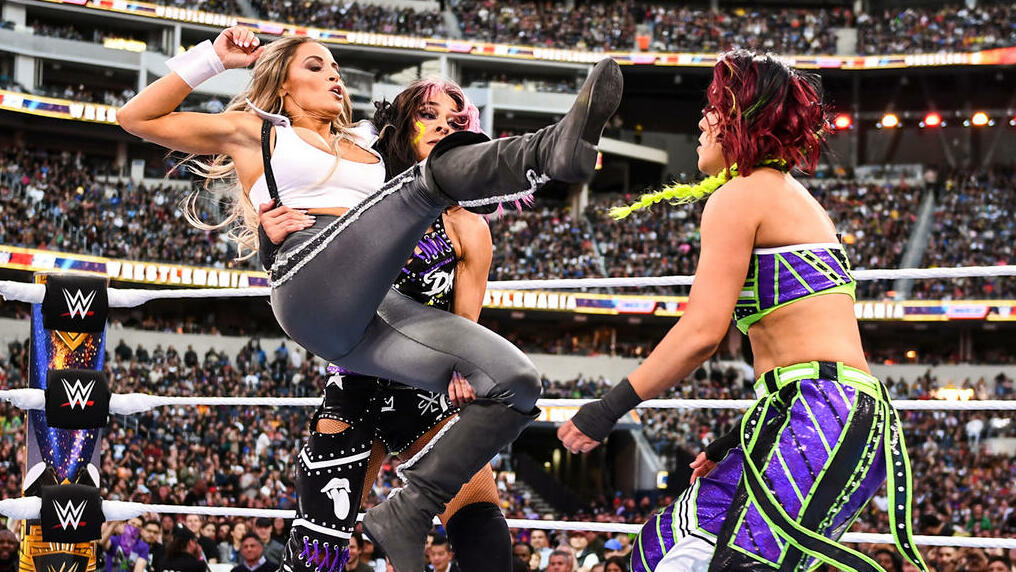
Credit where it's due: Trish Stratus knuckled down and refused to become mere eye candy as a "Diva". Yes, Trish knew looks played an important part in her career, but she yearned to be recognised as something more. Stratus successfully broke out and surprised many by becoming an accomplished in-ring star who (alongside Lita) made WWE history as one of the first female headliners ever.
She was one of the biggest stars on the roster for years, and Trish is still highly regarded whenever she dips a toe back into wrestling nowadays. A crucial component of her arsenal was the humble Stratusfaction bulldog. It was comprised of three distinct parts. One, a side headlock clutch and raised arm in the air from Stratus. Two, her springing off the ropes. Three, a satisfying front bump that led to wins more often than not.
One of the finest compliments someone could sling at the Stratusfaction bulldog is that it worked on anybody. Trish hit this on a few of the guys over the years too, and all of them sold it like they'd been levelled by a truck. Her leg strength was cited as one of the main reasons why. The way Trish would spring off the ropes? Smooth, and timeless.
Adding that springboard element into the sequence was an inspired decision by Stratus. It showed that she was creative between the ropes, and it turned an otherwise basic running bulldog into something unique to her matches. That's always a grand idea for any worker, regardless of weight class, gender or style.
Resist. The. Urge. To. End. By. Saying. Stratusfaction. Guaranteed.
Sorry!