11 Fascinating WCW/NJPW Collision In Korea Facts
The unbelievable story of the biggest wrestling show of all time.

WrestleMania is around the corner, and with it will come WWE's biggest crowd of the year, although the Orlando audience is not going to top the 'Mania 32 all-time record of 101,763 (a number which itself is widely believed to be bloated by WWE).
Regardless, 'Mania 32 is considered to have hosted the largest attendance in WWE history, but you need to almost double the claimed attendance in Dallas last year to get close to the actual largest wrestling attendance of all time.
A reported 190,000 people crammed into the May Day Stadium in Pyongyang (North Korea) on April 29, 1995 for a show billed as Collision in Korea, a New Japan/WCW-produced show that holds a rather peculiar position in the history of professional wrestling.
Depending on your point of view, Collision in Korea is either a mythical supershow or an aberration in wrestling's history, two nights were professional wrestling stood tall over politics or bowed down to fame and fortune. Regardless of which side of that fence you are on, the show is a fascinating square peg in a long history of round holes. It is a trip full of stories that deserve to be told.
This is the tale of the time Flair Country came to the Hermit Kingdom...
11. Antonio Inoki Saw It As Potential Political Redemption
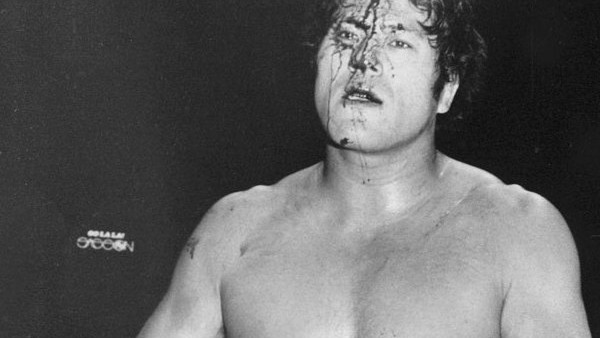
By 1995, Antonio Inoki's political career was at a critical point.
The founder of New Japan Pro Wrestling had been faced with a number of scandals over the previous years, the most damaging of which was the embezzlement revelations brought forward by his former manager and secretary, Hisashi Shinma. Inoki was unlikely to be re-elected to the Japanese House of Councillors and as such, he needed a grand statement to push his cause.
Inoki was nothing if not politically innovative. He was often quick to see political opportunities where others refused to look, and just a few short years after putting on a wrestling show in Iraq to improve relations and free Japanese hostages in Saddam's nation, Inoki saw a similar opportunity in the Hermit Kingdom, the Democratic People's Republic of Korea.
The godfather of Japanese pro wrestling, Rikidozan, was born in North Korea. As a result, Inoki saw an opportunity to take the wrestling world to North Korea, improve Japanese-North Korean relations, and help his re-election bid in the process.
10. Eric Bischoff Didn't Ask For Permission

The show was to be a New Japan Pro Wrestling production, but the promotion had a working relationship with WCW, and as such, Inoki wanted to get some US faces involved. A number of North American stars thus made the trip with Eric Bischoff acting as the go-between thanks to Easy E's position of influence in WCW at the time.
In what can possibly be seen as a harbinger of Bischoff's future recklessness, Eric decided against speaking to anyone high up in Turner Broadcasting before deciding whether or not to go. By his own admission, Bischoff simply asked some friends at CNN what he could expect from a short professional trip to North Korea.
Bischoff was told that the worst he could expect was going to be a slap on the wrist and maybe a number of awkward questions from the State Department, but jail wasn't going to be coming to him.
That was good enough for Bischoff. WCW was going to North Korea.
9. Inoki Wanted Hulk Hogan Instead Of Ric Flair

The main event of the second night show was Antonio Inoki vs. Ric Flair, but if Inoki had gotten his way, The Nature Boy would not have been involved at all: Inoki originally wanted Hulk Hogan to be his opponent in the main event of the biggest show in wrestling history. Bischoff subsequently asked Hulk, but later revealed that he may as well have been asking the Hulkster to 'row to Pluto'.
When one stands back and thinks about it, Hulk Hogan was obviously the number one choice. This was 1995, after all, and in 1995 there was no more American hero than the leader of the Hulkamaniacs himself. His entrance music is basically a song about how American he is, after all.
The North Korean attitude to Americans may be somewhat negative now, but 20 years ago it was still positively vitriolic. There simply could have been no bigger heel than 'Real American' Hulk Hogan.
8. Muhammad Ali Was The Life And Soul Of The Party
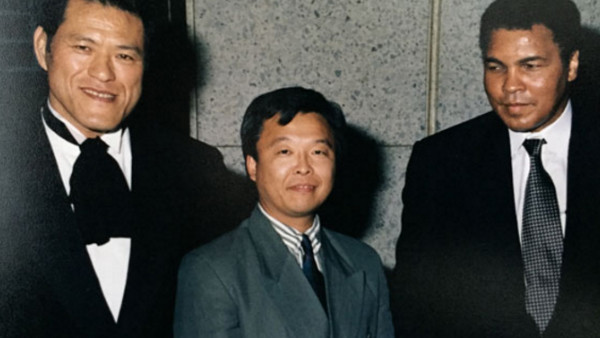
With Hogan unavailable and Ric Flair on board, Inoki decided that some extra star power was needed.
He may have been long finished in the boxing ring, but Muhammad Ali's star never stopped shining. Inoki and Ali had a relationship that went all the way back to their much-maligned match in Tokyo in June 1976, a 15-round bore that involved not a whole lot of action.
Bischoff also had a professional relationship with Ali. It wasn't difficult to get The Greatest on board. As the assorted wrestlers and press flew over to Pyongyang from Nagoya (Japan) many have described the mood at the time as 'sombre' to say the least. Nobody knew just what they were flying into.
Ali took it upon himself to keep the mood light on the flight, cracking jokes and telling stories that the wrestlers had heard hundreds of times but were overjoyed to hear once more. Ali continually told Road Warrior Hawk to cut promos on him, the soundbites inevitably ending in cackling laughter and Ali insisting Hawk start again.
The mood dropped almost as soon as the plane came into land. Sonny Onoo has since said that they seemed to be landing in the middle of the Klingon Empire, whereas Bischoff referred to it as like 'landing on Mars'.
7. Hawk And Too Cold Scorpio Had A Shoot Fight

As with most visits to North Korea, the group were shepherded around the various sights of the DPRK over the first few days. Depending on the contracts signed, this meant riding in a bus or in chauffeured cars. It will surprise few to hear that Ric Flair found himself in the latter.
Road Warrior Hawk had travelled with Flair for a day or two before deciding he wanted to return to the bus with the rest of the boys. Tensions were running high, and after days of terrible food and claustrophobic conditions, the slightest remark was almost begging to be blown out of proportion.
As the story goes, Hawk was unsure whether to stick on the bus or return to Flair, which led to Too Cold Scorpio letting fly an expletive or two that the Road Warrior returned in kind. One thing let to another and all of a sudden Flash Funk and Hawk were duking it out on the bus, a fight that ended overwhelmingly in Scorpio's favour.
Scott Steiner said that 'Scorpio did a number' on Hawk, and his brother Rick was convinced that the two were going to be taken off the bus and shot. The wrestlers had been explicitly told that they were to be on their best behaviour. In no walk of life is a fist-fight considered 'best behaviour'.
Neither Scorpio nor Hawk was reprimanded for the incident, but it represented a low point in a pretty miserable tour.
6. Scott Norton Almost Got Arrested

The first show of the two-night extravaganza was headlined by IWGP Heavyweight Champion Shinya Hashimoto going up against the American behemoth Scott Norton, and whilst the 20-minute match is considered to be a bore by pretty much everyone who has seen it, Norton can consider himself lucky to have even been in the ring that night.
Norton wanted to call home to check on his wife and family, but the only way to do so at the time was to call via an operator in China. The paranoia that the DPRK inspires meant that Norton was convinced that his call was going to be monitored. He wasn't wrong.
An argument broke out between Norton and his wife. Mrs. Norton accused Flash of partying and cheating on her, at which point Norton told her the truth about the situation in North Korea, referring to the country as a 'sh*thole'. The phone immediately went dead.
Keep in mind that westerners have been arrested in the DPRK after being accused of saying negative things about the country. Here was Scott Norton caught on tape referring to the country in less than savoury terms. Norton was quickly taken out of the hotel and to a secret location to be grilled - a grilling that was interrupted by an official looking disgustedly at Norton. The big man was convinced that his time was up.
For reasons that may never be entirely clear, Norton was allowed to walk. He was told not to say anything bad about the country for the rest of his time there.
5. The Women's Tag Team Match Stole The Show

So what of the show itself?
Collision in Korea is one of the few major WCW events that is not available on the WWE Network, a result of the show primarily being a New Japan production. The pay-per-view was eventually aired in the United States more than a year after it happened - and even then, it was in heavily edited form.
Some footage of the show does exist on the internet, however. Pretty much all reviews of the show put it in the fair-to-middling range, only worth watching for the strange spectacle of a disinterested crowd and the largest audience in pro wrestling history. Only one match tends to come highly recommended, and that was a women's tag team match in the middle of the card on the first night.
The match saw Bull Nakano team up with Akira Hokuto to take on the legendary Manami Toyota and Mariko Yoshida, and the match was a nine-minute sprint that was fairly indicative of Japanese women's wrestling at the time.
Dave Meltzer gave the match four stars, leaving it head and shoulders above everything else on either show.
4. The North Koreans Had No Idea About Professional Wrestling

Whilst references to countries being out of the popular culture loop are often rooted in xenophobia or a lack of understanding of the country in question, North Korea is deserving of every bit of isolationist rhetoric thrown its way.
This is true today, but 30 years ago it wasn't even to be questioned. Western culture isn't a factor in the DPRK in the slightest.
If Nirvana and Pearl Jam hadn't made it big in North Korea, there was little chance that Too Cold Scorpio and Chris Benoit were going to find themselves in front of adoring fans come show time. That is exactly what happened; the mass of humanity watched the wrestling with mild curiosity as opposed to wild-eyed excitement.
The wrestling itself was preceded by a people's parade, a show that dazzled and amazed in ways that professional wrestling simply can't. After the choreography and colour of the national parade, the wrestlers were left with the unenviable task of winning over a crowd that had no idea why they were doing what they were doing, let alone who they were. According to the journalists on hand, the people thought they were going to get the very pinnacle of amateur wrestling.
What they got was Road Warrior Hawk against Tadao Yasuda.
3. Ric Flair And Antonio Inoki Wrestled Just Once In Their Careers
The second night was headlined by Antonio Inoki and Ric Flair, a genuine dream match for any pro wrestling historian. Inoki and Flair are unquestionably two of the most important names in the history of professional wrestling, and would almost certainly constitute one half of any legitimate wrestling Mount Rushmore. It is only apt that they should headline the show with the highest attendance in wrestling history.
The match was the only time the two men were in the ring together. Both men were past their best by this point, but the old adage about form being temporary and class being permanent rang true on that starry night in Pyongyang. Flair and Inoki put on a clinic that managed to get the Koreans out of their seats in excitement, proof if proof was needed of Ric Flair's professional wrestling ability.
Inoki won the match after hitting his trademark Enziguri, and the two men were presented with ceremonial vases following the match. The two had never even met before this match.
2. Ric Flair Barely Made It Out Of The Country

With the shows over, the North American wrestlers were more than ready to go home. They were desperate to get their passports back and head over to Japan, to familiar land and the day to day freedoms that they had been restricted from enjoying in North Korea. But before they could go, North Korean officials wanted Ric Flair to give a speech on live DPRK TV.
As Flair tells it, the North Koreans wanted The Nature Boy to give a speech stating that he now understood why the United States was so afraid of North Korea and how much better DPRK culture was. Flair may have been the professional heel, but he wasn't about to sell out his country, leaving him in something of a pickle.
Instead of giving the carefully worded speech that was prepared for him, Flair extended his gratitude to the people of North Korea and to the Great Leader Kim Il-Sung in particular. Flair's decision to change the speech was risky, to say the least. Much like Norton, he got away with his error, and the plane left for Japan.
Needless to say the stars went out that night, and they stayed out.
1. Collision In Korea Is The Biggest Wrestling Show In History

All records are broken eventually. This is especially true in professional wrestling, a world that is carefully put together by experienced minds. If WWE wants to break a record then they can carefully create a situation in which they can. Despite this, it is difficult to see how the attendance records that Collision in Korea set can ever be matched, let alone beaten.
The numbers are difficult to be sure of, of course, but regardless of whether 160,000 or 190,000 people attended the second night it still stands way ahead of WrestleMania 32. This was a unique audience, almost 200,000 people who were forced to attend or face dire consequences, the biggest drawing wrestling show of all time where the audience had no idea about the sport.
Collision in Korea will forever hold a unique spot in wrestling mythology. On the one hand, it showed that professional wrestling crosses all cultural boundaries and can be a useful tool for bringing people closer together. On the other, Scott Norton almost got killed over a throwaway comment on the phone.
You win some, you lose some.