12 WWE Booking Mistakes Vince McMahon Made Personally

Crazy ideas he was determined would work.

Vince McMahon is the creative genius behind Wrestlemania. However, regarding other things that Vince is the "creative genius" behind, that's actually an incredibly small number of things for which he is deemed almost solely responsible. Yes, outside of wrestling there's things like the XFL that get bandied about as key McMahon mistakes. However, when it comes to WWE, outside of Wrestlemania, Vince has absolutely had more epic moments of complete failure than successes. In the current era, much ado is made over Vince being "an out-of-touch 70 year-old man." However, when Vince was a 50 year-old man and 60-year old man he was as much (or even more) out of touch than he is now, with a series of creative decisions made exclusively by him that leave much to be desired in terms of actual success. Of the literal thousands of creative decisions that Vince McMahon has personally made in his 30-plus years as WWE Chairman, there are certainly more than 12 of them that were incredibly bad. But these were the absolute worst...

12. Fandango

Curtis Hussey was signed to WWE in 2006, and though a talented performer, languished in developmental for seven years while numerous other performers passed him by. However, it was none other than Vince McMahon who saw the wrestler then named Johnny Curtis and thought..."male ballroom dancer," and what followed was the debut of Fandango. Though what we know now of Curtis are fans everywhere throwing fingers in the sky and dancing around, back in 2013 he had an entrance that was more grandiose than the original concept of MVP as a pro football superstar. From a shower of golden pyro to separate entrance staging, to doing the a tango-style step with a professional dancer, it was certainly unique. Fandango feuded with a returning Chris Jericho into Wrestlemania 29, and in defeating him and getting a bigger push, actually saw Fandango's popularity grow with fans, but for humming and purchasing his catchy entrance theme and for very little regarding Curtis' in-ring abilities. Since his initial boom, Fandango's settled into the "win/loss/win/loss" sea of midcard mediocrity and not been the massive heat garnering heel that McMahon originally expected Fandango to become.

11. The New Day

In 2014, Xavier Woods, Big E and Kofi Kingston were languishing in midcard mediocrity when they began to pitch an idea of the trio being a stable to creative. The pitch involved the three not being the Nation of Domination or any sort of angry characterization of African-Americans, but then again, there wasn't really any sort of exact clarification put on just who or what The New Day were actually supposed to be. Enter Vince McMahon... As the trio told Chris Jericho on the Talk is Jericho podcast, McMahon's idea was to re-cast the trio as a group of heavily religious African-American babyfaces, aka good guy versions of D-Von Dudley's "massively successful" run as "Reverend D-Von" in 2003. The gimmick didn't get over at all, and ultimately saw the fans begin to chant "New...Day Sucks," which led the trio (and not McMahon) to develop strategies to be an effective heel team. Given that they're now the tag team champions, they were right and McMahon was incredibly wrong.

10. Tom Magee

The year was 1986, and if you didn't think that Vince McMahon was already looking for someone to run as a top dog alongside Hulk Hogan only two years into Hogan's big run, you're wrong. If you thought that the guy that Vince always wanted to be that star was the Ultimate Warrior, then let me introduce you to Tom "MegaMan" Magee. At 6'5" 275 pounds of chiseled muscle, weightlifter Magee was already quite the top-name star in one industry. However, when Vince McMahon saw pictures of the upstart bodybuilder-turned-wrestler Magee in 1986, he immediately brought him into the WWF. By October 1986, Magee was having reputedly terrible house show matches with Bret Hart and Terry Gibbs, which Hart wrote in his autobiography, €œstunk the building out,€ with no fault due to the work of either Gibbs or Hart. Impressively, Tom Magee stuck around in the WWF until 1989 proving just how much Vince McMahon hates being wrong.

9. Roman Reigns Wins The 2015 Royal Rumble

The look on The Rock's face in this picture says, "Vince, you're an idiot. If any of these Philly a**holes hits me with anything, my price goes up $10,000." A year after Daniel Bryan defied the odds and BATISTA winning the Royal Rumble to main event Wrestlemania, Roman Reigns absolutely survived 29 other combatants and staved off a challenge from DB to make it to the showcase of the immortals this year. Of course, if you ask any member of the WWE Universe if that's the finish they wanted to see, well, you're probably not going to get an answer in the affirmative. Roman Reigns is a developing top star. Is he a top star yet? Certainly not. Can the crowd see through this? Absolutely. In this being the case, Vince McMahon couldn't've been more wrong in making a decision.

8. Vladimir Kozlov

"I LOVE DOUBLE DOUBLE E." In 2005, Vince McMahon's near fetishistic love of the film Rocky IV as a constant source of booking tropes introduced us to Vladimir Kozlov, aka sambo karate champion Oleg Prudius turned into a modern-day Ivan Drago. In 2008, Kozlov was finally unleashed on the main roster, promoted as an undefeated monster on the Smackdown brand and was pushed for the better part of six months at the top of the roster alongside the likes of The Undertaker, Triple H, Edge and Shawn Michaels. It was in clearly not having the level of professional wrestling expertise as the aforementioned quartet that eventually doomed Kozlov and stalled his push. Intriguingly enough, if watching WWE in 2015, seeing Rusev as being credible in largely the same role as Vladimir Kozlov is entertaining, as it's obvious that once Vince McMahon has an idea he loves, he's not likely to ever let go.

7. The Return Of Batista

OK. So, yeah. In 2005, when Dave Batista was 36 years old, he was THE MAN and had just won the WWE Championship from Triple H at Wrestlemania 21. Four WWE Championship runs, seven feature films, one MMA match and a retirement from pro wrestling later, how does any of this equate into Batista being a credible Royal Rumble winner? It doesn't. Batista's return had everything to do with things other than his wrestling. Be that skinny jeans, wearing fresh Air Jordans, semi-matching blue gear, a heel turn based around not understanding millennial wrestling tastes, et. al., it was a largely terrible run. Did the rub Batista got from WWE prior to his starring role in "Guardians of the Galaxy" even actually matter? No. Batista's acting job was great at a level larger than anything a WWE rub could've done to draw people to the theater. In retrospect, "Bluetista" was kinda great, though...

6. The WBF

So, yeah...the best time for a steroid-laden professional wrestling company to get into the non-kayfabe world of steroid-assisted weightlifting is when there's a federal government investigation regarding steroids in the wrestling company owned by the man now getting into weightlifting... Weightlifting competitions are shoots, which when WBF attempted at develop pro-wrestling style characters for each WBF BodyStar made the company just feel like pro wrestling without the ropes. WBF BodyStars and WWF Superstars appearing on Family Feud certainly didn't help things either. By the time Lex Luger was set to debut and McMahon had decided to bill the WBF as "steroid free" in 1992, the bloom was definitely off the rose. A worked, gimmicked and steroid-free bodybuilding federation? Really Vince? Apparently...

5. The Lex Express

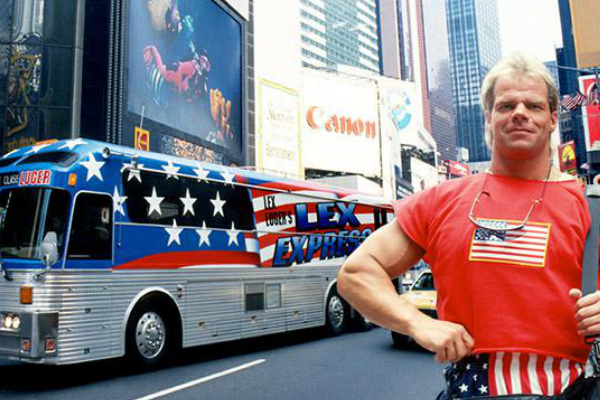
The close of the WBF allowed the then WWF to absorb the contract of Lex Luger and bring him back into the world of pro wrestling. Of course, Luger's 1993 babyface turn came at the same time that Hulk Hogan was leaving the WWF as steroid allegations intensified against the company. Aping the America-loving aspect of Hogan's gimmick and giving it to Luger, the big idea surrounding making Luger a top guy involved him travelling across the country on a red, white and blue bus to drum up support as he chased heel "evil Japanese" champion Yokozuna. The payoff to the Lex Express being Luger getting a countout win versus Yokozuna at SummerSlam, and having that victory celebrated like a championship win. This ludicrous turn of events actually hurt Luger more than aided his cause. Sinking down the WWF card, it's no surprise that when his contract was up in 1995 that he defected back to WCW as well, Vince McMahon's "creative genius" had completely failed him.

4. Bobby Lashley

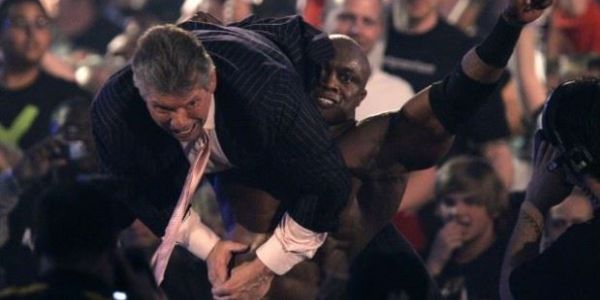
Lacking everything but a killer instinct, Bobby Lashley's run to main event stardom in WWE was waylaid by Vince McMahon basing a push on a wrestler's body far more than on their brain. Bobby Lashley was a collegiate and amateur wrestling superstar. However, for as much as he dominated in that realm, he wasn't exactly Kurt Angle in transferring those skills to the not quite comparable world of pro wrestling. Lashley's greatest fame came not as the ECW or US Champion though, but rather while being the ECW Champion and competing as Donald Trump's surrogate against McMahon's charge Umaga in the "Battle of the Billionaires" at Wrestlemania 23. Less than two years after the match, after suffering a severe shoulder injury and being largely underwhelming as a top draw, Lashley was released from his WWE contract.

3. Bringing Back ECW

In 2007, Vince McMahon won the World Championship of his resurrected ECW. By 2010, and after seeing zombies, Straight Edge Superstars, Paragons of Virtue, Shamans of Sexy and yes, Kelly Kelly in the brand, it died. Vince McMahon resurrected ECW in order to make money. When ECW was actually costing him more money than it was making him, he killed it...again. And it's not coming back. There's so much more that could be said about how bad Vince McMahon's ECW was that it could easily fill its own list of bad television, bad booking and bad everything else, too.

2. Killing Himself

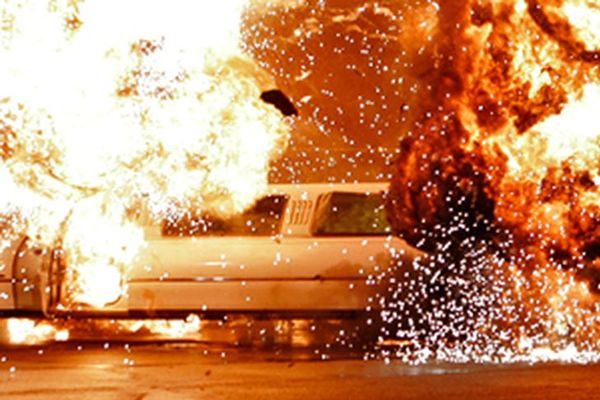
On June 11, 2007, Monday Night Raw ended with Vince McMahon entering a limousine just prior to its explosion. Minutes later, WWE.com reported the angle with a "legitimate" air, proclaiming Vince McMahon as "presumed dead". WWE later acknowledged to CNBC that he was not truly dead, but rather Vince's "Mr. McMahon" character that had bit the bullet. In the cruelest of karmic twists, on June 25, 2007, Raw opened with a cold open and Vince/Mr. McMahon in the ring stating that he was very much alive, but that Chris Benoit, his wife and their son Daniel were dead. In one of those moments where real life is stranger than fiction, this was an incredibly bad decision.

1. Steve Austin's Heel Turn

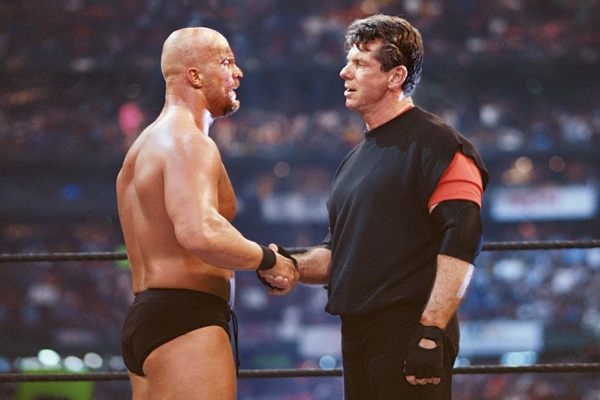
Some decisions make awesome "wrestling" sense. However, in the sense that wrestling is televised "sports entertainment," the decision for Steve Austin and Vince McMahon to shake hands at the end of Wrestlemania 17 meant that two of TV's most iconic scripted combatants of the late 1990s were no longer going to be fighting each other, and in many ways, that also symbolized that it was time to stop watching pro wrestling on television, too. Steve Austin's reasons for wanting to turn heel make all of the traditional pro wrestling sense. Not wanting to burn himself out, thinking that there was no more money to be made as a babyface, needing fresh opponents, etc. All of these reasons are logical when approaching the situation from a traditional wrestling mindset. The idea that Vince McMahon would be okay with the finish of Wrestlemania that turned one of his biggest cash cows heel and would also potentially turn off many longtime viewers is shocking. Vince was never really a "wrestling guy," and had he not been in this situation, just consider how many things would've been different as a result.

Contributor
Contributor

Besides having been an independent professional wrestling manager for a decade, Marcus Dowling is a Washington, DC-based writer who has contributed to a plethora of online and print magazines and newspapers writing about music and popular culture over the past 15 years.