13 Wrestlers Who Died In The Ring
It's happened more times than you might think.
https://www.youtube.com/watch?v=zhnOkDV3LpU Note: This article has been revived because of the sad death of Perro Aguayo in the ring this Friday night. You can see our news story on the tragic incident HERE. This article remembers those wrestlers we tragically lost in the ring... Outsiders will often label professional wrestling as 'fake'. While it's true that the punches and kicks don't normally connect, it is still an incredibly high risk profession. It takes a tremendous toll on a person's body, and unfortunately, nobody has yet discovered a method of faking gravity. Every bump on the canvas that you see, and every thud on the canvas that you hear, is real. It has been estimated by doctors that each 'regular' bump that a wrestler takes (that is to say, from a standing position to the floor, as opposed to a manoeuvre executed from the top rope) is the equivalent of being involved in a car accident at 20mph. As well as impacting the body itself, a lot of these bumps can impact the brain as well. The head was not designed to be snapped back and forth suddenly: it causes the brain to rattle inside the skull and can cause all manner of problems, as this article will show. While a boxer may be more at risk of this, a boxer fights maybe two or three times a year. A professional wrestler will compete anywhere between 100-300 times a year, depending on their situation. Of course, things have changed these days, and with far greater awareness of health & safety and medical emergency handling, such deaths are, hopefully, less common. Jerry Lawler's brush with death live on Raw in 2012 is proof of this. If Lawler had been at home, or wrestling on a smaller, independent show, then it is likely that he would have passed away on that day. The following 13 people from around the world, listed alphabetically, were not so lucky. They all died in the ring, testament to the dangers of wrestling and the fact that every time a wrestler steps into the ring, they are putting their lives on the line in the name of entertaining the fans who have paid to watch them.
13. Gary Albright

12. Kevin Cawley

11. Larry Cameron

10. 'Iron' Mike DiBiase
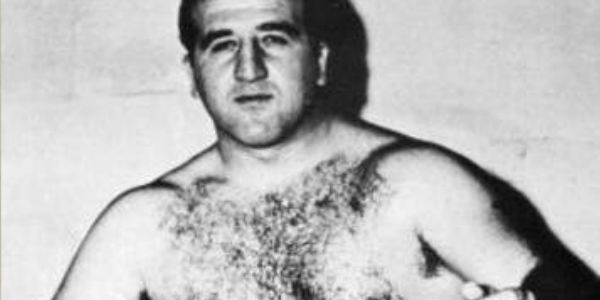
9. Owen Hart
 Owen Hart's accidental death is, after Chris Benoit, the most infamous death in professional wrestling in the West. The youngest son of Stu Hart, Owen was the most naturally gifted of all the male Hart brothers, all of whom became wrestlers. Trained by his family, he debuted for Stampede Wrestling as a teenager in 1983. He also made several trips to the UK, as Stampede had close links with Joint Promotions, with wrestlers from one promotion frequently touring the other. Owen made two appearances on British television, one as an 18 year old in an international tag team tournament, where he tagged with brother Ross, and the second in 1987 as a much more mature wrestler in an all-time British classic against Marty Jones, challenging for Jones's World Mid-Heavyweight Championship. https://www.youtube.com/watch?v=teRI76gncUg In between these two appearances, Hart had also ventured out to New Japan, where junior heavyweights like Jushin Liger, with their faster paced matches, were starting to capture the attention of the Japanese audiences. Hart had a brief tenure in the WWF in 1988-89 under a mask as the high flying Blue Blazer. While a favourite of children and wrestling connoisseurs, he didn't fit in with the WWF of the time, where the heavyweights ruled the land, and soon left for pastures new. After a very short stay in WCW, where he wrestled just five times on television, a stay in Mexico using the Blazer gimmick, and another trip to England, where he had another British classic in Bath with Danny Collins, he resurfaced in the WWF, where his most famous feud in the WWF came in 1994. Sick of being in his brother's shadow, Owen turned heel and attacked Bret after they had unsuccessfully challenged for the World Tag Team Championship at the Royal Rumble. This led to their all-time classic confrontation at WrestleMania X, and a dramatic cage match which headlined SummerSlam '94. But then, with these two combatants, they were never going to have anything but classic matches really. Bret won the feud and Owen dropped back down the card, mainly competing in successful tag teams with Davey Boy Smith and Yokozuna. In 1999, Hart 'quit' the promotion in storyline and started competing once more as the masked Blue Blazer. However, this time, in the Attitude era, the righteous, preaching and clumsy Blazer was a pseudo-heel comedy character. He would occasionally descend from the ceiling attached to a zip wire, usually getting stuck a few feet off the ground and needing help to get unshackled. All of this was done as a dig at Sting in WCW. In the midst of WCW's dominance in the Monday Night Wars, the reinvention of Sting as a dark character descending from the ceiling had been one of the sparks of their triumphant ratings. At the Over the Edge pay-per-view on May 23rd 1999 in Kansas City, Hart was supposed to descend from the ceiling in his full Blue Blazer attire. While a pre-recorded interview played out to the television audience, Hart's shackle accidentally released within moments of him stepping off the catwalk in the rafters. He plummeted approximately 80 feet, landing chest first on the top rope just by the turnbuckle, and slumping into the ring. Fortunately for the TV audience, this footage never made it to air due to the slight delay that live TV is usually broadcast on. The camera panned the audience before cutting to a visibly shell-shocked Jim Ross, who had to inform viewers what had happened, telling them famously that this was not part of a storyline, but was "as real as real can be". Hart was rushed to hospital but he had died, most probably in the ring, from blunt force trauma. In the aftermath, the WWF was widely criticised afterwards for continuing with the rest of the show. WCW, meanwhile, immediately stopped using a similar zip wire for Sting's entrances, and Martha Hart, Owen's widow, took legal action against the WWF and the manufacturers of the shackle device which had opened accidentally, sending Hart to his death at the age of 34.
8. Emiko Kado
7. Mal 'King Kong' Kirk
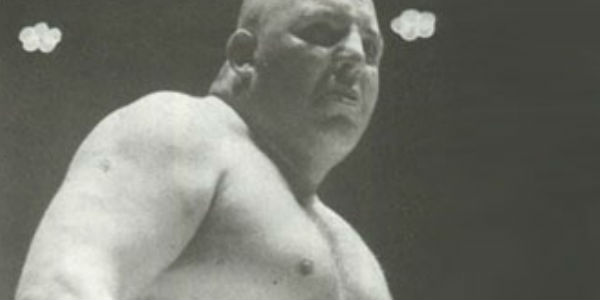
6. Luther Lindsay

5. Plum Mariko

4. Mitsuharu Misawa
WARNING: The video below shows the immediate aftermath of Misawa's death in the ring, which some readers may find distressing. Mitsuharu Misawa was a bona fide legend of Japanese wrestling. It is no exaggeration to say that his death would be the equivalent of Ric Flair or Hulk Hogan passing away inside the ring. A very good amateur wrestler, he turned pro with All Japan Pro Wrestling, the promotion he was a huge fan of as a youngster, in 1981. In 1984, Misawa's name disappeared from AJPW bills and a new wrestler, Tiger Mask II, was born, with Misawa under the mask. He had huge boots to fill, as the original Tiger Mask, Satoru Sayama, had been he first wrestler to popularise junior heavyweight wrestling in Japan. Under the mask, Misawa feuded with the likes of Dynamite Kid and Chavo Guerrero Sr, and in April 1990, he fought Bret Hart to a 20 minute time limit draw at the WWF/AJPW Summit 1990 show at the Tokyo Dome. Later that year, during a tag match, he dramatically got his partner, Toshiaki Kawada, to rip his mask off and continued wrestling, where he was immediately identified by the commentators as Mitsuharu Misawa. Misawa climbed the ladder of AJPW and won a total of five Triple Crown championships. He established himself as the top star of AJPW throughout the 1990s, competing in many hard-hitting five star classics, particularly against his old tag partner Kawada. After AJPW President Giant Baba died in 1999, Misawa took over, but fell out with Baba's widow and was removed from his position the following year. This led to Misawa forming his own promotion, Pro Wrestling NOAH (representing the journey away from AJPW as per Noah with his ark), where he took the vast majority of the AJPW roster with him. With a green ring canvas, the colour of Misawa's tights, this was undoubtedly his baby. Pro Wrestling NOAH soon became the number one promotion in Japan, mainly thanks to the consistently high quality of the matches. However, these matches took their toll on each wrestler's body and the cracks began to show. Headliner Kenta Kobashi's body started to fall apart and then he contracted cancer. New headliners like Takeshi Morishima and Naomichi Marufuji, were not really taken to heart by the NOAH fans. The main title in NOAH, the GHC (Global Honoured Crown) World Heavyweight Championship, was initially won in a tournament by Misawa, and throughout NOAH's history, much like John Cena in the WWE, the title would always return to him when an attempt to create a new headliner failed. By 2009, Misawa wanted desperately to retire. Years of cumulative injuries from the hard hitting Japanese style were taking their toll on his body, but the Japanese culture was to never complain and just get on wth things. Plus, NOAH was not in a position financially for Misawa to retire. Without him, audiences would drop and with no guaranteed headliner to replace him, he had to carry on. On June 13th 2009, Misawa teamed with his protege Go Shiozaki to challenge GHC World Tag Team Champions Bison Smith and Akitoshi Saito in Hiroshima. Misawa took a belly to back suplex from Saito, a move that he would have taken thousands of times before. However, on this occasion, Misawa stayed down on the canvas. A team of medics worked on him as the roster all emerged from the dressing room to surround him. Women in the audience were in tears as the crowd chanted, "Misawa! Misawa!" in an attempt to rally their hero. But it was all to no avail. Misawa's death not only shocked the wrestling world, but Japan as a whole and his death in the ring was mainstream headline news. http://www.youtube.com/watch?v=oGdiAF09R7Q Although the official cause of death was never released publicly (a Japanese law enables the cause to be kept private if requested), it was widely believed that Misawa suffered a major injury to the cervical vertebrae, which connects the brain to the spine, which led to cardiac arrest and his death in the ring at the age of 46. His death led to calls for more regulation in Japanese wrestling, but this never came about. Although still operating today, Pro Wrestling NOAH has never really recovered from the shocking death of their founder and figurehead.
3. Oro
http://www.youtube.com/watch?v=8uNObZL8gfo WARNING: The video above features the immediate aftermath of the incident described on this page, which some readers may find distressing. In Mexican Lucha Libre wrestling, the masked wrestler is king and the vast majority of 'luchadors' at least start their careers under a mask. Whether they finish it still with their mask intact is another thing entirely. Jesús Javier Hernández Silva was a young man who wanted to follow in his father's footsteps and become a luchador. Both Jesus and his brother Esteban became professional wrestlers, initially against their father's wishes. Jesus took up the name Oro (meaning gold in Spanish), wearing a black and gold mask, while Esteban became Plata (silver), wearing a mask that was identical except that the gold was replaced with silver. They were joined by a Lucha veteran who went under a new mask as Platino (Platinum) to form a trio called Los Metalicos (The Metals) to compete in the six man tag matches that are the staple of Lucha Libre. Success came quickly to the team, and one year after their debut, Los Metalicos won the Mexican National Tag Team Championships. Oro also caught the eye of Japanese veteran Gran Hamada, who invited him to travel to Japan and work for his new promotion, which fused Japanese style and Mexican style. Oro even teamed up with the legendary Mil Mascaras and Ultimo Dragon. Upon his return home to Mexico, he was being groomed for singles stardom in his native EMLL promotion. In May 1993, the foundations of this push were laid when he won his only singles title, the NWA World Middleweight Championship, a title later held by Ultimo Dragon, Chris Jericho and Mistico (Sin Cara). On October 26th 1993, Oro was featured in a six man tag match, teaming with Brazo de Plata (not to be confused with his brother, Plata) and La Fiera against Kahoz, Jaque Mate and Dr Wagner Jr. Oro had said ahead of the match that he wanted to take a dramatic looking bump on his head to help build the storyline of the match. During the match, Kahoz clotheslined Oro, who, as planned, span around and landed on his head. Kahoz attempted to pick him up, but his body had gone limp. He collapsed and his pulse faded. As he lay on the floor at ringside, the match continued without him, as the other luchadors just assumed he had been knocked out. He was taken out on a stretcher while his brother shouted to him to not fall asleep and maintain consciousness. However, Oro died before he could even be placed into an ambulance. He had passed away, with his death believed to have come from a brain aneurysm aged just 21. His brother Plata continued to wrestle, but took up the Oro mask and wrestled as Oro II in honour of his brother. In 2011, his son, the original Oro's nephew, started wrestling as Oro Jr, ensuring that the name of Oro contnues to live on in Lucha Libre.2. Moondog Spot
http://www.youtube.com/watch?v=-kUB02lukk4 WARNING: The video above is taken from local TV news reports the following day and briefly shows the incident described below, which some readers may find distressing. Larry Booker was a veteran of the wrestling industry who had two distinct periods of his career under different gimmicks. As Larry Latham, he was able to compete in rival promotions in Tennessee, in Nashville and Memphis. Here he formed the vicious heel tag team of The Blond Bombers with Wayne Farris (who later found worldwide fame as The Honky Tonk Man in the WWF). They became widely acknowledged as the first people to popularise what later became known as hardcore wrestling following their wild concession stand brawl with Jerry Lawler and Bill Dundee in Tupelo, Mississippi. Booker disappeared from wrestling for several years and re-emerged, a lot heavier, under a new gimmick of Moondog Spot, part of the interchangeable Moondogs stable that featured in Memphis and then in the then WWWF. In fact, Moondog Spot replaced Moondog King as part of the team while they were WWWF World Tag Team Champions in 1981.With his ruffled long blond hair, straggly beard, large gut and tattered jeans, while carrying a large bone to the ring (which was often used as a weapon), he was a sight to behold. Spot even made it onto one of the WWF's first ever ventures into pay-per-view in November 1985 at the Wrestling Classic tournament, where he defeated Terry Funk before losing a battle of the canines against The Junk Yard Dog. He was still wrestling on the independents in 2003, and had even had a brief stay in TNA that year. On November 29th 2003, on a show to celebrate Jerry Lawler's 54th birthday that day at the famous Mid South Coliseum in Memphis, The Moondogs (Spot and Puppy Love, another addition to the Moondogs) were featured in a four way concession stand battle royal with The Rock 'n' Roll Express, The Lifeguards and Alan Steel & Mike Money. It was a typical Memphis brawl, during which fans noticed that Spot was slumped in the corner, not moving. Everybody in the ring just assumed that Spot was selling a weapon shot, when in actual fact, he had suffered a heart attack in the ring. Once his partner realised that something was wrong, he went to check on him and the match went straight to the finish. The other three teams hastily left the ring, leaving the Moondogs, their manager and medics in the ring, as the audience was asked to stay in their seats and were told that this was not part of the show. Other wrestlers came out and Spot was wheeled away on a gurney as the audience applauded. An intermission was called, during which the audience were told that he was still breathing. The show continued, and after the main event, it was announced that Spot had died and a ten bell salute and silence was held for him. He was 51 and had been suffering from diabetes for some time. Again, the lack of regulation in independent wrestling meant that an overweight man in his 50s with existing health issues was allowed to wrestle in a physically strenuous environment.1. Jeanette Wolfe
