17 Things We Learned From Eric Bischoff On Legends With JBL (Part 1)
Did Bischoff really fire Stone Cold and JR? And what are the real origins of the nWo?
17. WWE And Bischoff Are On Very Good Terms

16. WWE Tryout And Alternate Histories
15. Growing Up As A Fan Of The Business

14. Vince 'Killing The Business' In The 1980s

13. Ted Turner
JBL details the long and complicated history of Vince buying Crockett Promotions, selling it back to him, the SuperClash PPV, AWA going out of business and Bischoff essentially being broke and having his car towed from his garage. JBL asks that given the history, did Bischoff and Ted Turned have a common goal of getting the 'bad guy from New York' and trying to drive him out of business. 'No, not at all' is Bischoff's reply. He also claims to not know much about the history of the wheelings and dealings between promotions and Vince's deal with TBS until the last couple of years. He says it never came up besides one time when Ted asked Bischoff what WCW needed to do to be competitive with WWE, but it was never a case of them going after Vince specifically (at least not in the early days). Bischoff says it wasn't personal, at least not to him. He went as far as to say that he didn't even talked to Turner that often, maybe seeing him at a Christmas party or in an elevator or something. The two weren't best friends and didn't play golf together. They go off track a little bit and get into whether or not Turner was bitter at the AOL/Time Warner merger in 2000 and Bischoff says that he was and that, when pressed, he thinks WCW 'might have had a chance' to survive had Turner stuck around. He says that he relied on his relationship with Turner and Turner's stroke but that by 1998 Turner didn't have that kind of stroke in his own company anymore.12. Jim Herd

11. Bill Watts

10. Becoming The Boss

9. Heat With Jim Ross
8. Cutting Costs And Moving To Disney
When Bischoff took charge he looked to reduce spending with a view to actually turning a profit, something WCW had never done. In fact, it was haemorrhaging money when he took over as WCW couldn't draw a big paying audience, instead attracting pitiful crowds at house shows and papering crowds for TV and PPV. So Bischoff stopped live events and looked at Disney-MGM studios in Florida as a possible new place to tape from. This was met with a lot of resistance from the old timers, Bischoff said, who were also displeased with the lack of house shows. But Bischoff knew he had to cut costs and his initial goal was to get WCW to make a single dollar of profit while he was in charge. He thinks that the narrative of 'Bischoff got given a load of money to kick Vince McMahon's ass' is a convenient narrative but that's not how it was as he spent the first couple of years aggressively cutting costs and implementing new strategies. Bischoff said he earned the budgets that he got in later years by proving his worth in the early days.7. He Didn't Want To Sign Lex Luger

6. Stealing Stars And Missing Stars

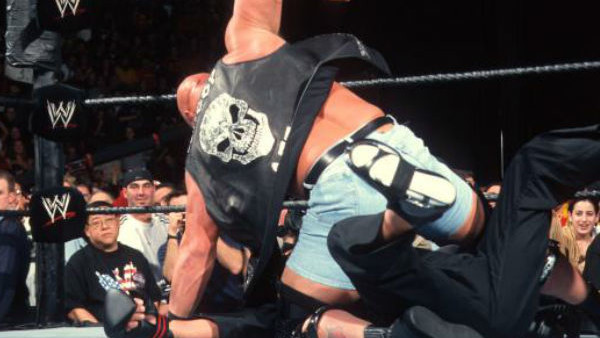
5. Firing Steve Austin
4. The Cruiserweights And Their Glass Ceiling
JBL gives Bischoff credit for the cruiserweight division and how it helped to revolutionise the business. He said that while it was a hell of a car crash and entertaining, did Bischoff not think the term 'cruiserweight' was a bit of a catch-22, since once you label a guy that you can't then put the Heavyweight Title on him and that they were then sort of relegated to the midcard. Bischoff said that it wasn't his intention and that he had the conversation with guys like Eddie Guerrero and Rey Mysterio and even held a meeting with the cruiserweight workers where he outlined their role in the show, using the term 'car crash' himself. He said that the cruiserweights would always be on during the 9 o'clock hour to stop viewers from turning to the competition. JBL bluntly states that WWE tried to copy it with the Light Heavyweight division and failed miserably, which is a fair comment. They certainly weren't a patch on WCW's cruiserweights. But JBL says that Eddie, Jericho and Mysterio all came to WWE and became major stars, with Bischoff interjecting and saying that it was because he 'made them stars'. Bischoffs ends by saying they weren't ready to be main events stars when he was in charge of WCW.3. The Origins Of The nWo

2. He Never Thought That WWE Would Lose TV Because They Went Too Far

1. Bischoff's Success