17 Wrestlers You Didn't Know Worked In WWE
Some of the biggest stars in the history of the business who just passed through...
17. Samoa Joe
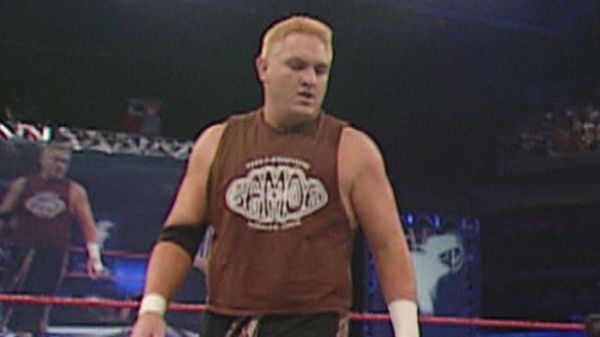
https://www.youtube.com/watch?v=fG5ONc6aWac In 2005, it was clear that CM Punk and Samoa Joe were both going to make the move from Ring of Honor to a bigger promotion. Punk was clearly going to WWE since he was very public about hating TNA, but Joe was a question mark. When he heard rumors that WWE was signing him just to bury him, he opted for TNA and has been a mainstay ever since. He did wrestle on WWE television once, though: In 2001, when he was just a southern California indie guy without much of a name, a young, slim Joe took on Essa Rios. This was during a period where a lot of indie guys got showcase matches against cruiserweights like Rios, and it's a pretty fun match, though Joe doesn't look like the world beater he became later.16. Bruiser Brody
https://www.youtube.com/watch?v=qLYXf3x-evw Arguably biggest American star of the '80s not to have a run with a national promotion during that time, Bruiser Brody was a wild brawler who made his primary living in Japan. An outlaw who wasn't afraid to stand up to promoters, he took dates in indie promotions and the remaining territories in between his overseas tours. Before that, he was a green rookie wrestling under his real name, Frank Goodish. In Florida, met Killer Kowalski, who recommended him to Vince McMahon Sr. as a potential opponent for WWWF Champion Bruno Sammartino. It was there that he got the Bruiser Brody name, as well as his behind the scenes reputation, as he was fired after a confrontation with part-owner Gorilla Monsoon.15. El Hijo Del Santo
https://www.youtube.com/watch?v=xa80Z1ZeNWQ Recently retired due to a back injury, the son of the biggest legend in lucha libre history became a huge star on his own, thanks in part to being a better in-ring wrestler than his father. A savvy businessman, he would only make season appearances on television to avoid overexposure, as he made his living touring the country and didn't want to be too familiar to the audience. In 1998, the WWF made a deal with Univision for a Spanish-language lucha libre show with a mix of WWF and Mexican talent (Santo's far from the only one, but he's by far the most recognizable to English-speaking fans). Santo was brought in as the star, and he had a number of fun matches, though they were short because it was a half hour show. The relationship was doomed from the beginning, though, as WWE wanted the talent to unmask. They were so magnanimous that they even offered Santo a $5,000 bonus! Thankfully, someone (likely Jim Cornette) intervened and he didn't walk out right there.14. The Fabulous Freebirds
https://www.youtube.com/watch?v=JfSCVfGH1As Yes, Michael Hayes has been with the company as a non-wrestler since 1995, but he had a cup of coffee with the WWF in 1984 as they were expanding nationally. On the heels of Cyndi Lauper getting them a ton of publicity, the WWF wanted rock and roll wrestlers to be associated with her. With Hayes trying to kickstart a singing career, who better than Hayes and his partners, Buddy Roberts and Terry Gordy? It lasted a few weeks, with a handful of matches on weekly TV and televised house shows. Hayes lasted a few weeks longer. They just didn't fit with the WWF, either stylistically or backstage.13. Konnan

12. Christopher Daniels
https://www.youtube.com/watch?v=Vs2oYmSTf1Y See Samoa Joe, just a few years earlier. Daniels was a veteran independent wrestler, but the post-ECW indie boom was years away. He got a pair of TV matches against Taka Michinoku on Shotgun Saturday Night, and impressed the hardcore fans watching the WWF's most throwaway show. He started to be more in demand among promoters all over the country, and compilations of his best matches were heavily traded. He became a hot commodity and was signed to WCW, but it didn't go anywhere. He became one of the most induring stars on the independent scene via runs with ROH and TNA.11. Tiger Mask
https://www.youtube.com/watch?v=tXy3Eus0p6g From the mid-'70s through the mid-'80s, the WWF had a working agreement with New Japan Pro Wrestling. The company got a big booking fee while NJPW got big name American stars and would occasionally tape television at the WWF's Madison Square Garden shows, where a few Japanese stars would appear. Another part of the deal was that NJPW could bill a new belt, their junior heavyweight belt, as the WWF Junior Heavyweight Championship. Initially conceieved to elevate Tatsumi Fujinami on the way to becoming a main eventer, it became a full-fledged division. When Fujinami moved up, he was replaced by Satoru Sayama in the guise of Tiger Mask, a legendary anime character. With a blend of kickboxing techniques, high flying inspired by Lizmark in Mexico, and British-style matwork, he became a giant star. He made numerous WWF appearances on the weekly TV shows and at Madison Square Garden, leading to the northeast fans declaring him the greatest high flyer they'd ever seen. His prime was just two years, but he made such an impression that Best of Tiger Mask sets are the best-selling pro wrestling VHS and DVD releases every in Japan.10. Kevin Von Erich
https://www.youtube.com/watch?v=8AEhaCeMVNM The oldest and last surviving of the wrestling Von Erich brothers (the oldest died in an accident as a child), he was one of the biggest stars in the wrestling business in the first half of the '80s. Famous for wrestling barefoot, he was one of the better high flyers in the United States at that time as well as part of a number of great brawls like his family's feud with the Fabulous Freebirds. He spent most of his career at home in Texas with ocassional stops elsewhere, but never he never went anywhere else full-time. It was always quick shots or tours for a few weeks like in Japan. One of those quick shots was at Madison Square Garden in 1980, where he got a showcase match beating area mainstay Johnny Rodz. He returned for a dark match in Texas in 1991, when his younger brother Kerry was on the roster as the Texas Tornado.9. A.J. Styles
https://www.youtube.com/watch?v=y1h3JCirtuU One of the faces of TNA for much of its existence (he was in their first pay-per-view match), the popular high flyer was actually under WCW contract when the company was bought by WWE. His contract and that of his tag team partner Air Paris were not picked up, though, so both went back to the independent scene, including their home promotion, NWA Wildside. With the deaths of WCW and ECW, new promotions tried to fill the void, with TNA stepping up to try to replace WCW and Ring of Honor trying to replace ECW. Styles quickly became one of the top stars in both companies, and caught the eye of WWE to a degree. He appeared on the B-shows like others before him and even got a few try-out dark matches. While impressive, he wasn't what WWE was looking for at the time. Styles left TNA this year, claiming they attempted to cut his contracted money 40%, and WWE didn't show much interest this time, either.8. Kevin Sullivan
https://www.youtube.com/watch?v=GSPR4rKq7U8 Best known nationally as a WCW mainstay (and their head booker) during the nWo boom, Sullivan had decades of wrestling experience. He learned from some of wrestling's most creative minds, like Mark Lewin and Bob Roop, and carved out a niche for himself booking promotions where he'd work on top playing some variation of a Satanic character leading a stable of crazy characters. A Boston native, he grew up on the WWWF, and that's where he spent the mid-'70s, working the mid-card as a babyface. With the McMahons' love of ethnic babyfaces, including their fellow Irish-Americans, it's likely that the only reason he didn't get a bigger push was being short (billed at 5'9 and actually a few inches shorter) in a promotion that's always been the land of the giants.7. The Public Enemy
https://www.youtube.com/watch?v=dFLuGQrC48M The signature tag team of ECW in its early years, they left for WCW early in 1996, where they had minimal success: They won the tag titles once, but largely did jobs for bigger names and filled out B-level TV shows. The WCW stint exposed them as limited talents who Paul Heyman did an expert job protecting with booking, production, etc. In 1999, at the recommendation of Terry Taylor (who was working there as an announcer), the WWF hired them. They fizzled out in short order due to a number of issues including Rocco Rock appearing on camera during a segment where he was supposed to have disappeared. Most famously, they were booked to be squashed brutally by the Acolytes as punishment in a match filled with weapons shots and table bumps...only to have no idea that was the plan and thank their opponents for an awesome ECW-style match.6. Kaz Hayashi
5. Brad Armstrong
4. The Great Sasuke