18 WWE Attitude Era Midcarders That Deserve Hall Of Fame
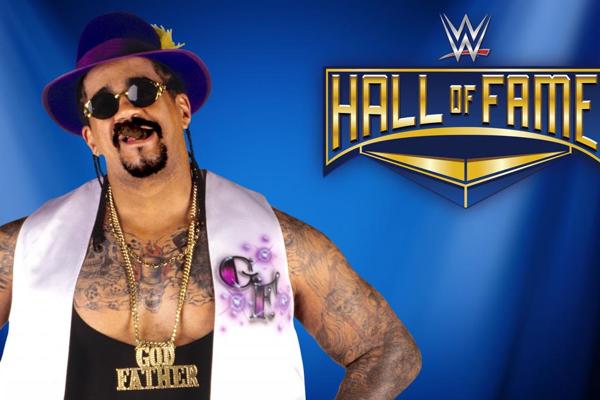
With The Godfather's induction, WWE should continue celebrating its most successful period.
The Attitude Era was a magical period for WWE. It bred some of the most captivating angles, memorable stories and unforgettable characters in the history of professional wrestling. It was also home to some of the truly great Superstars to ever compete in a Vince McMahon-owned ring.
The February 22 episode of Monday Night Raw brought with it the announcement that The Godfather would enter the company's Hall of Fame during WrestleMania weekend. A massively popular star whose penchant for pimping hos and rolling fatties fit in perfectly with the tone of that era's programming. He was a great opening match character in that he energized crowds and had them looking forward to the rest of the night's action. Never anything more than a midcard talent, he is still fondly remembered as an iconic persona.
What the Attitude Era did so well was give every member of the roster something to do. Thus, the label of "midcarder" was not nearly as offensive as it may be today. Not every Superstar in that role was a heavily gimmicky character. There were legitimate wrestlers, some of whom have belonged in the Hall for years now, their accomplishments more-than deserving of the honor.
In the wake of Godfather's call to immortality earlier this year, enjoy this look at 15 Superstars and three Divas who deserve to take their place among the greatest of all-time...
18. Terri Runnels

There are many reasons to argue against Terri Runnels' inclusion in the Hall of Fame, but there is no denying her longevity and the memorable storylines she was involved in. As Marlena, she was key to the overall Goldust package. She was enigmatic and created even more questions about the bizarre, face-painted Superstar. Standing at ringside and puffing on her cigar, she had fans questioning whether she was his significant other or the mastermind behind the Golden One's mind games.
After the breakup with Goldust, she was paired with Val Venis in an angle in which she openly tormented her former beau, who had been revealed to be her real life husband months earlier. Her and the adult film star Venis produced several "films" that aired on Raw, emotionally torturing the spiritually minded young man, who had ditched the gold and black to compete under his given name of Dustin Runnels.
As a heel, she was deliciously deceitful and devilishly distracting. She was a great addition to the Venis character but, for whatever reason, the decision was made to drop the program and, along with it, the on-screen relationship. She would go on to create the Terri Invitational Tournament in which either Edge and Christian or the Hardy Boyz would receive her managerial "services," then entered a feud with The Kat in a memorable Divas program that stretched throughout 2000. Gigs managing Perry Saturn and Raven followed before Terri ended her run with WWE as a backstage announcer.
Never a women's wrestler, she did have a very brief reign as hardcore champion. The advent of the WWE Network has also allowed fans to get a peek at her days as Alexandra York in WCW. A company woman who did as she was asked, no matter how messy, degrading, sexual or ridiculous the segment, she deserves to be remembered among to other women that have graced the Hall. If for not other reason than she was so adaptable for so long and a key member of the Divas roster during WWE's most profitable run.
17. The British Bulldog
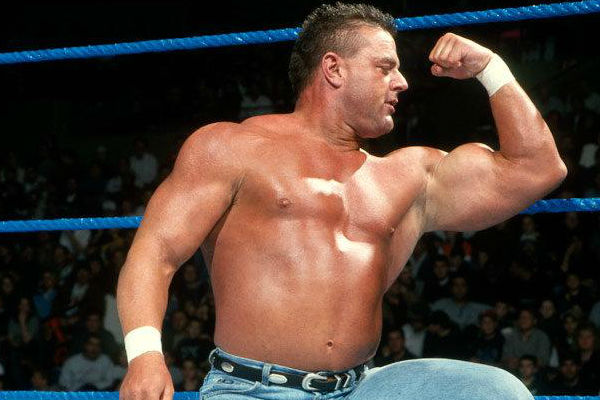
To suggest that "British Bulldog" Davey Boy Smith deserves an induction into the Hall of Fame based on his work during the Attitude Era would be ridiculous. He was clearly past his prime but a series of match with The Rock, Mankind and Triple H helped him find moderate success during the hottest period professional wrestling had ever seen.
While he was a solid midcard addition to the WWE roster based on name recognition alone, Smith's Hall of Fame credentials lie in his many accomplishments in the world of sports entertainment. One of its biggest stars over the span of 15 years, he collected eight championships in total while serving as one of the cornerstones of the company during the mid-1990s. An elite performer when focused and motivated, Bulldog was a powerhouse whose agility and speed was unmatched.
From the representation of his homeland of Great Britain, to his five-star classic against brother-in-law Bret "Hitman" Hart at SummerSlam 1992, he was a key player in some of the most memorable moments of his time. Given one last chance to achieve success as a singles competitor, Smith's body was in rough shape when he arrived in WWE for his final run in 1999.
Despite his lack of health, he worked hard against the top guys the industry had to offer and that is all anyone could have asked for the longtime fan-favorite.
16. Chyna

Regardless of what she did in her post-WWE days, Chyna absolutely deserves a place in the Hall of Fame. The first woman to tangle with men, she regularly tossed them around the ringside area as backup for Triple H. Eventually, she became so popular that fans became as invested in her as any of the men she accompanied to the squared circle.
Able to hold her own against the most dangerous men in the industry, Chyna began setting foot inside the squared circle for sanctioned matches against her male counterparts. And won. At one point, she was the No. 1 contender to the WWE Championship held by "Stone Cold" Steve Austin. Then, she followed that impressive feat by making history as the first female intercontinental champion. She would hold that title on two separate occasions, all the while sharing the ring with the likes of Chris Jericho, Jeff Jarrett, Kurt Angle, Rikishi, Eddie Guerrero and The Undertaker.
One of the few professional wrestlers to ever truly cross over into the mainstream media, she exceeded all expectations that anyone ever could have had for her. Her appearance in Playboy set records and changed the perception of beauty, at least for the time being. She was highly influential, with other promotions attempting to replicate her success but failing miserably. A former women's champion as well, Chyna accomplished all that there was for someone in her position to. Minus, of course, a stint with the WWE Championship.
The track records of current Hall of Famers are far from spotless, with some having been arrested for domestic violence and others with noted drug histories. To rob Chyna of proper recognition for her contributions "because of what kids may find if they Google her" is the biggest cop out from WWE in years.
15. Bradshaw
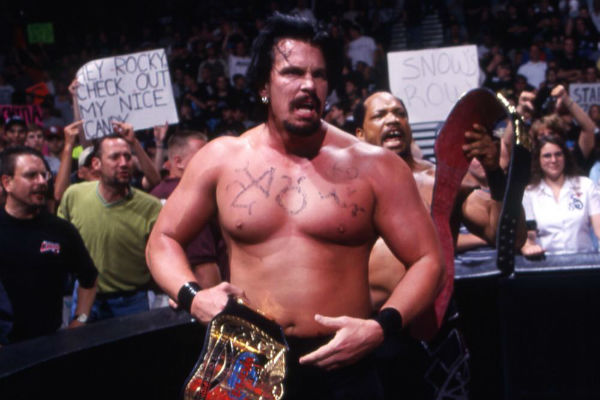
In 2004, John Bradshaw Layfield captured the WWE Championship by defeating Eddie Guerrero at Great American Bash. In the process, he solidified his claim for a spot in the Hall of Fame, which will likely come his way sooner or later. But before he donned the white cowboy hat and adopted the persona of a New York businessman, Bradshaw was a kickass beer-drinker of the Acolyte Protection Agency. Throughout the Attitude Era, Bradshaw and partner Faarooq would dish out punishment to fellow WWE Superstars as the most feared tag team in the sport. For others, they provided protection. That is, for the right price.
As popular as they were, bruisers who got off on dealing cards and ass-kickings, there was a time when they were not the wild fan favorites that they would become. As one of the enforcers of The Undertaker's Ministry of Darkness, Bradshaw was key to keeping The Big Show, Mankind, Ken Shamrock and Steve Austin away from The Phenom. And in the process, he found himself and his partner at odds with The Brood, leading to an understated rivalry between the factions that dominated early 1999.
A wrestler in the mold of Stan Hansen, Bradshaw was a rugged, take-no-prisoners Superstar who looked the part, intimidated his peers as much as he did the fans and went on the achieve tremendous things as a singles worker. His entry into the Hall is but a question of "when," not "if."
14. Mark Henry
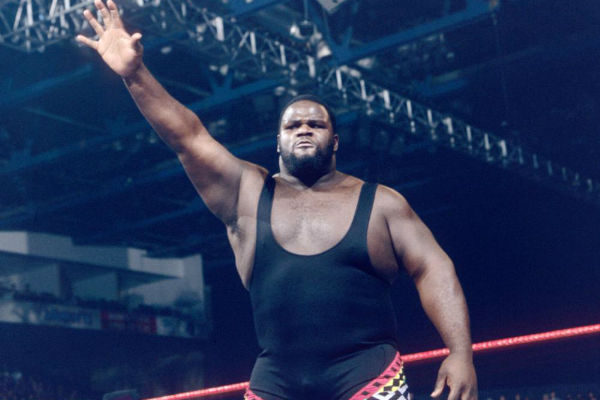
The second of three Superstars destined to enter the Hall of Fame, Mark Henry starred during the Attitude Era as the sex-addicted heavyweight notorious for having knocked up Mae Young. Few could have ever imagined that he would become one of the company's longest-tenured stars ever, with 20 years of loyalty to Vince McMahon's promotion and a World Heavyweight Championship on his resume. A former Olympic power lifter, Henry failed to live up to his sizable contract during his first two years with the company. A heel turn and run with The Nation, though, helped him gain momentum.
A friendship with D'Lo Brown resulted in a moderately successful tag team that ended prematurely when injury struck Henry. It was around this time, beginning late in 1998, that Henry underwent a character change. There was significantly less emphasis put on his status as the World's Strongest Man. Instead, he became the Superstar with the world's largest sexual appetite. From Chyna to Terri Runnels to the aforementioned Mae Young, no woman could resist a taste of Sexual Chocolate.
Henry's charisma and fun-loving personality shined through and the result was a beloved character whose nickname is still chanted in arenas wherever the big Texan competes.
13. Christian
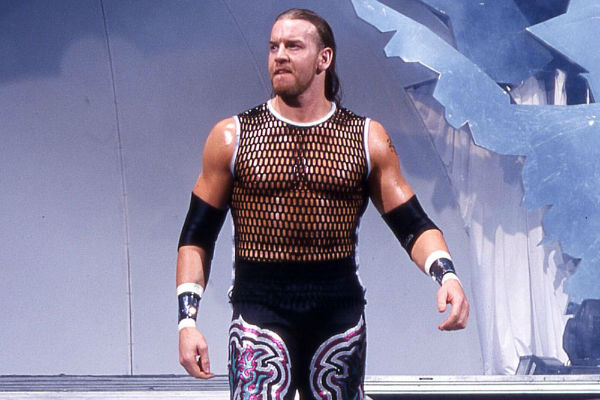
The third and final "sure thing" on this list is Christian, a former world heavyweight champion whose legacy as a tag team competitor will be as important to his Hall of Fame induction as his run as a singles star. Debuting for WWE in October 1998, he joined Edge and Gangrel as members of The Brood, a vampire-inspired goth faction that almost immediately deemed the coolest element of Vince McMahon's company. When the group split up, though, Christian and Edge went on to achieve greatness as a tag team, collecting 10 reigns as champions while simultaneously reeking of awesomeness.
Edge was always touted as the future star of the team but Christian was just as essential to the success of the team. He played off his childhood friend so well that every segment they appeared in was comedic gold. Who can possibly forget him training to challenge for the Lightheavyweight Championship by wearing a chicken suit?
He would go on to greatness as a singles competitor, winning every major championship available to him and becoming the first wrestler to willingly jump to TNA. But it was the foundation that he laid in the Attitude Era, and the classic Tables, Ladders and Chairs matches that he was part of, that helped establish him as one of the premiere talents in professional wrestling.
12. Val Venis

There may be no character that better personifies the sexual element of the Attitude Era better than Val Venis. Handed the gimmick of an adult film star, he made the character his own. From the not-so-subtle innuendos to the moaning and groaning that accompanied every sentence out of his mouth, not to mention the innovative vignettes that managed to incorporate world renowned pornstar Jenna Jameson into them, he was 100-percent invested in the persona. Fans bought into it, accepting it because he did.
Venis was never more than a quality wrestler in a midcard role, capturing the Intercontinental Championship on two separate occasions, first as a babyface, then as a heel. While he is most remembered as the babyface that had fans laughing at every inappropriate sexual reference he made during pre-match promos, his best work may have come as a heel in the summer of 2000, when he aligned himself with Trish Stratus and feuded with Rikishi. The two Superstars battled in a Steel Cage match at the Fully Loaded pay-per-view that saw Venis endure a top rope splash at the hands of the 350-pound competitor.
His days as a bona fide star came to an end late in that year when he was shoved into the Right to Censor faction, stripping him of his gimmick...and his heat. Despite the late-era misstep, Venis was a star of his time, a character easily associated with the most creative era in sports-entertainment history. Some may look at the later years of his career as a glorified jobber and argue against inclusion in the Hall but, if Koko B. Ware can be included based strictly on his WWE career, Venis at least deserves consideration.
11. Raven
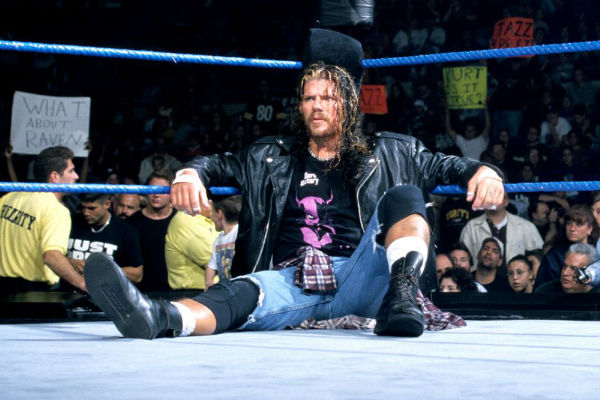
Raven returned to WWE in 2000, six years after he last appeared in the company as Johnny Polo. Though the most success he would achieve in his second go-round with the company would countless reigns as hardcore champion, Raven deserves inclusion in the Hall of Fame as much for his revolutionary character and many contributions to the ECW product as anything. A cerebral performer who understood the need to change with the times, to stay one step ahead of pop culture, he adopted a persona that was straight out of Seattle's grunge scene.
He was anti-society and fueled some of the most innovative storytelling in wrestling history under Paul Heyman. He became the centerpiece of the ECW product, waging war with Tommy Dreamer, Sandman and The Pitbulls all at the same time. When he finally did make the jump to WWE in the new Millennium, he was immediately leaned on as the savior of a hardcore division that had become a caricature of itself.
While he was still forced to work under the ridiculous 24/7 rules, he was able to flex his creative muscles to deliver some of the highest quality hardcore title bouts since the infancy of the title in late 1998.
10. Dean Malenko

Dean Malenko did nothing in WWE that would suggest he is deserving of a spot in the Hall of Fame. That he was a star in the company, during its hottest period, is all that lands him a spot on this list. What does get him into the discussion is the long line of accomplishments and the considerable body of work he put forth prior to arriving in McMahon Land. One of the most respected technicians of his or any era, Malenko was a phenomenal wrestler whose stoic personality earned him the nickname of "Iceman" during his days in ECW.
He was cold and calculating, twisting opponents every which way before forcing a tapout with his patented Texas Cloverleaf. His series with Eddie Guerrero ranks as one of the finest exports from the extreme promotion and the catalyst for Malenko's jump to WCW. There, he became one of the standard bearers for in-ring work at a time when focus was on the old timers dominating the main event scene.
His matches with Rey Mysterio, Chris Jericho and Juventud Guerrera helped establish the Cruiserweight division while his tag team with Chris Benoit proved to be one of the bright spots of 1999 for the Ted Turner-owned company. A celebrated wrestler with over 11 major championships to his name, and the top spot in the 1997 PWI 500 bolstering his resume, Malenko belongs in the Hall of Fame.
9. Jeff Jarrett
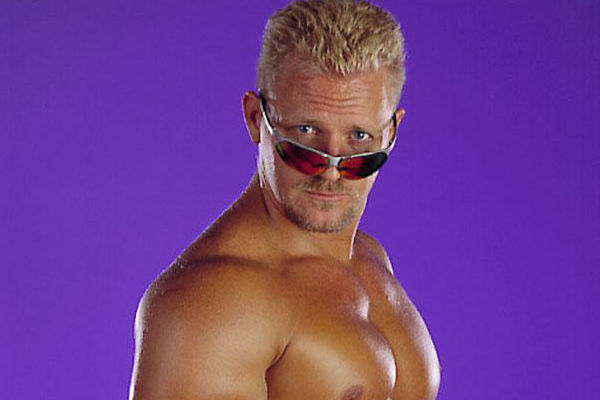
At one point in WWE history, before the title became a prop rather than a legitimate prize, no Superstar had ever held the Intercontinental Championship more times than Jeff Jarrett. With six reigns, he established himself as one of the greatest IC champions of all-time. During the Attitude Era, a period of time not readily associated with him, Jarrett emerged as the centerpiece of the midcard. He was the veteran that Vince McMahon could trust to carry a match or a program both on the mic and in the ring. And Jarrett proved himself repeatedly.
There was the steady evolution from the country musician Jarrett to the nasty, guitar-smashing chauvinist villain that warned fans against pissing him off and regularly put his hands on women. Not in the typical Attitude Era way, either. From his brief programs with Edge and D'Lo Brown to his full-blown rivalry with Chyna that led to the historic Good Housekeeping Match at No Mercy 1999, Jarrett was as solid a performer as there was.
Couple his accomplishments at that time with his countless world titles in WCW and TNA wrestling, his history as a promoter and his successes during the territory days in Memphis and you have a no-brainer for the Hall of Fame.
8. Big Boss Man

Big Boss Man was a huge star for Vince McMahon during the late 1980s and early '90s, both as a babyface and heel. When WCW came calling in 1993 with a bigger contract offer than his current employer, he made the jump, preceding so many others that he had shared the ring with. As his star faded in 1998, though, he saw the opportunity to return home to the company that made him a household name and he took it. As the bodyguard for the evil Mr. McMahon character, he was an integral part of The Corporation faction. He was the hired gun sent to the ring to soften up Steve Austin, Mankind, The Rock and The Undertaker.
The result was one of the most significant pushes of his career. Not since his series with Hulk Hogan had he been so important to the grand scheme of things. Even when he dropped down the card, he was still a valuable midcard talent, working the likes of Al Snow, Road Dogg and Hardcore Holly. His most memorable feud of that era, though, involved The Big Show. Months after cooking Snow's dog and feeding it to him, Boss Man intensified his heeldom by revealing that Big Show was a bastard child, then topped it all off by poking fun of the death of the giant's father.
He was brilliant, a nasty and old-school villain that relished every opportunity to infuriate the fans. And in the process, he strengthened what was already a Hall of Fame career.
7. The Dudley Boyz

When all is said and done, Bubba Ray and D-Von Dudley may be considered the greatest tag team of all-time. That sounds like a bold statement or hyperbole but The Dudley Boyz experienced considerable success in every promotion that they worked. They have collected 23 tag team championships across two continents, firmly establishing their greatness. That they did so in two different decades proves their longevity and, more importantly, their ability to remain relevant despite the constantly changing landscape.
Signed to WWE contracts in 1999, the duo wasted little time establishing themselves as the elite in tag team wrestling. Sure, there were bumps in the road but the tables gimmick earned them tremendous popularity. By February 2000, five months after arriving, they had already won the tag titles from The New Age Outlaws. Always a top team, they revolutionized tag wrestling along with Edge and Christian and The Hardy Boyz in a three-way feud that resulted in the epic Tables, Ladders and Chairs matches that wowed audiences and heightened the importance of the WWE Tag Team Championships.
Excelling as both heels and babyfaces, the team was a mainstay at or near the top of the tag mountain for their entire stay in the company. That they had as much success as they did around the world is further proof of their Hall of Fame excellence.
6. Owen Hart

There is no argument against Owen Hart. His accomplishments, his career...they speak for themselves. His tragic death in 1999 only immortalized him as one of the greatest wrestlers of his generation, his work never really diminishing. He was forever extraordinary. A recent WWE Home Video release documented how much he meant to the wrestlers he shared the locker room with, and the fans who enjoyed his work. During the Attitude Era, Hart was a bit of an anomaly. He was not the flashy, edgy characters that would drive programming. He was a wrestler, a fish out of water as the company's policies on adult-themed television changed. He never betrayed himself or his morals, remaining true to himself and his family.
His feud with Ken Shamrock, arguably his best during that era, was a throwback that allowed the Black Heart to do what he did better than just about anyone: wrestle. He would become a premiere tag team wrestler, partnering with Jeff Jarrett to form an old school heel tag team. From there, he donned the mask of The Blue Blazer, a gimmick he had revisited at the time of his death. Owen's legacy remains at the mercy of wife Martha, who has been incredibly reluctant to allow her husband's images to be used by WWE.
Some had hoped the release of the Owen: Hart of Gold DVD would lead to the enshrinement of the beloved Superstar. With that appearing not to be the case, only time will tell when, or if, the baby of the Hart family will one day come home to WWE, his many accomplishments celebrated in the grandest way imaginable.
5. Chris Benoit

Chris Benoit will never take his place among the greats in the Hall of Fame. Anyone still holding out hope is delusional. The circumstances surrounding his death, and the deaths of his wife Nancy and son Daniel, disqualified him from enshrinement forever, and rightfully so. That does not mean, though, that he should not be included in this list. Benoit was an extraordinary professional wrestler, a throwback to the days of Dynamite Kid. He was the best technician of his time, capable of working classics with wrestlers of any style or background.
He could mix it up on the mat with Dean Malenko, Eddie Guerrero or Chris Jericho, throw fists with Raven and Diamond Dallas Page in a brawling setting, or excel while working The Rock in a WWE style main event. He was the most talented professional wrestler of his era, a workhorse who broke his body on a nightly basis for the entertainment of the fans and the quality of the show.
Amassing 20 title reigns in WWE and WCW alone, not to mention a victory in the 2004 Royal Rumble, Benoit was one of the most decorated Superstars of his generation. A wrestler who found success in every promotion, in every corner of the globe, he is one of the most glaring omissions from the Hall.
4. The Hardy Boyz
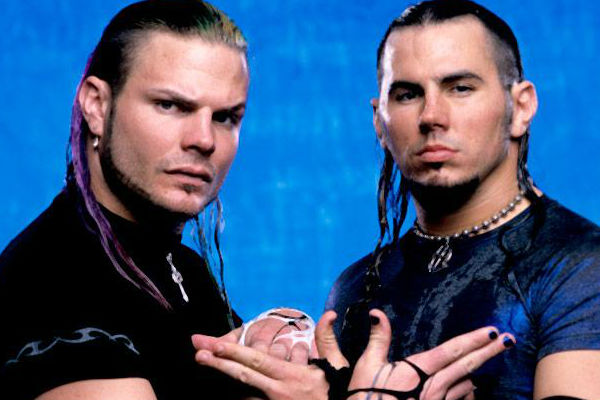
The Hardy Boyz defined tag team wrestling during the Attitude Era. Rising from the abyss of the undercard to become the most popular duo in the industry. The were fresh, exciting and their willingness to put their bodies on the line in death-defying leaps of faith helped capture the imaginations of the audience. That they looked like models out of the latest Hot Topic catalog endeared them to the female members of the audience looking for a heartthrob or two. In the ring, the brothers were the best of the best. Their chemistry was off the charts but it was their flashy offense that helped them get over to the extent that they did.
Their matches with Edge and Christian, The Dudley Boyz, The Acolytes and T&A helped revolutionize tag team wrestling and bring it back to relevancy after years of mediocrity. Tag team champions seven times over, the siblings were among the most successful teams in WWE history. They would each experience championship glory and worldwide recognition as singles competitors, Matt the underrated brother responsible for holding down the midcard and Jeff the charismatic enigma that made it all the way to the top of the industry, winning the WWE Championship in 2008.
While their status as full-time performers for TNA Wrestling may hold up any sort of Hall of Fame induction now, they will one day Swanton Bomb their way in and take their place among the most influential stars of all-time.
3. Sable
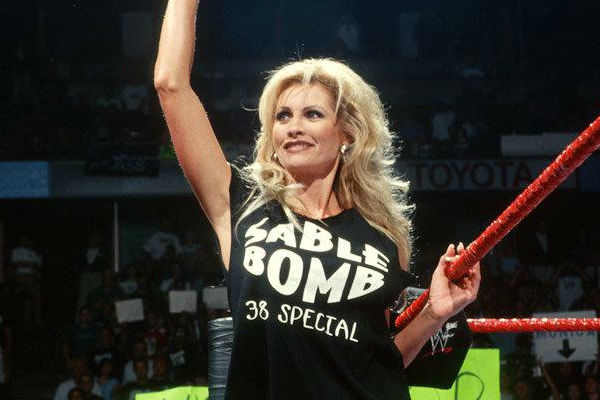
Sable's contributions to the Attitude Era are immeasurable. A blonde bombshell who captured the attention of fans from the moment she arrived in 1996, the shift to an edgier and more sexual product allowed her star to grow exponentially, to the point that she became a much bigger name than her husband, Marc Mero, with whom she feuded on-screen. Determined not to stand in his shadow, Sable broke out, proving to be a strong woman completely in touch with her sex appeal. A beautiful woman, she would smile and wave to the audience, but was not opposed to showing her body off when the time was right.
Whether she was guiding boys through puberty in soaking wet swimsuits or mixing it up with Luna and Jacqueline in Evening Gown matches (in which she ended up in her bra and panties), she was among the most popular performers on the roster. Sable was as integral to the success of the Attitude Era as Steve Austin, The Rock and D-Generation X. She brought that sex appeal that interested members of the all-important 18-35 male demographic. Suddenly, young men wearing nWo t-shirts switched over from WCW to see the gorgeous woman stripping down to the bare essentials and catfighting with her fellow Divas.
It was an effective strategy by head writer Vince Russo to use her to lore that age group to the shows. So popular was she that Hugh Hefner reached out to WWE to have Sable grace the cover of Playboy magazine. And she did, in one of the best-selling issues ever. With everything she meant to shifting the balance of power to Vince McMahon and his merry band of rebels during the Monday Night Wars, not inducting her would be an injustice.
2. The New Age Outlaws
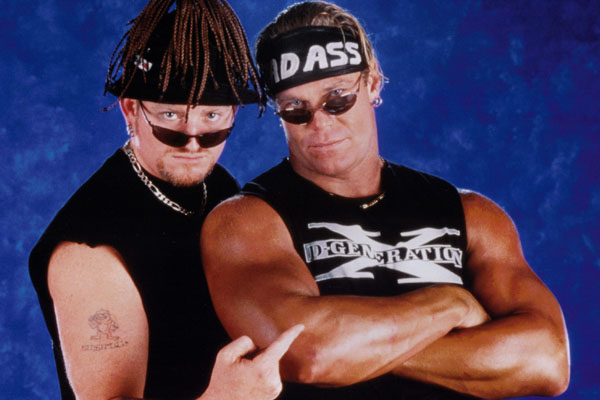
Billy Gunn and Jesse James had no business succeeding in the Attitude Era. In fact, both were filling the roles of glorified jobbers, making television cards only to put over whoever they shared the ring with. As "Rockabilly" and "The Real Double J," they were colossal bombs. The characters were way too gimmicky for that era and they died miserable death. Thrown together for no other reason to give them something to do and save their jobs, they soon adopted the "New Age Outlaws" moniker. From there, they James became "Road Dogg" and Gunn became "Badass" and suddenly, they had an edge they never could have achieved in their previous gimmicks. After joining D-Generaion X in March 1998, they achieved their greatest success.
Already former tag champions, they became the premiere team in WWE. They were the centerpiece of a tag division growing and expanding with every passing week. Their wars with Cactus Jack and Chainsaw Charlie were a major part of the build to WrestleMania XIV while the battles with The Nation, Steve Austin and Undertaker, and Kane and Mankind almost single-handedly elevated the credibility of the tag titles. As the era progressed, they were major players in every top angle, thanks to their relationship with Triple H. It was not uncommon to see them mix it up with the top stars in the company, either in singles or tag team competition.
They were as integral to television product as anyone else, thanks to the considerable work they put in. And they were over. One could even argue that Shawn Michaels and Triple H specifically asked to work with and around the Outlaws early in '98 because they were as over, if not more so, than them. They were definitely cooler. That is why their addition to DX was of no real surprise. The Outlaws ran their course and by mid-2000, they were a thing of the past. Some 14 years later, though, they returned to television for a brief nostalgia run, winning the tag titles one last time and reminding fans of the Attitude Era of great days gone by.
1. Goldust
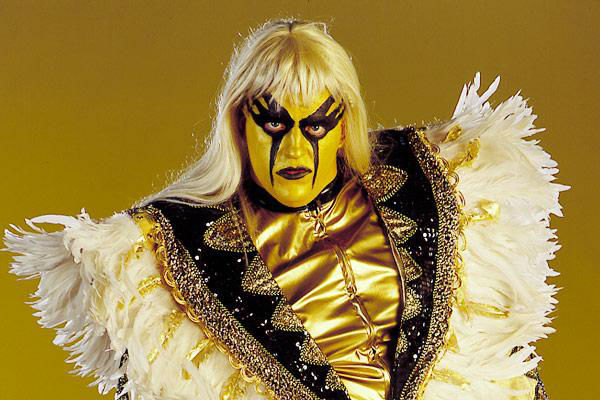
Without Goldust, there may never have been an Attitude Era. The WCW transplant was essential to the shift in tone that WWE programming took in the mid-90s. He was bizarre and obliterated all sorts of limits. An enigmatic character with a flare for the dramatic and quoting films, he also demonstrated homosexual overtones that sparked a great deal of controversy from people outside the company. He was unlike anything anyone had ever seen to that point, a character that called into question morality and pushed the boundaries of good taste.
One moment, Goldust would be tongue kissing director Marlena and the next, he would be rubbing down Razor Ramon's chest, presumably playing mind games. He was so good at it, though, that it called into question how much of it was manipulation and how much of it was real bisexuality. As the Attitude Era arrived, he became the even more bizarre Artist Formerly Known as Goldust. Led to the ring by Luna Vachon, it was not out of the ordinary to see him dressed as rocker Marilyn Manson or sporting a ball gag, all for the sake of the shock factor that Vince Russo's writing was so dependent upon.
He eventually returned to the original Goldust character, but the overtones were turned all the way down, questions about his sexuality no longer rampant. Far too often, the credit for the Attitude Era is placed at the feet of Steve Austin, Vince McMahon, D-Generation X, Sable and even Russo himself. Never attributed with creating the daring new direction, though, is Goldust. Without him taking a nondescript character and making it his own, excelling under the gold and black paint as a true enigma, the idea that wrestling could be big if just a little edgier may never have been conceived.