20 Most Tragic WWE Deaths This Century

11. Curt Hennig (March 28, 1958 - February 10, 2003)
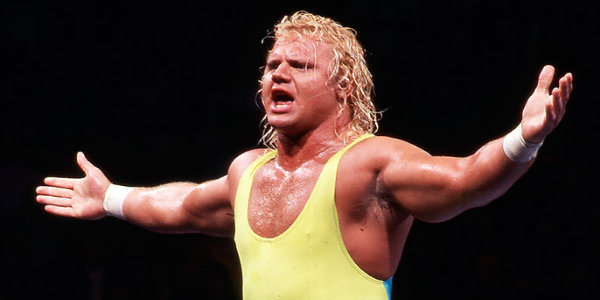
As the son of Larry "The Axe" Hennig, Curt not only achieved greater fame than his father but he also did it...perfectly. Hennig found his first success in the AWA alongside his tag team partner Scott Hall. The duo captured the AWA tag titles but Curt eventually turned heel and defeated the legendary Verne Gagne for the AWA world title. However, when Curt jumped to the WWF in 1988, he found his biggest fame. Rechristened "Mr. Perfect", Hennig was introduced to the WWF audience in a series of vignettes showing him performing near-impossible athletic feats. At one point, Hennig caught his own Hail Mary pass and scored a touchdown. Inside the ring, Hennig went on an undefeated streak that lasted over a year, making people think that maybe Curt really was perfect. He was pushed to the main event against Hulk Hogan but did not win the title for various political reasons. He did, however, capture the Intercontinental title and became one of the most successful champions. In August 1991, due to a back injury, Hennig dropped the IC title to Bret Hart in a classic match at Summerslam. Hennig believed that his in-ring career was over and he transitioned to announce position with the company. However, Hennig returned to the ring in 1992 to feud with his former friend, Ric Flair. He wrestled as a babyface throughout 1993 until eventually returning to his heel mannerisms and turning on Lex Luger at Wrestlemania X. Hennig worked as an announcer and manager until departing for WCW in 1997. Once in WCW, Hennig earned the distinction of being one of the few wrestlers to be a member of the Four Horsemen and the New World Order. He won the US title and feuded with Goldberg but, surprisingly, it was a gimmick change to a country singer that caused his star to rise in WCW. As a member of the West Texas Rednecks, Hennig waged a war on rap music alongside Barry Windham, Kendall Windham, and Bobby Duncum, Jr.. The cowboys were supposed to be heels against the rapper Master P and his group of No Limit Soldiers but the predominantly southern fans of WCW cheered the Rednecks instead. Their theme song "Rap is Crap" even got some airplay on local country music stations. Hennig briefly returned to WWE after their purchase of WCW but mainly served as a jobber to younger stars. He still struggled with substance issues and was fired after picking a fight with Brock Lesnar on the "Plane Ride from Hell" in 2002. Sadly, this seemed to be the rock bottom of Hennig's life as Curt began using drugs more frequently and was found dead in February 2003 at the age of 44. Hennig's official cause of death was an overdose of cocaine but Larry Hennig stated that steroids and painkillers also contributed. Curt Hennig was one of the most gifted athletes in wrestling history and one of the best who never got a run with the world title in WCW or WWE.

10. Sherri Martel (February 8, 1958 - June 15, 2007)
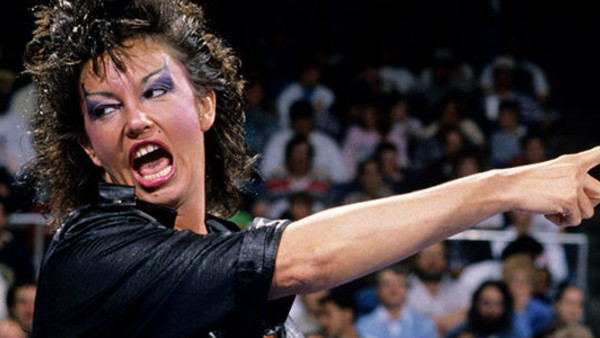
When "Sensational" Sherri led a wrestler down to the ring, you knew that guy had instantly credibility. Sherri was always associated with top talent and she had the ability to elevate her clients to a new level and put heat on the match every time. The fact that she was a woman never stopped her from getting physically involved in a match and guys had no problem selling for her because she was so effective in her role. After being trained by the Fabulous Moolah, Sherri went to the AWA where she captured their version of the women's title and managed Buddy Rose and Doug Somers against the Midnight Rockers. On the recommendation of Jesse Ventura, Martel was hired by the WWF in 1987 and quickly captured the WWF women's title from her old mentor, the Fabulous Moolah. With the decline of women's wrestling in the WWF, Sherri moved to the managerial ranks and aligned herself with Randy Savage during his feud with Hulk Hogan. Sherri was instrumental to Savage's heel turn as she was the exact opposite of Miss Elizabeth and gave fans a reason to hate Randy. When Savage lost a retirement match to the Ultimate Warrior at Wrestlemania VII, Sherri realized her meal ticket was gone and attacked Savage after the match. Miss Elizabeth made the save to a huge reaction and helped to provide one of the best moments in Wrestlemania history. Sherri then moved on to the newly heel Shawn Michaels, helping to establish him as a singles star. Soon after, she moved to WCW and became the manager of Ric Flair, continuing her rivalry with Hulk Hogan. She then took the reigns of Harlem Heat, accompanying them to the ring until 1997. She made a few one-off appearances with WCW, WWE, and TNA after that but never returned full-time to wrestling. Unfortunately, Sherri struggled with substance abuse problems in her later years and they would ultimately lead to her demise. In June 2007, only a year after being inducted into the WWE Hall of Fame, Sherri Martel was found dead at her mother's house in Alabama at 49 years old. Doctor's blamed a drug overdose for her death, as multiple drugs were found in her system along with a large amount of oxycondone.

9. Andrew "Test" Martin (March 17, 1975 - March 13, 2009)

For a man of his size, Andrew Martin seemed destined for big things in the wrestling business. When he started to received his huge push to the main event during the Attitude Era, the man known as "Test" seemed to be on the fast track to the main event. However, a number of developments left Martin stuck in the midcard and his untimely death left us wondering what might have been. After being trained by Bret Hart, Martin made his WWF debut in 1998 as a kayfabe bodyguard for the rock band Motley Crue, who were performing on Raw. After tossing an overzealous fan during the concert, Martin made his Raw debut the next week, teaming with the Rock to defeat Triple H and X-Pac. It was a sign that big things were planned for the large Canadian. Martin began to date Stephanie McMahon in storyline terms, defeating her brother Shane in a Love Her or Leave Her match at Summerslam 1999 that almost stole the show. Their wedding was planned for Raw but Triple H interrupted and revealed he had drugged Stephanie and married her in Las Vegas. Test vs. Triple H was booked but Steph turned on her boyfriend and aligned herself with Triple H, ushering in the McMahon-Helmsley Era on Raw. Test's push was completely abandoned and he was put into a tag team with Albert that only served as a vehicle to get their super hot manager, Trish Stratus, over as a diva. Test joined the Alliance during the Invasion angle but soon after aligned himself with real-life girlfriend, Stacy Keibler. Test remained firmly in the midcard until his release following spinal fusion surgery in 2004. Martin eventually returned to WWE on their new ECW brand in 2006 and immediately shocked fans with his massive bulk. Martin looked to have put on about 50 lbs. worth of muscle during his time away from WWE, causing fans and backstage officials to be concerned about his physical well being. Not surprisingly, Martin failed a drug test and was released from WWE in 2007. In March 2009, at the age of only 33, Martin was found dead in his Florida home from an overdose of oxycodone.

8. Chris Kanyon (January 4, 1970 - April 2, 2010)

One of the more under appreciated talents of the late 1990s, Chris Kanyon struggled with personal problems most of his adult life and never truly found himself in the rough business of professional wrestling. After working as a jobber for a number of years, Kanyon found himself as a member of Raven's Flock in WCW while portraying the masked wrestler Mortis. Once that character was abandoned, Kanyon was proclaimed the "Innovator of Offense" thanks to his wrestling abilities and his unique moveset. He joined the Jersey Triad alongside Bam Bam Bigelow and Dallas Page, winning the WCW tag titles and defending them under the Freebird Rule. Kanyon turned heel on DDP in 2000, copying Page's character with a new persona that he dubbed Positively Kanyon (based off of Page's book Positively Page). He adopted Page's finishing move and joined the New Blood faction, engaging Buff Bagwell in the infamous Judy Bagwell on a Pole match at the New Blood Rising pay-per-view. During the Invasion, Kanyon named himself the Alliance MVP and started building a fan following. However, a series of injuries led to Kanyon being out of the ring until late 2002, killing all of his momentum and forcing him to start at square one following the Brand Extension. He only made one more appearance on Smackdown, emerging from a crate dressed as Boy George and singing to the Undertaker before being destroyed. Kanyon hinted that this segment was made to poke fun at him being a homosexual and later claimed that was the reason WWE released him. In addition to the pressure of being a gay man in an unforgiving business, Kanyon was also diagnosed with bipolar disorder. He had threatened suicide numerous times and on April 2, 2010, he finally followed through on his threats. Chris Kanyon, who overdosed on antidepressant drugs, was found by his brother near a note he left for his family. He was only 40 years old.

7. Miss Elizabeth (November 19, 1960 - May 1, 2003)
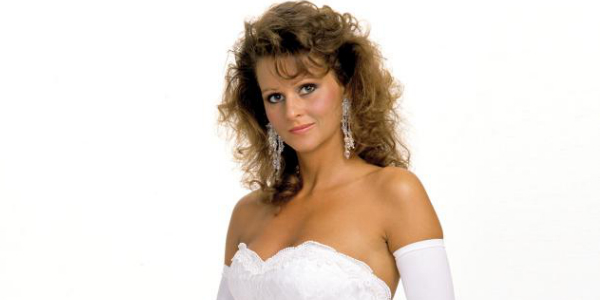
Elizabeth Hulette, better known to the wrestling world as Miss Elizabeth, was the rarest character in wrestling. She was someone who was considered untouchable by fans, almost as if she was too nice and too innocent to be involved in such a barbaric sport. She and the Macho Man were icons of their era and it's hard to picture Randy Savage without Miss Elizabeth by his side. However, by the end of her life, Elizabeth's situation was more dramatic than any storyline a promoter could book. Elizabeth married Randy Savage in 1984 after meeting at ICW shows in the Memphis area. When Savage moved to the WWF, all of the heel managers bid for his services but Randy ended up picking Miss Elizabeth. In a rare pairing, Savage was a full-blown heel while Elizabeth was loved by the fans. Savage would mistreat and talk down to Liz at every opportunity and that only made her more loved by the fans who wanted to rescue her from the evil Macho Man. Savage's babyface turn came as a result of Elizabeth. The Macho Man challenged the Honky Tonk Man for the Intercontinental title on Saturday Night's Main Event and was being attacked by Honky and his manager, Jimmy Hart. When Liz tried to stop the assault, Honky Tonk Man did the unthinkable and shoved her to the mat. It was the first time anyone had put their hands on Elizabeth and the fans were outraged. Savage's babyface turn was made official when he formed the Mega Powers with Hulk Hogan and became the number two babyface in the company. Following the awesome Mega Powers breakup angle, which featured Savage accusing Hogan of having "lustful eyes" for Elizabeth, Savage turned mega heel again and replaced Liz with Sherri Martel. She reappeared in 1991 during the Macho Man's retirement match against the Ultimate Warrior, rescuing Savage from an attack by Sherri after he had lost the match. They were married in a storyline sense at Summerslam 1991 but that wasn't enough to save their real-life marriage, which ended in 1992. Hulette returned to wrestling in 1996 when she debuted in WCW alongside Ric Flair. Eric Bischoff had convinced Liz to come out of retirement to work a storyline with Savage, an uncomfortable if not lucrative situation. Elizabeth joined the nWo alongside Savage and eventually aligned herself with Lex Luger, both in the ring and in her personal life. For whatever reason, Vince Russo decided that Liz had to become an in-ring competitor, a completely ridiculous notion since Liz reached the height of her fame as a manager and was in no way trained to be a wrestler. She had a few matches in 2000 but was released from her contract soon after. Elizabeth never made another televised wrestling appearance following her release from WCW but her relationship with Luger was strained. Luger was charged with battery after a domestic violence incident left Liz with various injuries to the head and she was a passenger in the car when Luger was arrested for DUI in 2003. In May 2003, Luger called paramedics to the house when he found Elizabeth unresponsive. The EMTs attempted mouth-to-mouth but were unsuccessful and she was pronounced dead at a Georgia hospital at the age of 42. The cause of death was listed as "acute toxicity" brought on by a mix on painkillers and vodka.

6. Crash Holly (August 25, 1971 - November 6, 2003)
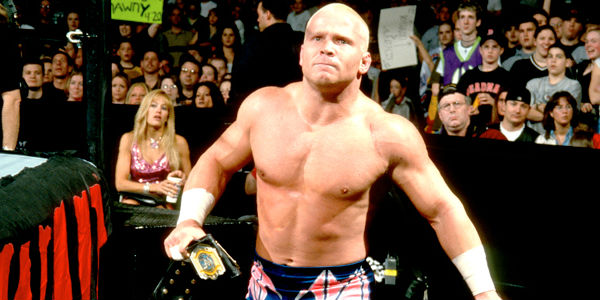
Before he became the "Houdini of Hardcore", Mike Lockwood spent 10 years on the independent wrestling scene trying to get his big break. He managed to work a few matches for ECW in 1997 before being signed to a WWF developmental deal in 1998. Lockwood debuted as Crash Holly, cousin of Hardcore Holly, in August 1999. Though he was only about 6 feet tall and 200 lbs., Crash insisted that he was a super heavyweight who weighed "well over 400 lbs." and even brought a scale to the ring with him so he could weigh-in before matches. However, it was once Holly entered the Hardcore division that he became a star. After beating Test for his first of 22 Hardcore title reigns, he instituted the "24/7 rule" where the Hardcore title had to be defended 24 hours a day, 7 days a week no matter where the wrestlers were. This led to some of the most entertaining segments in Raw history, as Holly was forced to defend his title in an airport, his hotel room, a Chuck E. Cheese, and backstage. Crash wasn't safe anywhere and he would be frequently attacked by random people like one of the Godfather's hos. Holly would usually resort to hiding in trash cans or running away from his opponents, earning the nickname "the Houdini of Hardcore". However, Crash's career stalled once the Hardcore title had run its course and he became lost in the shuffle. After being released from the promotion, Lockwood had a brief and forgettable run in TNA as Mad Mikey, a wrestler who was mad at things. Aside from his wrestling career stalling, Lockwood had recently been served with divorce papers from his wife and it took a major toll on him. Lockwood was found dead in the home of his friend Stevie Richards on November 6, 2003, having committed suicide with a combination of pills and alcohol. He was just 32 years old and WWE didn't even mention his death on their broadcast.

5. Chris Candido (March 21, 1972 - April 28, 2005)
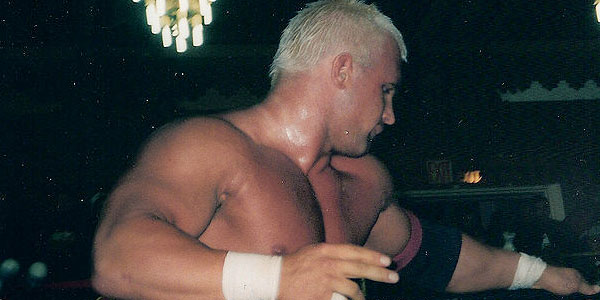
€œNo Gimmicks Needed€ Chris Candido was one of the most talented young wrestlers in the world during the 1990s. Most people don€™t realize that Candido was only 24 years old during his first run in the World Wrestling Federation as a member of the Bodydonnas alongside his girlfriend Tammy Sytch. Unfortunately, he never reached his full potential thanks to a tragic medical mishap. Candido first achieved success in Jim Cornette€™s Smoky Mountain Wrestling, winning the NWA World Heavyweight title in a 10-man tournament after Shane Douglas had infamously vacated the belt in ECW. He soon jumped to the WWFi but saw his manager, Sunny, becoming more of a star than he ever was. Chris left the WWF after running into problems with the HBK-Kevin Nash-Scott Hall power group and went to Paul Heyman€™s land of extreme. Finding success as a member of Shane Douglas€™s Triple Threat stable, Candido had a lengthy run towards the top of the card and as a tag team with Lance Storm. Following a disappointing WCW run, Candido jumped around the independent scene until landing in TNA in 2005. Candido was clean of drugs and alcohol for the first time in forever and experienced somewhat of a career renaissance. Unfortunately, Candido suffered a broken leg and a dislocated ankle during a cage match which required surgery. Chris shouldn't have been flying so soon after surgery but still he flew to the TNA tapings only a few days later. He collapsed and was brought to a nearby hospital, where he was diagnosed with pneumonia. Doctors drained his lungs but Candido still tragically died at the age of 33. Later, his brother would state that Chris died of a blood clot that formed following his leg surgery. The death of Chris Candido severely impacted wrestlers and fans. It seemed like Candido was finally cleaning his personal life up and he died before he could reap the rewards of his efforts.

4. Eddie Guerrero (October 9, 1967 - November 13, 2005)
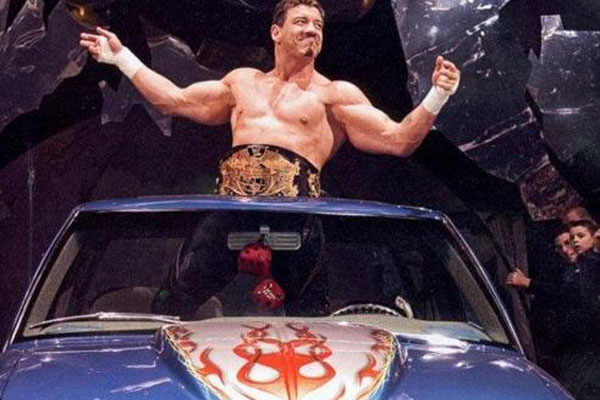
The youngest of the legendary Guerrero brothers ended up being the most talented and most popular out of them all. Eddie Guerrero had everything you would want in a professional wrestler: Athleticism, charisma, popularity, and a love for the business. That made it all the more sad when Eddie died prematurely in 2005, just before another run with the WWE world title. Eddie rose to stardom as a member of the heel tag team €œLos Gingos Locos€ in the Mexican AAA promotion alongside Art Barr. Guerrero€™s work in Mexico garnered the attention of Paul Heyman, who brought lucha libre to the United States and Guerrero along with it. Eddie then jumped to World Championship Wrestling, having an amazing match with Rey Mysterio at Halloween Havoc and winning the Cruiserweight championship on two occasions. Guerrero seemed to have the talent and charisma to launch himself into the main event but WCW kept him firmly entrenched in the midcard. Finally, Guerrero was fed up and jumped to the World Wrestling Federation alongside Chris Benoit, Dean Malenko, and Perry Saturn. His initial push was halted thanks to an injured elbow but Eddie finally found his groove in the WWF. His €œLatino Heat€ character was over huge with the fans and Eddie seemed to be having fun for the first time in years. However, Guerrero€™s personal problems were beginning to mount and an arrest for drunk driving cost him his job with the WWF and his wife, who divorced him after years of trying to control her husband€™s demons. To his credit, Eddie took to the independent circuit to prove he could be clean, sober, and still rock the ring with the best of them. He earned his wife and his job back in 2002 and his tag team with nephew Chavo finally rocketed Guerrero to superstar heights. Adopting a motto of €œLie, cheat, and steal€, Eddie€™s antics got him over with the crowd and actually did the unthinkable: It drew money to house shows. People were actually willing to pay to see Eddie Guerrero, can you believe it? Eddie finally won the WWE title at No Way Out from Brock Lesnar and defended it successfully at Wrestlemania against Kurt Angle. The final shot of Eddie Guerrero hugging Chris Benoit in the middle of the ring as Wrestlemania went off the air should have been the start of a new era in wrestling. Instead, it has taken on a much more sinister symbolism in the years since. Instead of embracing the champion€™s role, Eddie put more pressure on himself to perform and pushed himself way too hard. Vince McMahon had Guerrero drop the title because he was legitimately concerned for his health and well being. After recuperating, Guerrero seemed energized and entered into a storyline against Batista with the plans being Guerrero regaining the belt. On November 13, 2005, Eddie Guerrero was found unresponsive by his nephew Chavo. At only 38 years old, Guerrero died of a heart condition. In an unsurprising report, Sports Illustrated reported that several WWE wrestlers (including Guerrero) had allegedly obtained steroids and hCG from various pharmacies. Guerrero gained huge amounts of muscle from 2002 until 2005 and that coincided with his rise to main event status. Guerrero's life choices ultimately caused his untimely death but the wrestling world still misses his passion and talent.

3. The Ultimate Warrior (June 16, 1959 - April 8, 2014)
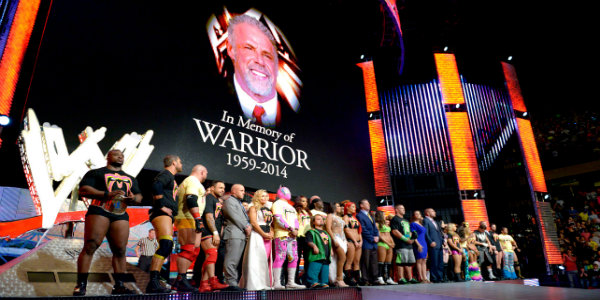
One of the most polarizing figures in wrestling history, Jim Hellwig would be cursed with a family history that seemed destined to end his life early. His father died at 57 and his grandfather died at 52, but that still didn't make it any less tragic when the Ultimate Warrior died at 54 years old just days after being inducted into the WWE Hall of Fame. Warrior began as a bodybuilder, winning Mr. Georgia in 1983 before falling into professional wrestling alongside Steve €œSting€ Borden. Warrior teamed with Sting as the Blade Runners before moving onto World Class Championship Wrestling and being christened the Dingo Warrior. Doing nothing really of note, Warrior was signed by the WWF and began wrestling as the Dingo Warrior. Vince McMahon stepped in, claiming he didn€™t know what a €œDingo Warrior€ was but he wanted something different. You see, Kerry Von Erich was the €œModern Day Warrior€ and Animal and Hawk were the Road Warriors, so Jim Hellwig should be the Ultimate Warrior. Warrior had a few lower card feuds before being catapulted to stardom when he squashed Intercontinental champion Honky Tonk Man in 27 seconds. When Vince saw the crowd reaction to the Warrior, he decided that Hellwig should become the next superstar of the 1990s. Hulk Hogan put over the Warrior at Wrestlemania VI, giving him possession of both the Intercontinental title and the WWF title, seemingly cementing him as the next huge superstar. However, Warrior€™s title reign was less than stellar and he departed the WWF after a dispute with Vince McMahon over money in late 1991 and made a brief return in 1992 before experimentation with HGH caused his release. A weird return in 1996 inspired no one and the less that is said about his WCW match against Hulk Hogan in 1998, the better. Warrior finally made his WWE return in April 2014, seemingly forgiving Vince McMahon for past indiscretions and becoming part of the WWE family for good. Unfortunately, Warrior€™s return was not to last as he died of a heart attack only hours after making an appearance on Raw. Many backstage reported that Warrior was breathing heavily and looked frail and exhausted during Wrestlemania weekend, foreshadowing his eventual death. The wrestling world certainly wasn't ready for the Ultimate Warrior to leave them, especially after welcoming him back from exile.

2. Randy Savage (November 15, 1952 - May 20, 2011
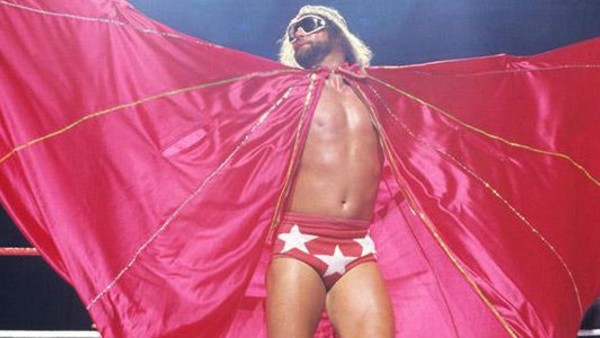
With a career that spanned more than three decades, the Macho Man Randy Savage became a pop culture icon and one of the most recognizable figures in the history of professional wrestling. He was a larger than life character who drew thousands of people to arenas around the country with his unique promo style, tremendous ring work, and a character that will never be duplicated. Randy got his start in his father's ICW promotion, engaging in a promotional war with Jerry Lawler's territory and trying every dirty trick in the book to draw crowds. ICW eventually closed, allowing Savage and Lawler to have a hot feud thanks to their years of warring in real life. Savage was signed by the WWF in 1985 and immediately became a star in the promotion. He beat Tito Santana for the Intercontinental title and engaged in an all-time classic against Ricky Steamboat at Wrestlemania III, winning basically every single Match of the Year award in the process. Savage finally turned babyface in 1987 when he formed the Mega Powers with Hulk Hogan and won the WWF world title at Wrestlemania IV. The storyline between Hogan and Savage was phenomenal, with the psychotic Savage becoming increasing paranoid of Hulk Hogan and his too-friendly relationship with Miss Elizabeth. Finally, Savage snapped and attacked Hogan, accusing him of having lust for Liz and challenging him to a title match at Wrestlemania V. Savage lost the match and became a full-blown heel once again, adopting Sherri Martel as his manager and feuding with Dusty Rhodes. When Savage lost a retirement match to the Ultimate Warrior at Wrestlemania VII and reunited with Elizabeth, many thought we had seen the last of Randy in the ring. If that were true, it would be the perfect ending. However, Savage returned to the ring to face Jake Roberts when Roberts crashed his wedding reception and threatened Elizabeth with a live snake. Savage won the WWF title for the second time, defeating Ric Flair at Wrestlemania VII but was slowly transitioned to a color commentator because Vince McMahon felt his in-ring career was at its end. Savage left for WCW in 1994 due to his desire to remain a full-time wrestler and rejoined Hulk Hogan. His on-again, off-again relationship with Hogan mirrored the real-life situation and tension remained between the two for years. Savage joined the New World Order eventually and helped to elevate Dallas Page in their feud, even main eventing the Great American Bash in 1997. Savage would end up capturing the WCW world title four times during his tenure, winning his final title alongside Team Madness, his female managers consisting of Madusa, Molly Holly, and Gorgeous George. Savage made one final wrestling appearance for TNA, making a brief appearance at the 2004 Turning Point event. However, citing health concerns, Savage retired from pro wrestling, cancelling a planned NWA title run. In May 2011, while driving, Savage suffered a heart attack and crashed his Jeep into a tree in Florida. Savage had no illegal drugs in his system but did have an enlarged heart (most likely caused by steroids) and a fairly advanced form of heart disease. Savage was 58 years old at the time of his death and, though he lived a rough and eventful life, fans seemed happy that their hero was not the victim of an overdose or illegal drugs. Many wrestlers have died throughout the years but the emotion shown by fans at the loss of the Macho Man spoke volumes about how popular he was. In his prime, no one was a better combination of charisma, power, or technical skill. Savage could have a great match with anyone and prided himself on being one of the best at his chosen profession. When the world lost the Macho Man, they lost a once-in-a-lifetime talent.

Contributor
Contributor

Mike Shannon hasn't written a bio just yet, but if they had... it would appear here.