5 Reasons TNA Never Became WWE's True Competitor

Do you remember the last episode of WCWs Monday Night Nitro? It was a pretty surreal night in the history of professional wrestling. Vince McMahon had purchased World Championship Wrestling, there was the only simulcast between Raw and Nitro in the history of the Monday Night Wars, and Ric Flair cut a promo where he mentioned Harley Race and Buff Bagwell in the same sentence. It was truly a night of firsts.
The aftermath of the purchase left a giant void in the wrestling business as McMahons primary competitor had been vanquished. It was only a short month after the purchase that Paul Heymans ECW would finally succumb to financial struggles and have to close their doors as well. Whether intended or not, both brand names were quickly buried during the disappointing Invasion angle and both promotions are now relegated to DVD releases and WWE Network time slots.
The purchase occurred in early 2001 and it would be a long year until wrestling fans would find viable alternatives to invest in. For the pure blood wrestling fan that missed the emphasis on the matches and athleticism, Ring of Honor would open its doors in 2002 on the backs of Low Ki, Christopher Daniels, Bryan Danielson and Samoa Joe. However, ROH lacked television and pageantry, and those that lived outside of the state of Pennsylvania were forced to order DVDs or illegally tape trade in order to get their yakuza-kick fix.
A more promising opposition to WWE was the creation of NWA: TNA by Jeff Jarrett and his father, Jerry Jarrett. The promotion worked around finding an immediate TV deal by running weekly pay-per-views, had financial support from Panda Energy, and was able to employ a slew of new talent to feature on their programming. TNA was feisty and ready to challenge Vince McMahon from day one.
However, after 12 years of scratching and clawing to become a viable competitor, TNA is now facing issues with Spike TV and have been dealing with financial struggles. AJ Styles, an original performer with the promotion, has walked away from contract negotiations. Jeff Jarrett, the backbone of TNA from the beginning, has stepped down and is now rumored to be starting another promotion with Country Music Star Toby Keith. The days of TNA may be nearing an end, but why did they never get over the hump?
Here are 5 Reasons Why TNA Never Became WWEs True Competitor:
5. Pass The Book
Professional wrestling is sometimes this bizarro world where success and failure doesnt really apply, just that you once held the job somewhere. Its kind of like how employers want experience over a college degree, except minus the degree, and dont worry about accomplishing anything in that window of experience you may have acquired.
Thats not to say that the bookers of TNA didnt have good ideas in the past or werent successful in one avenue or another. Its more to say that professional wrestling is a form of creative entertainment which, as long as theres an understanding of how the show is portrayed and how the performers work, just about any writer could potentially develop compelling television for. This is part of the reason why WWE made the transition from bookers to writers on their creative staff.
The creative direction for TNA, however, relied on a revolving door of names that never maintained a clear direction. The issue with using a multitude of bookers is that any particular booker has their own image that a professional wrestling promotion should be molded to. Dutch Mantels image is different from Dustys, is different from Russos, and is different from Bischoffs. Actually, Russo and Bischoff were probably on the same page much of the time. Which might also be why the promotion is in the situation its in today.
As is the case with any company of any genre, a clear direction is most necessary to achieve success. When the pushed performers are constantly changed and the direction of the company continues to flop-flop from We promote wrestling to Just kidding, were all about that Crash TV! the fans are left with no one to cheer for and nothing to relate to.
4. Unoriginal Product

At the onset, TNA was rife with concepts that set it apart from WWE. The X-Division featured the always popular light heavyweight style, but removed the weight limit gimmick so more wrestlers could be logically involved. The weekly pay-per-view era featured as much independent talent as the promotion could cram into their run time. Also, as TNA made the move to Fox Sports in 2004 on their first TV deal, they adapted the use of the lucha-influenced six-sided ring. Even though the companys stature wasnt within reach of WWEs level, great strides were being made to separate themselves from Vince McMahons product.
In 2006, Vince Russo was brought back to the promotion to as a creative writer and would eventually move on to Head of Creative in 2009. This isnt to scapegoat Russo as the sole reason of the company image dissolving, but rather a timeline marker for when TNA began to lose the separation it created. The structure of the programming began to resemble the same flow of segments that WWE programming prescribed to. The featured performers of the show were Christian Cage, Kurt Angle and the Main Event Mafia, which was a stable comprised mostly of former WWE and WCW talent.
The Main Event Mafia was involved in was a gang war storyline against the TNA Frontline that was a stable of young and original TNA performers. Good idea, right? It couldve been, except this was the same angle that was done in the dying days of WCW when Russos New Blood went to battle with the aging Millionaires Club. Nothing quite screams Movin on up! like using the same storyline from a dead company, which was in the midst of a downfall when the angle was originally attempted.
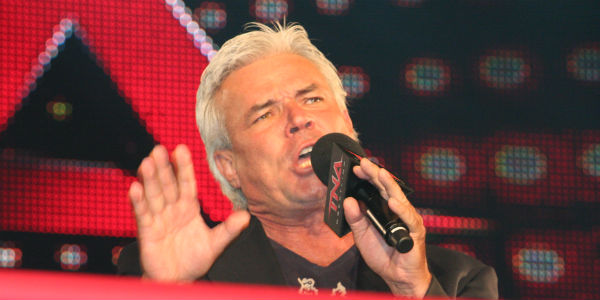
In 2010, Eric Bischoff and Hulk Hogan were brought into TNA to take over the reins of the company. The announcement was met with an echo of proverbial groans from the internet wrestling community, with Bischoff and Hogan quickly scoffing at the fans for making ignorant assumptions. What the fans assumed was that Bischoff and Hogan would do go into business for themselves and by the end of their contracts, TNA would be in worse shape than it was at the start and the fans were right.
To estimate that Bischoff or Hogan appeared on screen on a ten minute cycle would be a safe bet. Impact became their own personal variety show. Friends of the two were pushed and given TV time, old names like The Nasty Boys were briefly featured again, and episodes of Impact resembled WCW Thunder from 2000. For a company looking to push into the future, it had instead been burying itself in the past.
3. The Brand Name

While the concept behind naming the company TNA made sense on the surface, it was a rather short-sighted idea in the long run. The name clearly derived from the abbreviation of T-and-A, which is in reference to those ever so enjoyable parts of the female anatomy. TNA was beginning as a division of the NWA, so Jarrett wanted a name that expressed the company as a part of the Alliance, but without a regionalization to limit its scope. The name couldnt be relegated to a geographic location and needed to encompass a broad marketability.
The company began as a pay-per-view show, which allowed the freedom to experiment with an edgier name to turn heads. Thus, Total Nonstop Action with the abbreviation of TNA, became the brand name of the company. The inherent problem is that the name is a complete and utter gimmick. There is nothing prestigious or honorable about the TNA name, it is just a ridiculous pun that somehow managed to find the top of a letterhead. Gimmicks work for characters in the promotion, but they dont work for the promotion itself.
The two biggest things that promotions concern themselves with are 1) making money and 2) finding a way to capture the elusive casual fan so that the company can make even more money. As fans of wrestling, we are on the fringe of pop culture. Its not all that cool to be a fan of professional wrestling, nor is it all that impressive to start a discussion at the pub about how much you appreciate Super Delfins work in the 94 Super J Cup. If that blonde with the glasses and hipster clothes knows who Super Delfin is, be afraid. If she has the 94 J Cup on DVD, well screw it, marry her. But, I digress
Dixie Carter, Jeff Jarrett, and Vince McMahon dont care so much about attracting the fans that are going to be fans until the end of time. We are here to stay and we are the proverbial downside guarantees of PPV revenue, merchandise sales, and weekly ratings. We will watch wrestling, whether its called WWF, WWE, WCW, ECW, NJPW, or TNA.
The expansion of a pro wrestling company, especially an upstart promotion, comes in the ability for that company to attract the person that doesnt watch religiously. Thats the same person that isnt going to talk about pro wrestling to that chick at the pub. Hes going to keep it to himself that he pounds back a tray of fun nuggets on Monday Night while he cheers on John Cena to beat up Randy Orton.
The TNA name doesnt lend itself to put any pride into being a fan. To be blunt, its total bush league. Theres no momentum to be built off the name and it doesnt lend itself to the championships associated with the company. Does being the TNA World Heavyweight Champion carry more weight to it than being the World Wrestling Entertainment World Heavyweight Champion? It sounds cheap and illegitimate, if anything. The name might garner a chuckle and may be memorable, but it is only memorable because of the negative connotation it has. Its near impossible to rally behind a name thats nothing more than a bad joke.
In 2011, TNA shifted gears and became more eager to promote the "Impact Wrestling" name underneath the TNA logo. While it does have a nicer ring to it, the name should've been addressed at the inception of the company.
2. TV Production

It is really hard to sit through an entire episode of Impact. It wasnt always this way, but the combination of the deteriorating production and uninteresting storylines have led to a rather underwhelming two hour wrestling show. The camera angles, the set design, the absent crowd participation, and the flat backstage segments are unbearable to the point that you often wonder how this final, edited product is what actually makes the air. It borders on incomprehensible that a wrestling promotion can manage to hide their strengths and emphasize their weaknesses, rather than the other way around.
The most glaring issue is how disinterested the crowd seems to be during the show. The set, lighting, and film direction can all be made up for if the crowd is hot and fired up for the wrestling action theyre watching. This just isnt the case on Impact. Furthermore, the production staff doesnt seem to take any measures to mask these things. WCW programming used to catch heat for piping audience noise into their TV shows, but really, what does that matter to the TV audience? The point is to sell the viewer at home on the idea that the wrestling action on TNA is exciting the live crowd to a boiling point. If it works, I should be pounding back my fun nuggets and wishing I was there live. If it REALLY works, then I absolutely feel like Im there with the live crowd. Instead, the show is at a flat line.
NXT's first episode of the New Year aired on Hulu the other week and the WWE developmental show is operating under similar conditions to how TNA films Impact. Theyre in a small, intimate studio setting and their talent is performing in front of a limited audience. Yet, that NXT show comes across as ten times larger than TNAs program and is infinitely more exciting. The filming is tight to emphasize how close the fans are to the wrestling action and the crowd is absolutely into every character that they watch perform in front of them.
It doesnt bode well for a company when their programming struggles to rival the competitors minor league online show. Whether the disinterest derives from a lackluster product or just from being a heavily-papered show with non-wrestling fans, the lack of energy bleeds through the screen and deflates interest in watching.
1. No New Stars

I recently listened to an episode of Steve Austins podcast where Samoa Joe was the guest. About half way through the interview, Austin mentioned that he couldnt believe that TNA didnt strap a rocket to Joes back and push him to the moon. Joe, being the professional that he is, replied that those decisions were out of his hands and he just does his best to perform each night. Yet, Austins sentiments are something to be taken to heart. Samoa Joe hit TNA in 2005 with an enormous amount of hype and an even larger potential to be a main event performer that, barring his bookings with ROH at the time, wouldve given TNA an entirely unique featured performer.
2006 marked the arrival of Kurt Angle in TNA. Joe and Angle were quickly put into a high profile, strong style feud that placed emphasis on the technical talents of both performers. The matches were intense, hard-hitting, and helped to solidify Joes increasing worth. Unfortunately, Joe would soon become lost in the plethora of ex-WWE talent that TNA would choose to invest in.
In 2002, AJ Styles was a young talent with a good look, incredible athleticism, and a great deal of potential to be the guy to carry the TNA banner. As of 2014, AJ Styles was a veteran talent with a good look, incredible athleticism, and a great deal of potential to be the guy to carry the TNA banner. After 12 years, Styles had found himself pigeon-holed into a role. It comes to no surprise that Styles recently walked away from the company and is accepting bookings from ROH and exploring the potential of working in Japan.
There were numerous other wrestlers along the way that couldve been elevated to the status of being THE talent that represented TNA. Along with Joe and AJ, wrestlers like The Pope, Monty Brown, Desmond Wolfe, Chris Sabin, Alex Shelley, James Storm, Bobby Roode, Chris Harris, and Low Ki were either void of any connection with WWE, or flew under the radar enough to not be viewed as a WWE talent. These same talents, however, found themselves to be recipients of minor pushes, but were ultimately cast aside in favor of former WWE performers.
A number of established wrestlers were necessary to be part of their promotion in order to garner an initial interest. TNA absolutely needed the likes of Sting and Kurt Angle to generate buzz and attract both hardcore and casual fans. However, TNA quickly adapted this philosophy of hiring virtually any performers that had been released from WWE. The volume of the hiring of these wrestlers wasnt the issue so much as TNA programming was becoming flooded with ex-WWE talent that was getting put over by TNA talent that hadnt yet established themselves as viable stars. Where TNA wanted to added legitimacy and name value, they were instead decreasing their value by slowly turning into a WWE Wasteland.
Mentioned earlier in this article was the Main Event Mafia, which was a stable that featured Sting, Scott Steiner, Kevin Nash, Kurt Angle, and Booker T. Wrestling may be a work, but developing a stable dubbed the Main Event Mafia and assembling that roster with main event talent, who achieved that status in a competitors company and are actively associated with that competitor by the MEM title, and having that group cut promos and run segments that look down upon the younger TNA talent, accomplishes nothing in establishing an identity.
Kevin Nashs return to TNA in 2006, which occurred before the Main Event Mafia angle, featured Nash appearing in vignettes with Alex Shelley that openly made fun of the X Division wrestlers for their smaller stature. Each segment would poke fun at the X Division performers for being midgets, not main event talent, or just generally uninteresting and not worth the viewers time. TNAs creative team was actively allowing one of the most original aspects of their promotion to be buried week after week by an ex-WWE talent. At the time, TNAs X Division featured more unique talent than any other part of their card. Yet, viewers were being force fed the idea that they shouldnt watch. To make matters worse, the angle was never paid off and Nash simply moved on to a World Title feud, as the X Division was left with a dunce cap.
It was the consistency of angles like these that led the company to a point where their homegrown talent couldn't achieve the level marketability needed to create an identity.
We live in a sports culture where the individual is promoted above the team so that there is a star for fans to watch. Lebron James and the Miami Heat have a basketball game against Blake Griffin and the LA Clippers. Drew Brees, Jimmy Graham, and the rest of the New Orleans Saints, have a playoff match-up with Russell Wilson, Marshawn Lynch, and the Seattle Seahawks. What TNA has accomplished in their run is the equivalent of that Seahawks team running TV ads for that game against the Saints with a pitch of, "Come watch Drew Brees and Jimmy Graham absolutely crush our Seahawks! Tickets on sale now! Buy Jimmy's jersey while you're at it! Get a football autographed by Drew Brees! Above all else, make sure you move to New Orleans and watch that team after you're done in our stadium!"
TNA caved into the pressure of the competition. As a result, they never became the competition.