7 Godfathers Of Hardcore Wrestling

Without these guys, hardcore wouldn't even be a term in wrestling.
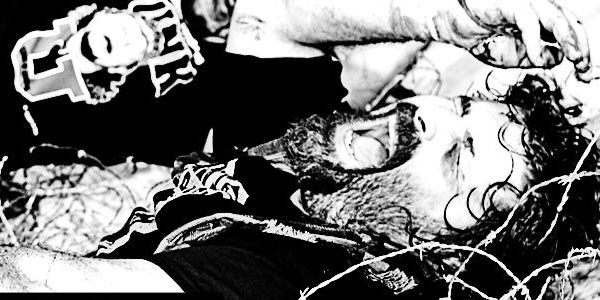
The word "Hardcore" brings many images, matches, and memories to mind for wrestling fans. Arguably, hardcore wrestling was the catalyst for the wrestling boom of the late 90s, but the evolution of the style goes back decades and this article will rank the true pioneers of the blue print of hardcore. From the world's most famous bingo hall, the ECW arena in Philadelphia to the legendary Korakuen Hall in Tokyo, the hardcore style thrilled (and terrified) fans for decades. While the industry as a whole evolved and the hardcore trend ran it's course during much of the 90s, the impact of the style changed the wrestling business, even to this day. More specifically, there was much more to the revolutionary style than blood, barbed wire, and fire. The pacing of both the matches and storylines were drastically changed after the more extreme style became apart of main stream wrestling TV. However, long before Mankind became the WWE hardcore champion in 1998, Crowbar was WCW hardcore champion in 1999, or an alphabet soup of independent promotions started promoting "ultra violent" matches in the early 2000s, there was a group of individuals that provided the foundation for all of it. Consider these, The Godfathers of Hardcore:

7. The Original Sheik

Eddie Farhat was the true originator of hardcore and without question, he influenced the rest of the names to be listed here. Despite being one of the top drawing and most well known names in pro wrestling history, most of the details of his career remain a mystery, but that was one of the staples of his character. Farhat presented himself as a true wild man and his ability to make fans believe is one of the reasons he remained a star for almost five decades. The realism of The Sheik became a necessity of the true hardcore style and that's what gave the hardcore style the longevity it had, it made the fans BELIEVE. The argument of if wrestling was real or phony raged for years, but nobody questioned Ed Farhat. Quite simply, The Sheik was real in the fans' eyes. After he started his career in 1950, Farhat traveled the country wrestling in every major territory in the United States. He also owned the Detroit territory that drew major crowds in the 1970s to see him battle the legendary Bobo Brazil. Similar to his travels in the US, Farhat would make his way to Japan in the 80s and wrestle primarily for the All Japan promotion before eventually landing in Onita's FMW promotion in the 90s. Ultimately, what made The Sheik the legend he is today wasn't the spike, pencil, or fire he used during his career, but rather the legitimacy of the presentation of the character. It's truly remarkable that Farhat made such an impression on generations of fans without saying a word and the impression he left made him a global star.

6. Bruiser Brody

Frank Goodish, who became wrestling's "intelligent monster" as they called him in Japan, followed the patten of Farhat of being seen as real to the fans in attendance. While The Sheik opted for any gimmick that wasn't nailed down, Brody captured a similar aura of danger with a series of stiff shots to his opponents. Brody was a journeyman and an independent business man that demanded his fair share of the gate. Brody wouldn't take any gruff from promoters and his reputation as a rebel enhanced his character both inside and outside of the business. A prime example is the infamous cage match with a young Lex Luger, where the promoter wanted Brody to do the job for the rookie, but Brody, not wanting to damage his drawing power in the United States, refused. Brody attempted to negotiate a different finish, but the promoter would hear none of it. Luger, who was said to be quite nervous about the match to begin with, tried to work the match with Brody, but as he rifled off punches, the cave man didn't move. Brody no sold every offensive move from Luger, who eventually climbed the cage and left the ring, distancing himself from the bizarre incident. Some would call Brody's decision to take the match in his own direction as unprofessional, but this was years before guaranteed contracts and Brody had a legitimate concern, as payoffs were usually determined by the gate in the United States during that time. The Luger incident actually showed how smart Brody was and in terms of marketing a persona, he was ahead of his time. More specifically, Brody knew he had to diversify himself during his career, which is why he regularly studied the TV production of shows before he went to the ring. It's a safe bet that Brody could have played a role behind the camera for a promotion had he lived long enough to retire from in ring competition. Goodish's widow, Barbra released a book along with Larry Matysik, "The Triumph and Tragedy of Wrestling's Rebel" a few years ago that detailed his career and provided some unique insight into Frank Goodish the business man. A tremendous read, the narrative provides a look into the motivation of some of Brody's more controversial decisions and more so, an explanation of the business sense behind them. Brody knew how to maximize a draw and in the process, added a new dimension of physicality to the hardcore style. The sight of the furry boots, wild hair, and swinging chain sent fans scattering anytime Brody roared through the crowd. Again, the true definition of hardcore made the fans believe. Perhaps, what set Brody apart from other big men in the sport during his era was ability to move for someone his size, as drop kicks and leap frogs were normal maneuvers for the 6'7 brawler. Bruiser spilled blood during successful run in the WWF, AWA, NWA, Puerto Rico, and Japan. Speaking of the Japanese tours, Brody was one of the very few wrestlers that appeared for both New Japan and All Japan during the competitive environment in the 80s. He had the ability to land such specialized deals because he was one of the top draws in the country, even on par with any Japanese star in their native land. Though Brody's life was cut short, his influence and legacy can still be seen today.

5. Sabu

The nephew of The Original Sheik, Sabu, followed into the family business, but he certainly made his own name and in the process, added another aspect to the hardcore genre. The spectacular aerial offense that eventually became common place in wrestling, was brought to the table by Sabu. Speaking of tables, he was the true innovator of the furniture in the industry, which also became common place. Similar to his uncle, Sabu had a sense of believability when he preformed and he was key to putting ECW on the map, especially during the promotion's early years. Without Sabu, it's quite possible ECW wouldn't have made it off the ground and without ECW, the argument could be made that hardcore in the United States wouldn't have boomed in popularity. He really took the risk factor to a different level in the early 90s as well, including a fire death match in the FMW promotion, where the ring caught fire during the tag team contest. All four competitors fled the ring, as flames surrounded them and they escaped the inferno. The incident garnered major press in Japan, but Sabu had an even greater impact when he debuted in ECW in 1993. In some respects, it's a shame that Sabu isn't a millionaire today, but at the same time, the decisions he made during his career didn't do him any favors. In fact, for the majority of his career Sabu didn't get the credit he truly deserved. He quite literally destroyed his body and along with the scars that litter his body, he carved a legacy into the American scene. Thankfully, The ECW resurgence, as much of a flop as it was as a whole, finally acknowledged Sabu as the innovator that he was. Further more, Sabu was an original, and in the wrestling industry that are really only a handful of true originals. Again, for as many people that knock the WWE version of ECW, it gave millions of fans a chance to watch some of Sabu's finest (and most unbelievable) work after the release of some of the best of ECW DVDs. Specifically, the barbed wire match with Terry Funk was released to the general public and an entire generation of fans could finally see the bout where Sabu sliced his arm on the wire. That match alone set the standard for barbed wire matches in America and very few compare to Sabu/Funk from 1997 at the ECW arena. Regardless of his problems in recent years, Sabu drew the road map for hardcore in the 90s.

4. Atsushi Onita

https://www.youtube.com/watch?v=V5NbbOoFP3A Atsushi Onita is probably a name that most fans outside of Japan haven't heard before, but he was an extremely influential figure to the hardcore genre. Originally, a Jr. Heavyweight for All Japan in the 70s and 80s, Onita was exposed to the early stages of hardcore when he toured Puerto Rico and Memphis during the formative years of his career. Speaking of Memphis, Onita was actually involved in the famous concession stand brawl that is known as one of the first hardcore matches on American TV. The flying fries and pop corn had a profound effect on the young Japanese grappler, who was first exposed to barbed wire a few years later in Carlos Colon's World Wrestling Council. Colon was the first promoter to put barbed wire in a main event spot, but Onita took it to an entirely different level when he took the gimmick back to Japan with him. After a series of knee injuries derailed his fast paced style in All Japan, Onita founded Frontier Martial Arts Wrestling, which changed the path of the hardcore style. By today's standard's FMW would probably be considered garbage wrestling, but in 1989 when the promotion's first barbed wire match was promoted, it drew an audience because there was a sense of real danger. Onita's willingness to push the envelop (and scar his body in the process) allowed FMW to become the top independent promotion in Japan in the 90s with a cast of intriguing characters and a variety of weapons regularly featured. In 1993, Onita promoted the first exploding barbed wire match (the video above) against Terry funk with 30,000 fans in attendance, which is very rare for an independent show in Japan. The success was noticed by a young manager in America, Paul Heyman, who borrowed quite liberally from the FMW formula, including putting the ECW title on FMW alumni, Masato Tanaka. That's not to say that Onita was responsible for ECW's success because he clearly wasn't, but the influence was there. Onita's contribution to the genre was that he proved that hardcore could draw money and that it could be a main stream product. However, it should be noted that FMW wasn't all blood and guts, as the promotion had some tremendous high fliers on its roster, including the legendary Hayabusa. Despite, Onita's notorious reputation during recent years, which led to his dismissal from his position in the Japanese government and the tasteless angle he ran after the murder of Bruiser Brody, which garnered negative press in Japan, he must be credited for his accomplishments. The FMW promotion itself folded in 2002 after Hayabusa broke his neck in a match the previous year, but he has made remarkable progress in recent years.

3. Terry Funk

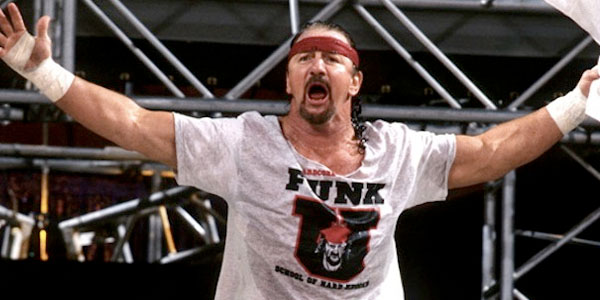
What can be said about Terry Funk? He's a living legend that has done it ALL in the wrestling business and there will only ever be one Terry Funk. The Texas wild man is from a wrestling family and considered one of the most influential performers of all time. In many respects, Funk had two different careers over the course of his fifty years in the ring, as during the first half of his career he was a technical competitor before morphing into the "middle aged and crazy" Funk during his later years. However, Terry was ALWAYS wild during his career and brought a sense that anything could happen to the ring. Again, Terry made the fans BELIEVE, a staple of being hardcore. A true global superstar, Funk reached mythical status in All Japan and throughout his career wrestled for every major promotion in the world. More so than the style and presentation that Funk brought to the table, he legitimized hardcore and a series of promotions along the way. Funk, a former NWA Heavyweight champion, lent his credibility to both the style and performers during his career. His stamp of approve and endorsement of a promotion let the fans know that it was worth watching. ECW promoter, Paul Heyman was quoted in "The Rise and Fall of ECW" documentary as saying, "There wouldn't have been an ECW without Terry Funk." Heyman was right because without Funk's credibility, extreme wrestling could have been seen as a flash in the pan. The same could be said for Onita's FMW, as Funk was the first major star from one of the "big two" promotions in Japan to sign with the independent group. Even IWA Japan, which promoted the legendary "King of the Death match" tournament that was written about in Mick Foley's debut book, was given a boost because Terry Funk was on the card. His feud with Mick Foley in 1995, when the two quite literally set each other on fire, elevated Foley's profile enough that he was signed to the WWE a year later. The same can be said for Sabu, as his visibility increased after his matches with Funk. Basically, the hardcore style was given the chance to excel to new heights because Terry was willing to give back to the business, which is a noble gesture.

2. Paul Heyman

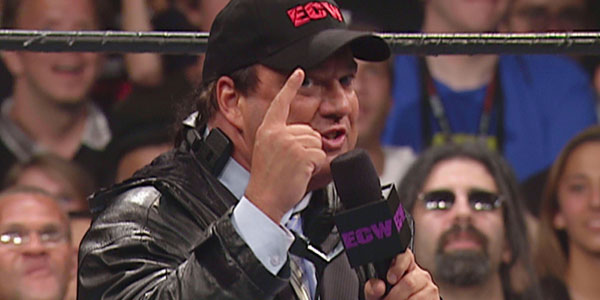
Paul Heyman is one of the most innovative and controversial minds in wrestling history. He's currently delivering some of the WWE's best mic work as Brock Lesnar's manager, but he was also the architect of hardcore in the United States. Heyman didn't get put through a flaming table or get tangled in barbed wire, but he was the one behind ECW, which put hardcore on the map. Without the notoriety of ECW, it's doubtful the "Attitude Era" would have been quite as successful as it was during the peak of the industry. Heyman was the booker that gave hardcore a stage and developed the ideology along with it. He provided the substance of characters, angles, and a cutting edge presentation to go along with sizzle of all the weapons featured on an ECW show. If you take into account the entire scope of extreme wrestling, Heyman proved that hardcore could be successful if it had a stage and weapons actually were not a necessity. The 20 minute wrestling clinics that were put on by Lance Storm, Jerry Lynn, Chris Candido, and others were just as extreme as the plunder that littered the ring during a weapons match. The technical wrestling aspect of Heyman's booking is another aspect that added substance and it was just as important as the extreme moments. ECW provided an atmosphere that hardcore gave the fans 100% every match, which defined the style more than any gimmick.

1. Mick Foley

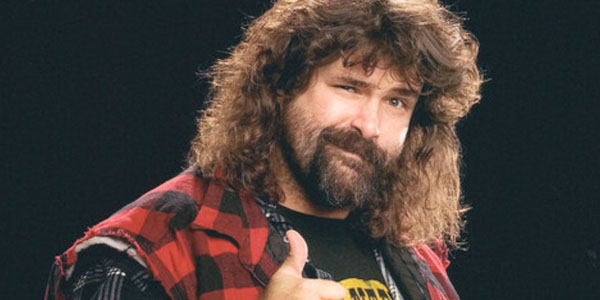
Why did Mick Foley rank #1 on this list of esteemed Godfathers? As was mentioned earlier, Sabu didn't get the credit he deserved and one of the reasons could be he didn't get as much main stream exposure as others on this list. Mick Foley had the character to get over with a global audience and took more risk than most on a main stream stage. Ultimately, Foley exposed hardcore to a world wide audience during his run in the WWE and as a result, hardcore drew more money than ever before. He wasn't just at the right place at the right time, though. He earned his spot on this list with some of the most dangerous bumps in pro wrestling history. Foley's career captured many of the different aspects of hardcore that were mentioned here, his matches with Vader in WCW, one of which resulted in the loss of Foley's ear, were brutal. His matches with his mentor, Terry Funk, were extremely dangerous and resulted in second degree burns for each competitor. The bump that he took from the top of the cell in 1998 raised the bar for risk taking and it was a level that was rarely revisited after that. Those matches were in Foley's prime, but he had an impressive series of matches in 2006, including a Wrestlemania match with Edge that showcased the WWE's first flaming table. The fans recognized Foley's sacrifice and it made him one of the most popular competitors in the pro wrestling business. Foley is another example that hardcore isn't about the gimmicks, it's about leaving an impression on the fans, which is what made the hardcore style an art form.

Contributor
Contributor

Jim Lamotta hasn't written a bio just yet, but if they had... it would appear here.