7 Things Bill DeMott's Resignation Tells Us About Corporate WWE

"Old school" is dead.
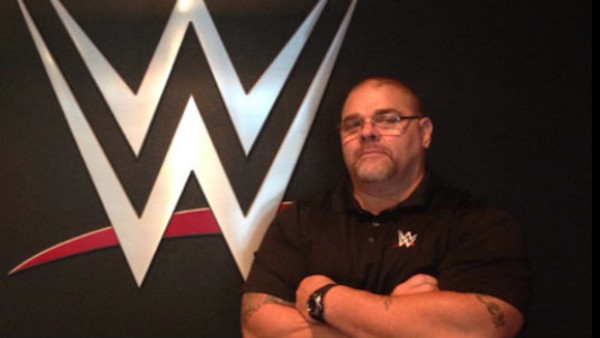
Amid numerous allegations of perceived professional improprieties, on March 6, 2015, Bill DeMott officially resigned from his position as head trainer at WWE's Performance Center. From allegations of racist and homophobic statements plus physically abusing his students, DeMott's alleged behaviour was so bad that him staying in his position could've easily led to more harm than good for now wholly corporate WWE. Bill DeMott is a 25-year wrestling veteran who comes from another time in the industry, his career starting in 1990 making him one of the last of the top wrestlers broken in during wrestling's "territory" era. If anything, the territory era wasn't exactly known for being politically correct, kind, or pleasant in most any way for those who were doing the wrestling itself. From angles being booked that sensationalised issues of race, gender and sexual orientation, to needing the perception of being "tough" in order to be able to be considered a top star, it was a different time. Of the trainers employed by WWE, it's entirely possible that being "old school" in the ring was DeMott's job. Simply put, in-ring trainers in Florida like Norman Smiley, Robbie Brookside and Sara Amato represent a whole other era of wrestling that's decidedly different than North America's classic tradition. Thus, possibly in doing his job, DeMott was simply a relic of an era that's now dead and gone. Likely aware of (but staunchly against) where wrestling is headed, what lessons can we learn about wrestling's newly "corporate" era.

7. Homosexuality And The Heel In Wrestling Tradition
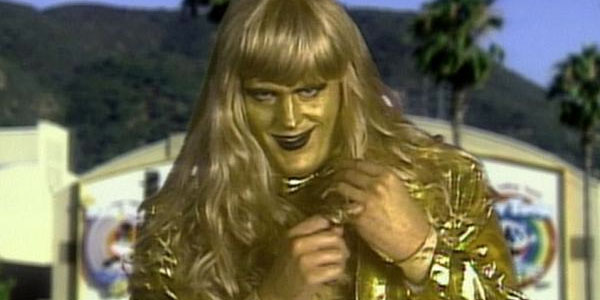
This is actually a huge thing to consider. The most popular heel in wrestling's early history was Gorgeous George, an effeminate heel who parlayed fans' homophobia into considerable heat that defined his career. As well, there's Dustin Runnels' portrayal of Goldust, which became one of WWE's most legendary characters, if for nothing else than tapping into the same vein of heat than George did three decades prior. In a carny era where a privately-controlled industry can skirt public opinion, that works. However, in 2015 WWE, Bill DeMott calling Brandon Traven (and others) "half a sissy" just doesn't work. Also, what of Kalisto's potential turn as a homosexual hairdresser? If Bill DeMott has left WWE for his believed homophobia (among many reasons), is Kalisto's possible forthcoming stereotypical homosexual gimmick supposed to be a positive portrayal? And what about self-outed homosexual performer Darren Young? Numerous issues about WWE's future should be considered here.

6. Wrestling Isn't "Protected" Anymore
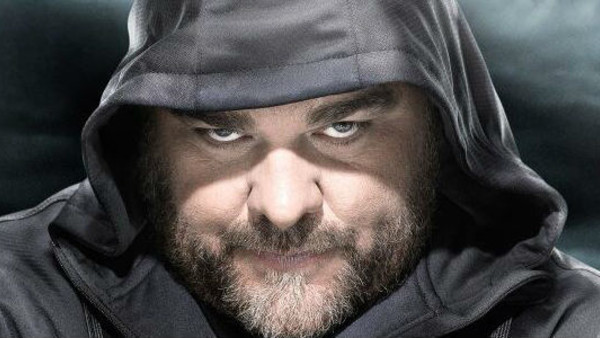
One of the accusations against Bill DeMott is that he willfully endangered the physical safety of his trainees by intentionally botching moves that he performed on them. If we think about the history of wrestling, there's something amazing to consider. One of wrestling's most legendary tales is of how in Florida, Hiro Matsuda broke Hulk Hogan's leg in order to "test" him to see how much he wanted to be in the wrestling industry. Is a broken neck the same as a broken leg? No. But, was DeMott just "protecting WWE's business" in his role? Possibly.

5. Ribs Can't Be Cruel Anymore

There are old school wrestlers who would state that snapping ropes in people's faces and calling someone with the last name of Pettyfer "pedophile" just a case of a guy being a cruel ribber. Of course, when we consider that some of the best wrestlers ever were also some of the cruelest ribbers of all time, too, then, yeah... Dynamite Kid is seen as someone who played a ton of really mean ribs on people. Was he ever fired in the 80s for any of those (what would now be perceived as) transgressions? Of course not. There was once a time in wrestling where greenhorns took their ribbing, and then when they became veterans, just gave them back to the next group of kids coming up. Of course, back then wrestling was an insular business (not traded on the New York Stock Exchange) that protected itself, too. That's just not true anymore.

4. Concussions Are A Serious Matter

Yeah, we all know about Chris Nowinski, the Sports Legacy Institute and chronic traumatic encephalopathy (CTE). However, for a (now) minority of wrestlers like apparently concussion-hating Bill DeMott, I'm sure that deep down inside somewhere they believe that Chris Nowinski is a "pussy" that ruined wrestling forever. There's something romanticised about "crazy old wrestlers." It's been a part of the wrestling industry's lore for quite some time. However, just stop for a second now and consider that every wrestler you think is "crazy" is someone who is suffering from a (possibly at one point) potentially "curable" case of CTE. Moving forward, there's probably not going to be very many "crazy old wrestlers" anymore. I can imagine that for someone who came up at a time in wrestling where wrestlers just "went crazy," doing things to potentially stop that actually seems "crazy," too.

3. You Don't Have To Be A Stereotypical "Tough Guy Wrestler" To Wrestle Anymore
The big takeaway from trainees not being agreeable with being beaten up and hazed in training is that we're in an era where athleticism and mainstream marketability (past having big muscles) are more important than stereotypical "toughness" in pro wrestling. Wrestling was once the industry that people got into because they wanted fast money, or were such hard-nosed societal pariahs that having a "normal" job would seem impossible. Now, WWE is a publicly-traded corporation where industry-minded men in gray suits or athletic, DIY-driven hipsters seeking non-traditional employment earn salaries and have "personal brands" and "marketing strategies." The days of "get on the gas, then get some color, bang some rats, and we'll sell a s**t -ton of t-shirts" is dead.

2. Social Media Is Everything

Bill DeMott's resignation wasn't mentioned first on WWE.com, no, it came right from DeMott's personal Twitter profile. That says everything. WWE's social media obsession says everything about just how much they know that a) other corporations looking for commercial subsidy through advertising love social media, and b) how much WWE knows that other corporations know that their fanbase is hyper-engaged on social media. But what does this mean for the wrestling? Social media is time consuming, so much so that it could potentially distract a talent less-than-gifted at time management away from working at their craft. Or in the case of say, Zack Ryder, WWE has to push talents that may not necessarily be completely ready from an in-ring, marketability and able-to-navigate-backstage politics standpoint. Social media is a double-edged sword for WWE, and in the corporate era creates a fine line for the company to walk in order to provide an in-ring product that matches up favourably with the voice of its fanbase. On some level, DeMott's resignation was likely caused by the company being concerned about the deluge of negative DeMott hashtags distracting those following WWE online from having all of their attention on the Road to WrestleMania. Amazing, right?

1. "Old School" Is Dead

https://www.youtube.com/watch?v=yW6_0H44aQw Starting somewhere around the time that Hardcore Holly assaulted Matt Cappotelli on an episode of MTV's Tough Enough in 2002, the death knell for "old school" wrestling was silently starting to ring. Throughout the past decade, moments including Chris Nowinski's retirement, Triple H embracing becoming "office," the surge in pro wrestling podcasting, CM Punk's WWE departure, and finally Bill DeMott's resignation have allowed that "death knell" to now ring louder than ever before. Now more than ever, it's easy-to-argue that WWE becoming a publicly-traded company killed "pro wrestling." That carny business filled with dark "secrets?" Dead. That industry where homophobia, sexism, racism and all manner of denigration is encouraged because it helps make money? Dead. The industry where training greenhorns involved literally breaking them in order to build them back up again? Dead, too. To some people like Bill DeMott, that's sad. To a shareholder hoping to turn a profit, that's wonderful. If attempting to locate the difference between "wrestling" and "sports entertainment," that has to be it. It's not the CEO, but the shareholders who run corporations. If the shareholders are unhappy, then the corporation loses money. If the corporation loses enough money, the corporation ceases to exist. Of course, Vince McMahon will never see the day that WWE is no longer economically viable.

In this post: 
Bill DeMott
 
Posted On: 
Contributor
Contributor

Besides having been an independent professional wrestling manager for a decade, Marcus Dowling is a Washington, DC-based writer who has contributed to a plethora of online and print magazines and newspapers writing about music and popular culture over the past 15 years.