7 Wrestling Promotions Which Tried To Beat WWE
Can All Elite Wrestling be the one to break Vince McMahon's stranglehold?

This past week, the interest of the whole wrestling industry - and particularly that of those cosying in a Stamford boardroom - was piqued when a set of new trademarks bearing the familiar hallmarks of Cody and The Young Bucks' were revealed.
The filings listed a slew of new trademarks under the banner of 'All Elite Wrestling' - as clear a sign as any that the Being The Elite crew, hot off the heels of their All In success, are seriously pursuing an ongoing, weekly television venture.
What's more, the company is believed to be bankrolled by entrepreneur Shahid Khan, the billionaire owner of the Jacksonville Jaguars with a net worth estimated to be almost double that of Vince McMahon's. For the first time since 2001, the business may have a new Ted Turner - and wrestling fans are understandably excited about the prospect.
AEW might the most well-equipped venture to take on Vince McMahon's hegemony, a stranglehold he's held on the industry since WCW's collapse in 2001. But they are by no means the first. Heck, Jeff Jarrett's tried it twice.
So far, nobody has succeeded.
7. ECW (2001)

WWE's purchase of WCW on 23 March 2001 officially brought the Monday Night Wars to a conclusion. The conflict had been anything but internecine, with the renewed spike in the industry's interest proving bounteous for both parties - until the Atlanta group's own mismanagement scuttled their ship.
Paul Heyman's ECW - for so long defined as North America's 'renegade independent' - had been gnawing at the giant's heels for some time. Heyman had designs on being anything but a violent feeder promotion, and was already diving headlong into national expansion as WCW began to sink beneath the waves. The company's demise presented a power vacuum for a de facto number two outfit, and ECW should have fit the bill.
There was one problem: just 12 days after WCW barred its doors, ECW followed it to the skip. Heyman, having lost his TNN deal the previously December, had desperately scavenged for a new network home, but came up short. With no fluid income covering mounting losses, remaining pay-per-views were cancelled after January 2001's Guilty as Charged, and on 4 April, ECW folded. Shortly after, WWE stripped it of its assets. More Penn. Avenue than Park Place, it was nevertheless enough to complete Vince's monopoly.
Status: Both it and WWE's zombified version are as dead as a doornail.
6. XWF

Kevin Harrington's line-up for his inaugural XWF show read like a who's who of the industry... circa 1993.
Left to the task, Jimmy Hart assembled a roster spearheaded by who else but Hulk Hogan, supported by weathered stars such as The Nasty Boys, Greg Valentine, Marty Jannetty, Johnny B. Badd and The Road Warriors. But he also seasoned the XWF - an acronym for the brilliantly bonkers name Xcitement Wrestling Federation - with up-and-coming talent, including nailed-on future Hall of Famers The Shane Twins, Johnny Swinger, and Lex Lovett. A certain AJ Styles helped make up the numbers.
Like every money mark before him, Harrington, a self-made millionaire through his "As Seen On TV" infomercials, reckoned he could take on the newly created McMahon monopoly. He planned to replace WCW with a potpourri product featuring every available style of wrestling - the biggest attraction obviously being Hogan, who had been on sabbatical from the business since walking out of WCW a year earlier.
Despite the grammatically illogical company slogan - "No more prima donnas, no more politics... in your face!" - initial tapings were solid. The problem was that no sooner were they in the can than WWE came knocking for any of XWF's relevant talent. Commentator Jerry Lawler, fresh off his divorce from Stacey Carter, was offered a reprieve from the company he'd left in protest over his ex-wife's sacking. Curt Hennig, Sable, and most significantly, Hogan, all followed him back to Stamford.
Jimmy Hart - now running the company after Harrington had tested the water and came out burned - had nothing left to offer TV executives. An 'invasion' of Puerto Rico's WWC and exploration of a weekly PPV model never amounted to anything, and the upstart closed its doors in 2004.
Status: Defunct. Hulk Hogan's WWE return has sadly killed a comeback.
5. GFW

What does Global Force Wrestling mean to the industry? In 2018, it might seem like nothing more than an elaborate front for a Ponzi scheme with Jeff Jarrett as King of the Mountain, but when it launched three years ago, its queasy chartreuse branding stood for much more.
An extremely comprehensive posting on the company's official website ahead of its first show outlined the key tenets of GFW, amongst them "fun", "variety", and "passion". Most strikingly amidst the bluster was the claim that the company was out to "achieve the improbable" - tacitly, to challenge McMahon's hegemony. According to the hyperbole, only Jarrett had "ever taken a wrestling company completely from scratch and turned it into a global entity" - and he was out to do it again.
How did that work out, then? Not brilliantly. The company became embroiled in scandal after Jarrett started selling 'Global Force Gold', encouraging investors to buy into bullion as part of an alleged pyramid scheme. It took over two years for episodes of GFW's television show, Amped, to air, and a proposed merger with Impact ultimately ended in bitter acrimony as Jarrett was forced into an indefinite leave of absence.
Following the split, Jarrett took the GFW brand with him, and has forged a partnership with FITE TV. The company has since helped produce All In's Starrcast and the NWA 70th Anniversary Show, but as an ongoing wrestling concern of its own, is a non-starter.
Status: Technically alive, like a sea sponge.
4. Lucha Underground
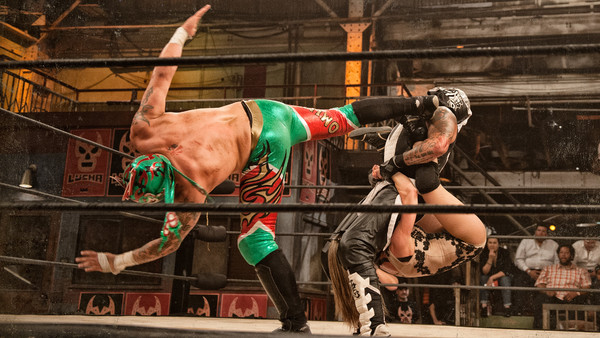
When Mark Burnett's Lucha Underground launched in 2014, it promised to shake up our basic understanding of how the industry should operate. To some extent it accomplished that goal, but in truth, it mostly just shook up Jim Cornette's feathers.
The philosophy was this: if wrestling is a television show with fictional characters, why can't it operate within the parameters of other fictional programmes? Instead of the thin veneer of a legitimate sporting contest, LU instead promoted a show revolving around outlandish storylines and characters, often straddling the supernatural, with a narrative progression more in keeping with serials and soap operas. 'Angles' and 'promos' were replaced with plotlines, played out in cinematic fashion to the mystery of those in the company's central setting, The Temple. It was here that 'off-screen' situations would reach their denouement.
The concept was novel - though not for everybody. LU's fast and loose approach to reality naturally got under the skin of 'rasslin purists, chief amongst them Jim Cornette. Everybody else who watched the show was endeared by its originality and creative charm, if not necessarily the actual wrestling - though that didn't necessarily matter.
Unfortunately, despite rave reviews, appeal was inevitably niche. Gaining a second home on Netflix has helped grow the audience to some extent, but its a user-base simply disinterested in wrestling. For fans, its seasonal approach makes it only an occasional alternative for those who crave a weekly product.
Status: Season 5 looks to be happening, but it's likely to be more of the same.
3. TNA/Impact

Perhaps if TNA hadn't had a puerile name straight out of the Attitude era, it could have competed with WWE. Or perhaps had it not went out of its way to make all the same mistakes as WCW.
The first simulated sin was somewhat unavoidable. Founded in 2002 by Bob Ryder and the Jarretts, it was only a matter of time before 'The Chosen One' was made the group's figurehead. Jeff's residual star power from WCW's dying days was, at least at the outset, just about enough to legitimise the newly minted NWA:TNA's novel weekly pay-per-view format. The first two years emanating out of Nashville's Tennessee State Fairgrounds - the so-called 'Asylum' - gradually stood up for themselves, the electric X Division in particular creating new stars in the shape of Christopher Daniels and AJ Styles.
In 2004, TNA emulated WCW once more in making an Orlando sound stage home of their new weekly TV show, the camel-cased iMPACT! To delineate themselves from channel-surfers, the company adopted a new six-sided ring - something WCW had oddly never tried. More significantly, they started promoting three-hour long monthly pay-per-views. They were trying to step up.

Then things began to unravel - in scarily similar fashion to the Atlanta group. Just as iMPACT! was gaining traction on Spike TV, President Dixie Carter fell into Vince Russo's honey trap, drafting the New York quack-hack for a bit of Attitude magic. It fell predictably flat on its rear; the association alone was enough to tarnish TNA's growing reputation.
Dixie's remedy matched WCW's: Eric Bischoff. Only this wasn't 1995 - heck, this wasn't even 2000 - and Easy E's antiquated ideas were just as irrelevant as Russo's. Disastrously, Hulk Hogan was brought on board and given the keys to the kingdom. The X Division promptly plummeted and superannuated stars of yesterday littered the top-line in a re-run less Golden Era and more XWF, whilst a hubristic move to Monday night saw iMPACT! utterly crushed in the ratings. It took years to recover.
Since then, TNA has knocked on death's door so often you reckon the Grim Reaper has a restraining order. It's the only way to explain their miraculous, continual survival. Today, the company exists as Impact Wrestling, and though it is flourishing creatively under Don Callis and Scott D'Amore, it barely even registers on the radar. The fact they are effectively being subsidised by WWE, now entirely willing to pay to feature archival footage on their documentaries, speaks volumes of Impact's threat to Vince McMahon. It's non-existent.
Status: Still on the go, but growth is barely perceptible. A bit like moss, in that regard.
2. ROH

ECW's demise didn't just leave WWE without its last vaguely viable North American challenger - it also left tape trader Rob Feinstein in a financial pickle.
Without his highest selling commodity, Feinstein's RF Video was staring down the barrel. After flirting with Combat Zone Wrestling for a bit, Feinstein eventually came up with a logical albeit supremely ambitious solution: he'd simply replace ECW with his own promotion.
In February 2002, Feinstein launched Ring of Honor, out of ECW's old Philadelphia stomping ground. Aside from its earnestly po-faced 'Code of Honor' concept, the debut show caught the imagination with a spectacular Triple Threat main-event, featuring three relative rookies: Christopher Daniels, Low Ki, and Bryan Danielson. It wouldn't be the last we'd hear from them.
Just as Ring Of Honor was beginning to build momentum, Feinstein was implicated in an internet sting which alleged he tried to solicit sexual activity from a minor. Talent-partner TNA immediately pulled out of their deal, taking ROH headliners AJ Styles and Christopher Daniels with them.

Feinstein's departure turned out to be something of a blessing in disguise. Under the stewardship of Cary Silkin, the company outgrew its original remit, expanding to PPV whilst putting on some of the best wrestling in North America in the process. Along the way, it kickstarted the careers of CM Punk, Samoa Joe, and Kevin Owens.
After seven years of personally bankrolling ROH, Silkin sold the company to broadcaster Sinclair, a move which guaranteed weekly syndicated television and financial security in the near-term. The confidence imbued by the Sinclair takeover has allowed ROH to expand even further, offering fixed contracts to talent and forging a fruitful partnership with NJPW.
This July, ROH made plain that it has big plans for the future, when they announced an historic show at New York's MSG over WrestleMania weekend. The event - the first in the venue by a company other than WWE since 1960 - sold out in less than a month. Those tapes will do hot cakes.
Status: Very ambitious. Partnership with NJPW and major financial injection could trouble WWE.
1. NJPW

New Japan Pro Wrestling has almost everything in its arsenal to take on WWE. Running for almost half a century, it has the prestige which only tenure can invoke. The roster, though far from extensive, is almost unparalleled in quality. In Kazuchika Okada and Kenny Omega alone, New Japan possesses the two crown jewels (not that one) of professional wrestling. The company also benefits from not being ran by Jeff Jarrett.
There's just one barrier: they're Japanese.
No matter how aggressively NJPW pursue their American expansion, they will always be at a disadvantage. Wrestling fans are not the problem. Any self-regarding follower has already found New Japan as WWE's tonic - but that vein might be entirely tapped. How do they create new fans?
The answer is that they probably can't. Anyone not tuning into WWE is unlikely to take the plunge on a foreign product with no recognisable English-speaking stars. Accessibility helps, but nothing is more accessible than the market leader, and they haven't been able to attract new devotees since 1998.
Like Japanese electronics companies of the '80s, NJPW could gradually ingratiate itself as a household name in the States. The problem is how it goes about doing that whilst wrestling remains totally passé. A link-up with a genre straddling AEW - fuelled by Being The Elite - could be a start.
Status: Alive, and stronger than ever - but still need a huge amount of work to go global.