8 Things We Learned About WWE Buying WCW From Dave Meltzer On Talk Is Jericho
Did the XFL's failure force Vince McMahon into a knee-jerk reaction over WCW?
From 1995-2001, the WWF and WCW went head-to-head every single Monday night for ratings superiority. Before that, both companies had been considered competitors, although it wasn't until the advent of Nitro and the nWo that WCW began bothering Vince McMahon. Then, the gloves were off, and wrestling fans witnessed one of the most thrilling periods in industry history.
Dave Meltzer, chief of the long-running Wrestling Observer Newsletter, lived through all of it. He was the guest on Chris Jericho's 'Talk Is Jericho' podcast this week, and he gave valuable insight into how the 'Monday Night War' ended. Specifically, Meltzer was there to talk about McMahon's purchase of his great rival in WCW, what it meant for the industry and why his plan to run both promotions concurrently failed.
The Invasion pay-per-view, the finances behind the deal, original plans, the XFL, who scuppered Vince's vision and more were all parts of the interview. Jericho, who'd batted for both sides during the war, showed remarkable restraint and let Meltzer take the floor.
The results will be fascinating even to those who have read extensively on the subject...
8. Meltzer Considers It The Biggest Moment During His Lifetime

Dave Meltzer has been chronicling pro wrestling since the early-80s. Whether anyone enjoys his personalised star-ratings system or approach, nobody can deny that Meltzer hasn't shown fervent dedication to feeding his hardcore fanbase. His Wrestling Observer Newsletter has charted everything from ECW, WCW and the WWF/WWE to MMA, New Japan and more.
Only one moment sticks out as the most impactful in Meltzer's mind though.
When Vince McMahon purchased the remnants of WCW, Meltzer viewed it as bigger than the time McMahon globally expanded in the mid-80s by gobbling up his rival companies. In one move, Vince had eradicated any and all competition. His WWF now had a clear path free of pressure, and Meltzer thought it was astounding.
He still does. Hearing him talk about the purchase on Jericho's podcast makes it obvious that Dave believes the entire business changed the day McMahon pocketed Ted Turner's old wrestling league. It was more significant to him than the 80s.
7. Why Vince McMahon Is Still Laughing

Both Meltzer and Jericho poured over the details of Vince McMahon's buy and still couldn't wrap their heads around the fact he snatched the entire WCW tape library for around $2.5 million. With one transaction, McMahon enhanced his own archive with hundreds of hours of footage that would surely make him 10x that sum in years to come.
Vinnie Mac must still occasionally have a giggle at how he pulled that one off.
Starrcade, Nitro, Bash At The Beach, the Clash Of The Champions specials and more were now Vince's property. He could do whatever the hell he wanted with them, and he planned to make money. Eventually, they'd find a home on the WWE Network, but WWE sold DVDs aplenty before that service kicked into effect 13 years following WCW's demise.
On top of the library and all that footage, McMahon bagged himself over 20 talent contracts as part of the deal, and he's still making a mint off WCW nostalgia by producing house shows using the Starrcade name. This, in case anyone is in doubt, was one of the best value deals in wrestling history.
6. Invasion Remains One Of Jericho's Biggest Payoffs

Glance at the match graphic above and you'll see that the WWF didn't have much true WCW talent to work with at Invasion. DDP and Booker T were the big incomers, but there wasn't much depth beyond that. That's why they had to draft ECW into the fold and add Rhyno and The Dudley Boyz to the 'Alliance' side.
That didn't matter to fans; people had been desperate to see WWF vs. WCW for so long that they were willing to try it on even with the dearth of top names. Invasion, site of the 'Inaugural Brawl' for control of everything, did huge business at the gate and box office. What's more, it was worthwhile for the talent.
Chris Jericho said on his pod that Invasion was his second-biggest payoff for one night. It wouldn't be topped in WWE until he headlined WrestleMania X-8 with Triple H the following year. That, for working a 10-man tag-team match, was amazing to Y2J.
It showed how much interest there was in cross-promotional warfare. That's exactly why Vince McMahon's original plan called for something a little less in-house...
5. Spike TV Blocked Vince McMahon's Original Idea
Spike TV, then known as TNN, hated McMahon's proposal.
Meltzer claims that things were so dire over in WCW that they contacted Vince about taking over. That's when the WWF figurehead went to new network TNN and pitched that he assume control of Monday Nitro but keep WWF programming where it was. Without hesitation, officials at TNN turned him down flat.
They'd just signed an exclusivity deal with the WWF that meant McMahon couldn't run any other wrestling programming away from their station without consent. SmackDown remained on UPN, but that was an exception, and they weren't willing to draft in a failed brand like WCW just because Vince wanted it.
This left the initial talks between McMahon and WCW dead in the water. It put the brakes on his tentative plan to run Nitro under the guise of competition to the WWF's show. In retrospect, it's hardly surprising that TNN weren't up for this idea. They'd just spent millions (between $26-28m, according to Meltzer) for the rights to Raw.
4. Nitro Would've Stayed On TBS Under McMahon Control
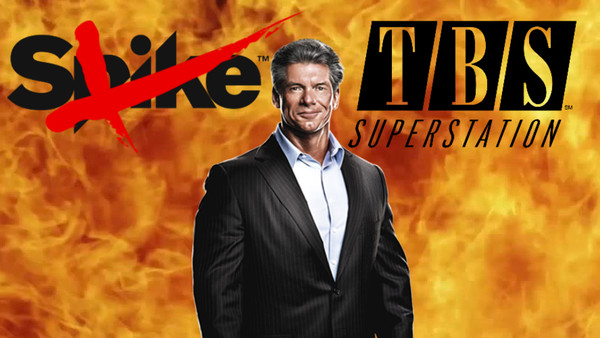
When WCW approached McMahon about taking creative control of their product, Turner top brass were weighing up their options. Though they weren't 100% sold on the idea of keeping WCW around on TNT and TBS, they also weren't sure it'd be wise to hand the reigns over to someone then kick the show off the air.
So, incredibly, Vince McMahon almost ran Nitro on the old TBS Superstation.
Meltzer elaborated on McMahon's original vision by saying that the WWF hoped to run WCW as "competition" that (in reality) wouldn't actually be a competitor. This would allow them to draft stars between brands in a fashion similar to the eventual Brand Split between Raw and SmackDown, and it'd theoretically lead to monster business on pay-per-view.
This is something most fans of the time know, but not many will know that McMahon's WCW wing would still be housed on TBS. That'd mean he and Ted Turner's old Superstation would be aligned for the first time since a brief period in 1984.
3. The Linda & Vince Divorce Angle's Importance

Remember when Vince was literally caught with his pants down by Linda McMahon after cavorting with Torrie Wilson? That segment was supposed to have way more significance than it ended up having. According to Meltzer, the angle was going to lead to an actual divorce between Vince and Linda, one that'd facilitate a major shift.
This only became the plan when TNN/Spike TV shut down Vince's plan to run WCW on TBS.
After that, he decided to have Nitro replace Raw on Monday nights (something that's unthinkable now, and was probably unthinkable to TNN). Linda's divorce would have sneaky terms that gave her control of the Monday night time slot. Then, the loving mother and vengeful ex-wife would hand that slot to son Shane and his WCW project.
Suddenly, Raw would become WCW Monday Nitro and SmackDown would remain the WWF show. Again, some know this, but probs don't realise the implications of the whole Vince and Linda separation storyline.
2. The WWF's Impatience Cost Them

The usual narrative says Buff Bagwell and Booker T had such a horrible match that Vince McMahon quickly cancelled all plans to run WCW as an in-house competitor. Meltzer thinks otherwise, and so does Jericho; to Dave, it wouldn't make sense for someone so dogged as Vince to give up so easily. Jericho agreed, saying he's witnessed first hand how determined McMahon is.
What happened then?
Well, one of Meltzer's arguments claims the WWF got their timing wrong. They booked the WCW match in Tacoma Washington, a place WCW had barely even been, on 2 July 2001. The partisan WWF crowd crapped all over the match, which seemed obvious. Things get worse when one looks at the promotion's upcoming calendar.
They were in Atlanta just one week later. Wouldn't it have made more sense to run the WCW match then instead of setting it up to fail? Whether this was accidental or not, it was rather silly, didn't help WCW's plight and factored in to changing Vince's mind completely.
1. How The XFL's Failure Factored In

Here's the real reason Dave Meltzer feels Vince McMahon pulled the plug on WCW when he did.
After the Los Angeles Xtreme defeated the San Francisco Demons 38–6 in the final game of the season, McMahon's football dreams went up in smoke and the XFL was cancelled. That game occurred on 21 April 2001, which was smack bang in the middle of Vince's acquisition of and grand plans for WCW.
Meltzer doesn't think it's a coincidence that McMahon got cold feet on WCW after its early troubles, because the Observer chief believes Vince couldn't stomach another failure. Specifically, he couldn't tolerate a wrestling-related flop. That'd reflect very badly on his ability as a businessman, and it wasn't acceptable.
By cutting the cord before WCW could ultimately fail, McMahon was saving some face. He'd shipped a reported $35 million on the XFL deal, and it wouldn't do to have more money fly out the door because of WCW.
What else did you learn from Dave Meltzer's latest appearance on Talk Is Jericho? Let us know down in the comments section below!