8 Things WWE Can Learn From Star Wars: The Force Awakens

Then. Now. And a long time ago, in a galaxy far, far away...
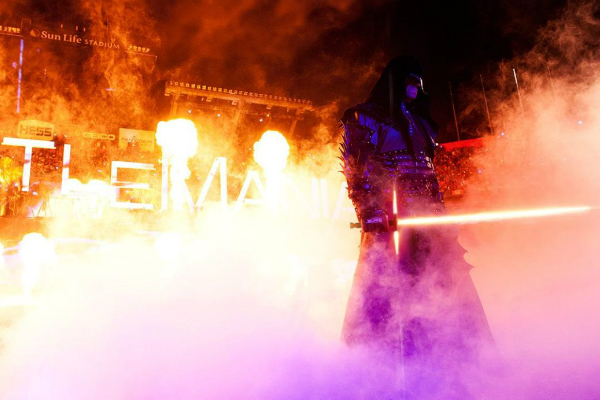
In the 1980s, Vince McMahon and his World Wrestling Federation were untouchable. With the assistance of the phenomenon known as Hulkamania, they€™d won the race to go national, beating the NWA and the AWA down in the process and stealing so much of the latter€™s talent that the one-time biggest wrestling promotion in America was forced to close down. The 1990s, however, saw creative stagnation and some of the worst wrestling television in history€ until World Championship Wrestling began to beat the WWF in the ratings, turning a skirmish into a full-fledged Monday Night War. Revitalised by a newfound Attitude, Mr. McMahon and his pet Rattlesnake saw off the competition once again. Riding high, with an indomitable market share and no rivals left in the wrestling business, they€™d never be so complacent as to drop the ball like that again€ right? Rewind. In 1976, 20th Century Fox and Hollywood in general had so little faith in George Lucas€™ new production that, despite the success of his American Graffiti a few years earlier, they were in the process of writing him and his €˜Star Wars€™ off completely. It€™s the reason why he was given the merchandising rights to the franchise as part of his deal: no one seriously thought they€™d be worth anything. Fast forward a few years, and Star Wars is a runaway hit, The Empire Strikes Back likewise, and Return Of The Jedi is about to follow suit. Lucas can write his own ticket€ and yet, in the years to come, that ticket is left to collect dust as Lucas obsessively rubs out and redraws parts of his blockbuster trilogy. When he finally gets around to making new movies, he presents us with a lacklustre prequel trilogy: The Phantom Menace, Attack Of The Clones, and Revenge Of The Sith. Not everyone hates these films, not by a long chalk€ but no one€™s raving about his genius anymore. Fast forward a few more years, and the seventh Star Wars movie, The Force Awakens, is released to massive fanfare. The film is acclaimed by fans and critics alike, breaking Avatar's stranglehold on box office records. After so many years of doing Star Wars wrong, they€™re finally doing Star Wars right. Vince McMahon and his WWE can learn a thing or two from how Disney and J.J. Abrams saved the biggest franchise on earth. Here€™s how (and there may be spoilers)...

8. Give Us Real Characters Reacting In Real Ways
In the old days of professional wrestling, it was sufficient to have good guys and bad guys: babyfaces, and heels. Everything was based around archetypes, just as in Greek myth. Their stories had simple resonance - bad guys did bad things to good people, and good people ensured that they received their comeuppance, usually on a big show costing money to see or attend. Television changed, and television drama has become more sophisticated: what's more, the audience for that drama has skewed younger. Whereas Cagney & Lacey, Magnum PI and Dallas were watched by a more adult audience, teenagers and young adults are just as into Breaking Bad, Game Of Thrones and Sons Of Anarchy as their mothers and fathers, perhaps more so in many cases. The rise of fandom over the last couple of decades on line has created cult followings even for cancelled TV shows and franchises. The original Star Wars trilogy also dealt with archetypes and archetypical storylines: the hero's journey, the farm boy who is really a super hero, that kind of thing. We may love Han Solo, but is there really a vast amount to his character apart from dangerous rogue with a heart of gold? Rey, Finn and Kylo Ren from The Force Awakens, on the other hand, have backstories essential to their characters. They're flawed, complicated people distilled to an essence that will fit inside a 130 minute feature film. Just as Disney's risk in focusing on new, untested characters rather than old favourites worked like gangbusters, so Disney's risk in making them relatable (and therefore potentially unlikeable) also paid off. WWE hasn't really moved that much with the times: it€™s still trying to run the same old stories, archetypical good versus evil angles. It seemed like things might change during the Attitude Era, where all kinds of characters appeared on WWF/E programming, and audiences were suddenly treated to all kinds of new variations on the classic babyface and heel dynamic, and introduced to the nebulous concept of the 'tweener'. Unfortunately, the company hit a reset button when it chose to step away from that way of doing things: as though the stories being told during the Attitude Era relied on the €˜attitude€™ part to work. The success of NXT as a separate brand has established that someone in WWE knows how to tell a good story. That being the case, it's all the more frustrating that the main roster's angles are so tired and derivative.

7. Don€™t Let The Past Bitchslap The Present

Abrams and Disney have very sensibly enticed the three lead actors from the original Star Wars trilogy back to work to once again play the iconic roles that made them famous - even professional Grinch Harrison Ford. However, Han Solo and Chewbacca don't fly in and defeat the First Order on their own, sidelining Rey, Finn and Poe Dameron and rendering their participation meaningless. Similarly, while The Force Awakens is heavy with nostalgic reference, it doesn't parade its connections to the story of three decades ago without a story from today to anchor them. The character of Solo, in particular, is present to service a specific present-day story point, and beyond that and a little nostalgia trip, isn't vital to the ongoing narrative. WWE has a tendency to do the opposite of all that, bringing elderly legends from the company€™s glory days in for a short run or even a single night, and then having them run roughshod over the current roster. The implication is always that the past - the Attitude Era, the New World Order, D-Generation X, Hulkamania, whatever - is preferable and more entertaining to the present or the future. That€™s not how you persuade lapsed and casual wrestling fans to devote time and money to your product. WWE need to drop the nostalgia run, nix the part-timers, and...

6. Take A Chance On The Future

The Force Awakens takes serious risks by foregrounding the three new main characters of the film - Rey, Finn and Kylo Ren - at the expense of the legendary material at its disposal. Remember, Disney could easily have chosen to make this Star Wars: 30 Years Later, and have Luke, Leia and Han doing the exact same thing as they did in the original trilogy, with the same vibe and tons of self-referential, winking dialogue. Those risks pay off, because most of what people have been talking about over the weeks since the film's release has been the new characters. There€™s been very little speculation over the fate of old school classics: no one's holding mass candlelit vigils for Lando Calrissian or Wedge Antilles. Rather, for the most part, fan excitement has centred around Rey and her mysterious past, around Finn and his potential redemptive arc, around Poe Dameron and just how goddamn cool he is. The WWE audience is crying out to become invested in new characters. A few years ago, Cody Rhodes and Zack Ryder were getting audience attention. For a brief period last year, Damien Sandow had audiences citing him as the best part of the show - now it's The New Day receiving all the plaudits. Not only that, but the WWE crowd is clearly desperate to get behind Dean Ambrose, who's been relegated to wacky sidekick, and Cesaro, who (before his unfortunate injury), had his own large and vocal section of fans in every city on the loop. There's more, too: but WWE seems only interested in investing itself in telling stories about the two, perhaps three people at the main event. At this time of year, the only storylines that WWE seems to think are important are the ones setting up the top three matches at Wrestlemania, which always seem to involve part timers, celebrity guests and WWE legends. Everyone else gets lip service to narrative, but no real commitment€ and the new characters are mostly left to rot in the bullsh*t battle royal and the pre-show. WWE need to start taking chances on the new again, especially with injuries depleting the roster so severely.

5. Don€™t Crap All Over The Most Devoted Fans

George Lucas has delivered most of his Star Wars material since the end of the first trilogy with complete indifference to the fans. The uproar over the wholly unnecessary changes to the original trilogy, and then again over the prequels still leaves him baffled today. He€™s convinced himself that millions of fans of his characters and the universe he created don€™t understand what he€™s trying to accomplish or - worse - don€™t understand Star Wars at all. Essentially, Lucas completely failed to engage with his fans... but then that's what happens when you're the biggest independent filmmaker in the world, self-financing your own fan fiction. Why would you listen to anyone else? Why would you care? Disney and J.J. Abrams have listened to Star Wars fans - hell, it seems that everyone involved in making The Force Awakens actually is a Star Wars fan, and many of them, like Oscar Isaac, are genuine Star Wars nerds. The result is a Star Wars movie for us. Call it pandering, call it targeting your demographic: but finally, the majority of Star Wars nuts the world over have a Star Wars movie that they can get behind. Just as television changed wrestling in the 1940s, and cable television changed wrestling again in the 1980s, the Internet and the rise of the smart fan has fundamentally changed the way that professional wrestling works. The trouble is, WWE still refuse to acknowledge that. JBL, Triple H, Joey Styles and others keep referring to the 'Internet fans' as being a separate subset of vocal fans, treating them with contempt. There are trolls, obviously - but that's a function of being online and working in social media and online fan interaction of any kind, not just wrestling. Everyone's online now: people are talking to each other about the wrestling from all over the world, using laptops and tablets and their bloody phones. The IWC isn't a thing anymore: it€™s a term that€™s been out of date for ten years, yet Styles - WWE€™s Vice President of Digital Media Content, no less - horribly embarrassed himself by using it only last week. In 2016, all kinds of wrestling fans talk about WWE online. We love wrestling, for a variety of different reasons, and we love talking - and arguing - about it. WWE's old-fashioned view on 'Internet fans' and contempt for the kind of people that form the bedrock of their fanbase is counterproductive and foolish.

4. Give Fans What They Want

I'm not one to blindly follow broad consensus opinion on matters of popular culture - far from it. However. The Star Wars prequels were a colossal snafu, in conception and execution. Overreliance on green screen for basic production values and the mise en scène made everything look like a cut scene from a video game. Dull plotting, lumpen pacing and horrible, flat, cringeworthy dialogue conspired to make it impossible to get a quality performance from the brave but unfortunate souls drafted in to make sense of all that mess. As to the characters and tropes of the original trilogy brought into the prequels? It's like this George Lucas hadn't even seen the first three films. He transformed Yoda into Sonic The Hedgehog. He gave Darth Vader a NOOOOOOOOO! moment. For all the Star Wars references and fan service in The Force Awakens, very little mention at all is made of anything from the prequels. That€™s precisely because broad consensus opinion is that the films sucked worse than a vegetarian vampire. Please note that I€™m not saying that the prequels don't have their fans - they absolutely do, and a whole hell of a lot of people love those movies. Hey, it takes all sorts: I still think Hudson Hawk is an underrated gem. But broad consensus is that they suck, and suck hard. And €˜broad consensus€™ is what The Force Awakens is concerned with: creating a movie that the majority of fans will love, that will appeal to casual moviegoers and committed Star Wars nerds alike. As previously discussed, the prequels aren€™t about what a large proportion of their audience wants them to be about. Instead of swashbuckling adventure in a galaxy far, far away, they focus on the melodrama of the Skywalker family's black sheep. Melodrama is binary: it either works or it doesn't, there€™s no middle ground. If it does, it gives us tragedy - TV shows like Sons Of Anarchy, or movies like Casablanca. If it doesn't work, it's hilarious for all the wrong reasons. The Force Awakens gives fans all the cool stuff that made us fall in love with Star Wars to begin with, and takes the melodrama out of the plot, placing it in character beats where it belongs. That's WWE's problem of the last decade or more, in a nutshell - they're too focused on the two or three characters they want to prioritise, to the total exclusion of all else. When Rock versus Cena dominated Wrestlemania for three years running, practically no one else got a look in. The only properly planned storylines these days are the ones involving the main event, and they€™re run through McMahon and Dunn€™s hellish €˜sports entertainment€™ filter. Those of us who chose to watch the professional wrestling show for some proper professional wrestling are in for perennial disappointment€ but we€™re also WWE€™s core audience, the people the Network is marketed to.

3. Refresh The Brand For The 21st Century
The WWE Network is a wonderful thing... but so much of it is geared towards everything except the core product. The vast library already uploaded to the Network is all about the past of the core product: old episodes of RAW and Nitro, old pay-per-views. The various original shows on the Network are all about the things that surround the core product: Table For Three was WWE superstars chatting out of character over dinner; Breaking Ground is a fly-on-the-wall documentary series about WWE's developmental wing; Swerved was Punk'd for WWE superstars, while Superstar Ink is about their tattoos; Culture Shock is a magazine show on the different places and people the WWE tour visits. WWE's core product is a television show (two of them, if Smackdown regains any form of relevance again in 2016) about a professional wrestling promotion, and the various wrestlers, managers and other talent that interact within that promotion. There are live shows, taped shows, and monthly live spectaculars that bring many of the storylines and feuds in those shows to a head, or a climax. Despite massive line-up changes, that core product has remained more or less exactly the same in fifteen years, with barely a break week to week. It looks the same, it sounds the same. The Force Awakens is an attempt to take the Star Wars franchise, a product with as many recognisable traits and tropes as WWE's core product, and update and expand it for a new era, while retaining all the things that made it so beloved by so many people. By and large, the film is considered to be a storming success in this area: it feels like old school Star Wars, but it also feels fresh, new and exciting. WWE need to look at the tools at their disposal to revitalise and reenergise their own core product, because nothing appreciable has changed about RAW and Smackdown since about 1999. Their pay-per-view format is almost entirely dead, thanks to the Network. Why are they still sticking to the same monthly formula, the same weekly formula? Ratings are plummeting. People are bored. Even a cosmetic change to the format of one or both shows would be something.

2. Bring Back The Old Storytelling Spirit
The three Star Wars prequels told the story of the downfall of a single individual, with the Star Wars setting, including the rise of the Empire and the fall of the Republic, as a backdrop. With all the politicking and personal melodrama going on, the prequels were short of adventure and that swashbuckling sense of fun. The Force Awakens returns to the idea that this is a space opera with elements of epic fantasy, not a soap opera with elements of sci fi. It takes the story of the most famous film trilogy of all time and tells us what happened next: it's event based, not character based. There's a reason WWE's storylines have begun to feel so wishy washy, so shapeless and difficult to follow. Look at Roman Reigns. He's a tall, handsome guy who's the latest in a long line of family members to become a professional wrestler. He's at odds with the men and women who run the company, yet receives opportunity after opportunity at the top title in the business. Unlike others who've been in his position ('Stone Cold' Steven Austin or Daniel Bryan, for example), Reigns is rarely if ever messed with by those in charge. In fact, at least once the Authority actually asks him to join them, and continues giving him opportunities at the title even after he says no. Despite this, when his latest attempt to win fails, he goes ballistic and flattens everyone, including his boss, who gave him the title match in the first place and who wasn't responsible for him losing. Those are the events that took place. You can see that the character beats are entirely different. The story is based around the character and his feelings: he feels marginalised, excluded and screwed over, and takes matters into his own hands. The things that happen to him simply don't match the way we're being told he feels. Pro wrestling stories may be based on getting characters over, but the best of them are fundamentally event-based, not character-based. Wrestler A does this to Wrestler B, who responds by doing that, and we have the basis of a feud. The thought processes, emotions and dialogue of a character or characters are what add colour and flavour to that narrative, but the narrative itself is centred around what happens to those characters.

1. The Force Isn€™t Strong With This One Anymore

Even when George Lucas was on point and wholly invested in the films, Star Wars was always best when he wasn't writing or directing it. He never liked screenwriting, and never had an aptitude for it - and as a director, he made a great editor - but as a producer, he selected exactly the right people to convey his ideas on screen. Had he handed over script and direction duties to others more suited for it, the prequels might have been better films: at the very least, the dialogue would be less likely to have induced ice cream headaches in the poor actors trying to make it work on camera. But really, the problem was that Lucas had very different ideas to most fans regarding what Star Wars actually was. Last November, he told CBS Morning:
€The issue was, ultimately, they looked at the stories and they said, 'We want to make something for the fans.' People don't actually realize it's actually a soap opera and it's all about family problems - it's not about spaceships. So they decided they didn't want to use those stories, they decided they were going to do their own thing so I decided, 'Fine.... I'll go my way, and I let them go their way.'€
I€™m sure every Star Wars fan growing up with space wizards with laser swords teaming up with space pirates, space princesses and space aliens in space battles in space thought to themselves, no, what this franchise needs is to have the most fearsome villain in modern cinema reduced to a prattling little boy and a sulky teenager in love. SPACE GOALS. The sad fact is that an elderly man shouldn€™t be trying to write invigorating action drama for a family audience that he€™s at least three decades removed from. Now, who am I talking about here? A seventy-one-year-old, out of touch George Walton Lucas Jnr, or a seventy-year-old, out of touch Vincent Kennedy McMahon Jnr? The best thing that could possibly have happened for The Force Awakens was to have Lucas as far away from the movie as possible - and, thank God, he had no hand in it at all. That€™s the reason for the glowing reviews€ and the same thing could happen for WWE with RAW and Smackdown if McMahon stepped away from the day to day booking and television production of the show. NXT€™s creative flair and brilliant character work shows what WWE could be capable of with red hot talent if McMahon and his homunculus Kevin Dunn weren€™t anywhere near it. That could be RAW. That could be Smackdown. That could be WWE.

Contributor
Contributor

Professional writer, punk werewolf and nesting place for starfish. Obsessed with squid, spirals and story. I publish short weird fiction online at desincarne.com, and tweet nonsense under the name Jack The Bodiless. You can follow me all you like, just don't touch my stuff.