8 Vital Elements Behind The Many Faces Of The Undertaker
Evolution of the Deadman.
Survivor Series this year takes place on Sunday 22nd November - exactly 25 years to the day since the same pay-per-view in 1990 featured the WWF television debut of The Undertaker. Since then, the Phenom has become one of the most enduring stars in professional wrestling history, and certainly WWF/Es longest running legend. Hes the only one left on the roster who was working there when Monday Night RAW debuted in January 1993. Hes seen the last gasps of the territories and the tail end of the 1980s explosion of rock n wrestling; the beginning of the 1990s, with the cartoon elements of sports entertainment in the WWF being pushed to the fore; the Monday Night War and the Attitude Era; the rebranding to WWE; the Ruthless Aggression era; and the gradual transition to PG programming, the digital age, the WWE Network and the move away from a traditional pay-per-view model of business. As The Undertaker, Mark William Calaway has done it all: but what do we actually know about how the man and the gimmick came together? Its a tricky proposition - unlike the majority of his peers, and even the generations that followed him, Calaway hasnt written a rasslin memoir (or had one ghostwritten for him). Hes as old school as it gets, so hes rarely broken character from the Undertaker persona. Ive trawled through shoot interviews, podcasts and wrestling autobiographies to attempt to put together a picture of how the Undertaker came together: how the character came to be the most successful gimmick in wrestling history, in all its different permutations. This is how the many faces of the Undertaker came together.
8. He Nearly Killed His Career Before It Got Started

Im goin to break that assh*les legs. His legs and his arms. All of them... That no good b*stards gotta learn that he cant play with peoples lives... Hes not gonna get away with it.Cappetta was right: an incident like that would have killed Calaway at WCW, and made him poison to the touch at any of the other territories. This was a fork in the road and Mean Mark was intent on taking Calaway down the wrong lane. Had he done so, the WWF would never have seen him, and there would never have been an Undertaker. Fortunately, the matter was taken out of his hands shortly afterwards: Sawyer would suffer a compound fracture of the wrist at the WrestleWar: Wild Thing pay-per-view event on February 25th 1990, and never ended up returning to WCW. Two years later, he was dead of heart failure brought on by an overdose, and Calaways bloody plans never came to fruition. A good thing too, because by the end of 1990 Vince McMahon was calling...
7. He Had The It Factor (And You Cant Teach That)
http://www.dailymotion.com/video/x2e2kt_wcw-1989-mean-mark-undertaker-vs-le_sport WCW didnt agree with Calaway, and in the summer of 1990 he put the feelers out with New York to see if Vince McMahon might be interested in him. Upon checking out some photos, however, McMahon was underwhelmed. Calaway wasnt cut like Jim Hellwig, or built like Sid Eudy: he was just tall, like the basketball player he used to be. To make matters worse, the night before he was due to be introduced to McMahon, Mean Mark Callous had wrestled 'The Total Package' Lex Luger at the Great American Bash for Luger's NWA United States Championship, coming up short to get the belt. The match didn't drizzle, but it wasn't great. Luger wasn't much of a wrestler, of course - Calaway was, but he had a dislocated hip at the time, and couldn't work any of his rope-walking, high-flying moves into the match. McMahon saw the match, and was even less impressed: by now, he was tempted to pass on the interview altogether. Fortunately for Calaway, he was persuaded to see the Texan and that was that. One thing that everyone who's ever known Mark Calaway agrees upon is that his presence alone is magnetic. As soon as Calaway set foot in the room on July 8th 1990, McMahon was impressed all over again. The worries about his physique, the disappointment with the previous nights match - all this paled into insignificance. McMahon could see money in the big man just from talking to him. He didnt have anything for him right then and there, however - but weeks later, Calaway picked up the phone to hear that gravelly voice boom, Is that The Undertaker? Calaway replied, Hell, yeah and the rest is history. McMahon wasnt entirely familiar with his new signings moveset and previous work, however. Bizarrely, the man was a legitimately astonishing athlete being asked to run a slow-moving monster gimmick: a damn good pro wrestler being asked to no sell everything his opponent threw at him. All of his usual tricks were made unavailable the only thing he had going for him was presence, the it factor, the ability to make people sit up and notice him. Calaway had size, true, and talent to spare: but it was that charismatic presence that got the Undertaker over, right from the very beginning.6. He Had The Full WWF Juggernaut Behind Him
In late 1990, The Undertaker project was Vince McMahons second attempt to make a brand new star, after the Ultimate Warrior. Hed inherited Hulk Hogan and Hulkamania from the AWA: Terry Bollea had already been doing every aspect of his Hulkster act for two years before bringing it to the WWF. McMahon had taken Hogan and made him the centrepiece of all of his programming in taking the WWF national. Competing with Jim Crockett, Eric Watts and Verne Gagne to see who could make it first, McMahon hadnt had the time or the inclination to look at who might take the WWF into the 1990s, but once he had, he threw himself into it with characteristic vigour. The Warrior had been a big hit with the crowd: flush with success, McMahon determined to repeat the trick. Once Mark Calaway was in, he brought the full power of the fledgling WWF production to bear on working on his new stars debut.

5. The 'Rest In Peace' Catchphrase Was Coined On His First Night
https://www.youtube.com/watch?v=_I6IkjXDnCI Although Survivor Series on Thursday 22nd November 1990 (Thanksgiving that year) marks the Undertakers first appearance on WWF television, his debut match was some weeks earlier: hed worked a number of house shows in the gimmick before making his debut proper. Technically, his first appearance on the WWFs flagship TV show Superstars Of Wrestling had been taped a few days earlier too, on Monday 19th November: it would be broadcast two days after Survivor Series, on Saturday 24th November. That night, the commentary team were well-prepared. Rowdy Roddy Piper and the Honky Tonk Man would trade insults all night while Vince McMahon himself (in the days when he was only really known on television as an announcer) would keep order and call the match, where in typical early nineties WWF style, Undertaker would squash a nobody, in this case moustachioed jobber Mario Mancini. The three men succeeded in putting the new guy over, as well as in plugging his appearance on the Royal Rumble weeks in advance. Yet its a throwaway comment at the end that makes this match memorable: Vince cracks a horrible, horrible joke about the Undertaker being deadly', which he sells as though its a proper zinger, to almost no reaction. Its the Honky Tonk Man, of all people, that saves McMahon from the dead air of sheer embarrassment, making himself cackle with his 'rest in peace' crack at 2:50 in the above video, as the replay shows the ropewalking move that would become known as Old School in a decade or so. That line would become synonymous with the Dead Man for quarter of a century. Honky should have asked for commission.4. He Was Inspired By Jake The Snake Roberts
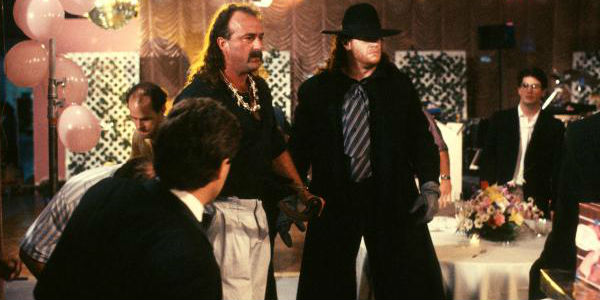
"Actually, I learned quite a bit from Jake Roberts - good and bad. Jake was probably, in my opinion... had one of the best wrestling minds, as far as psychology and how to present his character to the audience. From the time Jake hit the arena to the time he left, man he was Jake 'The Snake'. I also watched his brilliance in the ring and applied it to what the Undertaker was going to be about." - This Is My Yard, 2001The intensity, the dark flair for drama, that Roberts brought to every match, the magnetic grasp of psychology Calaway soaked all of it up like a sponge. In the days when he wasnt permitted to sell much, to move too fast, or to apply an advanced moveset, all he had to connect with the crowd was his version of Jakes gift as a wrestler: the idea that knowing how and when to do something and why were the real secrets of professional wrestling.
3. He Brought The Darkness With Him
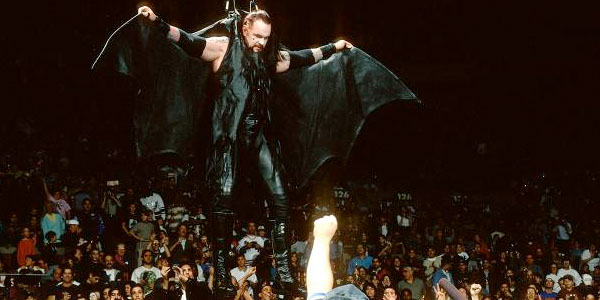
"That was kind of like the last facet of the whole darker side that I brought out. You know, Vince had this vision of the whole Undertaker character: fortunately, he allowed me to make the essence of it I think one of the reasons why it was so successful is it's very genuine. I've always been one that's kind of fascinated with the darkness, and it came out so genuine because it was. People try and go out there and portray this character, and it looks contrived and it looks like they're trying to be something, you know, that they're not. And you didn't get that with the Undertaker, because what I was doing was coming natural to me. - This Is My Yard, 2001The times were changing, and a character like this could actually be a successful babyface in 1996: although the Undertaker had teetered to and fro from time to time, hed been a babyface since turning on Jake The Snake Roberts in 1992. That would change in 1998 with the introduction of the Ministry Of Darkness, as the Undertakers gothic rebel transitioned into the evil Satanic cult leader that would allow Calaway to play a heel role for the rest of the decade, taking the same supernatural, horror-tinged metaphors and imagery and giving them a villainous spin. The reasoning behind the turn and the creation of the stable was typically Mark Calaway, however:
I took away some of these other wrestlers' names and gave 'em their own Ministry names, and I think a lot of people that were involved in it benefited from the spotlight that they hadn't had before. A lot of guys were brought up through the Ministry... Edge and Christian were part of it, the Acolytes... I take these ideas and I try to provoke some emotion from them, whether it be good or bad. At the time, I felt like being the antagonist, the heel of the whole situation, so I turned what was cool into something that was... kinda weird." - This Is My Yard, 2001Calaway had, so far, had almost complete creative control over how the character would be presented, although it was in collaboration with the storylines and angles that Vince McMahon wanted the character to take part in. That would change with the merger of the Undertakers Ministry stable with Vince McMahons Corporation stable to become the Corporate Ministry. Suddenly, The Undertaker was the junior partner in his own firm, as his storylines inevitably began to revolve around the McMahons. Calaway himself wasnt altogether happy with how the character had changed, admitting that it was the first time that the Undertaker had been a part of something that wasnt specifically derived from his character or history.
2. He Nearly Retired In 2000
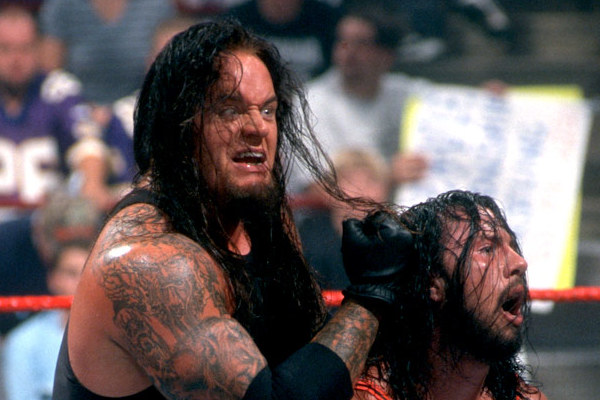
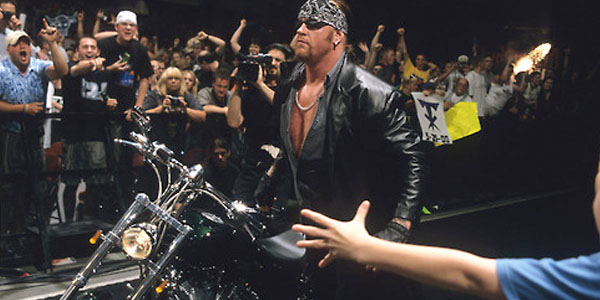
"About a year or so ago I went through two really serious injuries, serious enough to where I contemplated retirement. Anyway, I took this ride and I was just, like, everything that's happened over the past ten, eleven years has for some reason brought me to this point. I didn't want to go out in the midst of self-doubt and whether my body was going to hold up anymore. The thought came over me, you know and it was like, you know what? You're gonna make a comeback. You're gonna go back to the top of the pile, you're gonna be the big dog in the yard and there's no two ways about it." - This Is My Yard, 2001That was the genesis of the most controversial gimmick variation in the Undertakers career: the beginning of the American Badass (known by some as the Bikertaker, because wrestling fans are hilarious). Returning in leather and denim as a more realistic, hardass biker at the Judgement Day event in May 2000, Calaway was noticeably heavier than hed ever been before, finding it difficult to keep his wind: that was the result of coming back as soon as he was physically able, but before hed managed to train again to get back into fighting condition. Hed remedy that while on the road over the following few months.
1. Constant Reinvention Is The Key To Longevity
Every few years, the Undertaker would take time away, returning refreshed and revitalised: with a different look or outlook, different theme music and entrance, a diffferent style - yet all still recognisably the Undertaker. Thats the key to remaining relevant in the mercurial world of professional wrestling: if youre always moving, stay exactly the same, and if youre in one place, keep changing. Performers like Abdullah The Butcher and Bruiser Brody played the territories like a violin, arriving like giant, terrifying whirlwinds to assault the local babyfaces and force a confrontation then leave and head somewhere else. But the key to doing that, to making that guest starring role effective and dynamic, was to remain the same monster, all the time: week in and week out. Contracted to appear for one company for a quarter of a century, Mark Calaway constantly kept the Undertaker fresh, constantly kept him new for fourteen years until it was time to become the special event, the guest star on the show. Thats when the American Badass went away, and was replaced with whats casually referred to as the Hybrid Deadman - a character that serves as a combination of aspects of every iteration of the Undertaker to date, something recognisable to WWE fans of every stripe since 1990. As his schedule went more part time, so the Undertaker remained the same. Sure, thered be the occasional change in clothing, in haircut, in theme music, but as and when the storyline demanded (or, with the mohawk, because receding hairlines dont care that youre an undead sorcerer with power over death and a demonic pyromaniac serial killer for a kid brother).