8 Wrestlers You Didn't Know Were Jewish

Happy Chanukah!
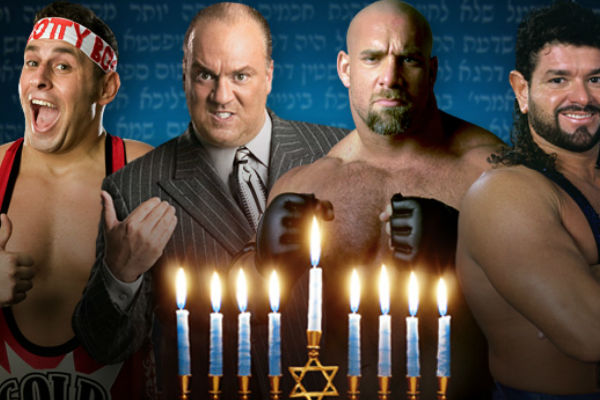
This Sunday is the first night of Chanukah, the Jewish festival of lights. Sure, the anticipation for Christmas has been raging for weeks already, but for the all of the Jewish people around the world, we've only got a few more days to go. Chanukah may not be the most important of our holidays, but it's hard to find one that's more fun - for eight days we exchange presents, eat potato pancakes, and spin a top. All I'm saying is, I'm not jealous of your yuletide festivities. With Chanukah frenzy at a high, I thought it would be fun to celebrate the holiday on WhatCulture, courtesy of your favorite form of entertainment and mine: professional wrestling. Over the years, there have been several great Jewish grapplers, men and women who have represented all sorts of different fighting styles and brought many different styles and talents to the ring. Here, in honor of the eight nights of Chanukah, are eight of the absolute best (though not ranked in any real order). Enjoy, and no matter which holidays you celebrate (if any), I hope you have a great season! Quick note: There are lots of lists of Jewish wrestlers online with dubious entries and no citations. For the purposes of this list, I've stuck to wrestlers who have been confirmed as identifying as Jewish.

Honorable Mention: Barry Horowitz

Sure, Barry Horowitz didn't have the most impressive resume when it came to the world of sports entertainment, but this list couldn't go by without a mention of everyone's favorite jabroni. Horowitz was trained by Jewish legend Boris Malenko and first started competing in Florida under the name Jack Hart, gaining a reputation as a solid technical worker on the indies. WWE soon took notice and offered him a job. Unfortunately, in the early 1990s, solid technical workers without much charisma were usually used to make other wrestlers look good. After hundreds of losses, Horowitz finally got something of a push in 1995, upsetting Chris "Skip" Candido in a match on Action Zone, then beating him in a SummerSlam rematch. Horowitz began to wear his heritage on his sleeve, using classic Hebrew song "Hava Nagila" as his entrance music and emblazoning a Star of David on his trunks. The push didn't last very long, but it helped Horowitz become a part of every WWE fan from that era's childhood.

8. Colt Cabana

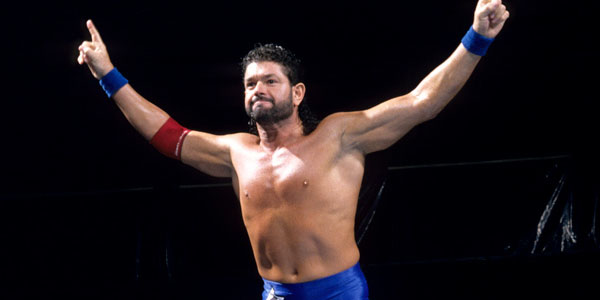
One of the more beloved U.S. independent talents of the past fifteen years, Colt Cabana has managed to combine pure comedy with skilled scientific wrestling like few others. Breaking into the business alongside good friend CM Punk, Cabana made a name for himself in Ring of Honor and other small promotions in the early-mid 2000s. Eventually, WWE took notice, and the sports entertainment giant signed Cabana up. He competed on Smackdown as Scotty Goldman, but his matches and interviews (which were peppered with Yiddish phrases) were few and far between. Most agreed that he didn't get a fair shot in WWE, and when he was released in 2009, he jumped right back into independent competition. Today, Cabana is still an active wrestler, but he's also famous for being the brains behind The Art of Wrestling, one of the first wrestler-hosted podcasts. Cabana may not have become a star in WWE, but he's had a successful career on his own terms.

7. A-Train

Call him Prince Albert, call him A-Train, call him Tensai, call him Giant Bernard - just don't call him on Shabbat. Despite being with the company for many years, Matt Bloom never really emerged as a standout in WWE. After a number of gimmick changes and turns, he was released from the promotion and went on to reinvent himself in Japan. As Bernard, Bloom captured the New Japan Cup in 2006, won the World Tag League tournament in 2007 and 2009, and captured tag team gold with Travis (Tyson) Tomko and Karl Anderson. With Anderson, Bernard boasted the longest IWGP Tag Team Title reign of all time. Not bad for a guy whose claim to fame in WWE was being bombarded with 'shave your back' chants. In 2012, WWE wooed Bloom back to U.S. competition, christening him Tensai and giving him the true-to-life gimmick of a former superstar who found himself competing in Japan. Unfortunately, sloppy ring work and a poor reaction from fans led to Tensai slipping down the card. He retired but he's doing very well for himself as the lead trainer at WWE's Performance Center.

6. Madusa Miceli

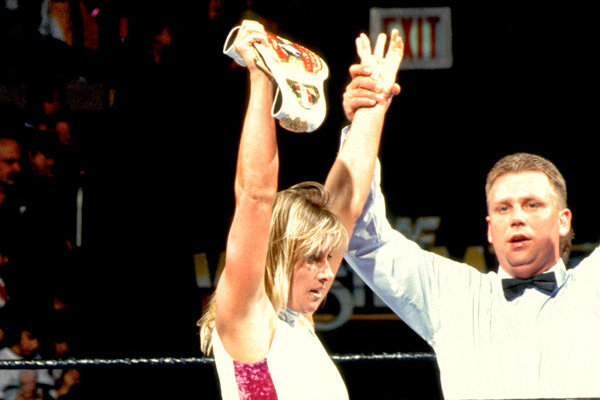
There are few women wrestlers in history - heck, few wrestlers, period - who have had careers as interesting as that of Madusa Miceli. As a wrestler, she competed (and held titles) all around the world, including in WWE, WCW, and the AWA. Still, she's arguably most famous for her shocking debut on Monday Nitro in 1995. She was fired from WWE while still reigning as Women's Champion, so at Eric Bischoff's behest she brought the title to TV and threw it in a trash can. Needless to say, WWE executives weren't pleased, but it all became water under the bridge in 2015, when Madusa was inducted into the WWE Hall of Fame. Equally interesting is Madusa's post-wrestling job as a driver of monster trucks. She has excelled at that, as well, becoming the first woman to win the Monster Jam World Finals Racing Championship. According to Miceli's official website, she practices the mystical branch of Judaism known as Kabbalah.

5. Raven

In the 1990s, Extreme Championship Wrestling had a reputation for taking some of the talented grapplers who were overlooked or underutilized by WWE and WCW and allowing them to develop into interesting characters and talented performers. One of the greatest examples was Raven, who was a manager in WWE under the name Johnny Polo and a wrestler in WCW as Scotty Flamingo, but never really got a chance to live up to his potential. In ECW, Raven found himself, becoming a grungy, nihilistic genius who engaged in legendary feuds with The Sandman and Tommy Dreamer. In one infamous angle, Raven (with help from Stevie Richards and The Blue Meanie) tied The Sandman (atheist Jim Fullington) to a cross. A legitimately angry Taz confronted Raven backstage, asking him how he would feel if somebody did the same thing with a Star of David. Raven could only muse, "Do you know how many boards of wood that would take?".

4. Dean Malenko

During the 1990s, the face of American wrestling began to change. As men like Bret Hart and Shawn Michaels became superstars, more of a premium was placed on talent and athleticism, whereas previously size and spectacle were the orders of the day. As such, smaller yet talented men like Chris Benoit, Rey Mysterio, Eddie Guerrero, and others were able to break out in the U.S. pro wrestling scene. One of the most adroit superstars of the era was Dean Malenko, who was trained by his father, Boris. Malenko was a journeyman for some time, but in ECW, he finally got noticed. He formed a successful tag team with Benoit and feuded with Guerrero before jumping to WCW, where subsequent rivalries with Guerrero and Chris Jericho saw Malenko become one of the most popular midcarders in the company. Malenko was alongside Benoit, Guerrero, and Perry Saturn when the four jumped to WWE, and though he finished up his in-ring career not long afterward, he's spent the past 14 years as a well-respected road agent/producer for the company.

3. Abe Jacobs

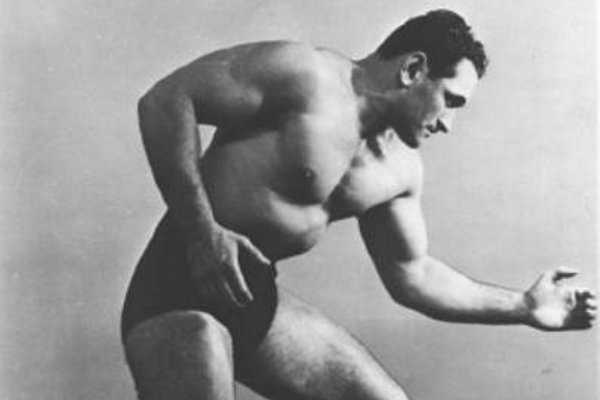
Abe Jacobs may not be known to too many modern fans, but in the 1950s and 60s, the "Jewish Heavyweight Champion" was a star around the United States. At the age of 20, the New Zealand native made his way to New York and began competing for Vincent James McMahon's Capitol Wrestling Corporation. Jacobs feuded with "Nature Boy" Buddy Rogers and Karl Von Hess, with the latter, a Nazi sympathizer, once causing a brouhaha with comments directed at the Jewish Heavyweight Champion. Jacobs also competed for Jim Crockett Promotions, winning the National Wrestling Alliance North American Title and challenging for the World Heavyweight Championship. Jacobs retired in 1983, but his legacy lives on - in 1999, he was featured on a special commemorative edition of New Zealand's $10 bill, and in 2008 he was inducted into the George Tragos/Lou Thesz Hall of Fame. Today, the 78-year-old Jacobs lives in Charlotte, North Carolina.

2. Paul Heyman

Paul Heyman may not be a wrestler, but his contributions to the sport are as important as anyone's. After making a name for himself as manager Paul E. Dangerously, Heyman took control of Eastern (soon to be Extreme) Championship Wrestling and built the coolest, most subversive wrestling organization in U.S. history. By stealing workers from ECW and copying the company's style, WWE and WCW eventually drove the organization out of business, but Heyman landed on his feet - he worked for WWE as an announcer, manager, authority figure, and writer from 2001 to 2006, then returned to the company in 2012 as the advocate for Brock Lesnar. Today, it's hard to imagine Lesnar without Heyman by his side. Heyman, the son of a Holocaust survivor, is typically depicted on-screen as a remorseless liar undeserving of any trust - needless to say, that brings to mind several hurtful stereotypes that have been associated with Jews for centuries. Nevertheless, Heyman makes his role work without ever giving the impression that he's trading off the stereotypes - he's just a sleazy guy in a sleazy industry, and he's one of the most entertaining things about it.

1. Goldberg

Sure, we've technically already mentioned eight great Jewish wrestlers, but no menorah would be complete without its shamash, and that's where Goldberg comes in. Goldberg became one of the biggest stars of the Attitude Era by beating everyone placed in front of him, refusing to compromise anything about himself in the process. The result was that crowds around the world couldn't help but chant one of the most demonstratively Jewish last names in existence. Goldberg holds a unique distinction - with all due respect to Abe Jacobs, he's the only real Jewish Heavyweight Champion, the only member of the faith to win a world title (he did so in both WCW and WWE). At one time an NFL player for the Atlanta Falcons, Goldberg's career was ended due to injury, but he managed to make the jump to pro wrestling with style and found success, eventually earning comparisons to Baseball Hall of Famer Sandy Koufax. Like Koufax, Goldberg refused to compete on the High Holidays. Goldberg, who was Bar Mitzvahed at Tulsa, Oklahoma's Temple Israel, said in a 1999 Washington Post article: "I had three intentions when I became a wrestler. One was to keep my integrity. Two was to give pro wrestling a more respectable image. And three was to be a role model to Jewish kids, who may not have thought they could do what I do". Thanks, Bill. Happy Chanukah.

Contributor
Contributor

Scott Fried is a Slammy Award-winning* writer living and working in New York City. He has been following/writing about professional wrestling for many years and is a graduate of Lance Storm's Storm Wrestling Academy. Follow him on Twitter at https://twitter.com/scottfried. *Best Crowd of the Year, 2013