8 Wrestling Offences You Didn't Know Could Be A Disqualification

Every fan knows the basics, but these eight things will also lead to a DQ.
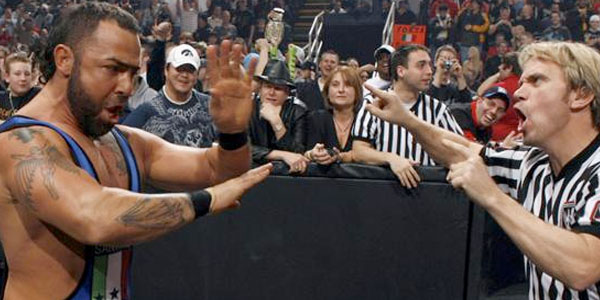
Every wrestling fan is aware of the basic things that can result in a disqualification for wrestlers. It€™s common knowledge that interference or the use of a foreign object will warrant a DQ in standard competition. There are, however, a great deal of actions that should technically cause the referee to call for the bell as a result of disqualification. Most of these rules that lead to a DQ are rarely discussed or established. Furthermore, in this day and age, a lot of them are just not strictly enforced. Meanwhile, some rules are just ignored completely. According to the rules there are a myriad of ways for a wrestler to be disqualified. A DQ does not come about simply because of outside interference or the use of weapon. There are certain illegal maneuvers and tactics that can result in a disqualification finish. However, they are not commonly known due to their lack of enforcement by officials. While you may be aware of some of the following rules, it€™s likely that you may not know they should lead to a DQ -- since they very rarely do. So, join us as we take a look at 8 reasons a professional wrestler can be disqualified.

8. Eye Poke Or Rake

Poking an opponent in the eye or raking them is an obviously illegal maneuver in the world of sports entertainment. It€™s often used by heels to get cheap heat, or even by some faces to get a quick pop from the crowd. However, did you realize that such a tactic should technically be a disqualification? Well, it should. According to the proverbial wrestling rulebook, a rake or poke to the eyes is subject to a five-count from the official. If the superstar refuses to stop, they are to be disqualified immediately. But, when have you ever seen someone DQ€™ed for attacking another wrestler€™s eyes? Never. It€™s quite logical that going for the eyes should result in a disqualification, but it€™s never enforced. Attacking an opponent€™s eyes is similar to a low blow to the groin -- both areas are quite sensitive, and relatively unprotected. While a low blow almost always results in an immediate DQ, an eye rake never does. It seems that, like all rules in professional wrestling, it€™s a matter of the referee€™s discretion.

7. Closed Fist Punches

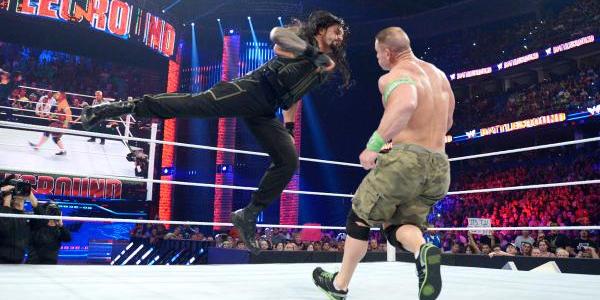
While one closed fist strike has probably never resulted in a disqualification, a string of them should. Like refusing to release a submission hold, a competitor is supposed to receive a five-count. If they fail to relent on the punches, they are to be disqualified. This is why wrestlers used to often rely on chops, elbow strikes, clotheslines, and clubbing forearm blows. The closed fist rule has been a part of wrestling for a number of decades. Go back and watch a late 80s or early 90s World Wrestling Federation event and you will see the referee repeatedly tell superstars to €œopen the fist up€ -- he may even administer a five-count. Somewhere along the way, this rule was seemingly done away with and is now blatantly ignored. This once-enforced regulation began to vanish during the Attitude Era, as everyone one from the Rock and Stone Cold to the Road Dogg and Shane McMahon were using fisticuffs as primary parts of their offense. It€™s gotten worse as the years have gone on. Nowadays, certain competitors use closed fist strikes as a signature or finishing maneuver. Roman Reigns€™ Superman Punch is technically an illegal maneuver, as is the Big Show€™s WMD.

6. Attacking A Manager

It€™s well established that if a manager becomes physically involved in a contest and is spotted by the ref, the bell will be called and the offending manager and wrestler will be disqualified. However, it seems that, according to the hallowed rulebook of wrestling, a competitor is barred from laying their hands on an opponent€™s manager. This too can result in a DQ for the offending wrestler. It€™s another example of a rule that is not well established and is rarely enforced. Fans have often seen a manager get beaten up, usually to a chorus of cheers. For example, whenever a competitor would attack Bobby €œThe Brain€ Heenan in the middle of a contest, he would not be DQ€™ed. Instead, the ref would simply encourage the wrestler to get back in the ring, and leave it at that. Furthermore, this rule is much less relevant in today€™s day and age with so few managers. In the late 80s and early 90s, it seemed that nearly every superstar was associated with a manager or valet. Today, there are only a handful of stars that require the assistance of a manager at ringside.

5. Throwing An Opponent Over The Top Rope
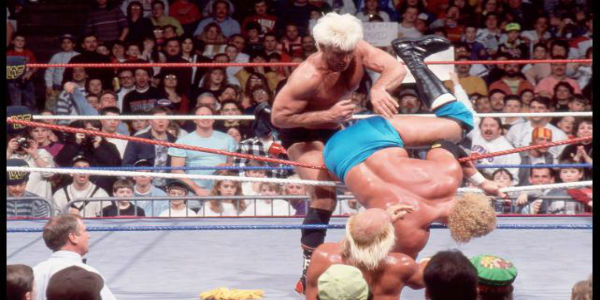
This odd rule was only ever enforced by one organization -- the National Wrestling Alliance, or NWA. However, due to the NWA€™s status as a governing body which oversaw countless territories in its heyday, the regulation was widespread. Technically speaking, any NWA-affiliated promotion had to follow this rule. In fact, throwing an opponent over the top rope is still illegal in NWA promotions to this day. Supposedly, the purpose of this strange rule was as an attempt to keep the wrestling action inside the squared circle. However, by the 1980s, the rule was being used as a kayfabe storyline device. Dubbed the €œDusty Finish€, NWA Championship matches would often see a referee get knocked down. Subsequently, the big babyface would toss the dastardly heel champion over the ropes and to the floor. In the end, the tried and true good guy would get the pin and become the new champion. That was until another NWA official would come to the ring and inform the original ref -- who had not seen it -- of the rule violation. The outcome of the match would be overturned, and the champion would retain the title. It was a clever way for the NWA€™s often heel champions to retain their gold while still making the babyface look like a formidable opponent. However, Dusty Rhodes -- who came up with the booking strategy, hence it€™s name -- used this finish as a plot device far too often, cheapening its effect. World Championship Wrestling would do away with the regulation after withdrawing from the NWA in the early 1990s. However, as previously stated, the rule has stuck around to today in some smaller NWA-affiliated promotions.

4. Breaking Up A Pin Or Submission

This is a sort of unspoken rule in the world of WWE, and it€™s not clear why. According to former WWE competitor, David Hart Smith -- the British Bulldog€™s son, and member of the Hart Dynasty -- the WWE enforces a strange rule in tag team contests. Supposedly, teams are only allowed to save their partner once, through breaking up a pinfall or submission. Any attempts to prevent a fall after that would result in an automatic disqualification. https://www.youtube.com/watch?v=GCbr28zz2I4 As Smith points out in the above video (relevant part at the 2:25 mark), despite the regulation being in place, it€™s curiously never mentioned on television. It would seem logical to establish the rule, so that if it is broken, fans would better understand the DQ. Furthermore, if the ruling is established, fans would be aware that a team has used their only save -- potentially making for a more exciting atmosphere. It€™s undoubtedly odd on WWE€™s part for creating a rule and then not establishing it for the audience. Also, there are surely times in tag team matches that this rule is broken and there is no resultant DQ. However, like most rules in WWE, it seems that it€™s a matter of the referee€™s discretion.

3. Entering The Royal Rumble Too Early

This is one of the stranger rules on the list and has almost never come into play. According to the €œofficial€ rules of the Royal Rumble match, a superstar must wait until their allotted time to enter the ring. If they enter any sooner, they shall be disqualified. The rule makes sense, but seems a bit unnecessary. When has this ever happened? Well, it happened at least once, but the resultant disqualification led to a confusing mess. We€™ll set the scene: Hornswoggle was an active competitor in the 2008 Royal Rumble after being entered in the match by his €œfather,€ Vince McMahon. At one point, he was trapped in the corner, surrounded by Mark Henry, Viscera, and Chavo Guerrero. Suddenly, Finlay ran to the ring to make the save. He entered the match and began nailing everyone with his trademark shillelagh. Then, it got strange. Finlay picked up Hornswoggle and simply left the ring. It turned out that Finlay was to enter the contest later and had jumped the gun to save his buddy. Because of this, Finlay was disqualified from the contest. While that makes sense, it made for an incredibly confusing moment, as no one was aware of this apparent rule.

2. Using €œBanned€ Moves

This rule has often been used for kayfabe reasons. Jerry €œThe King€ Lawler€™s piledriver finishing maneuver was banned for a number of years, which simply made fans want to see him use it more. Occasionally, The King would bust out the dangerous maneuver and he would be disqualified -- although, the crowd would erupt anyway. There are, however, some instances and examples of wrestling moves and holds actually being disallowed by management. Following the Chris Benoit double murder-suicide, the Crippler Crossface submission was barred from being used. When Bill Watts was running WCW in 1992, he banned any move from the top rope. WWE has a strict policy against unprotected chair shots to the head nowadays -- a rule enforced with a hefty fine. Furthermore, it seems that WWE has had a legitimate ban on the classic piledriver -- with an exception for the Tombstone variation -- as it has not been used for some years now -- save a CM Punk/John Cena match a few years back. There are countless stories about wrestler€™s being told that they cannot use certain moves. This is especially true with a lot of independent guys who get signed by WWE. Evan Bourne recently revealed in a shoot interview that the company did not want him performing the Shooting Star Press, as they felt it was dangerous. Bourne apparently insisted, and was told to demonstrate that he could consistently perform the move safely. It was only after repeating the spot countless times for company officials that they relented.

1. Removing A Wrestler€™s Mask

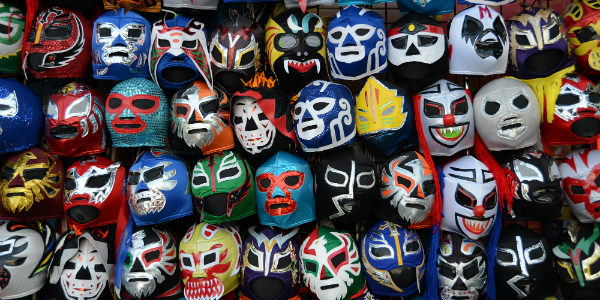
This wrestling regulation can be found almost exclusively in the official rulebook of Mexico€™s lucha libre promotions. (There are a small number of Japanese organizations that enforce the rule as well). In Mexico, luchadors -- or wrestlers -- often wear colorful and decorative masks. It€™s a tradition that dates back to the beginning of lucha libre. These masks, especially in the old days, would be worn anytime a luchador was in public. It was an attempt to conceal the true identity of the men underneath, as Mexico often treated their favorite wrestlers like superheroes. Mil Mascaras, Blue Demon, and El Santo are all famous for never being seen without their traditional masks. Even competitors like Rey Mysterio and Sin Cara are rarely seen in public without their signature hoods. Therefore, it makes sense that a rule of this nature exists. It is not only illegal, but is also considered highly disrespectful to remove another competitor€™s mask in the world of lucha libre. There is an exception to this regulation, however, as Mexican promotions often feature Mask vs. Mask or Mask vs. Hair matches. In these, the loser -- should he be a masked competitor -- is required to remove their trademark hood and reveal their face to the fans. Did you know about these often unheard of rules that can lead to a disqualification? And, can you think of any other reasons for DQ that we didn€™t mention? Let us know your thoughts in the comments below.

Contributor

Douglas Scarpa is a freelance writer, independent filmmaker, art school graduate, and pro wrestling aficionado -- all of which mean he is in financial ruin. He has no backup plan to speak of, yet maintains his abnormally high spirits. If he had only listened to the scorn of his childhood teachers, he wouldn't be in this situation.