9 WCW Monday Nitro Episodes You Must Watch On WWE Network

Nitro is coming to the Network soon. Check out these 9 episodes for only $9.99.

Recently, the WWE has been trying to drum up more interest in their WWE Network. We€™ve all been witness to the constant plugging of the Network€™s $9.99 price point. Beyond the shameless shilling, however, the WWE has continued their trend of adding new and original content to the over-the-top platform. In the days following SummerSlam, subscribers were treated to a new documentary which focused on the three former members of the Shield and their respective journeys to the big time. A similar documentary aired after WrestleMania, focusing on Daniel Bryan, along with an insightful piece on the Ultimate Warrior following his passing. Along with these docs, the WWE has produced a handful of original shows which air exclusively on the Network. Chief among these shows was the successful Legends€™ House reality series. Now, the WWE has delivered on a long-promised series, the Monday Night War. The program documents the history of WCW and the WWE as they went head-to-head in the late 1990s. With the Monday Night War program already off to a successful start, there are plans for the WWE to upload a multitude of WCW Monday Nitro episodes to the Network. Therefore, we thought we€™d run down some of the best episodes in the show€™s history. In honor of the Network€™s $9.99 price tag, join us as we take a look at the nine must-see editions of Monday Nitro that you won€™t want to miss.

9. Debut - September 4, 1995

WCW was out to make a bold statement with their premiere episode of Monday Nitro. The show was broadcast live from the Mall of America in Minneapolis, Minnesota. It was an odd choice to hold the first episode of a new prime time wrestling program from a mall, but it was somehow, kind of cool. Back then, Nitro -- like Raw -- was only one hour, and as such, only featured three matches. However, all three contests were top notch affairs. Jushin €œThunder€ Liger and Flyin€™ Brian Pillman kicked off the broadcast with their high-flying, daredevil antics. Then, longtime rivals, Sting and Ric Flair, did battle as they had numerous times before, but as always, the pair delivered. The main event saw WCW€™s resident megastar, Hulk Hogan, defeat Big Bubba Rogers -- formerly known as the Big Boss Man up North. However, the biggest event of the night came at the conclusion of the show. As Hogan celebrated his victory over Big Bubba, a familiar face suddenly appeared in the entranceway. Lex Luger -- a former WCW Champion -- strolled out to ringside. Fans in the audience and at home were shocked, as Luger had been with the Federation only the night before. https://www.youtube.com/watch?v=30EKWrtdyjQ That moment alone set the tone for what was to come from WCW. For better or worse, fans expected the unexpected every week when they tuned into Monday Nitro. The show often delivered countless surprises, but they weren€™t always for the best.

8. The nWo Make A Statement - July 29, 1996

https://www.youtube.com/watch?v=mtc7QzFzjPY WCW was on fire at this time. The New World Order had been formed just weeks earlier at the Bash at the Beach pay-per-view, and since the beginning they had sworn to take over. On July 29th, the Outsiders -- Kevin Nash and Scott Hall -- once again invaded Nitro, but this time they were out to make a statement. In the middle of a six-man tag match, Jimmy Hart came running down to ringside and started shouting at the camera. He was screaming that help was needed in the backstage area. The action cut to the back where Hall and Nash had laid out Arn Anderson and Marcus Bagwell with baseball bats. Bagwell€™s American Males tag partner, Scotty Riggs checked on him and got a knocked out for his troubles. Then, the most famous image of this melee happened. Rey Misterio Jr. dove at Kevin Nash, who caught the cruiserweight and tossed him headfirst into the side of a trailer. Back at ringside, Jimmy Hart had jumped up on the ring apron and began shouting at Lex Luger and Ric Flair, who were doing battle inside the ring. Suddenly, Luger and his partners, Sting and the Macho Man, left the ring and ran backstage, but it was too late. Nash and Hall hopped in a limousine and fled the scene. The Outsiders were only featured in the segment for about a minute. The next 15-plus minutes was spent documenting the chaos backstage. It was like watching the aftermath of a natural disaster on CNN. An ambulance arrived to cart off the various wrestlers that were laid out by the nWo. Even the fire department showed up -- supposedly, fans watching at home had called emergency services. It was an incredibly shocking moment and was extremely well produced. Before the internet boom, the original nWo angle skirted the line between reality and fiction to such an extent that many believed what was happening was real. It wasn€™t real, but it was a surreal moment in Nitro€™s history.

7. Sting Leaves - September 16, 1996

https://www.youtube.com/watch?v=dit0sfMCYpI The New World Order was on a role by late 1996. The group€™s numbers had grown by that point, and even included an impostor Sting. However, the nWo€™s version of the Stinger had been able to get into the minds of the WCW locker room. As a result, the WCW roster began to doubt the real Sting when he claimed the impostor was not him. The real Sting had become increasingly frustrated with the situation at hand, and as a result, walked away from the company. On the September 16th broadcast, the Stinger made his way to the ring and proceeded to cut a promo on the WCW locker room. He felt betrayed by their unwillingness to trust him, considering he had been there since day one and had fought the nWo from the beginning. Ultimately, Sting would return to WCW a month or so later, but it would be in a completely different capacity. For months, the Stinger would stand in the rafters, watching the action below but never getting involved. He had changed his look from the colorful attire of yesteryear to strictly black and white. Eventually, Sting would get involved and show his allegiance to WCW, as he continued to fight off the nWo. It was the hottest wrestling angle of the rest of 1996 and much of €˜97. However, this September episode of Nitro was the starting point and is well worth a watch.

6. The nWo Takeover - December 22, 1997

The December 22nd edition of Monday Nitro was a historic episode in the show€™s history. It was to be the beginning of a whole new era for the program, as the New World Order had taken over the show. The original idea was that the nWo would run Nitro while Thunder became the main show for WCW stars. The three hour edition of Nitro started normally, but would slower morph into an nWo run program. Midway through the show, various New World Order members show up -- Rick Rude, Buff Bagwell, and Konnan, among others. The nWo runs off the commentary team and begins to tear apart the Nitro stage. Any and all WCW signage is removed and replaced with nWo lettering. After a commercial break, Eric Bischoff rides to the ring on his motorcycle and introduces the entire nWo. After some in-ring rambling between Hogan and Bischoff, the show continues with regular ole WCW guys wrestling. Nearly every match for the rest of the night ends in a disqualification or some other non-finish, often thanks to various members of the New World Order. To close the show, the nWo again fills the ring. Bischoff and Hogan go through more of their uninteresting schtick before Sting suddenly appears on top of the entranceway. The Stinger zip-lines toward the ring and the show goes dark. The premiere of nWo Monday Nitro is over. https://www.youtube.com/watch?v=0keslql2jWk Ultimately, the experiment failed and Nitro quickly returned to its original format. The idea was a solid one -- as Vince McMahon would prove years later with his warring Raw and Smackdown brands. However, WCW€™s execution of the nWo takeover was horrid. Still, the show represents a significant moment in Nitro€™s history and is worth a look for that fact alone.

5. Goldberg Topples Hogan - July 6, 1998

WCW packed the Georgia Dome in Atlanta for this episode of Monday Nitro. Bill Goldberg had been tearing through the WCW roster and had one man left to defeat -- Hollywood Hogan. Over 41,000 fans came out to see their hometown hero dethrone Hogan and take his WCW World Heavyweight Championship. WCW had been building to this moment for what seemed like an eternity. Many insiders would question WCW management€™s decision to broadcast this highly anticipated match on Nitro rather than sell it on pay-per-view. While it can be argued it was a poor decision, it doesn€™t take away from the fact that WCW drew a huge crowd -- its largest in history -- and garnered a monumental television rating. Before the match could take place, Goldberg was forced to defend his United States Championship earlier in the evening. The former NFL linebacker squared off with Scott Hall, but was able to swiftly vanquish him. The main event itself was no technical masterpiece, but the fans didn€™t care -- they had been waiting for this moment. Surprisingly, WCW gave the fans what they wanted -- as they so rarely did -- when Goldberg hit a spear and Jackhammer to defeat Hollywood Hogan. The match lasted barely lasted ten minutes, but as soon as Goldberg picked up the three count, the Georgia Dome crowd erupted.

4. Ric Flair Returns - September 14, 1998
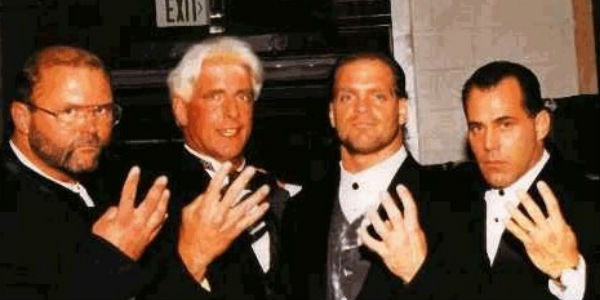
Ric Flair was an stalwart of World Championship Wrestling. Save for two years with the Federation, WCW -- and its NWA predecessor -- had been Flair€™s home for his entire career. However, by the late 1990s, the relationship had soured. Flair was unhappy with his role in the company and was dissatisfied with the constant backstage politics of people like Hollywood Hogan. Furthermore, he held no regard toward Eric Bischoff either personally or professionally. In April of €˜98, there was a dispute between Bischoff and Flair stemming from Ric missing a Thunder television taping. Bischoff filed a lawsuit against Flair and Flair countersued. Because of this, the €œNature Boy€ sat at home for an extended period of time. The suit was settled out of court, and the door was opened for Flair to return to WCW television. On September 14th of that year, that€™s exactly what happened. James J. Dillon and Arn Anderson made their way to the ring, both clad in formal wear. The two talked about their history together before introducing the current stable of Four Horsemen -- Mongo McMichael, Dean Malenko, and Chris Benoit. Arn then went down the list and told each man what he thought of them, praising each for their talents and abilities. https://www.youtube.com/watch?v=ycgNEC86q0w After announcing the return of the Four Horsemen, Arn sarcastically accused himself of being a €œgoof€. He had nearly forgotten the fourth man -- Ric Flair. Flair came down to the ring and joined his Horsemen running mates. The €œNature Boy€ got on the mic and proceeded to shoot on Eric Bischoff and the politics of WCW. Bischoff would make his way down to the ring, but Flair would not relent. The two would end up feuding in the following months, leading to Flair being betrayed by his son, David. Regardless, Flair€™s return to WCW was an emotional moment for the fans at home and the stars inside the ring.

3. Fingerpoke Of Doom - January 4, 1999

Monday Nitro emanated live from the Georgia Dome in Atlanta with more than 40,000 fans in attendance. Millions were watching at home on television. The night€™s main event was to see Goldberg get his revenge on Kevin Nash. Nash had controversially defeated Goldberg at Starrcade €˜98, only weeks prior, following interference from Scott Hall and his stun gun. Fans would never get to see that match, however, as Goldberg was arrested midway through the show. The hometown crowd hated it. That was until the replacement was announced in the form of Hollywood Hogan. Hogan had been absent from WCW television for about a month. Now, fans would be treated to the often teased, but never realized match between the leader of the Wolfpac and the leader of nWo Hollywood. Unfortunately, that match wouldn€™t really happen either. Instead of the leaders of the two rival nWo factions duking it out, fans were €œtreated€ to one of the most infamous moments in wrestling history. As the two behemoths started the match, Hogan raised his hand, as if to punch Nash, but instead, gently poked him in the chest. Nash sold it like a shotgun blast to the face, and crashed to the mat. Hogan made the cover and got the three count, becoming the new WCW World Heavyweight Champion. https://www.youtube.com/watch?v=WhS4ZDnRqJQ The newly reformed nWo celebrated in the ring, jumping around and laughing like buffoons. Suddenly, the crowd erupted as Goldberg came charging to the ring. Lex Luger pulled up the rear, and fans thought both men were there to make the save. Instead, Luger attacked Goldberg, joining the New World Order. Goldberg was then handcuffed to the ropes and repeatedly tased and spray painted. Many have argued that the €œFingerpoke of Doom€ was the beginning of the end for WCW, and it€™s difficult to disagree with that sentiment. While countless other issues helped lead to WCW€™s eventual demise, the fingerpoke was a visual representation of all that was wrong with the company.

2. Reboot - April 4, 2000

By the year 2000, World Championship Wrestling was in serious trouble. They were handily losing to the World Wrestling Federation in the ratings war on Monday nights. A drastic decision was made on the part of WCW management, in an attempt to counteract this. It was decided to bring back both Vince Russo and Eric Bischoff. WCW was hopeful that the two could run the company together, and that they would get the best of both worlds. It didn€™t work. However, on their first night back, Bischoff and Russo attempted something that was never done in wrestling before -- and has never been done since, which should be an indication of things. World Championship Wrestling and its flagship Monday Nitro program were essentially rebooted. The show began with nearly every wrestler inside the ring and around ringside -- save for most of the upper echelon, like Hogan, Nash, Hart, Flair, etc. Jeff Jarrett, who was the United States Champion, strode to ringside and got on the mic. He introduced none other than Vince Russo -- who had never appeared on WCW television before, despite running things backstage for a number of months. Russo, surrounded by the mob of competitors inside the ring, cut a scathing promo against WCW management and the direction of the company. Eric Bischoff soon interrupted the proceedings. Fans thought they would see a confrontation between the two, but instead, Bischoff embraced Russo. After being confronted by some of the top stars of the company -- Diamond Dallas Page, Sting, Lex Luger, and WCW Champion, Sid Vicious -- it was announced the Bischoff and Russo were stripping every champion of their respective titles and that the company was starting anew. It was a bold move for WCW which ultimately did not produce the result that they desired. The company attempted to move away from their established stars of yesteryear and shift their focus to the young talent of tomorrow, but fans weren€™t interested. And, like most things to take place in WCW at that time, it was poorly handled and managed.

1. Farewell - March 26, 2001

March 26th marked the end of an era, and was surely a sad day for both fans and competitors. Vince McMahon and his World Wrestling Federation had officially won the Monday Night War. The WWE had inked the deal and purchased World Championship Wrestling. As such, the March 26th edition of Nitro was the final WCW broadcast in history. Nitro began with a surreal sight that night, as Vince McMahon himself appeared on WCW television. McMahon announced the purchase and stated that he would sign the contract that Sunday at WrestleMania. However, his plans would be derailed as his son -- and WrestleMania opponent -- showed up in Panama City, Florida. Shane entered the WCW ring and announced to his father and the world that he had signed the contract -- effectively becoming the new owner of World Championship Wrestling. Of course, Vince really owned the company -- purchasing all of the promotion€™s trademarks and copyrights, a number of specific superstar contracts, and the vast WCW tape library. The final Nitro was also significant for its Night of Champions theme. It was decided that every WCW championship was to be defended on the ultimate Nitro broadcast. In a very un-WCW manner, nearly every championship was won by a good guy. WCW had always been known to stick to the Southern mentality of having a face chase a heel for the championship. Furthermore, Booker T defeated Scott Steiner, retaining his United States title and attaining Steiner€™s World Championship. https://www.youtube.com/watch?v=UeAsznxYxds The show ended with a throwback to the very first Nitro broadcast. Earlier in the evening, Ric Flair had cut a heartfelt promo about his time in WCW and had subsequently challenged his longtime rival -- and sometimes friend -- Sting. The two did battle in the main event of the evening, and it was obviously an emotional affair for both competitors. It was also an emotional moment for every that worked at WCW and for dedicated fans of the promotion. WCW and Monday Nitro were no more. The Monday Night War was over, and they lost.

Contributor

Douglas Scarpa is a freelance writer, independent filmmaker, art school graduate, and pro wrestling aficionado -- all of which mean he is in financial ruin. He has no backup plan to speak of, yet maintains his abnormally high spirits. If he had only listened to the scorn of his childhood teachers, he wouldn't be in this situation.