9 Wrestlers That Refused To Break Kayfabe
The oldest of the old school: the men who wouldn't let it go.
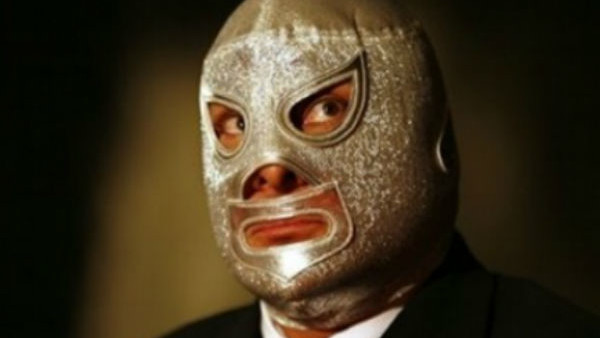
Old school. As much as the 21st century WWE prides itself on its technological advancement and cultural significance as much as modern professional wrestling is a hodge-podge of disciplines and styles from all over the world, one thing remains resolutely old-fashioned. If you're old school, you're a step above the rest.
It's not just about age, either. Mark 'The Undertaker' Calaway debuted in 1984 and started with WWF under the gimmick that made him famous in 1990, but if he was a stick of rock he'd have old school written right the way through him. For the even younger generation, CM Punk is resolutely old school, as is Dean Ambrose.
Old school means you don't just respect the business: you live and breathe the business. It's in your blood and your soul. Having respect for veterans, displaying an encyclopedic knowledge of history, standing by wrestlers court, living the gimmick, protecting your finish - any one of a hundred details can promote an old school mentality, but the biggest and most important of those details, even today when it's supposed to be dead, is kayfabe.
Now, in this day and age you'll get out of character interviews from wrestling's best and brightest all the time, but back in the day, before professional wrestling was properly exposed to the world, that would never happen in a million years. Protecting the business was everything. Today, even that man of mystery Mark Calaway is known to have appeared out of character.
This article is dedicated to those bastions of the old school who (to our knowledge) never broke kayfabe and probably never will.
9. The Mysterious Life Of Arman Hussian
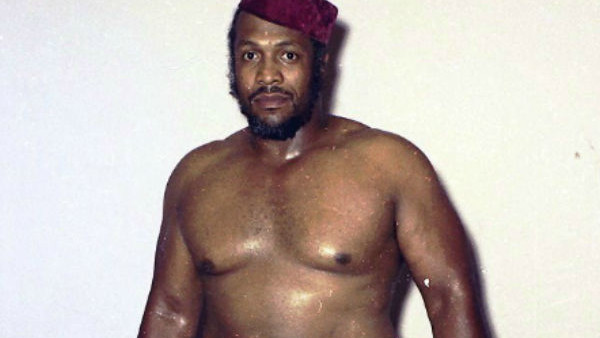
Our countdown begins with someone that most might not even remember. Arman Hussian has had his name misspelled by countless promotions over the years; Armand Hussein, Arman Hussain being used most often - and last worked in the Von Erich's World Class Championship Wrestling as a manager in a faction with booker Gary Hart, after a nasty car accident broke his left hip, causing a major infection that nearly killed him and ended his wrestling career in the early 1980s.
Why go for a man barely anyones ever heard of? Because Arman Hussian was the professional wrestlers professional wrestler.
A formidable size, with an exciting grasp of athletic, technical wrestling, the former Mike Barber, or Mike Harmon (no ones exactly sure) was billed as being from the Sudan, having taken on the character he was playing - that of a Muslim graduate of Oxford University - so completely that he legally changed his name to Arman Hussian in 1959.
Hussian would keep the English accent going twenty-four hours a day, seven days a week not just in public, but backstage, to the extent that even the other boys didn't know where he was from. He never spoke of his private life to anyone in the business, but given that he never appeared to go home, but constantly toured the territories, he may never have had one. He appeared to be highly-educated and articulate, but promoters suspected that he was in fact a high school drop out from Alabama. But no one knew.
Hussian was an enigma, well known for refusing to break kayfabe at any time, or for any reason. Whether teaming with Sammartino in the WWWF as a babyface, or Abdullah The Butcher in Canada as a heel, Hussian never once dropped his gimmick, not for anyone. That car accident that ended his career? He told all of the boys that Roddy Piper did it to him in the ring.
Arman Hussian worked everyone; from the moment he debuted as the character to the moment he left the business.
8. Sammartino's Memoirs Are A Work (Of Fiction)

Bruno Sammartino, probably the most decorated and popular wrestler in the history of the business, may be the most old school of old school professional wrestlers. Sammartino constantly supported the legitimacy of the sport throughout his decades-long career, and for long after that career had ended - even going to great lengths to maintain kayfabe in his own ghostwritten autobiography, refusing point blank to admit that blading was a common practice in the bigger matches. Sammartino adamantly denied that it was possible to smuggle a blade into the ring and then use it, without anybody seeing it, citing the fact that hed never worn tape to hide a blade as evidence that hed never used one.
Written in the nineties when, like an aging stripper, pro wrestling had been completely exposed for years, Sammartino's book would also refuse to admit that wrestling matches were or had ever been predetermined, an oddity that marred the story it was trying to tell, everyone reading it knew that pro wrestling was a work by then.
This meant that a first-time memoir of (and allegedly, by) one of the greatest wrestlers of all time just read like a wrestling angle written in the first person.
7. Abdullah Is The Butcher For Half A Century

Arman Hussian's occasional partner in Vancouver in the 1960s, the notorious innovator of hardcore has been the world of professional wrestling's most terrifying heel for well over half a century. Having carved himself out a niche as the business' scariest free agent as a young man, the real life Lawrence Shreve would move from territory to territory, establishing himself as the monster invader that would suddenly appear to destroy the areas biggest babyface stars.
Violent and bloody, Abdullah The Butcher's matches would have an infamy all their own, becoming bloody in almost every single case. He would constantly and consistently maintain character in the ring and in public for the entirety of his career but his character was that of a gore-loving practically mute Middle Eastern torturer, so shoring up the gimmick became a labour of love in and of itself.
Attacking people with all kinds of weaponry (including the legendary fork), eating live animals and inanimate objects on television, the monster of monsters is still out there to this day, still wrestling decades after anyone else would have quit and the only thing hes really doing differently, even decades after the business was exposed, is actually talking in occasional interviews, although (because hes Abdullah The Butcher, and kayfabe is his life) he regularly lies about his age, claiming to be inexplicably younger than he is.
6. The Enforcer Still Protects The Business To This Day

The Keith Richards to Ric Flair's Mick Jagger, the originator and backbone of wrestling's greatest ever faction, The Four Horsemen, The Enforcer Arn Anderson is legendary for protecting the business.
One of the words most associated with Anderson is underrated. A master of psychology and drama, The Enforcer would prove himself to be one of professional wrestling's greatest ever ring generals, a technical wrestler par excellence with a mean line in vicious brawling. Along with Harley Race, Anderson would be a young Paul Levesque's blueprint for the perfect professional wrestler - you can see Anderson in Triple H's moveset even today in that snapping spinebuster.
Being the legend that he is, having worked for both WCW and WWF/E over the course of his long career, Anderson has been a perennial talking head in WWE-produced DVD and Blu-Ray documentaries for years now. Watch enough of them, and you'll notice a common theme... Arn Anderson never breaks kayfabe. While other interview subjects will waver between storyline and real life, Anderson will remain focused, ultra-careful never to talk about a subject a way that might betray the business - a business that was exposed decades ago.
Watching Arn Anderson talk, you'd actually think that he believes that professional wrestling isn't scripted or choreographed, and that every one of his matches has been the genuine sporting article.
Now that's commitment to the business.
5. The Greatest Poker Face In History

One of the greatest heel wrestlers of all time, Classy Freddie Blassie had an ability to maintain his kayfabe game face so incredible that it occasionally seemed as if he was actually delusional. Blassie was so loathed as a heel that he could cause riots and drive fans to attempted murder.
By the close of his career in the ring, he'd been stabbed twenty-one times, been declared dead twice, nearly blinded and had acid flung at his face. Never once did he break character or expose the business in order to prevent himself from being hurt, or even maimed. The feared heel would become an equally feared heel manager, and famously represented comedian Andy Kaufman during his forays into the world of professional wrestling, appearing in character in his film My Breakfast With Blassie, as well as on television on the Letterman show.
It was his Letterman appearance that showcased Blassies commitment to the business, maintaining his gimmick even in the face of tongue-in-cheek goading from the shows host and open ridicule from the studio audience, especially when comparing the doughy Kaufman's wrestling ability to stars of the day like Big John Studd and Crippler Stevens, and with a straight face.
That was Freddie Blassie for you - irascible, bold as brass and with a poker face so committed that it looked like granite.
4. The American Dream Lies To His Children

It's often been claimed that 'The American Dream' Dusty Rhodes would maintain kayfabe from feuds and angles he was involved in three decades ago. Dusty Rhodes was famous for keeping kayfabe even within his own family. On WWE's Rise And Fall Of NWO documentary, Cody Rhodes talks about watching his father, a member of the notorious heel faction, attacking babyface Rey Mysterio Jnr., and having the Dream maintain kayfabe even to his own son when replying to him. Not only that, but when Cody was upset that his father joined the NWO in the first place (well, everyone else in WCW had joined the NWO by that point), Dusty was forced by his wife to tell the child what was really going on, because hed refused to break kayfabe to reassure his own son.
There's also the jive talking and rolling accent that legendary talker Rhodes used in every promo and interview throughout his illustrious career, the voice that's made him second only to Macho Man Randy Savage in wrestling mimicry - all of which was gimmicked. Rhodes' normal speaking voice was just that - completely normal, with a slight accent and lisp.
3. Mr. Wrestling Saves Wrestling
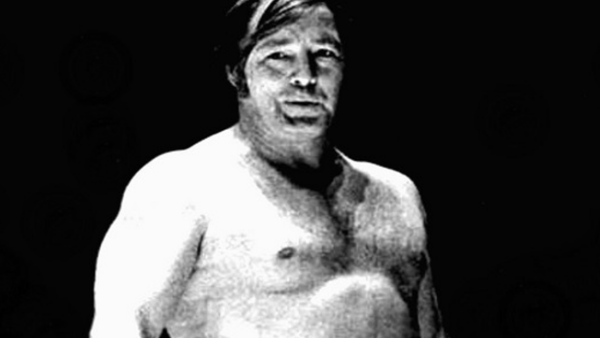
One of the most famous single incidents of the maintenance of kayfabe above and beyond the call of duty came following The Plane Crash That Changed Wrestling in 1975.
The late Tim Woods, nicknamed Mr. Wrestling as a masked babyface star at the time, was travelling with heels Ric Flair, Johnny Valentine, Bob Bruggers and announcer and promoter David Crockett to an arena show when the plane ran out of fuel short of the airport and crashed into a barrier. Only Crockett would escape relatively unscathed - Valentine and Bruggers broke their backs and ended their careers, while Flair also broke his back, but recovered and returned to wrestling. The pilot would end up in a coma, and die the following year.
Woods was badly hurt in the accident, but for him this wouldn't be the worst that had happened. He was a masked babyface, travelling unmasked by plane with his (storyline) hated enemies. In 1975 this was an exposure of the business that he could not allow to come out. At the hospital, Woods resolved the problem the only way he knew how by maintaining kayfabe, and lying through painfully gritted teeth. He provided his real name - George Burrell Woodin - to the authorities, and claimed to be a wrestling promoter, like Crockett.
In the following weeks, newspaper articles would list his involvement under those details. In the days before the internet, there was very little way for people to know that the journalists information was inaccurate. Even so, rumours began to get around that Woods had, in fact, been a passenger on the plane as well. Woods would refute those scurrilous but entirely accurate whispers when, a fortnight after the crash, he reappeared in the ring, despite still being badly injured.
Adamant that he would not risk the business being exposed, Woods was clearly in a lot of pain from all reports, but started and finished the match as booked to do so: pretending he hadn't been onboard the horrific crash that claimed one life and ended the careers of two of the boys, in order to maintain the illusion of his fan favourite gimmick.
Flair himself would refer to him from then on as the man who saved wrestling.
2. Andre Lives The Gimmick

There was never any easy way for Andre Roussimoff to live out of the limelight and away from the Andre The Giant character he'd made famous. After all, he was a legitimate giant, twice the size of most normal men. He couldn't use public transport or eat at most restaurants without special help and reinforced seats.
There was no separation possible between Andre and the character he played in the ring. While other legends would play on their real life personas to create a hyperreal version of themselves that they could live with performing at all times (a playboy like Ric Flair having it slightly easier than most), Andre was a man forced to live his gimmick by virtue of the gimmick being his sheer size. Constantly stared at in public, Andre couldn't escape professional wrestling if he wanted to - but, as a man raised in the shadow of kayfabe, he wouldnt have broken character regardless.
There's an old story about two drunks approaching Andre in a bar in France and casually insulting the giant and his trade, needling him about wrestling being fake. Ever the consummate professional, Andre chased the two men out of the bar and, finding them locked inside their car, proceeded to flip the vehicle onto its side.
He would then return to the bar and his bottle of wine, that no doubt looked like a miniature in his colossal grip.
1. The Greatest Superhero In Mexican History
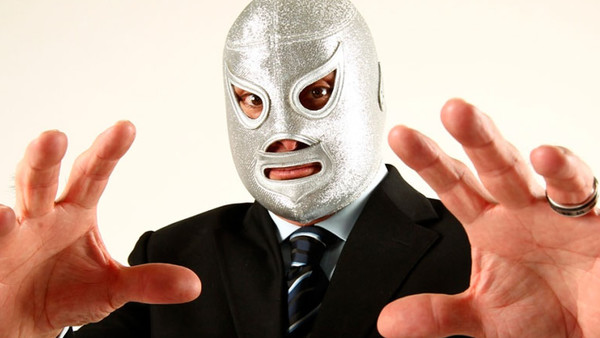
The late Rodolfo Guzman Huerta was Mexican wrestlings most famous exponent, a multi-media sensation in his country long before the USA managed to parlay their version of pro wrestling into real crossover fame.
This is no exaggeration: El Santo was a household name in Mexico far in excess of Stone Cold Steve Austin and John Cena in America and Europe. Only Hulk Hogan rivals Santos' genuine mainstream celebrity.
He starred - as himself - in his own movie franchise, in comic books where he was the superhero. The silver mask and cape became more than just a wrestling costume. They became a symbol, just as Superman's red-white-and-blue and stylised S are a symbol.
Huerta's realisation left him with very little choice if he wanted to preserve the character's mystique. He resolved to never take the mask off and, with one exception, he never did. For the entirety of his forty year career under the name El Santo, Huerta never once took off his mask in public. El Santo didn't show his face in the ring, on television, in films, backstage or when walking down the street.
Huerta would be forced to go to ridiculous extremes while doing so, as anyone with more than a little imagination can guess. He'd even take separate transport to travel so that no one who knew him would see him remove the mask to get through customs.
Santo retired from active appearances in lucha libre in 1982 and, incredibly, continued to wear the mask even into retirement. Winning his final match, as befitted Mexico's own favourite superhero, Huerta passed on the legacy of El Santo to his son, who would wear a version of the mask as El Hijo Del Santo.
A year or so after his retirement, Santo would appear as a guest on Mexicos Contrapunto television show and, just for a moment, would remove his mask for the first time in public in front of the studio audience and cameras.

A week later, Santo would pass away from heart failure, and was buried in the mask he'd made famous. Its almost as if he was saying goodbye.