9 Wrestling Heels Who Were Totally Justified
Bad people, doing bad things… for the right reasons.

There's an argument to be made that WWE's babyfaces almost always have heelish aspects to their characters or their actions. D-Generation X, Ric Flair, and Eddie Guerrero would cheat to win whether playing the villain or the hero, and The Rock and John Cena have repeatedly been pilloried for allowing occasional misogynist and homophobic taunts to stay in their heavily scripted promos. In their most celebrated babyface runs, 'Stone Cold' Steve Austin had no friends and a history of assaulting anyone who came within stunning distance, while CM Punk was a pr*ck to pretty much everyone he met.
In comparison, the company's heels can often appear to be the more well-adjusted, rational characters on the roster. That's not necessarily a bad thing: after all, the best, most believable villains usually have complex motivations. A good maxim for portraying a heel in a pro wrestling angle is to find the rationale to the heels' villainous actions. Mick Foley recalls Michael Hayes telling him that, in his mind, the heel has to feel that his actions are justified. It doesn't matter how far out his motives - as long as he feels he's right.
The best heels are committed and headstrong in that belief: why else would they put themselves through so much grief? If their reason for doing what they were doing was just a bullsh*t smokescreen for them to be a douchecanoe, then they'd quit it and beg off the second that the babyface fronted up to them. No, all the good bad guys are right, in their own wrong way.
Not sure what I mean? Well, here's a list of ten examples that I just found conveniently lying about - most, of course, are dissections of heel turns, because these are usually the most dramatic instances of heelishness you could hope to find.
9. The Hitman Turns Heel Everywhere Except Canada

In mid-1997, fan favourite Bret 'The Hitman' Hart turned heel for the first time in years, but in an innovative storyline twist, he would remain a babyface in Canada (where it was practically impossible for a Hart to get booed) and heel it up in the States.
Hart's rationale for this was fairly straightforward: he hadn't changed, the fans had. They didn't want traditional babyfaces anymore; they wanted foul-mouthed, trash-talking, pugnacious, sarcastic b*stards like Stone Cold Steve Austin and the soon-to-materialise Rock. In Hart's mind, however, he was still a role model for the impressionable youth of the world, still their hero - and he didn't deserve the way he was being treated, being marginalised in favour of this new, loud, brash Attitude Era.
As far as he was concerned, the fans had turned heel on him and you know, he's got a point. Like all the best pro wrestling characters, there was just enough of the real Bret Hart in this new Hitman to give it edge and drama: the man genuinely disliked the new direction the WWF was going in, with hypersexualised eye candy performing in the women's division and casual profanity and a general lack of ethical conduct the order of the day.
Hart claims in his autobiography that, in fact, he would still be deafeningly cheered overseas, in Europe and the United Kingdom. Far from turning heel on the world, he'd only turned heel on the USA. That's not borne out by the memories of people who were in attendance at European shows around this time, however: Hart tends towards the self-serving and his memory for events is skewed to reflect that.
8. Where We're Going, We Don't Need Rhodes

In 1991, ex-Horseman Barry Windham and son-of-the-son-of-a-plumber, The Natural Dustin Rhodes were a tag team at the very pinnacle of WCW's tag division, poised to win the big one. Then, Windham was taken out by their rivals, The Enforcers, and left on the shelf for a while.
Rhodes didn't miss a beat - he recruited the legendary Ricky 'The Dragon' Steamboat to take Windham's place, and the new team would defeat The Enforcers for the tag titles shortly afterwards. When he returned, Windham had some significant singles success before reuniting with Rhodes in September 1992. The pair would finally win the unified WCW/NWA World Tag Team Championship together, only to lose them at Clash Of The Champions XXI in November 1992 to, of all people, Ricky Steamboat and his partner Shane Douglas.
In that title match, Steamboat suffered an accidental low blow that turned his avocados to guacamole - hey, it happens, this isnt ballet (Copyright John Layfield, 2008). Rhodes saw the potato-mashing agony his friend and former teammate was in, and refused to pin him. Windham, however, just saw his less experienced partner deliberately failing to capitalise on their good fortune to retain their titles. Windham tagged himself in to make good on Rhodes' blunder and Steamboat's pulverised vegetable metaphor, delivering two inverted atomic drops and going for the winning pin. Then Rhodes stepped into the ring and literally dragged Windham off their opponent.
Flabbergasted, Windham stepped to Rhodes and the two had words before exchanging some hard slaps - meanwhile, Steamboat managed to tag Douglas in, and taking advantage of the distraction, Douglas hit a hard belly-to-belly suplex on Windham to take the pinfall and the tag team titles. After the match, Windham went ballistic, kicking and punching Rhodes, performing a massive implant DDT and his trademark floatover superplex before the referees piled in to separate them as the show went to commercial. When they came back, it was with a backstage interview with the new tag team champions, and as Jesse 'The Body' Ventura asked them about the dodgy circumstances under which they'd won the titles, Steamboat as good as shrugged and said, "Well we won, didn't we?"
It was when he was giving a shoutout to his friend Dustin Rhodes that Windham appeared from nowhere, like a chair-wielding goblin, to batter the champions about the head and face. It's almost impossible not to sympathise with Windham over this, and indeed a huge number of WCW fans felt Windham's outrage was justified. If Rhodes, Steamboat, and Douglas were intended to be the babyfaces, then WCW screwed the pooch badly on that one. Windham had always made a cracking heel and the circumstances of his turn were soon forgotten.
7. Some Say Paige Started 'The Diva's Revolution'

Well, actually according to WWE's storylines and according to the real life timeline of NXT's success she's not wrong. Credit to wrestling commentator Brandon Stroud for pointing it out, but before Stephanie McMahon brought three of the four NXT Horsewomen to Raw and kicked off the confused, directionless mess that was the Divas Revolution, it was Paige who was calling for an army of the disaffected to rise up and throw off the Bella twins stranglehold on the division.
Before the revolution went down, she was literally going from person to person calling for a revolution. Then a babyface (although with her it's always difficult to tell), Paige claimed to be the Anti-Diva: a real wrestler from a family of real wrestlers and a ten-year veteran at the age of twenty-two, who despised the low rent catfight that the WWE presented as women's wrestling. Paige tried to mobilise the locker room against Nikki Bella, only to find that no one would stand with her, and then suddenly the boss wasn't just standing with her, but elbowing her out of the way.
That's not an interpretation of events from Paiges point of view: it's almost blow by blow the events as they went down. Paige - constantly telling people whats actually going on, and constantly being told to button her lip. That'd turn anyone heel.
6. Do I Have Everybody's Attention Now?

At Raw 1000, CM Punk - then the WWE Champion for 246 days, just over halfway through his historic run with the title between November 2011 and January 2013 - hit the Go To Sleep on The Rock and officially began the process of turning heel. His reason for turning, for laying the smackdown on Dwayne and his candy ass? Lack of respect.
Punk was of the opinion that the focus of the show - of the WWE promotion - should be on the WWE Champion. The WWE Champion should be headlining every pay-per-view, main eventing every Raw, and when visiting movie stars come back to say 'hi", they absolutely should not be interrupting the WWE Champion mid-promo, entering the ring with him, ignoring him for five minutes and then condescendingly informing him that he's scheduled a title match with him for six months time, at which he'll be taking his title away.
Of course, it's common knowledge that Punk's run as WWE Champion hadn't exactly come with a guaranteed main event spot: he was constantly playing second fiddle and upper mid-card to John Cena, and to a lesser extent Brock Lesnar and The Rock. The hottest thing in pro wrestling in 2011 had lifted the title and taken the spot he was aiming for only to find that there was always another brass ring to reach for, and another spot that eclipsed his.
When, the week after kneeing The Rock in the face, Punk sat on the announce desk and explained to Jerry Lawler why he'd done it, he didn't do so in an exaggerated, whiny, passive-aggressive way, and he didn't tell the crowd that they were all idiots. All of that would come later, when his heel character mutated from a man seeking respect due him to a megalomaniac demanding worship. At Raw on July 30th, 2012, all we saw was a p*ssed off professional wrestler, six months into his reign as WWE Champion, sick of still having to prove that he was The Man over and over and over again.
5. Kevin Owens The WWE

Kevin Steen named his firstborn after his favourite wrestler, Owen Hart. He was a WWF/E kid, eleven years old in 1995 when he saw Shawn Michaels and Diesel wrestle for the WWF Championship at Wrestlemania XI. Steen's first language is French, and he literally learned how to speak English by watching the WWF.
Debuting as a professional wrestler in May 2000, he'd spent the last few years of his independent career watching as all of his peers were signed by WWE, watching, as Bryan Danielson became Daniel Bryan, as Tyler Black became Seth Rollins, as his best friend and running buddy El Generico became Sami Zayn. That's the way the storyline went, anyway, that, while he got married and started a family, all of his friends were getting ahead of him, getting rich and famous.
Fast forward a year or two, and Steen finally signed with WWE, adopting a stage name to honour his son. On the very night that Kevin Owens debuted in NXT, began wrestling for the company he'd idolised since he was a kid, his best friend Sami Zayn won the NXT title. Owens was the first to congratulate Zayn, and the last to leave the ring with him.
Then came the ambush, Owens violently slamming Zayn down to the ramp outside the ring and finally delivering a vicious powerbomb on the ring apron. He'd deliver another nasty beatdown the following week, leading to an angry challenge from his former best friend which Owens refused, unless it was for the NXT Championship. At TakeOver: Rival, Owens destroyed fan favourite Zayn for the title, two months to the day since his NXT debut. Three months after that, he was debuting on Raw and facing down John Cena - and two weeks after that, he was cleanly pinning Cena in his first televised match on the main roster, at the Elimination Chamber event.
He'd learned more than just English watching the Attitude Era: he learned to make a name for yourself, no matter who you have to step on, and manipulate events to get yourself where you need to be. As Samoa Joe found, a few months later, in WWE, nice guys finish last, if they finish at all.
Kevin Owens (the character) is a massive tw*t, it's true: a man who loves to run his mouth, take shortcuts, and act like a pr*ck any chance he gets. Hes also a prizefighter who works to support his family, the most important thing in his life. Excelling at this job, for this company, to make sure his family never want for anything... that trumps any friendship. It has to... and any one of you would have done the same.
4. Stopping The Showstopper

Chris Jericho's peerless series against the Heartbreak Kid in mid-2008 might well be the best feud hes has ever taken part in. The bitter rivalry started oddly, though - during Michaels feud with Batista. Jericho had been named the special guest referee in their match at Backlash, and had counted the pin when Michaels defeated Batista while selling a knee injury sustained after escaping an attempt at a Batista Bomb.
In the weeks following Backlash, Jericho would be convinced that Michaels was faking the injury, until persuaded otherwise by Michaels himself, who was still selling the knee two weeks later. Jericho even took to the ring to issue a formal, very public apology to his childhood hero over it, offering to postpone their upcoming match. That's when it got ugly. Michaels told Jericho flat out that he'd been faking it, that his knee was fine and that he just needed to win the match. Jericho refused to believe him, so to prove it, Michaels superkicked him into the middle of next week and left the ring, no longer hobbling, even flipping over the top rope to the floor to underline the point.
The following Sunday, Michaels defeated Jericho at the Judgment Day event on May 18th, and the two shook hands afterwards. Evidently, the outcome of that match must still have bothered Jericho however or maybe it was the fact that Michaels (the one exhibiting the poor sportsmanship, cheap shots, and blatant disregard for the rules) was being cheered and Jericho (the victim of said cheap shots, who'd been tricked, lied to, and made to feel like a fool for trusting HBK) was booed. Whichever, the next time Jericho and Michaels were in the ring together was for an edition of The Highlight Reel on 9th June, the day after Michaels ended his feud with Batista.
Y2J buttered up the Showstopper first, before calling him out on all his lying, cheating ways, and calling the WWE crowd out for constantly supporting him despite his heelish antics while booing Jericho for pointing them out. Attacking Michaels, Jericho was coming off worst until he caught the older man with a well-timed low blow and then rammed his face through a prop television monitor, causing a kayfabe eye injury, and officially turning heel for the first time in about three years.
Practically speaking, it's very difficult to fault Jericho's reasoning, or say that he had no right to be upset: he was cheap-shotted twice in a row and lied to, and saw Michaels continue to receive overwhelming fan support for his actions. This was the beginnings of Jericho's finest ever heel run - as the only honest man left in wrestling.
3. Stuck In The Shadow Of Greatness
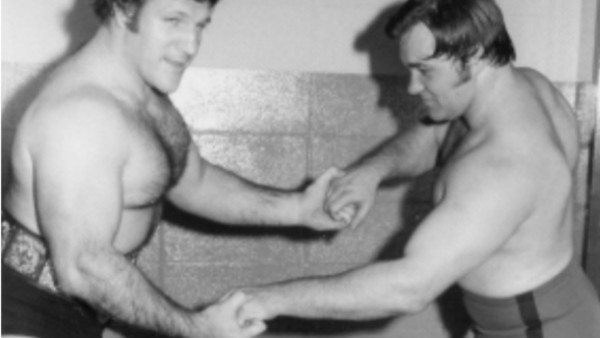
Debuting in 1973 after being trained by no less a wrestler than Bruno Sammartino, Larry Zybysko would carry around that label - Bruno's protégé - for years before finally chafing at the limitations that it set out for him and his career.
Back in the days when kayfabe reigned and commitment to character was everything, Zybysko and Sammartino were portrayed as close friends, like brothers. That changed in late 1979, when Zybysko began to openly question his status in the industry under Sammartino, and query whether the honour of having a living legend as his mentor hadn't in fact placed a glass ceiling over his head. Zybysko was a proper babyface about it, too: it was about pride, and self-respect. He didn't want to be in Bruno's shadow - he wanted to prove that he was on Sammartino's level.
To do so, he challenged the most popular wrestler in the world to a match. Bruno said he had no desire to come out of retirement to wrestle anyone, least of all Zybysko. Back in those days, kayfabe was such that every match was portrayed as a legit shoot fight, as MMA is today - Sammartino's storyline concern was that in order to wrestle Zybysko, he'd have to want to hurt him, and he had no desire to beat up a man hed taken into his home, who was a part of his family. Zybysko's response - completely babyfaced, yet again - was that he couldn't continue with this charade of a career if he wasn't given the chance to prove himself. He would retire if Bruno didn't agree to wrestle him.
Caught between a rock and a hard place, Sammartino finally agreed to make a minor comeback: but he still couldnt bring himself to fight his friend. He would defend himself, but he would not - could not - counterattack. The match took place on January 22nd in Allentown, Philadelphia, taped for the newly renamed WWF's Championship Wrestling show. Every time the opportunity came for Sammartino to return Zybysko's offence, the living legend backed off, releasing his former pupil. As the match wore on, Zybysko became more and more frustrated: Sammartino just wouldn't wrestle him. It was like he was being humoured, like this wasn't a real match. It was as if Bruno was looking down at him.
Finally, Zybysko snapped and began drilling Sammartino with punches and kicks, before leaving the ring to grab a nearby wooden folding chair, smashing it over his friend's head and causing him to bleed heavily (Sammartino clearly blades, despite his repeated old school assertions that he's never indulged in the practice). The crowd went bananas - their hero had made his comeback and then been brutally assaulted by his best friend! - and continued to do so for the remainder of the feud, which stretched well into late 1980, culminating in the main event at Shea Stadium, in a steel cage, in front of 36,295 screaming wrestling fanatics, all of whom wanted Zybysko dead.
This was old school heelwork: during the course of the feud, Zbyszko was assaulted on a regular basis by fans, attacked in the street, and after matches. Cars he was travelling in were mobbed (once a taxi was turned over with him inside), and on one memorable occasion he was actually stabbed in the ass in a riot after a match in New York. Still, partisan fans aside, you can see his point of view. He'd made it crystal clear how important the match was to him, and Sammartino refused to take him seriously until Zybysko made him.
The bones of the storyline actually mirrored real life: Lawrence 'Larry Zybysko' Whistler was trying to figure out where to take his career next when he had the idea for the angle, and ran it past his real life mentor Sammartino. The pair were constantly at loggerheads with Vince McMahon Snr over the feud, which the WWF boss never really appreciated, even when it was selling out houses that his handpicked WWF World Champion Bob Backlund was busy emptying.
2. Surveilling And Profiling

From December 2004 to July 2005, there was arguably no heel in WWE with more heat than Muhammed Hassan (and, to a lesser extent, his sidekick Daivari). The pair debuted on RAW during a Mick Foley promo segment, with the Hardcore Legend bigging up his upcoming appearance in front of the Iraq-based US troops. Hassan and Daivari introduced themselves as Arab Americans sick of the way in which they'd been treated since the horrendous events of 9/11.
Hassan claimed that they'd been the target of massive prejudice since the attacks because of their families' ethnic origin, that they'd been profiled, harassed, and abused, kept under surveillance by the government of their own country, and that they were sick to death of it. They were fed up with the jingoistic, blinkered support of US troops overseas, as it related directly back to the same prejudices and reactionary action that had been causing them so much grief at home.
The characters attracted nuclear levels of heat with their subsequent insistence on interjecting themselves into seemingly every other promo on Raw and SmackDown. Part of the problem was that the pair were attracting massive heat through portraying angry Muslim Arab Americans, not necessarily through heelish actions of their own. It was their fury over their supposed treatment as bad guys which caused their bad guy status, a Catch-22 that was made more morally questionable due to the fact that this had been WWE's objective in booking the pair in those roles in the first place: they intended to take advantage of the mainstream American audiences inability to tell the difference between Muslim Arab Americans with a justifiable beef, and Muslim Arab fundamentalists with an extremist axe to grind, to create perfect heel heat.
As time went on, Hassan and Daivari would tone down or eliminate the Muslim references, gestures and rhetoric from their promos, due to serious complaints from genuine Muslims who recognised what WWE were trying to accomplish. The pair would be involved in red hot feuds with some of WWE's biggest names: Shawn Michaels, Hulk Hogan, Batista, John Cena, and The Undertaker all faced Hassan before he was removed from WWE programming in July 2005. The reason? WWE took it all a step too far, introducing actual terrorist imagery into Hassan's angle with The Undertaker when paramilitary style, balaclava-clad men assaulted the Dead Man on Hassan's behalf on SmackDown. The episode was taped on the same week that Islamic extremists detonated bombs in London.
Hassan's career never recovered from the controversy, which was exactly the kind of heat that WWE didn't want of course. Had they not played with fire by mining anti-Islamic prejudice and bigotry to create a new heel character for their programming, none of that would have happened.
1. Cane Dewey And The Anti-Hardcore Legend

The best ever example of a wrestler playing the role of bad guy with a completely justifiable motivation came in Extreme Championship Wrestling, with one of the single greatest heel promos of any generation. Mick Foley, as Cactus Jack, had been asked to turn heel against Tommy Dreamer, who'd finally begun to get over as a babyface.
The only problem was, this was ECW. How on earth do you turn heel in a promotion where the babyfaces are the heels? You turn babyface, of course well, sort of. Foley devised a promo, based upon his wife's visceral shoot reaction to seeing a sign in an ECW crowd saying 'Cane Dewey' (Dewey was their then three-year-old son) that would help to get Dreamer over even more with the hardcore faithful. More than that, it would also serve to change his own alignment in the process, and for an apparently entirely justifiable reason.
He portrayed his Cactus Jack character - a genuine innovator of violence, and the recent winner of the IWA King Of The Deathmatch tournament - as a cult hero to ECW fans, who he claimed asked too much of their heroes in the squared circle and gave nothing back in return except scorn when those heroes fell short. Here's the relevant sections transcribed:
Cane Dewey. Cane Dewey. Dewey Foley is a three-year-old little boy--you sick sons of b*tches. You ripped out my heart, you ripped at my soul, you took everything I believed in and you flushed it down the damn toilet. You flushed my heart--you flushed my soul--and now it sickens me to see other people make the same mistake You don't expect me to be bitter? Tommy, when you open up your heart, when you open up your soul and it gets sh*t on, it tends to make Jack a very mean boy. And so, I say to you--before I take these aggressions out on you, to look at your future and realize that this hardcore life is a lie, that these letters behind me are a blatant lie, that those fans who sit there and say, 'He's hardcore, he's hardcore, he's hardcore,' wouldn't p*ss on you if you were on fire, you selfish son of a bitch!
As is the case with many of the best wrestling characters, the promo tapped into some issues that Foley was considering for himself: about his future in the wrestling business, about the unrealistic demands beginning to be made of so-called hardcore matches, about the diminishing returns that come after you can't up the ante any further.
It's an exaggerated, and entirely accurate, representation of the attitudes of most devoted fans of garbage wrestling as a phenomenon, even today. Brilliantly, Foley would change his wrestling style to reflect his new heel persona too. How do you work a heel character in a promotion that loves heels? Work slow, methodical technical matches to wind the fans up, and really get under their skin by tearfully telling them that hated WCW boss Eric Bischoff is a genius. Beautiful.