Every Major Weekly Wrestling Show Ranked From Worst To Best
Raw, SmackDown, Dynamite, Powerrr... and everything in between.
Professional wrestling organisations produce an absurd volume of content in 2019.
Nobody can keep up with everything. Nobody. Even if you dedicated every spare minute to consuming all that escapes WWE, AEW, NJPW, AAA, and CMLL, you'd never have time to do anything else - and that's only when taking the world's five biggest promotions into account. Cherry-picking is therefore a way of life.
Oversaturation is an issue, though it'd be daft to complain about having so much great wrestling available at the tap of a mouse or television remote. Every taste is catered for in 2019. Sure, viewerships aren't what they used to be and another boom period may never be forthcoming, but any creative itch can be scratched by consuming one (or more) of the weeklies within.
Note that "major" isn't necessarily a strict term here. Not every weekly wrestling product is covered, so the word is deployed primarily as an eliminator, with apologies to Championship Wrestling from Hollywood, Ohio Valley Wrestling, Women Of Wrestling, and others.
Subjectivity should also be stressed here. Your own rankings may be very, very different, so please head to the comments section and let us know how you feel.
Now, to begin at the bottom...
14. NXT UK

Ostensibly a front used to gut the once-bustling European independent scene of notable talent and stifle competition, NXT UK isn't a bad show (none of the products on this list are, though the high-end weeklies make certain others look poor by comparison), but a needless one.
It features competent wrestlers and talkers delivering competent matches and promos within a competent framework. It's a five or six-out-of-ten in every category. That's fine, but with so many other shows hitting highs that NXT UK can never hope to reach, there's little reason other than loyalty to the talent to actually tune in.
The brand suffers for its lack of stars, with Pete Dunne going full-time in the United States and Tyler Bate, Trent Seven, Toni Storm, and United Kingdom Champion WALTER surely on the verge of doing the same. Jordan Devlin is amongst WWE's most underrated wrestlers and plenty of others have promise, but the bookers haven't made stars of performers that didn't walk in with good reputations. Few feel genuinely must-see.
It's great that these British wrestlers are able to earn a full-time living with the world's biggest wrestling promotion, but second to Main Event (which is so pointless it wasn't even considered), NXT UK is wrestling's most inessential show.
13. 205 Live
WWE don't care about 205 Live. They never really have, and this rubs off on the viewer.
Why invest your time into a product that the promoters themselves barely bother with? The obvious answer is because, like NXT UK, it's a logically-booked show that rarely delivers below-average content. What separates it from WWE's British Network show are its in-ring standards, with 205 batting a much higher average. Still, now that the likes of Ali, Buddy Murphy, and Cedric Alexander are long gone, the purple brand isn't anything like it used to be.
205 Live is increasingly reliant on NXT talent, with the likes of Isaiah Scott and Oney Lorcan crossing over regularly. Cruiserweight Champion Lio Rush appears more on Wednesday nights than Fridays. The current core roster sits at just seven wrestlers, two of whom are the Singh Brothers. Again, WWE's disregard shines through.
The in-ring product offers plenty to enjoy for anyone unbothered by 205's dead crowds, though it's very much for diehards only.
12. AEW Dark

AEW Dark was conceived as a way to highlight "the matches you didn't see on Dynamite," per Cody. This gave the impression of a taped house show and, in fairness, that's roughly how the one-hour web series has gone thus far. Shorter, less impactful bouts held before and after Dynamite showcase performers that haven't been featured on the A-show for a number of reasons, but while Dark isn't always essential viewing, several factors elevate it above 205 Live and NXT UK's mundanity.
That Dark played host to a match the quality of Joey Janela vs. Kenny Omega and has already featured The Young Bucks, Cody, and SoCal Uncensored elevates it, as does From Undesirable to Undeniable, which profiles an AEW crew member's journey to the promotion each week. Host Tony Schiavone plays an important role in bridging episodes of Dynamite and the B-tier format lets AEW experiment with the implementation of new personalities, as well as auditioning potential signings like Mercedes Martinez.
But it's still effectively a dark match showcase, hence the low positioning.
11. WWE SmackDown
Eleventh doesn't flatter WWE's new A-show, though little has changed since SmackDown move to FOX. The blue brand remains the same. Sure, the cast and network are different, but it's effectively the same show written (largely) by the same people governed by the same tropes and formulae as before, the tremendous NXT invasion episode aside.
That night was an outlier. Forced into drastic measures when most of the roster was stranded in Saudi Arabia, WWE captured lightning in a bottle to kickstart their Survivor Series build in earnest. Adam Cole vs. Daniel Bryan was exhilarating, as were the angles, but they can't do this every week and the show struggles to generate such highs organically.
Eric Bischoff is out and Bruce Prichard is in, but this hasn't resulted in any major differences to the core product. You can still see almost every major story beat coming and while usually a well-booked show, SD's two hours rarely provoke genuine excitement, with the writers rarely straying from predictable patterns. More than any other show in the United States, it is in need of a shakeup beyond drafts and perfunctory personnel changes.
10. Ring Of Honor

Scheduling and taping issues make keeping up with Ring Of Honor television a pain in the ass. The show doesn't have a national timeslot, with the day and time depending on local listings, and that it is taped several weeks in advance means it's easy to get spoiled. In addition, the show recently aired a delayed Angelina Love Women of Honor championship defence two weeks after she'd lost the belt. It gets messy.
These problems aside, the show is fine. There are a lot of fundamentally sound but boring wrestlers working fundamentally sound but boring matches (such is the promotion's roster), but the likes of Rush, Bandido, and Jay Lethal regularly raise the bar. Every now and then you get a gem like 6 November's Alex Shelley vs. Jonathan Gresham clash and the 26 July bout pitting Dragon Lee & Rush against the Briscoes was legitimately one of the year's best TV matches*.
ROH TV needs to start reflecting the pay-per-view product if it's ever to move up the rankings. At the moment, there are few incentives to watch beyond "hey, that match was cool."
* it's free on YouTube. Watch it.
9. Impact Wrestling
That Impact is a good wrestling show in 2019 is no secret. Those who still tune can attest to its upturn since Don Callis and Scott D'Amore took the creative reins, with the duo running a tight, well-booked ship, building towards great pay-per-view events that often outshine WWE's main roster offerings.
The past couple of years have seen Impact take several steps towards differentiating themselves from the other "good weekly wrestling shows" out there. They needed an identity, and Callis and D'Amore have chased this by embracing hardcore wrestling, harder storylines (see: Sami Callihan battering Melissa Santos), wackiness like the Undead Realm, and, more recently, intergender wrestling. These are divisive concepts that certainly aren't for everybody, but at least give Impact the selling points lacking since Dixie Carter tried turning TNA into WWE Lite.
Your enjoyment of the product likely depends on what you think of the above concepts. Guys like Cage, Callihan, and the Rascalz will always bring great matches and the Knockouts Division is laced with excellent talent, but if you aren't buying into the awesome Tessa Blanchard as a World Title challenger, you may tune out. That's the problem with this path, though they deserve a high five for taking a different approach.
8. CMLL Viernes Espectacular
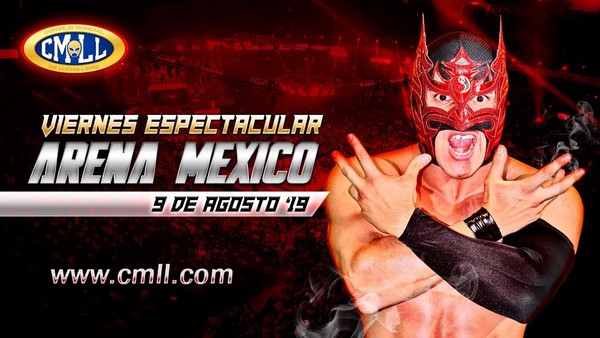
While getting into CMLL means overcoming significant barriers to entry, those willing to invest the time into understanding the product will find much to enjoy when the promotion hits Arena Mexico for its biggest weekly show every Friday night.
CMLL's booking is nonsensical. Trying to make sense of it will drive you mad, so don't even bother. The atmosphere is much different from the average Japanese or American show with constant noise reverberating around the building. Stylistically, fans need to get used to the glut of 2-out-of-3 falls and trios matches, though the 10-minute lightning bouts guarantee at least one singles sprint every week.
These are the barriers. As for the show's strengths, most revolve around the simple thrill of watching some of the most talented lucha libre practitioners doing what they do best in the perfect environment. In-ring standards sit well above almost everything else on this list and while stinkers aren't unheard of, the bigger, more important bouts are usually spectacular and you aren't going to see the likes of Barbaro Cavernario, the Nueva Generacion Dinamitas, and Hechicero operating at such high levels anywhere else.
Don't expect much build, but do expect to have your t*ts popped off regularly.
7. MLW Fusion

Broadcasting on television networks in the UK, Canada, South Africa, and Ireland and YouTube, MLW Fusion is accessible, easy to watch, and far from a major time sink at under an hour each week, so it's a shame that only 40-60k tune in online. Those who aren't tuning in are missing out on a well-booked wrestling show that builds and develops storylines with a far higher hit rate than any show below it on our rankings (and some above it, too).
Fusion is the best place to come if you want to see the fast-rising Jacob Fatu before he becomes one of the best wrestlers in the world. He's one of the hottest prospects in wrestling right now and he's surrounded by wrestlers of similar promise, including Brian Pillman Jr., Alexander Hammerstone, Myron Reed, and Mance Warner. Shows are pre-taped, but avoiding spoilers is significantly easier than with bigger name promotions, and units like CONTRA and The Dynasty work with purpose and chemistry. Also, MLW has the great LA Park.
The company isn't scared of shying away from edgier content, though this is a double-edged sword that appeals to fans of certain tastes, but creates genuine ugliness at times. Heel manageress Salina de la Renta, excellent in her role, is occasionally subjected to gross, sexist humour. Another problem is MLW's underwhelming record with piecing together big, important-feeling bouts, though this improved with the recent SuperFight pay-per-view.
6. WWE Raw
Paul Heyman is what separates Raw from SmackDown.
For better or worse, the ex-ECW head honcho's fingerprints are all over the red brand while its blue cousin remains the same show it has always been. This isn't always a good thing, but it's different. The average episode of Raw serves up one or two segments or matches that at least feel fresh and exciting, which is most welcome, given how stale so much of WWE's other main roster content feels.
Raw is just as likely to play host to a ripping Ricochet singles match as it as a cringe-worthy Lana cucking segment, and that's part of its appeal. The show veers from genuinely good to so-bad-it's-good from segment to segment. The current Rusev/Lana/Bobby Lashley storyline is so dumb and over the top in its execution that it's hard not to be perversely entertained by it all, and it's served up alongside weekly bangers from the brand's workhorse wrestlers.
Of course, it's still a Vince McMahon product at the end of the day, and Vince McMahon products have a well-defined ceiling, but Raw, at its best, is a wild ride.
5. NJPW On AXS
NJPW on AXS is essential viewing for anybody who wants to keep up with wrestling's most critically acclaimed promotion without paying ¥999 (roughly £7.20/$9.20 at the time of writing) a month it costs for a New Japan World subscription, though it suffers from almost always being behind. Yes, AXS hosts the odd live NJPW event, but it mostly catches up with shows that went down weeks or months prior, making this show a great shout for casual fans but few others.
That's about the only downfall, though. It succeeds by presenting the awesome, eyeball-bopping modern NJPW product through a more accessible lens, with full English commentary and no need to fiddle your way through World's awkward, Google-translated menu system. And yes, most World shows already have great English announcing from Kevin Kelly, Chris Charlton, and co., but it's hard to beat sitting down, flipping the TV on, and watching some wrestling, even in a world where Chromecasts and Fire sticks exist.
Though more of a compilation or highlights show than weekly episodic television, NJPW on AXS is a great way to consume the product regardless.
4. Beyond Wrestling Uncharted Territory
If you want to understand the beating pulse of the American independent scene in 2019, you need to be watching Beyond Wrestling's Uncharted Territory.
Currently in the midst of its second season over on IndependentWrestling.tv, this hoot of a show is proof that no matter how many talented wrestlers WWE and co. scoop from the indies, there's always somebody next in line, and in highlighting the biggest, brightest, and most promising of this generation of freelance wrestlers, Uncharted Territory is the product for anyone who claims to have their finger on the pulse.
The likes of Keith Lee, Dominik Dijakovic, Ortiz, Santana, Joey Janela, and Oney Lorcan once passed through Beyond on the road to bigger things. Today, Uncharted provides a cult platform that didn't exist when the aforementioned wrestlers were doing the rounds, allowing the likes of intense standout Chris Dickinson, red-hot prospect Kris Statlander, and modern indie figurehead David Starr to ply their trade before a raucous audience. It's a riot every single week, and the most fun product on this whole list.
The Discovery Gauntlet is perhaps Uncharted's biggest USP. Passed around by under-the-radar names yet to break out at a national level, it has helped bring Mick Moretti, Thomas Santell, and Daniel Garcia to greater awareness. Said performers' hunger stands out, even on a show packed with ravenous wolves.
3. NXT
NXT is an excellent weekly wrestling product, but one still hamstrung, subjectively, by flawed storytelling mechanisms.
That they generate such building-shaking reactions every single time grants a degree of leeway, as predictable as NXT's patterns have become. Feuds and matches are typically established by a wrestler's music hitting while another stands in the ring, the crowd-popping arrival staring the other down, and Mauro Ranallo spitting a corny pop culture reference to sell it. That this generates excitement is undeniable, but there's nothing under the hood, and the show's over-reliance on contrived main roster f*ck finishes is such a bore.
Nonetheless, NXT's positives greatly outweigh those negatives. The in-ring product is a straight-up sugar rush that deserves its reputation as one of the world's most cutting edge. Bouts as kinetic as Adam Cole vs. Matt Riddle rarely go down on other weeklies and the roster is ridiculously stacked, giving Triple H an almost endless list of combinations to play with. This is a big-budget version of Pro Wrestling Guerrilla with stories, basically. It is exactly what its core audience wants and the added appeal of main roster stars like Bayley and Finn Balor showing up gives it a fresh anything-can-happen vibe.
It's a great show, just not the greatest.
2. NWA Powerrr

Calling NWA Powerrr a "palate cleanser" is almost cliché at this point, but that's exactly what Billy Corgan and Dave Lanaga's '70s/'80s inspired wrestling product is. It's the perfect remedy for any jadedness, fatigue, or other negative energy surrounding this era of workrate-heavy pro-wrestling, rife with charm, joy, slow-burning storytelling, and some of the best promos in the game.
In taking the classic studio wrestling format of the past and injected it with modern energy, Powerrr isn't trying to be NXT, Dynamite, or Uncharted Territory. This isn't about workrate or star ratings, but simple, old-school wrestling television done well. That means shorter, more succinct matches, loads of character, great interviews, and a unique studio atmosphere.
One might look at the NWA's roster and criticise the lack of pure star power. It doesn't matter once Powerrr hits YouTube, though. Nick Aldis comes off like a true world champion through this lens, Ricky Starks is presented as a star on the rising, Thunder Rosa has been elevated through dominance, and Tim Storm is the premier everyman babyface in wrestling right now. They elevate almost everyone, is the point.
Please, they give Eddie Kingston, the G.O.A.T. indie talker, a live mic every week. That's a huge selling point on its own.
1. AEW Dynamite
Is AEW Dynamite perfect? No, of course not.
Jim Ross puts more things over than he buries, but shouldn't be burying anything as a paid mouthpiece. Acts like the Librarians and the Dark Order aren't connecting as intended. Some episodes lean too heavily on the adrenaline-heavy "cocaine" style of wrestling that pops in moderation, but grates like anything else when employed to librrally, though recent episodes have acknowledged this.
These are minor quibbles compared to the good that Dynamite brings to the table, though. In just seven weeks, AEW's flagship show has been a juggernaut of pro-wrestling storytelling, covering an unbelievable amount of ground every single week. They do this with blistering matches, angles that layer pops upon pops upon pops, and by rewarding (rather than punishing) investment, having already made stars of MJF, Scorpio Sky, Riho, and more, all while broadly sticking to the promises made by Tony Khan prior to the show's debut.
Colourful, energetic, and teeming with life, AEW's weekly show was the shot in the arm the stale American wrestling scene needed.