How AEW Built The Perfect Tag Team Division
In which it is and is not about holding the rope.

"It feels like tag team wrestling has become somewhat of a lost art. It's like you can't even see tag team wrestling on wrestling programmes anymore. That's all about to change. Our goal, our main objective, is to give you fans the best tag team division in the world."
- Matt Jackson, AEW Double Or Nothing Ticket Announcement Rally, February 7, 2019
The AEW tag team division was always very good. Great, even.
It actually started out perfectly before the launch of Dynamite on TNT; the classics worked between the Bucks and the Lucha Bros. at Double Or Nothing and All Out were jaw-dropping, state-of-the-art masterclasses in tag team wrestling. The tandem fare presented across Fyter Fest and Fight For The Fallen, while not on that level, was very effective in allowing Private Party and Jurassic Express to shine.
The World Tag Team Championship tournament hinted at the deft, incredible booking to come. The realistic touch of Scorpio Sky, last-minute replacement, working a match in gym shoes was such effective and well-received babyface work that it ultimately enabled some lovely dovetailing between the doubles and singles ranks via his pin over Chris Jericho. The Young Bucks proved their incredible prowess by elevating Private Party in a super match - Matt Jackson's storytelling nous made a mockery of bad takes made in bad faith - that, while not successful in the end, was the noblest of failures. The Bucks following the loss embarked on a great feud with Santana and Ortiz, the violent and gutsy climax of which didn't receive enough credit for highlighting Dynamite's uneven period post-Full Gear.
Before they regressed, Private Party worked the match of the tournament opposite Lucha Bros. This was a relentlessly exhilarating banger; a demented duel pitting Indieriffic offence against the spectacular stylings of lucha libre. There were very few tags in this tag team match.
This was divisive, even amongst AEW personnel.
CONT'D...(1 of 6)

Jim Ross had a conniption fit at the desk, and Chris Jericho called a backstage meeting demanding a consistent approach to rule enforcement. This did happen, to an extent, but, months later, AEW deftly folded this philosophical debate into onscreen canon.
Wrestling, and Christ knows we've seen the ugly side of this mentality in recent weeks, is all about getting away with it; a predetermined pseudo-sport, it functions to stretch the living hell out of suspension of disbelief. AEW, with the recruitment and booking of FTR, are getting away with bending the rules to maximise - and now, justify - the excess excitement of those cocaine bangers. Bring more of them on. Don't hold the tag rope. Dive more than strike. FTR's southern-style wars and the mentality that drives them will ultimately benefit from the glorious styles clashes to come. FTR Vs. Lucha Bros. books itself as a dynamic. Wrestling should be germane to wrestling and its stylistic differences as much as it is personal conflict.
AEW have perfected that, too.
SCU were better sentimental winners than they were World Tag Team Champions, in truth, not that they hadn't earned the distinction by grabbing the MVP crown in the very early days of AEW. The reign wasn't fantastic, overwhelmed as it was by a very uneven defence at Full Gear and an aborted draft of the Dark Order storyline.
AEW boasted the best tag team division in the world months and months before they perfected it, but that was the lowest of bars. NXT had de-prioritised its once-great tag team division since the move to USA; New Japan was shockingly apathetic; WWE's main roster is a joke that's not funny anymore.
December changed everything.
CONT'D...(2 of 6)
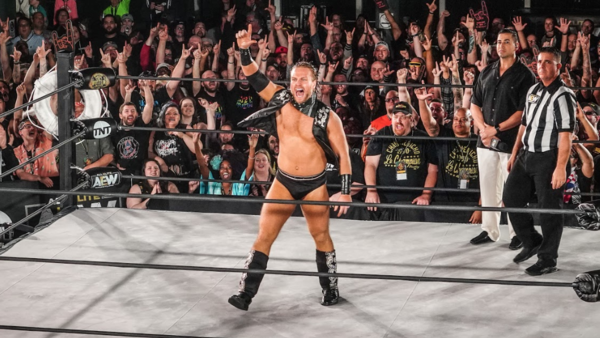
It was the month in which the Dark Order repelled Dave Meltzer into drawing comparisons between AEW and Vince Russo's WCW. It was also the month in which the incredible Kenny Omega and Hangman Page storyline began.
They first teamed against Kip Sabian and Shawn Spears, showing flashes of the awesome chemistry and very subtle tension that has defined the dynamic. A loss to the Lucha Bros. seemed to foreshadow a break-up, not a championship win, but that's the constant, dramatic fascination of the story and a credit to the brilliance of the balance of the work. They could erupt and throw down at any moment, or reign with those belts forever: thrillingly, either scenario is convincing. Is Page the ace of the team, for clinching all those wins? Or is Omega? Is the assist worth as much as the goal? And what does his commitment to absorbing those beatings say about the morality underpinning this tale?
All of this will one day boil over, but as incredible and unbearable as that proposition is, nobody wants it to happen yet. The journey is more compelling than the guaranteed ***** destination. That's the power the booking this division yields.
Page and Omega subsequently went on a tear, defeating SCU, the Lucha Bros. and the Young Bucks to become and become worthy of Champions. Match ranged from the lowly "superb" to the "greatest tag team wrestling match ever". Omega requested a gentleman's contest against SCU on the Jericho cruise. Kazarian dropped a surly Page on his head. Omega, infuriated, changed the complexion of the match - but Page secured the titles. Every second is carefully considered.
CONT'D...(3 of 6)

That Page can't see how well they complement one another is the bittersweet beat of the story, but his position is understandable. He was living in the shadow of his friends for so long that it feels to him like the Elite can't stand to let him celebrate under the lights.
At Revolution, AEW told a pathos-laced story of frayed friendship, encouraging the audience to sympathise with every member of both teams almost entirely through the medium of seminal wrestling. It was a masterpiece that, in the end, through incredible details-focused wrestling, positioned Page as the true hero. He went for the One-Winged Angel; Kenny Omega, in his match with PAC just days earlier, never went for the Buckshot lariat. When his own arsenal had failed him, he drew on Kota Ibushi's Kamigoye.
With the arrival of FTR, AEW's tag team division has perfected visual storytelling; it's not so much that there's no "time" for promos; there is simply no need. Why pummel viewers with exposition when wrestling, at its core, is a physical storytelling medium? AEW's tag team division rewards those who pay the strictest attention. The development : economy ratio is stunningly deft. Consider last night's all-round incredible Dynamite main event which, from entrances to the match itself to the post-match angle, was sensational.
Page and Omega defeated Best Friends in a very well built and thus close-to-call match with a fabulous finishing stretch that hinted at how close Page is to losing everything, provided he takes Omega for granted. FTR arrived to toast the retaining Champions. They handed them each a beer knowing damn well what they were doing. Omega drinks milk. They know he drinks milk. Omega knows that they know he drinks milk. Omega feigned to drink, and in a very obvious move, poured the beer over the ring. FTR played dumb. Hangman was probably just happy somebody gave him a bottle.
CONT'D...(4 of 6)

This was tremendously clever heel work; the divide and conquer tactic FTR have perfected so well between the ropes adapted to the post-match. They cut the ring in half like no other team. Now, with one excellent d*ckhead tactic, they are close to cutting Kenny Omega and Hangman Page in half, too.
Contrast last night's superb closing angle with the way in which the Young Bucks attempted to congratulate Hangman Page and Kenny Omega on the road to Revolution. The Bucks seemed to celebrate as if the Elite were a united front. Page, visibly, thought "F*ck that". This was about him. FTR didn't take the beer out of his hand to remonstrate with him; they put a beer in his hand to celebrate with him. Maybe Page was just happy that somebody finally got it.
That people will interpret this angle differently is what elevates into art. AEW's tag team division is the closest we've come to prestige television, much less great wrestling television.
This follows a tremendous angle from two weeks ago in which FTR and the Bucks both used spike piledriver variations in stereo to at once underscore their philosophical differences - think of the origins behind the Meltzer Driver name, and why FTR have adapted their version - and their shared mutual respect. Tag team wrestling, an afterthought in the mainstream, often struggled or didn't care to tell stories outside of title programmes. With FTR Vs. the Young Bucks mystery, AEW with one programme is essentially booking two non-title programmes at once, emulating in the narrative the unparalleled thrill of tag team wrestling's multiplied in-ring drama.
In the background, beneath that intoxicating three-way storyline, AEW has quietly worked away at the guts of the division and its marvellous range.
CONT'D...(5 of 6)
The Butcher and the Blade bring a no-frills - "meat and potatoes" - devastation that is a ghoulish midcard joy. Santana and Ortiz are incredibly talented, boast enormous babyface potential, and can slot convincingly into the title picture as heels with one or two wins. Joey Janela and Sonny Kiss are a very promising wholesome underdog act. The Lucha Bros. are the most spectacular team in the world, and are always very welcome in the hunt.
We still haven't seen the best of the Dark Order, and the best of Super Smash Bros. makes that an awesome prospect. Best Friends are hilarious, heartwarming, and have a banger in them. SCU are as dependable as sh*t, but that does a disservice to them, if anything. Le Sex Gods, when they return, are legitimately secret MVP-level great, in how that particular duo is a phenomenal storyline driver. Private Party need work, but still hold vast potential. The Natural Nightmares are great value, between Dustin Rhodes' enormous ring IQ and QT Marshall's endearing charm. MJF and Wardlow were great this week. Their opponents, Jurassic Express, are still to explore their rich potential as a duo.
Perhaps perfect is too generous. AEW has developed a somewhat brash habit of quietly and cynically building acts on Dark with wins over enhancement talents and calling them contenders. The route to the title match is sometimes cheeky, but that's the easy part.
AEW has made wrestling's biggest challenge for the last two decades look easy.