Just What IS Cody Rhodes' WWE Story Anyway?!
A long-read on why some stories are bigger than the championship pursuit...
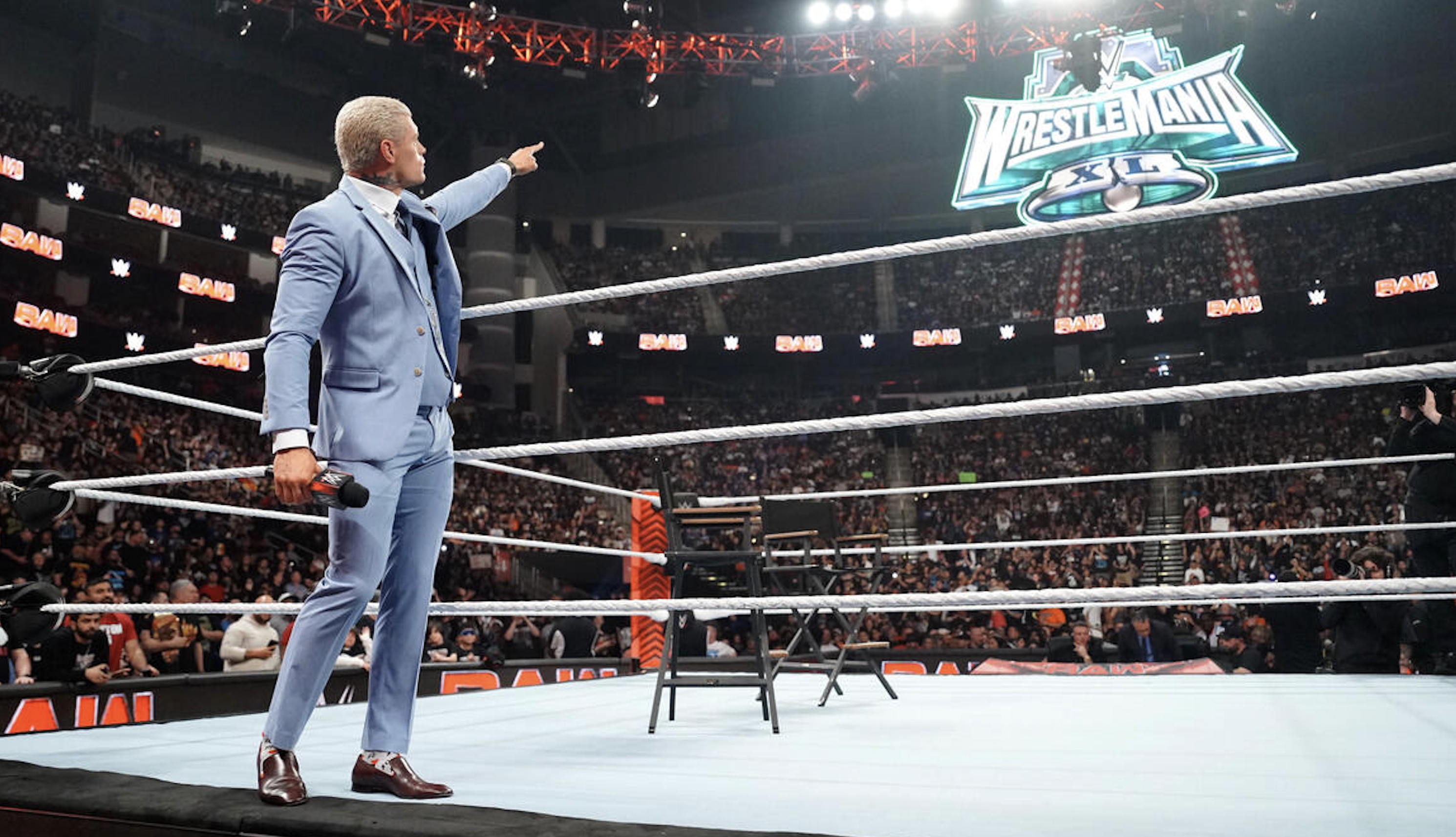
Cody Rhodes is the Undisputed WWE Universal champion elect.
He in April 2022 made his shocking return to WWE. On night one of WrestleMania 38, he defeated Seth Rollins in an excellent match that only evolved into an excellent match after the seven minute mark. The visual of Cody Rhodes in a WWE ring was so utterly surreal that what he did inside of it barely registered. For a long time, the action was incidental to the seismic, unfathomable event. In a great (and inspired) sequence deep down the stretch, Cody was about to strike Seth with a third Cross Rhodes. Instead, he let go of the set-up and blew Seth away with his father's flip, flop and fly strike combination. He then hit a third Cross Rhodes to win before revealing why exactly he paid tribute to Dusty Rhodes.
On the Raw after WrestleMania, he cut a promo and told the first chapter of the Story. He recounted his father's story of challenging for the WWWF title by requesting a photograph, dated September 26, 1977, be displayed on the tron. The picture was of Dusty Rhodes holding the old WWWF title, sideways, in Madison Square Garden. Cody said to his father that he never knew he was a "champion like Hulk Hogan". Dusty said to Cody that he wasn't, explaining the champion's advantage, and that he had in fact won the match but not the championship belt. (This doesn't explain why Dusty held the title aloft; this result wasn't a Dusty finish, predated the Dusty finish, and the scene of celebration was a bit stupid if you think about it - but it's a very warm story, so it's probably best to just go with it).
Cody then and there decided at eight years old to become WWE Champion in his honour - by finding his destiny “on the path he had taken to avoid it”.
At the time, there was some concern that Cody couldn't reconcile the sheer amount of potshots he aimed at WWE during his six years away, given everything that happened, but on April 4, 2022, he received a hero's welcome. Wrestling fans are forgiving (or fickle), and Cody was and is a star. Stars get away with everything. There's no use in psychoanalysing the WWE fanbase. Perhaps they enjoyed that Cody left the outfit he was instrumental in forming because he knew where the big boys really played. It wasn't as if Cody was a hugely over star that had returned. He was a nobody when he left. Perhaps they admired his sheer ambition and drive.
Regardless, the fans bought Cody as a main event-calibre returning hero. To really drive home that he was the top babyface in WWE - and, perhaps, to write a prospectus to any other want-away AEW talents - Cody cleanly defeated Rollins, a top star synonymous with WWE, twice more on pay-per-view. Cody didn't necessarily need to be any more over than he was, but his already incandescent star power was enhanced - only in wrestling is this sort of thing fortunate - when he tore his tricep ahead of Hell In A Cell. A very lengthy layoff awaited him, but he completed the match. A purple Cody Rhodes, whom it hurt just to look at, gutted it out. As infamous as it was disturbing as it was utterly compelling, the match established Cody not just as the man who got one over on those minor leaguers, not just as the gregarious showman, but the man who would endure unimaginable pain and put off major surgery to give the fans a show when they had paid for a ticket. Cody was a man who wrestled after the wheels fell off. To be a little cynical, in biting through the pain and making the grand comeback, Cody was Triple H in 2002 if the push panned out - a better flex than the publicity stunt he had pulled at Double Or Nothing.
He made his return from surgery to win the 2023 Royal Rumble, at the #30 slot, and his final show-down with GUNTHER was both an excellent match-within-a-match and a glimpse of what his eventual Undisputed WWE Universal title win might look like.
He didn't finish the story at WrestleMania 39 (in retrospect, WWE didn't really hammer that storyline with Roman Reigns). He lost, which was stunning. The feel-good win was considered a formality, especially when considering that Sami Zayn, both white-hot underdog and actual needle-mover, did not take down his manipulator at Elimination Chamber in Montreal. The complexion of the WWE fanbase had changed considerably since the old days of crowd hijacks. Cody and Sami co-existed as lead man and best supporting actor in the "cinema" that was the Bloodline saga. And still, he didn’t win.
The result was bad; the finish was worse. Solo Sikoa simply interfered, and Cody simply lost, as if this was the phoned-in finish of some B-level 'PLE' or other. The match was incredible. Cody Rhodes and Roman Reigns paced the drama so effectively that they genuinely could have gone an hour, if not longer. The fans were entranced. It felt like one of the biggest occasions in the history of a huge company that had rarely felt bigger. All the pity’ if WWE was going to screw Cody, they could have really thought about it. They didn't. Would it have been more poetic and heartbreaking, had Cody ironically followed in his father's footsteps and won via count-out?
Or should WWE have simply booked Cody to win at WrestleMania, since the Bloodline "saga" would have made more sense had Roman actually lost?
This dented faith in the process, as unfounded as the pessimism turned out to be. It did not however dent the faith of Cody Rhodes.
CONT'D...
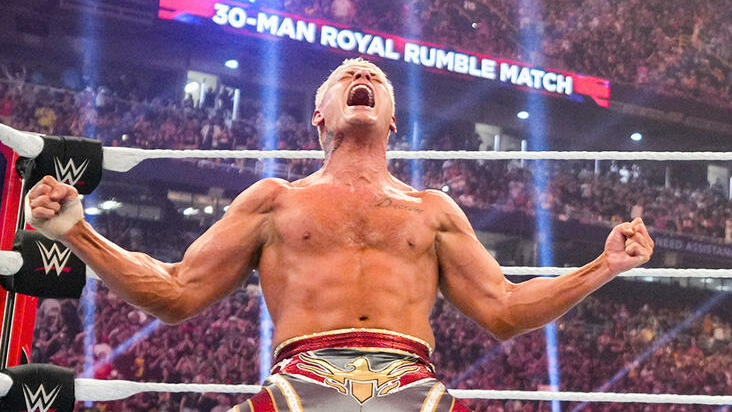
Cody, after several years of almost endearing self-owns, walk-backs, and fits of hypocrisy, was coy at the 2023 Royal Rumble post-show press conference. He acknowledged that speaking in absolutes had made a fool of him before. He was however unwavering, subsequently, in what his story meant. He wouldn’t have finished the story, were he to have won the World Heavyweight title created on April 24, 2023 and won by Seth Rollins. That, obviously, wasn’t the title his father came close to winning. It is ostensibly a World title, a top prize, promoted by WWE - but this is a story deeper than strict historical accuracy and a sense of romance. Cody doesn’t want a title that WWE can claim, selectively, when the narrative suits, is the biggest prize in the industry. The story isn’t just about Cody winning a title that was promoted under a banner - the WWWF - that no longer existed when he was born. Cody’s story is about being the man. He needs to defeat Roman Reigns in order to accomplish that irrespective of what the title is called. He needs to be a “champion like Hulk Hogan” to prove that his family’s dynasty is as strong as any other in the sport. Cody has never once wavered in what the story is. He hasn’t tried to talk his way around a potential demotion, to justify WWE’s selective continuity. He might have known some sort of chicanery was coming. It was; until the #WeWantCody backlash, WWE tried to put out some nonsense about the WWE title being the one you have to “politick” to get.
Cody is intelligent enough to know that the fans must believe in a babyface. He, to his immense credit, isn’t letting WWE “get away with” anything when allowed to speak candidly to the press.
After failing to finish the story in 2023, he was reheated by winning a ‘PLE’ trilogy over Brock Lesnar. It was booked in a boilerplate WWE way - fortuitous win, Austin-style “he didn’t tap!” technical submission loss, clean win - but it served its purpose and the series, while transparent in its time-wasting, reached a brilliant peak at SummerSlam.
In red-hot tags across the summer and autumn against various combinations of the Judgment Day faction on Raw, Cody continued his association with Kevin Owens, Sami Zayn, and Jey Uso. Raw felt like a constant rerun of itself at times, and while it wasn’t interesting, necessarily, it was still hot. It was almost good that it was so repetitive - for Cody’s prospects, anyway. Cody, a ticket-selling sensation, proved his staying power. Nobody complained when his nailed-on Royal Rumble win materialised. It wasn’t “predictable”. His name wasn’t prefixed with “Super”. He was simply the best and most over babyface.
He was more over than the most popular man ever associated with WWE: the Rock. The Rock, in a bizarre development that harkened back to the dire 2010s, decided to take the WrestleMania match with Roman - at Cody’s behest and after Cody had won the Rumble. This plan was in place before the Rumble (!). It seemed odd, when it was reported that WWE had deliberately engineered a plan to turn Cody into the “new Daniel Bryan”. Bryan Danielson may well be the single greatest pro wrestler of all-time - this is no knock on his legendary name - but Cody was a bigger star within WWE than even Bryan was. Cody sold more tickets, led a boom period, and is far closer to a John Cena type. He doesn’t have a contrarian set of fans rooting against him, either. The New Daniel Bryan was below a star of Cody’s stature.
The gambit worked rather too well; the #WeWantCody movement unfolded, and a very savvy Rock moved more quickly than he has since 2001 to rescue it. He turned heel, channelled 2003 to incredible and deafening effect, and will team with Roman Reigns to wrestle Cody and Seth Rollins on night one. WWE should be praised for the pivot. The noise in those buildings on Friday nights is nuclear. None of this is “cinema”, but WWE has, in its key programme, perfected sports entertainment. Cody has to win. As great as he is, fans will grow to resent a choke artist. He’s going to finish the story. WWE’s ability to truly listen to the fans is make or break on night two of WrestleMania XL. WWE is too big to fail outright - if it wasn’t, the promotion wouldn’t have survived 2019 - but the beginning of the end of the boom begins on April 7, 2024 if Cody does not finish the story.
That is his WWE story; his real story is far more significant than even becoming the most universally popular WWE megastar since Stone Cold Steve Austin. (John Cena, while a bigger star than Cody, was not universally popular).
Cody Rhodes is the professional wrestler to have best applied the demand bestowed upon every top name. More so than anybody else, Cody Rhodes, when it is all said and done, will have left the business better than he found it.
Cody Rhodes entered a completely dysfunctional system. He learned the trade in Ohio Valley Wrestling when OVW was in its catastrophic death throes. He didn’t spend too long there, received just enough education to perform, and was installed on the main roster in 2007. Recently, when sparring verbally with Drew McIntyre on Raw, Drew made a frivolous but accurate remark. He mentioned that, once upon a time, he and Cody were Tag Team champions together. Virtually everybody watching must have felt the exact same reaction:
What?
When did that happen?
That shouldn’t be a slice of strange but true trivia - ideally, you should remember champions, since they are meant to be outstanding in their field - but it was, and it about sums up the vast majority of Cody’s WWE run. Cody entered WWE at a time of completely asinine chaos in which almost nothing mattered beyond the main event scene. He won feuds, lost feuds, was dashing, disfigured. He was a scholar. He wore a moustache. He was the sh*t thrown at the wall to see if he’d stick.
He won titles!
When his oafish opponents stepped through tables.
He was in a stable with Randy Orton!
Which disbanded, leading to one of the most mediocre matches in the modern history of WrestleMania.
He was going to win Money In The Bank!
Before Vince McMahon decided - twice - against his own decision on the day of the event.
Wild as it is to write in 2024, the self-anointed knowledgeable fandom of the day was far more convinced of Dolph Ziggler's ability to succeed at the top level in WWE.
CONT'D...
All the while, looking back, you can see what Cody wanted to be. He was once asked why he used to wear his trunks as highly as he did, why he didn’t for a time wear knee pads. He wanted to evoke memories of the likes of Nick Bockwinkel, embodying the sepia-tinged elegance of old. He successfully campaigned for the return of Reggie Parks’ classic Intercontinental design, albeit with a white strap. He sensed that something was fundamentally wrong with modern wrestling, that it was broken and had lost sight of itself. In his own very small and mostly insignificant ways - GUNTHER did exponentially more for the ‘IC’ title than a well-intentioned bid for nostalgia - Cody wanted to return to what worked and what should never have gone away. He’d get there, the long way.
The issue there was that Cody lost his war on two fronts. WWE itself was never going to listen to a top star, much less Cody Rhodes: functional, a grafter, never really that over. The fandom, too, was out of step with Cody’s ideals. While bringing back the old title design was very welcome, Cody himself was unfashionable. When he grew into himself as a performer, his style wasn’t what was “in”. In the early 2010s, great, futuristic bell-to-bell action was a novelty. That all changed deeper into the decade, to such an extent that even John Cena reinvented himself as a PWG workrate guy. Daniel Bryan and CM Punk led that change, and Triple H was savvy enough to launch his bid proper as the heir apparent by emphasising great, acclaimed wrestling as the focal point of NXT. New Japan Pro Wrestling became the #2 promotion in the United States. The paradigm has since shifted, so far that LA Knight is infinitely more over than Johnny Gargano, but when Cody was deep into his WWE run, his work, bluntly, wasn’t cool enough to get the fans on-side. He had certain moments - they’ll be covered imminently - but when Cody voluntarily left WWE, very few people truly thought that WWE had overlooked and “fumbled” a “generational talent”.
Context is important when analysing the circumstances surrounding Cody's departure from WWE.
That Cody was simply permitted to leave, no questions asked, says rather a lot about his all-consuming influence over the industry. He wasn't warehoused. WWE didn't frantically search through his medical history to give themselves an excuse to add time to his deal. They didn't feel the need to loophole anything. What was Cody going to do: get a gig in TNA?
This is just one of the many things that changed after 2016.
In May of 2016, there was nothing for WWE to fear. They were entirely comfortable on their perch.
Somehow.
The television WWE produced around this time was bleak, despite it being one of the better-received years in WWE's rotten Vince McMahon twilight era. Watching it, you could be halfway convinced that WWE was intent on pushing a youth movement of sorts; after Roman Reigns dethroned Triple H in the tedious slog that was the WrestleMania 32 main event, Roman's Wellness Policy violation led to a welcome intra-Shield WWE title picture. That, on the surface, was refreshing, but then Dean Ambrose had to dress as the Mountie. When he wasn't cosplaying as old midcarders in terrible sight gags, he was getting b*llocked by Stephanie McMahon for dressing scruffily. When the heel Stephanie McMahon wasn't berating the babyface Dean Ambrose for the way in which he presented himself, she was scolding the heel Charlotte Flair for disowning her father. When Stephanie wasn't punishing Charlotte Flair, she was making Mick Foley's life miserable. Stephanie bemoaned Mick constantly for his apparent incompetence in the General Manager role. The key thread of WWE Monday Night Raw was Foley's ineptitude. For no discernible reason. This was never paid off, via, for example, a WrestleMania match in which Foley and Steph would each pick a representative for a WrestleMania 33 match held to determine who would gain control over the show. After almost a full year of this tedious administration and relentless bullying, Foley was fired in storylines and beaten up by - yes - Triple H. The whole thing seemed to play out because the McMahons enjoyed torturing people onscreen - people, in Foley's case, who broke their bodies for the promotion and stuck up for it at the expense of his dignity. If Mick Foley was treated like that, what chance did a midcard act like Cody Rhodes have?
One of the apparently better years of the 2010s was still cursed with an off-putting we-know-best mentality that had long since filtered into the product, and to underscore that, the well-received SmackDown product felt slightly different and almost feel-good for a few months before Vince decided that it should be Raw II.
Cody was correct not to trust the process. Everything went to sh*t again.
Goldberg defeated Kevin Owens for the Universal title at Fastlane 2017, putting an end to the popular Owens Vs. Chris Jericho programme as a main event concern. Bill was then defeated by Brock Lesnar at WrestleMania 33, after which the idea of a part-time mercenary reached a bleak, parodic nadir. To underscore the feeling that WWE had become an anti-meritocracy, Jinder Mahal defeated Randy Orton for the WWE championship 49 days later at Backlash 2017. The idea - the failure of an idea - was for Jinder to front a big push into the Indian market. For the majority of 2017, Jinder was not over. WWE hadn't even gone to the bother of patterning his push after Vladimir Kozlov's. Kozlov was as boring and unappealing as Jinder was, but WWE at least tried to obscure how much Vince just fancied pushing him because he wanted to push him and, with no competition, he could. Kozlov defeated all comers for six months before failing at the end. He famously beat the Undertaker. Cleanly. That push, incidentally, was one of many developments that unfolded since 2001 that alienated much of the fanbase. The rot - the conditions for the change Cody effected - set in long before WWE's disastrous 2010s period. Jinder was a different deal altogether.
Two days before becoming #1 contender on the April 18 SmackDown, Jinder lost a handicap match alongside Titus O'Neil to the Big Show at a live event. On the April 11 SmackDown - the week before you were asked to receive Jinder as your new top heel - he did a job to Mojo Rawley. In three minutes. Vince just woke up one day and wanted to do something senseless because he could. That was the state of play. You had never mattered less.
CONT'D...
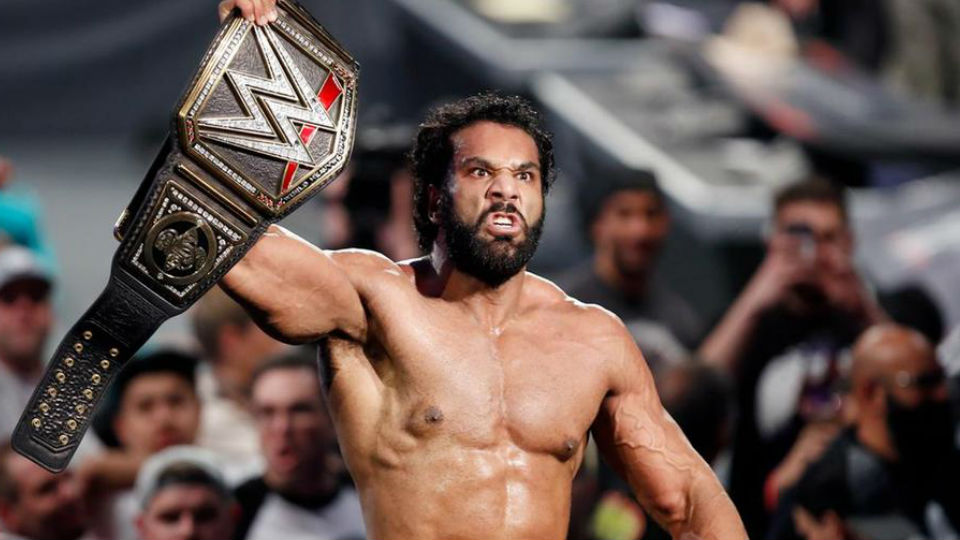
Brock and Jinder reigned with the top titles throughout much of 2017. It didn't matter how good, over or present they were. Vince wanted them pushed, so they were pushed. This was the epitome of WWE's "F*ck you!" era. The absolute minimum requirements to be a top champion were not met. Twice over!
Cody himself had been betrayed by a false promise.
At Battleground 2013, in one of the few intentional highlights of the time during which the Authority stable presided over WWE, Cody Rhodes and Goldust defeated Roman Reigns and Seth Rollins, reinstating their jobs per the storyline stipulation. This match was incredible. Stakes; drama; fire: it was as close to bonafide southern electricity as WWE had ever generated. At the finish, Cody put Seth down with the Cross Rhodes. This was the first glimpse of Cody Rhodes: headlining megastar. The fans were going apesh*t. He took his time to register the drama. He roared before saving his brother and his father as if their jobs were actually on the line. He roared so fiercely that there was a black hole where his face used to be. He was drenched in belief at that moment. While his in-ring arsenal, as ever, wasn't flashy or fashionable - he was never really on trend as a worker at a time when contrarian fans demanded somebody, anybody with a pair of kick pads supplant John Cena at the top of the card - he was so remarkably assured in the ring. Great matches aren't necessarily great for the content; pacing is the true magic, and that tag seesawed between despair and hope to nigh-on unbearable effect. The emotion was off-the-charts by the standard of a WWE PPV midcard match for that era. All four men - and Dusty and Dean Ambrose on the outside - achieved something truly special that night.
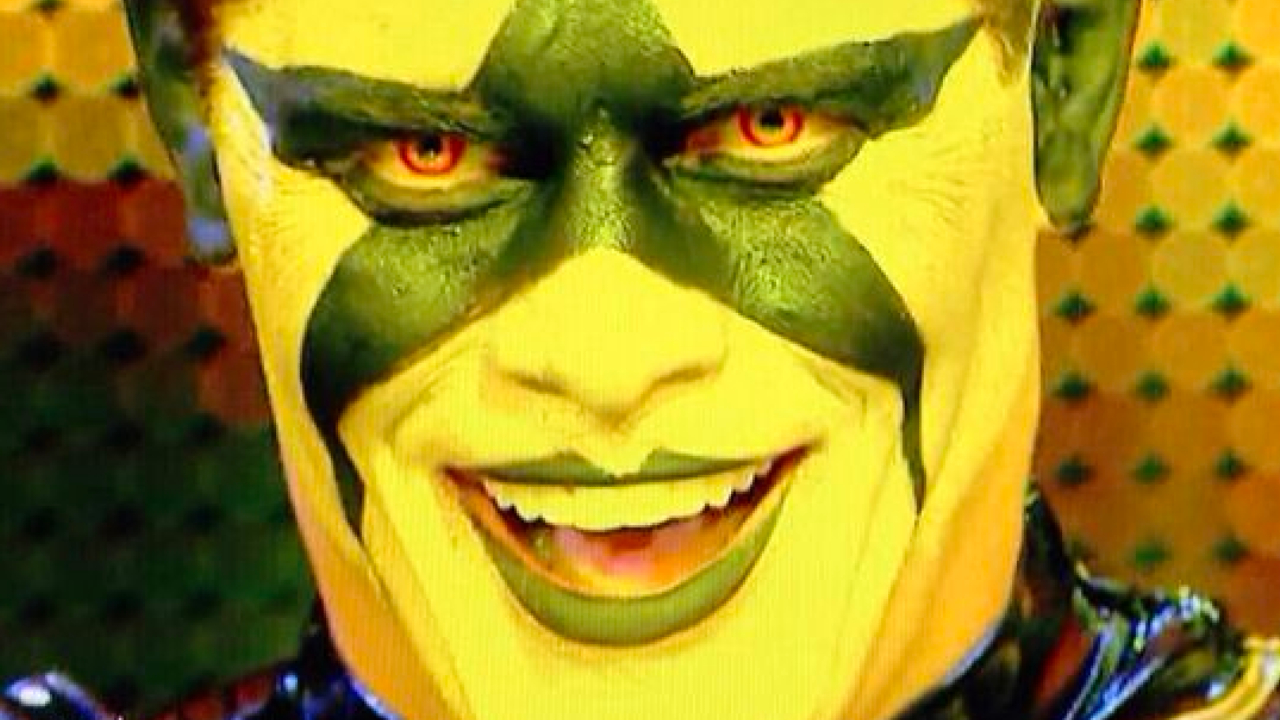
This was the sort of performance that, in a functional promotion, could launch a talent's career. A dysfunctional promotion - WWE - repackaged Cody Rhodes as Stardust in under a year. This was Stephanie McMahon's idea, as Cody revealed during a Starrcast panel in 2019. In the gorilla position, as the Brotherhood were about to make their entrance for a match months later, Steph, out of nowhere, said to Cody "Why don't you paint your face like your brother?"
This was probably a euphemism for "Your pops are getting quieter". Perhaps it was even casually, inadvertently insulting - "...because you know, you're a bit bland" - but Stephanie probably wasn't aware that she had just ruined two years of Cody's athletic prime. That she in that moment altered the course of professional wrestling history.
"Someone" was instantly besotted with the notion, and Stardust - a mischievous alien entity, or some such b*llocks - was born.
Cody tried. He tried to have a bit of fun with it, to be a team player. He knew the character was terrible. He knew that Stardust was never going to headline WrestleMania. He also knew, in a warped way, that he could potentially impress people by committing to the bit. Even if the bit itself was a cringeworthy creative atrocity, he was operating in a post-smart world. Everybody watching knew he was doing what he was told. The heat is almost invariably on the booker. He tried to portray that he had lost himself within the character. He took a wild swing and turned it up to 12. If he was going to be Stardust, he was going to be Stardust. His line readings were pure am-dram; he seemed to play it like a fading Shakespearean theatre actor cast in some risible sci-fi schlock in a naked cash grab. The very best he could do was a very intense stripe of so-bad-it's-good. He couldn't do tongue-in-cheek. The character was useless; a career death-sentence of an early-to-mid 1990s anachronism. The man who went on to wear a dapper suit at every single indie appearance however approached it like a complete professional. He could never be accused of not doing what he was told to his utmost. Even at his most undignified, nobody could accuse him of not treating every day on the job as his first. Nonetheless, the idea that anything earnestly good could emerge from under that paint was impossible.
With one historical curio of an exception.
Ahead of their disastrous match at Fastlane 2015 - picture the exact opposite of their AEW Double Or Nothing masterpiece, and you're still nowhere near close - Goldust interfered in Stardust's match against Jack Swagger. It was a WWE match. The distraction led to the finish and nobody in the audience cared at all.
In a "digital exclusive" promo cut after the show, something a talent could perform without Vince McMahon blowing a gasket at them for screwing up, something Vince likely never watched, you could glimpse the real Cody under the paint. He knew he could tell a better story than WWE - he'd prove that definitively just over four years later - and tried to do that in secret, almost. He talked some waffle about the "age of Aquarius" before getting to the point. Using what has become a well-worn wrestling cliché, he claimed he was hungry. That he wanted to eat some "steak". But, before he could do that, he wanted to cut out the fat. He compared the gristle to Goldust but did not stop there. He said that the fat was Kane, the Big Show, Mark Henry. "Old men talkin', young men dyin'" was his rather over-the-top way of saying that the stars of the Attitude Era were holding back the current generation.
This promo was the first draft of the interview that acted as evidence of All Elite Wrestling's ability to fulfil its promise. Ahead of the inaugural Double Or Nothing event, Cody on AEW’s YouTube channel compared his older brother to a dying horse that needed putting out of its misery. "It knows it's going to die and it wants to die. You don't just leave it. Because you love it. You pull from the hip, you roll your fingers on the steel of the chamber, you pull the hammer back, you do not anticipate the recoil, and you blow it away. Like I said: I love my brother."
"I'm not here to kill Dustin Rhodes," Cody lamented. "I'm here to kill the Attitude Era".
WWE's total inability to get over the Attitude Era was a key factor in the formation of AEW. Dolph Ziggler was part of Cody's "class of peers" who had been relegated by the "gilded" stars of the late 1990s and early 2000s - a never-ending development that Cody claimed in that promo was "an utter sham". Ziggler was similarly annoyed by WWE's stop-start treatment of his generation, the lack of belief in them, the poisonous way in which their careers were fated to die. Cody, Ziggler, countless more: all were stigmatised by this process of normalisation. Ziggler - and it is no coincidence whatsoever that the most profound thing that "Mr. Ziggles" ever said was not written by a member of the creative writing staff - referred to his "lot" as the 'Gratitude Era' on Edge & Christian’s Pod of Awesomeness.
WWE was so besotted with this short-term thinking that they in effect destroyed a truism. The cream no longer rose to the top. Cody eventually did, of course, but it took nothing less than the most seismic and improbable series of events to get there.
CONT'D...
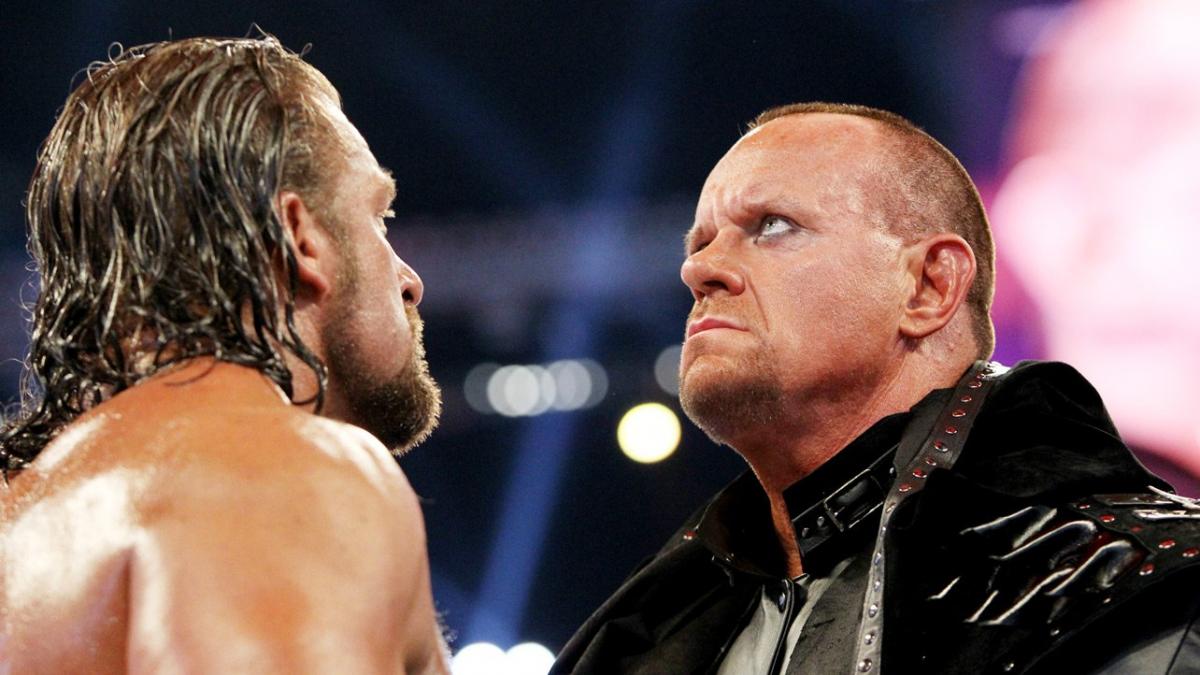
It wasn't just WrestleMania season, during which, from 2011 until very recently, the most important slots on the card were reserved by part-time nostalgia acts (in his 19-year association with WWE, Ziggler, a man who held gold on 15 separate occasions, never once worked a singles match at WrestleMania in front of fans). That was the big tell that you were a fool to invest in the rank-and-file all year 'round, but this mentality drove everything. The Gratitude Era performed talking head duties on the endless deluge of Attitude Era retrospectives produced by the WWE Network, recast as fawning marks. They were made to dress up as the Superstars of yore in dot com photo shoots, to wear the old classic titles that fans believed in more than the uglier participation trophies that were handed out to one and all as Vince failed completely to grasp the man-makes-the-title philosophy. The Attitude Era cast a shadow over everything on a macro and micro level. Ahead of WrestleMania XXVII in 2011, Triple H rather unhelpfully articulated the toxic mentality at the core of the company. He challenged the Undertaker to a match on the basis that there were no real challenges left in the back. "Not really".
Cody resented this, and rightly so. He was in the shadow of the Attitude Era to such a huge extent that he, as Stardust, was forced to cosplay as a character that had peaked well before that period had begun in earnest. He knew something needed to change, but change felt impossible.
His conviction drove that early Road To... promo, in which he deftly overlapped the mission statement of AEW with his own personal tale of the "prodigal son". This incredible promo was proof that wrestlers were far better at this sort of thing than some Hollywood failure of a writer. Cody had cut the fabled unscripted promo before AEW even landed on TNT. He had positively embarrassed WWE's approach to the brother versus brother story. An abysmal distraction finish versus an emotionally intense interview: that match was more of a bloodbath than the classic in Las Vegas.
In retrospect, much as Cody felt like a perennial midcard act at the time, it was clear that there was one thing holding Cody back from discovering the megastar within. Unfortunately for Cody, that one thing was the entity that monopolised pro wrestling and was the only viable place from which major money could be earned.
WWE broke a specific promise to Cody Rhodes in February 2016. He was told that, after WrestleMania, he’d revert to the Cody character. The death of his father in June 2015 rendered the Stardust act yet more untenable. He teased this direction on social media. He had new gear made. He was excited. It didn’t happen; Vince abandoned the idea and proceeded with the dead joke that was Stardust. An angry and determined but unfancied Rhodes left WWE outright.
In a long, since-deleted Twitter missive, he buried the writers, alleging that two unnamed key staffers, believed to be Ed Koskey and Ryan Ward, for “pretending to be on their clearly powered off laptop, barely listening to an idea I considered beneficial to more than one talent”. WWE is rarely framed as a pleasant place to work, but Christ almighty: the writers, allegedly, made the vintage “Let me just type that up on my invisible typewriter!” Simpsons bit a reality.
As was often the case, Cody showed infinitely more personality after he appeared on WWE television.
In the ultimate irony, Cody Rhodes cut his best promo under the WWE banner before he was contracted to WWE. In 2007, he spoke before Dusty was inducted into the Hall of Fame. His impassioned, composed, witty speech drew rave reviews. He was projected for super-stardom within the inside circles that knew he was, at that time, training down in Louisville. He’d never cut a promo in WWE that good again, at least until he returned in 2022 with much in the way of leverage. The difference is that, between 2007 and 2016, everything he said was written by some hack.
Cody had an idea to endear himself to the cynical, suspicious indie fanbase, and his total charm offensive worked to an extent that nobody could reasonably predict. He was humble. He knew what and who was hot, and while he shored up in TNA for a time, he was clever enough to not do a “TNA run” proper. Sensing the value in the “interloper” arc, he first wrote a list of names that he wanted to wrestle. Again, context is key here. There are very few forbidden doors left in 2024. The idea of an ex-WWE guy trying to mix it up with wrestlers you’d never see in WWE - the Young Bucks, Katsuyori Shibata - was a truly wild mish-mash of things eight years prior. Cody was an expert marketer; in his very first ploy as a true independent contractor, his mission statement, he made wrestling feel borderless and interesting.
Cody reinvented himself as the humble travelling babyface who thanked the top guys in the various promotions he worked, never stealing focus. He didn’t win the PWG World title, the WCPW World title. He was happy to be there or, more cynically, he was astute enough to not impose himself. He was very conscious about appearing like the entitled major league star bilking the promoter out of a payday. He played his indie run masterfully, and in ROH, he was incredibly over. Remarkably so; he still hadn’t mastered the timeless rhythms of his preferred in-ring approach, and seemed to be a step down from the workrate demigods that elevated the World title lineage. And yet, he was received as the superstar babyface in his win over beloved gatekeeper Christopher Daniels at the ROH Fifth Anniversary show on June 23, 2017. The charm offensive had worked.
Things were clicking - but New Japan Pro Wrestling was trickier.
CONT'D...
Cody wasn’t as great as the seminal crew of headline talent, who were either in their prime or, in the case of Hiroshi Tanahashi, even better for being a bit broken physically. He joined the Bullet Club Elite. In a masterstroke, he leaned into his self-aware dickhead jock bit.
In the ring, he had the right idea, but applied it in a way that was a bit on the nose. He sought to deprive fans of the reversal-blitz that was the vaunted NJPW in-ring standard - by stalling, mostly. It was a bit prelim heel, but he set himself apart nonetheless. He joined the cast of Being The Elite, and was the most earnestly funny part of it. He was a total arsehole of a narcissist. His tormenting of Flip Gordon was priceless. A very studious pro wrestler, his attempts to generate heat were far more effective on YouTube.
A heel only draws a performative strain of heat in the ring nowadays; if they cheat in some lousy finish or other, the blame is directed towards the booker. Cody, in the days of ‘Bullet Club is fine’, when he was attempting to fracture the group from within to launch his own career as a superstar with Elite back-up, knew how to torment the 21st century wrestling fan. He went after their t-shirts.
Cody threatened to change the iconic Bullet Club design, and as trivial as that may have seemed, he was really onto something. He deliberately tried to make the cool thing lame. His idea - to intentionally “nWo” the Bullet Club - was a masterstroke. A lot of people were genuinely upset about this tease before he unveiled a literal stitch of a punchline. The new Bullet Club logo was exactly the same, only with his blonde hair on top of the skull and his beloved cigars where the guns used to be. The Bullet Club was the in thing. The modern wrestling landscape is unrecognisable without the profound influence of that unit. Cody, who veered between babyface and heel a lot during this time, was exceptional in both roles. As a face, sort of but not really, he charmed the hard-to-please modern audience by slaughtering Disco Inferno - “Stop. You know nothing. You have drawn 0 dollars.” - on Twitter.
As a heel, he knew what was borderline sacred to his audience and his attempts to “destroy” it were all the better for his self-aware megalomania.
Who does Three Star Cody think he is, trying to make the Bullet Club his own?!
The ‘Three Star Cody’ tag didn’t shake for a while. Cody leaned into it, with the aforementioned stalling, but it wasn’t the long-term solution to the one thing that held him back from achieving true super-stardom. As effective as he was at drawing heat and sending Twitter into a meltdown, between 2016 and 2018, he never wrestled the true classic match that was necessary to be talked about as a Best In The World type.
At Double Or Nothing 2023, however, he drew the real stuff - but before AEW, there was All In - not that the two things were directly correlated. No one person was responsible for launching the unicorn that was AEW - the entity with which Cody changed wrestling for the better. The Young Bucks, through Being The Elite and an absolutely incredible, transgressive run across ROH and PWG, had revolutionised the merchandise revenue stream, parasocial meet-and-greet racket, and a means of telling very silly but undeniably, inordinately effective episodic stories on YouTube. They were instrumental in leading ROH to its commercial peak. Kenny Omega, through his masterpieces opposite Kazuchika Okada and his Alpha Vs. Omega match with Chris Jericho at NJPW Wrestle Kingdom 12, elevated the in-ring standard and proved that true big-time box office wrestling could exist beyond WWE’s purview. Tony Khan was the unicorn, who adored the range of great wrestling and could finance its major label debut, but it was Cody - a not inconsiderable draw himself - who dreamed the biggest. He knew that wrestling could be competitive and big-time all over again after two decades of oppressive monopoly rule.
In a moment of serendipity that changed wrestling forever, the Wrestling Observer’s Dave Meltzer was asked, on Twitter, whether ROH could ever draw a crowd in excess of 10,000 people. Driven by the Young Bucks and Cody, the promotion was hotter than it had ever been. Supercard of Honor XII drew a company record 6,100 to the Lakefront Arena on April 7, 2018 (albeit benefitting from the foot traffic of another huge WrestleMania Weekend).
“Not anytime soon,” Dave replied. Cody, insistent that wrestling simply didn’t have to be sh*t anymore - he saw the appetite for it - responded himself. “I’ll take that bet Dave.”
“This bet clearly was something Cody was serious about,” Matt Jackson wrote in the Young Bucks’ autobiography ‘Killing The Business’. “And he couldn’t get it out of his head”. When in discussions with then ROH Vice President of Operations Gary Juster - ROH ended up assisting with the budget and production, to their detriment, really, since the Elite had in effect elevated their own brand above it - the idea of the Sears Center in Chicago was floated as a potential venue. Cody immediately asked if it could hold 10,000 people; as Matt wrote in the book, Cody was “obsessed with that number”.
But why? Why five figures?
CONT'D...

Because 10,000 read significantly better than even 9,000, which would have been an incredible achievement. “10,000” felt like minimum for a big-time wrestling show - a romantic number, a number that acted as incontrovertible shorthand proof that non-WWE wrestling could be a viable concern.
The idea of a mainstream competitor was a remote possibility. For as long as cable TV wrestling had existed, the advertising industry had mocked it. That’s because, as you will be acutely aware, everybody in your life who doesn’t like wrestling simply cannot comprehend that you like it. Even those who don’t take the piss are simply in disbelief at your childish, fake, inexplicable hobby. Advertisers think you’re a dope - a poor dope who can’t afford what they’re selling to you - but then, so do doctors, accountants, locksmiths, office managers, retail assistants, travel consultants…
Wrestling’s primary obstacle has always been wrestling itself.
The shadowy formation of All Elite Wrestling actually predated All In, and it was Matt Jackson who first entertained the overtures made by the rich but unproven Tony Khan and his fanciful ‘World’s Best Wrestling’ project. The Elite’s brand was so strong that Khan had to successfully counter what was, at the time, an unprecedented WWE offer. Two years on from Cody’s WWE departure, everything had changed. Triple H offered Kenny Omega and the Young Bucks a main event salary, to bypass NXT entirely, and - this was the unprecedented bit - a no-catch clause in which, were they not happy with their creative after three months, they could leave. No questions asked. This had never been extended to anybody, and it’s an amusing self-own that Paul Levesque felt he had to insert this clause. By 2018, WWE was so atrocious that, by the end of the year, they had to apologise for it. This awful, antagonistic run of creative further opened up the market for All Elite Wrestling to strike the elusive - and virtually impossible - TV deal.
But it was All In - as uneven as it was, looking back - that acted as proof of concept for AEW, if it was not exactly a pilot. It was Cody’s baby - he’d actually spoken of running a major arena show before Meltzer rubbished the idea - and he stole it.
Powered by Being The Elite, All In laid bare that the WWE creative writers Cody had scorched on the way out were redundant. Unnecessary. Much of the storyline material that built towards All In has dated, and badly - one of the top matches was built around mocking the long-defunct WWE brand 205 Live, another was a story of sexual inadequacy featuring the disgraced Joey Ryan - but it captured the zeitgeist of the time. Cody was always a man out of time, and it’s his match that has truly stood its test. Kenny Omega Vs. Penta El Zero Miedo was an exhilarating and terrifying exhibition of movez-based violence, but it was below his best 2018 efforts. The Young Bucks and Kota Ibushi Vs. Rey Mysterio, Fénix and Bandido was state-of-the-art high-flying, a total rush, but it was truncated by Marty Scurll Vs. Kazuchika Okada, a match that both went too long and that nobody will remember fondly for reasons beyond the artistic.
Cody Vs. Nick Aldis was the match with which Cody discovered himself. He played the hero vying for what quite frankly was a joke of a title, one that was thrown to the ground by Shane Douglas as rubbish a quarter of a decade earlier and, beyond some rare magic in TNA, had stayed in the bin ever since. On the night, Cody elevated it. He elevated, of all things, the NWA World title in front of 10,451 fans, the most gathered at a US show not promoted by WWE since WCW died, in a very good match worked in an absorbing, timeless rhythm. Cody claimed in his departure letter to WWE in 2016 that he had specialised in turning chicken sh*t into chicken salad. Few believed him. He undeniably did that at All In.
September 1, 2018 was the night on which Cody Rhodes showed WWE that they had in fact missed something special by overlooking him. At a Starrcast panel preceding the event, Cody delighted fans with the famous “That referee was trying to f*ck on me!” story about Ted DiBiase, Jr. botching the finish of the “worst match” he’d ever been a part of. Cody with his wit and his gregarious ability to charm a room was the ideal figurehead of a revolution. With his ritual (and now ironic) take-downs of WWE, he was the partisan leader of the alternative party. The disillusioned fans who had drifted away from WWE - or who had for all intents and purposes been told to f*ck off by WWE - fell for his cutting jibes.
It was no surprise, then, that when AEW eventually formed, he was the fan’s hero - despite unveiling his masterpiece in the situational heel role at the inaugural Double Or Nothing. He bloodied Dustin Rhodes in Las Vegas to the extent that the canvas resembled the floor of an abattoir - a great aesthetic that both paid off the first great unscripted AEW promo and set the promotion apart, and how, from WWE. The match was at once scary - Dustin looked like he was losing far too much blood at an alarming rate - and, when Dustin shot his shoulder up from that when trapped in the figure-four, life-affirming. When Dustin whipped Cody’s bare arse cheeks in revenge for his condescending behaviour throughout, the fans completely lost it. This timeless blood-soaked drama reached stratospheric levels of emotion and gore. Wrestling was back. Cody again stole the show.
Unscripted promos, a waterfall of blood, exquisite use of the space between moves, old-fashioned slapstick comedy, fans legitimately crying in the stands: it took Cody one match to deliver what had been missing from mainstream wrestling in decades. He will leave the business infinitely better than he found it.
CONT'D...
Cody was so hot that, with all due respect to a super-solid pro, he worked a great programme with Shawn Spears subsequently. He was instrumental in doing the hard part in October 2019. Not to be too reductive about things, but any promoter can put together a great card of action. It’s harder now, since the indies have gone to sh*t, but you’ll see a high-calibre show over WrestleMania weekend with zero context without having to look too far. With that frankly absurd talent roster, anybody could book a great 2024 AEW pay-per-view - on the night.
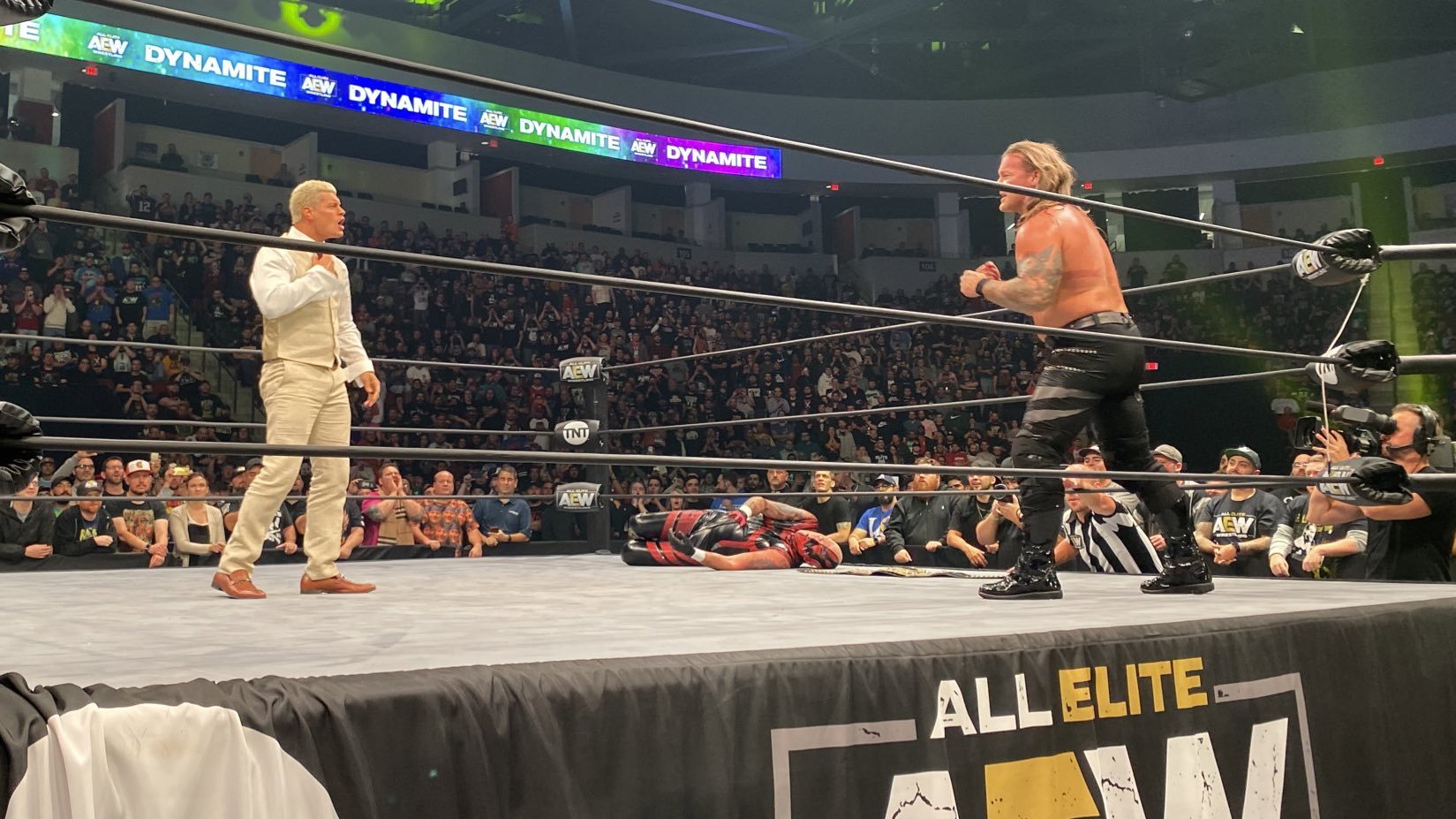
Cody Vs. Chris Jericho reached awesome extremes of emotion and entertainment value as the programme that launched Dynamite. It wasn’t just two wrestlers talking at one another for 20 minutes and taking it in turns to interfere in their matches. The angles were hot. The brawls were wild, funny. AEW reached the desired “sports-oriented” presentation with a pre-tape showing Cody in intense preparation for the Full Gear 2019 match; Chris Jericho subverted it with an inch-perfect parody. You could laugh at Cody and, when he cut the Ellis Island promo, run through brick walls for him. AEW badly needed this fantastic episodic thrust. The build to Full Gear was one of AEW’s tightest creative periods, Cody - then a part of the booking committee - again stole it.
AEW Dynamite launched on October 2, 2019. WWE debuted SmackDown on Fox 48 hours later. Brock Lesnar beat Kofi Kingston in 10 seconds on that show. Cody will leave the business infinitely better than he found it.
It went badly in AEW for Cody after that. The MJF feud was more exceptional linear television - the grand anticipation of Taz Vs. Sabu, but with a near-perfect traditional babyface versus heel dynamic - but the neck tattoo Cody got inked stole focus from the blow-off match at Revolution 2020. Then the pandemic happened. His work as TNT champion was remarkable, and it says a lot about his incredible ability to play a puro-influenced Ace figure that he was miscast in a role that got Eddie Kingston and Ricky Starks hired. He was simply a better babyface - that much is new window-clear now - and he probably accelerated through too many ideas in his first year.
Still, his legacy in AEW will be felt as long as the promotion exists. Every single week, AEW attempts to give a young talent some sort of rub. Every week, you’ll see a competitive television match between an established top star and an opponent well below their level. It’s Chris Jericho’s entire modus operandi - but has anybody done as good a job with that philosophy as Cody did with Darby Allin?
The Codyverse was overstated, in that the ‘Jerichoverse’ is a “thing” now. With too stacked a roster, a name wrestler often does some totally bizarre side quest or other.
(Jericho is currently a canonical vampire whose character seeks out young blood to suck in between cosplaying as himself in Mexico when working wrestlers from CMLL. It’s weird! Steve Austin didn’t become Stunning again when the Invasion happened.)
Cody was blamed for this when Tony Khan had primarily booked the product since January 1, 2020.
A personal issue that hasn’t been public ultimately drove Cody’s shocking jump back to WWE, but knowing what you know about his sense of drive and ambition, he couldn’t have been ecstatic about being supplanted, in effect, by CM Punk and Bryan Danielson.
Consider the various peaks of AEW and contrast them with WWE’s lows. Stadium Stampede I versus WWE’s cinematic Money In The Bank match. AEW listening to the fans and reorienting the Dark Order versus WWE persevering with Roman Reigns: Big Dog for half a decade. AEW Sting Vs. WWE Sting.
An alternate universe of US pro wrestling without Cody’s influence over it does not bear thinking about.
AEW is a unicorn of an entity. It shouldn’t exist. The biases against the art within the TV and advertising world make the most repugnant bad faith trolls look like “AEWsexuals” in comparison - and the opinions of advertisers actually count. There’s no social media bubble there; TV and advertising are financial oxygen to AEW and WWE.
The idea of a billionaire enjoying Mid-South Wrestling and striking a deal with Warner and getting Nick Gage on TNT just doesn’t happen, but it did.
CONT'D...
AEW should not exist. The odds on it are so vastly improbable. The exact conditions that converged to create it were as improbable as they were perfect. It is a fever dream made real, and it was Cody who dreamed of a movement big enough to fill 10,000 seats. None of this is to undermine what was very much a team effort. None of it happens if Kenny Omega doesn’t convince enough people that he has wrestled the best match ever. It probably doesn’t happen if Chris Jericho - who in 2019 was on career form - acts as the bridge leading curious viewers into a new phase of their fandom. It doesn’t happen if the Young Bucks don’t positively humiliate the mainstream with their outmoded ideas of how to get over and how to work. Dynamite might not go as well if Jon Moxley doesn’t portray AEW as the cool place over which to jump.
Hell, as Matthew Jackson himself said, his father deserves a credit: none of this happens if he didn’t build a ring for his boys when they were too obsessed with wrestling to concentrate on their studies. It was Cody however who refused to believe that 6,000 fans in one building was big enough.
It is no exaggeration whatsoever to state that the idea of WWE ever getting good or worthwhile again was just as - if not more - fantastical. The rejuvenation of WWE, honestly, is as improbable as AEW’s formation.
WWE between 2017 and 2021 was wretched, and if that scans as “AEW bias”, it isn’t. WWE itself apologised for how dismal it was on its own programming. WWE in that period was a place in which careers and fan investment died. Roman Reigns being smothered in dog food. The Revival scooting across the canvas as if they were threadworm-afflicted canines. Mojo Rawley screaming into a mirror with his face looking like Luna Vachon for some reason and then doing nothing. Lars Sullivan cutting promos with his shirt off for no reason and then doing nothing. Virtually every ‘Superstar’ on the roster doing some insane bullsh*t and saying the worst, most inauthentic dialogue you’ve ever heard in your life - and then doing nothing. Bad. Historically, unacceptably bad.
WWE was handily defeating AEW before Cody returned, and the brilliant repackage of the Tribal Chief Roman Reigns character cannot go understated, but Cody was great in WWE before Vince McMahon mercifully left and is drawing huge houses now he’s gone. He is a true emotional, believable figure who can smash through the synthetic presentation and make you feel something. His matches are timeless, universal experiences that play to the back row as well as the first. He has the fire, the sincerity, the sheer goodness to be the leading man. Finally, after years of awful indentured stand-up comics, WWE has a top guy who knows how sh*te the patter was and can get away with calling it out.
Cody Rhodes has made two promotions reach peaks - one that shouldn’t exist and one that had no artistic right to exist - and is the common denominator.
This is why so many fans are desperate to see him win the big one.
Even if he somehow doesn’t finish the story, the story he has already told since 2016 is the most compelling and necessary story in the modern history of pro wrestling.
Nobody across the 21st century deserves it more.