The Disturbing Truth Behind WWE's Royal Rumble 14 Curse
Curse or coincidence?
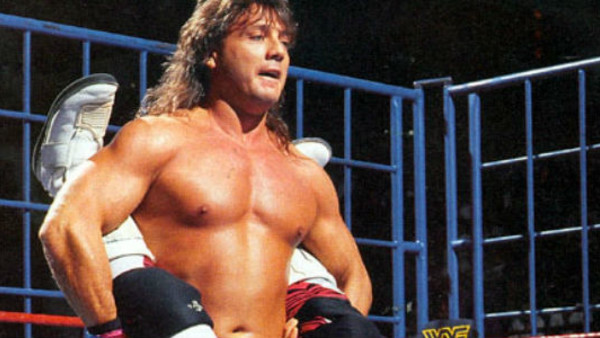
It’s almost morbidly funny, the fact that the number 14 is more unlucky in WWE lore than the number 13.
Everything has to be one bigger, one better. Everything is barked with such blistering carny conviction. Monday Night RAW is the longest-running weekly episodic television show of all time! WWE Evolution is the first-ever all-women’s pay-per-view! The number 14 is unluckier than the number 13! In Royal Rumble mythology, the number 14 is an unluckier draw than 13, or even one or two. Drawing number 14 spells a fate worse than that of Santino Marella, or the fate that would have befallen Titus O’Neil, were he not so bad at even being bad.
We begin our chronological exploration into the so-called Royal Rumble curse with 1988, since the secret, experimental 1987 Rumble featured just 12 competitors.
Drawing #14 that year was ‘The Outlaw’ Ron Bass, who did not succumb to it; enjoying a rare, happy wrestling retirement—retiring as many do to the golf courses of Florida—Bass passed away in 2017 at the age of 68.
One year later, Rocker Marty Jannetty drew #14 from the golden tumbler, but took the silver podium in his singles career, and became—despite dissenting voices who knew him to be an excellent babyface in his own right—the punchline to too many “you’re not as talented as your bonafide legend of a tag team partner” jokes. Personally, too, Jannetty couldn’t escape a life lived at midnight, later becoming the butt of a far darker joke, provided you believe the man was “hacked”: he wanted to put his biological daughter in the Rocker Dropper.
CONT'D...(1 of 5)

In 1990, Haku drew #14. Nobody is going to f*ck with Haku, not even a voodoo witchdoctor. He was fine.
A year later, the British Bulldog emerged from that slot, and a year after that announced himself as the biggest drawing card in all of pro wrestling. Beyond his peak, Bulldog contested several more outstanding matches—that European Championship final of 1997 is the most characterful technical bout in WWE history, surely—but departed this life in 2002, at too young an age, as another sad casualty of wrestling’s steroid-laden past.
In the same year Bulldog headlined Wembley Stadium, 1992, Hercules drew #14. He died two years after Davey Boy Smith, struck down by the same over-worked organ. 1993 meanwhile saw the Berserker occupy what was a doomed number lurking in plain sight—but he only faded from mainstream relevance after his unremarkable WWF stint ended that very same year. This becomes a theme.
By 1994, the man behind the clown mask of Doink had changed from the brilliantly sinister Matt Borne to the broad and unfunny Ray Apollo, who wasn’t so much doomed by a curse as much as a patently difficult gimmick only his predecessor could pull off. Like the Berserker, Jacob Blu (1995) was gone by the end of the year. He lasted a lot longer than Doug Gilbert in 1996, making his only appearance for the company. A few short years later, Gilbert cursed Jerry Lawler’s integrity with a… troublesome revelation. Or lie.
Goldust, one of the most enduring characters and men in all of wrestling, endured personal hell in the years following 1997. Ken Shamrock, in 1998, escaped the curse. Kurrgan transitioned into a respectable acting career, having been about as good a fit for the in-ring as Jonathan Coachman was to the commentary booth. Bob Backlund (2000) went certifiably insane. The Goodfather (2001) had already been cursed to lose his riches by the PTC. Diamond Dallas Page (2002) needed no cursing; either; he probably did enough of his own, under his breath, during his catastrophic programme with the Undertaker.
CONT'D...(2 of 5)

Eddie Guerrero (2003) returns us to far more harrowing territory. The fast lane of personal excess and painstaking professional sacrifice robbed us of his Lying, Cheating, Stealing brilliance two years later. Rikishi (2004), years removed from the fame he did so well to grab, also left WWE that same year. The curse became a veritable P45.
Orlando Jordan (2005), known as the second-worst United States Champion ever, behind Dean Ambrose, was released the next year. Joey Mercury (2006) also fell victim to the curse, which manifested, sickeningly, as an exploded face in a December TLC match. Jeff Hardy (2007) fell victim to—and overcame—and fell victim to—and overcame—the curse. Umaga (2008) passed away the very next year. Finlay (2009), hard as f*ck in-ring talent and revolutionary, progressive road agent, was released from his latter role in 2011 after booking an anti-American angle on a house show.
MVP (2010), having already quite literally pissed his career away, was released later that same year—but did enjoy an influential NJPW run, impressing officials so much that they created the Intercontinental Title for him. Chris Masters (2011) followed this pattern (not the New Japan bit). Jinder Mahal (2012) left two years later, returning in 2016, sadly, to ruin the prestige of the WWE Championship. Rey Mysterio (2013) was booed out of the f*cking building by virtue of not being Daniel Bryan a year later. Kevin Nash (2014) had a public, physical falling out with his son. Diamond Dallas Page returned in the same nostalgia slot (2015) in a Rumble that itself was cursed. DDP also received a diagnosis of a rare breathing disorder (subglottic stenosis) shortly thereafter.
Stardust (2016) cursed WWE by leaving of his own volition that year, and developing a brand perhaps strong enough to challenge WWE. Kofi Kingston (2017) suffered an ankle injury just months later, requiring surgery.
CONT'D...(3 of 5)

In a wonderful meta development, fan favourite and eventual winner Shinsuke Nakamura drew #14 in the Men’s Rumble of 2018. This was telling, given the wider theme of a match that threatened to monumentally piss the smartened-up fans off. Yielding a winner from the #14 slot for the first time in Rumble history, this spot of manipulative booking bled into a finishing sequence pitched perfectly to make us think we were in for another, infuriating continuation of the Roman Reigns push. But no: the King of Strong Style broke the curse…
…but then fell victim to it months later by losing his prize match at WrestleMania 34, losing also the wider feud, and Dean Ambrose-ing the United States title consolation he was given for what, it transpires, was no reason at all.
We can deduce, given the manipulative theme of the 2018 Men’s match, that WWE at some point became aware of the curse—and used it to prey on our fragile, but our favourites never get to win! emotions.
But for how long? How long have WWE been aware of the curse first put forth by old school wrestling columnist Sheepster in 2004? “Anything to fit a narrative,” was the reasoning behind a column designed to prove that statistics, in turn, can be used to prove anything. But, since 2004, the so-called curse has mutated to an extent that, one could argue, WWE has even acknowledged it within its own universe.
Given WWE’s history of cruel and unusual punishment, the curse, since 2004, appears to have manifested as a cruel rib of sorts. If a wrestler’s name was on the chopping block, that wrestler drew #14. Perhaps it was a way of undermining job security before the chop, if we’re cynical. Or perhaps we can apply a narrative to anything, if we’re honest.
But before that?
CONT'D...(4 of 5)

What of the deaths, the various departures stemming from substance abuse?
Bluntly, wrestling was once a harrowing industry that enabled—encouraged—its workers to inject steroids into their flesh purely to stand a chance of making it in Vince McMahon’s big time of the 1980s. Several, several more pro wrestlers from that period died from the long-term effects of steroid abuse, in addition to all manner of substance addiction. They didn’t need to pretend to draw a number from a tumbler, much less the number 14.
Ultimately, of course, drawing the dreaded number 14 is incidental to the fate of a superstar’s career. Notice how the cursed number falls one shy of dead centre: it’s not 1, 2, 27 or 30, numbers reserved for the athletic, crowd favourite iron men or sudden death game-changers. It is a number drawn far more often than not by the rank and file, who run to the ring to pad out the bloated middle act of an hour-long epic. Number 14 gets eliminated by a heavily-pushed prospect (Rusev 2015, Roman Reigns 2014), the field-destroying behemoth (Great Khali 2012, Kane 2009), or the megastar (Batista 2008, Edge 2007). Those who draw #14 are inherently down on their luck; the performer shapes the number, not the other way ‘round.
The truth is that there is no curse, but rather a series of unfortunate events—tragic, in many cases. But again: that is wrestling. The real disturbing truth is that this great hobby, to paraphrase Tony Schiavone, used to be awful.
Happily, at a push, it’s merely very cruel now.