The Simple Solution To AEW's Biggest Problem
It takes a good doctor to treat an unhealthy division.
All Elite Wrestling's seeds were sown long before the Double Or Nothing rally on 8 January 2019, but that was when the promotion planted its flag into the monopolised American wrestling market's crust.
Executive Vice Presidents Cody and The Young Bucks outlined an alternative product seemingly designed to recapture lapsed fans and create new ones, with meaningful wins and losses, a purported "real sport feel", a two-way audience/company relationship, and other DNA strands forming AEW's identity. Bold statements, but they worked: existing Elite supporters who'd followed them through ROH, NJPW, and beyond were energised alongside those left disaffected by almost 20 years of WWE dominance.
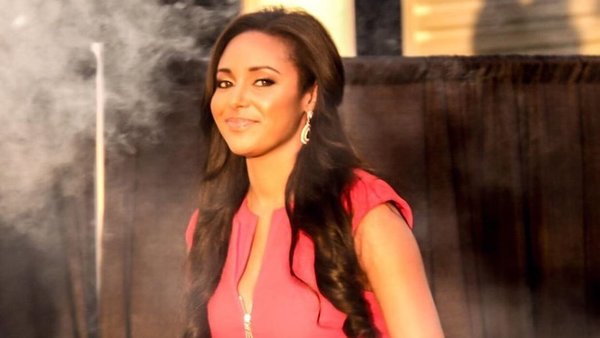
Brandi Rhodes spoke on AEW's women's division. The Chief Brand Officer wanted to build a strong scene with "the best female wrestlers in the entire world." A wide net would be cast to secure top global talent, women would be paid equal to the men depending on card position, and Britt Baker was introduced as the division's first signing, though other details were scarce. "More on that to come," Rhodes said of discussions with "some of the top Japanese wrestlers in the world."
22 months later, Rhodes' ambitions are yet to be realised onscreen. Dozens of talented, exciting, and hard-working women have competed for AEW, though they are hamstrung by a lack of weekly screentime and slipshod presentation, giving the impression they are an afterthought to the bookers. Hikaru Shida and Nyla Rose's Full Gear "feud" is a prime example of this: prior to the go-home show, AEW spent just 3:02 of television time building this programme, 2:30 of which was on Dark, the YouTube series. Other storylines have suffered similarly, though this is the worst instance.
That NXT does such a sterling job with its own women's division means AEW's criticism is often amplified, though much of it is warranted. This is not the division fans were told to expect on 8 January - and the numbers tell a grim story too.
CONT'd...

Dynamite's quarter-hour viewing figures paint a picture as damning as any fair, subjective criticism.
AEW aired 13 regular two-hour shows on TNT in August, September, and October. Quarter-hours featuring women's matches lost an average of just over 43,000 viewers during this three-month period (h/t the Wrestling Observer Newsletter for the data). Meanwhile, on the other channel, NXT's women gained around 4,000 viewers, though the likes of 28 October's Io Shirai vs. Candice LeRae peaked higher than anything AEW could muster.
Quarter-hour numbers are an imperfect metric as most 15-minute windows aren't solely dedicated to women's segments (particularly in AEW, where the division's rank-and-file matches run shorter). Other matches and segments within those periods skew the ratings. Regardless, it is possible to deduce that to an extent, these bouts are prompting people to change the channel.
This is an objective problem.
The data tells us that the talents are not being received as stars. For the most part, they aren't pulling viewers in from elsewhere. This is a systematic failure. When you fail to build wrestlers up in ways that present them as big deals, it becomes harder for audiences to take them as such.
Fixing this should be a priority.
CONT'd...

How does AEW "fix this"?
Increased screentime is a popular answer. This brings the short-term quandary of risking bigger viewership dips, as it stands to reason that presenting more of what people are tuning out of could worsen the situation, least temporarily. Still, it is beyond reproach that these wrestlers need more than the average 06:30 of ring-time they received on regular two-hour episodes of Dynamite in August, September, and October. They cannot be expected to grow, develop, build connections with the audience, and become drawing television attractions when opportunities to do so are so thin.
Another problem is that many wrestlers in this division are still green, and handing them increased television time risks exposing them. Smart booking would make this a non-issue. There's nothing green about Hikaru Shida, Serena Deeb, or the absent Shanna between the ropes, while the developing Nyla Rose and Penelope Ford are capable of bursts of excellence, and Anna Jay is yet to put a foot wrong (despite being the least experienced person on the roster). These are the people to feature at the forefront while the likes of Tay Conti and Big Swole are seasoned.
At the centre of all of this should be the division's new franchise player. The only women's wrestler in AEW, in fact, whose quarter-hours sparked increases in viewership throughout October...
CONT'd...

It's time for AEW to call the doctor.
Britt Baker was the only female wrestler introduced at AEW's January 2019 launch event. Everything about her presentation told viewers that the promotion saw her as a potential centrepiece, from her involvement in future press events to the way she was packaged on television months later, including the "Brittsburgh" celebration when Dynamite hit her Pennsylvanian hometown on 23 October 2019.
A report from the Wrestling Observer's Dave Meltzer emerged earlier this week, noting that AEW had originally intended on pushing Baker as the division's top babyface star. This changed, obviously, and AEW went with Hikaru Shida (who relocated from Japan to the United States after being signed).
More on Shida later, but pivoting away from Baker after those first few months was probably the right decision. Her babyface character wasn't connecting. Although promo skills were a reported reason behind her initial franchise player pitch, Britt rarely came off confident in her infrequent speaking roles and was inconsistent between the ropes as well, struggling with the likes of Bea Priestley. Long story short: the character wasn't hitting her.
An early rocket push wouldn't have worked out. Months later, the story couldn't be more different.
CONT'd...

Britt Baker has been one of AEW's most well-defined and consistent television performers since turning heel in January 2020.
The move resulted in an instant upturn in fortunes for Baker, whose performances seemingly became more assured overnight. Prickly, gloating promos and increasingly nasty ring work (remember the night she took glee in knocking Yuka Sakazaki's tooth out?) drew real, passionate heat, and Tony Schiavone became a sympathetic perfect foil for her bullying. The veteran announcer is amongst the most wholesome people in AEW. Everybody loves him. Baker's biggest browbeatings of the 62-year-old were the equivalent of somebody mugging your lovely uncle on his morning grocery run.
A knee injury suffered in May should have derailed this train, but no. From her wheelchair, and with Reba by her side, Baker delivered a week-to-week masterclass on how to stay relevant without being able to wrestle. If anything, her strength of character increased. Britt became increasingly obnoxious, deluded, entitled, and paranoid as she delivered her Rules of Being a Role Model, unrivalled conspiracy theories, and warred with Big Swole, and while the end result was All Out’s panned Tooth and Nail cinematic match, Britt perfected her onscreen persona during this period.
Finally, a personality strong enough to push the division forward had emerged and this, primarily, is why it’s time for her to take the throne.
The entire division has suffered from a chronic lack of character development. Shida is the perfect example of this, as while most would agree on the Full Metal Champion’s bell-to-bell pedigree, her personality has never been expanded beyond what she’s able to show in the ring. Elsewhere, Nyla Rose has a potentially useful manager in Vickie Guerrero, though the duo are rarely given promo time. Penelope Ford barely says a word. Going further back, Riho’s character was scarcely expanded outside the ring, while Kris Statlander’s development never went beyond the word “alien”.
Britt Baker, therefore, is an anomaly; an anomaly that must now become the norm.
CONT’d…
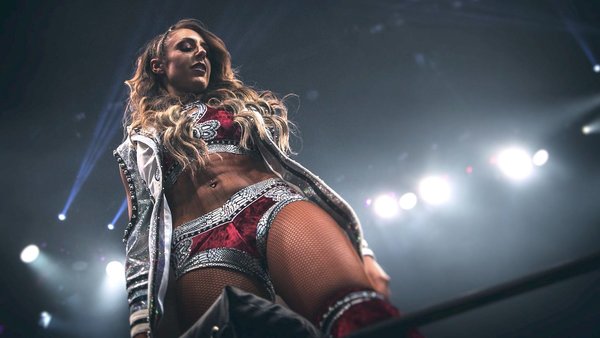
While “fixing” the AEW women’s division isn’t as simple as Tony Khan clicking his fingers and strapping Britt Baker, moving forward with the scene’s best talker and biggest character represents a clear break from how it has been presented since Riho bested Nyla Rose in the first Women’s World Championship match.
At the original All Out, AEW chose its strongest male personality, Chris Jericho, to carry the men’s belt for its first few months. Let’s try that with a dentist now.
It must be stated that none of what has been said in this editorial is a shot at the wrestlers, who aren’t responsible for what has happened here. From developing prospects like Tay Conti to Shida, the longest-reigning champion, there is a lot of talent within this group - and more than enough to build a division that drives viewership in a positive direction while satisfying creatively.
The proposed solution isn’t complicated. It’ll take a lot of work, and perhaps enduring a few viewership storms, but it isn’t complicated.
Having a lacklustre women’s division isn’t good enough in 2020, particularly when AEW’s direct competition is doing such an impressive job of pushing, presenting, and promoting a scene that stands as the jewel in a black and gold crown. Even if it isn’t considered one behind the scenes, NXT’s division makes AEW’s feel like a booking footnote.
Putting Britt Baker at the centre of a rebuilt framework may help make this problem go away.