The True Story Behind John Cena's WWE Heel Turn
WrestleMania 36 gave us a glimpse of what could have been.

WrestleMania 36 wasn't just, ahem, too big for one night, but it was apparently also too big for a single (WWE) universe.
One of the unquestionable highlights of an otherwise subdued part two of the stripped-down supershow was a positively barmy Firefly Fun House contest, in which John Cena confronted both his fears and his past. It also gave long-term fans a glimpse into an alternate reality many hoped for, but which never came to fruition.
At one point in the madcap match, which saw Cena run the gamut of a tight-trunked Kurt Angle-challenging upstart, chain-laden rapper rejecting Ruthless Aggression and an '80s throwback every bit the caricature he became, the feed cut away to the opening credits of WCW's Monday Nitro. Shortly after, Bray - bedecked in the colours of the nWo Wolfpac - channeled Eric Bischoff in introducing the coolest cat in all of wrestling: 'Hollywood' John.
The Face never Ran the Place down in Atlanta, GA - he was but a UPW pup when the Monday Night Wars reached their ceasefire - so this was obviously a reference to The Prototype's pray-saying, vitamin-eating prototype, Hulk Hogan - albeit a version of Hogan Cena crucially never mimicked.
That was the point. In 1996, Hogan, a perennial babyface for much of his mainstream career and the industry's key needle mover, did the unspeakable and the unthinkable when he traded his defining clean-cut persona for the dark side. In one fell swoop, a hitherto unimaginable heel turn established the New World Order (or 'New World Organisation', as he fumbled during his Bash at the Beach promo), and immediately injected WCW with a degree of cool Titan Towers' meteorologists could only dream of.
Continued on next page...

Hogan swapping yellow for black had never seemed likely, but it was a necessity. The character young children had once idolised no longer resonated now they were entering teenhood, particularly with the lingering stench of familiarity and Federal investigation. The Hulkster might have been 42 when he made his beachside betrayal, but his wrestling age was instantly reset to zero. The novelty meant four additional years of relevance and remuneration.
Coincidentally, John Cena is 42. Wyatt's tease, though it likely went over the heads of neophytes at home, was designed to draw direct parallels between the arcs of two cross-generational WWE totems. The key difference - and the crux of the skit - was that, despite facing even more vociferous rejection during his unceasing time on top, the number one hero never once dipped his heel in the river of heeldom. The implicit message in the Hogan comparison was: "you should have done what fans demanded years ago, for the sake of your audience if not yourself."
Of course, there was no hint of selflessness in Hogan's switch; dying his goatee wasn't a prelude to ushering in the next era of WCW superstars, but a way of setting scythe to hay whilst the sun shined. The winds of wrestling had shifted, and Hulk was going to make damn sure the sails of his gravy boat pointed in the right direction. His cohorts soon jumped on, riding coattails as they'd done in the '80s heyday.
It made perfect sense for Hogan to take the New World Order route. Though Cena's Superman schtick was loathed by a subset of WWE's audience in a similar manner - particularly his propensity to prevail against all the odds time and time again - the same solution was simply never prudent. It may have satisfied a portion of the fanbase tired of a single man dominating the product, but there were precisely zero business reasons for John to abandon his key ethos of loyalty and respect. The face of WWE was still an icon to a demographic not angrily tapping away on Twitter: children. Learning how to withpart parents of their money has long been the goal of many entertainment avenues. Having cracked it, WWE weren't about to sacrifice their primary merchandise mover.
Continued on next page...
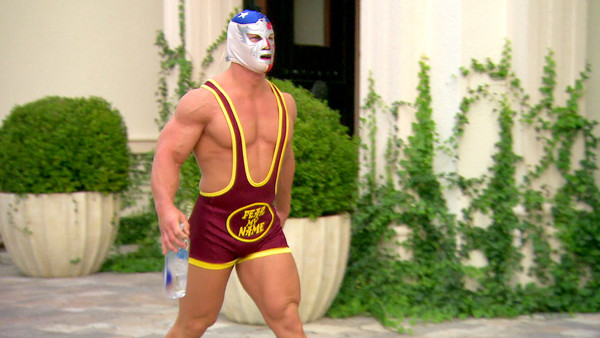
The closest we ever came to seeing Big Bad John before Sunday night was way back in 2011. News of a new WWE trademark circulated, protecting the phrase 'Fear my name'. Nothing sprung from this, but rumours began that it applied to Cena, who Vince McMahon was prepping for a turn. Apparently, attire bearing the slogan had even been manufactured - as later confirmed by an episode of Total Divas, during which John had then-belle Nikki Bella in stitches with the get-up. Cena later corroborated the story during a WWE Network podcast opposite Chris Jericho, telling Y2J that turning heel would have supplemented his feud with The Rock.
Vince McMahon's change of heart on the change of character occurred when the penny dropped on just how many pennies he'd be dropped by doing so. As the Wrestling Observer's Dave Meltzer tells the story, McMahon decided at the 11th hour that the idea was "f*cking stupid", and promptly declared there and then that Cena would be babyface forever. Period.
The irony of Bray Wyatt's nWo rib is that the decision, ultimately, was never John's. The delicious truth, to the chagrin of fans who once bayed for his blood, is that turning heel has long been an ambition of his. Whilst promoting his latest Hollywood action vehicle Bumblebee in 2018, Cena - playing a rotter in the flick - admitted he'd love to have played a rotter in the ring. "There are creative feelings inside me that would like to be a bad guy on WWE, but that ain't gonna happen because that's not my job," he told Chris Van Vliet. "My job is to be who I am, and that comes from Vince."
Maybe that was the point of the final part of this little sketch, which saw a marionette of WWE's chairman wryly describe Hollywood Cena's emergence as "such good sh*t". Had this ever actually happened, it's like McMahon, aghast at the hole in his bank balance, would have dropped the superlative.