THIS Is The Exact Reason Wrestling Will Never Get Big Again
As you once knew it. All Elite Wrestling is the only hope the industry has left...

Pro wrestling is a paradox of an industry. It is a predetermined art form that asks, or used to ask, its audience to take it very earnestly.
Reductively, the old model played on a strict babyface versus heel dynamic. The heel would beat the sh*t out of the babyface or otherwise f*ck him over in disqualification finishes before the hero would triumph in the big town for the big gate. It was A-grade carny fare effective for its time (which makes it all the more batsh*t that WWE goes back to the DQ over and over again in the 21st century). The people were more earnest back then. No adult ever truly bought that wrestling was real, but they were more inclined to believe in it. The psychological complexion of the general public was simply more susceptible to the worked machinations of the industry, and indeed fictional in a general sense. Numbed into submission by wave upon wave of harrowing real-world events, the entertainment medium itself has lost the power to shock and outrage the average person. The old boogeymen - Eminem, Marilyn Manson et al. - feel positively quaint in 2020.
That which used to drive pro wrestling - the big heat angle - is untenable now. The potential pro wrestling fan won't feel it. The existing hardcore fan cannot ever feel it in the same way because they are too far beyond the looking glass. It's another extension of the paradox; even the very best heat angles don't work because our understanding of the craft is such that, ironically, we respect the heel's work. To elicit even an emulation of the old feeling is such an impressive achievement that one can only applaud the talent we are meant to loathe.
CONT'D...(1 of 6)

There's a lot of playing along in 21st century pro wrestling. The same is true of any TV show or movie, but then, the best TV shows and movies are more worthy than professional wrestling. Great wrestling is better than anything. That's why we're here. But the medium does not lend itself to the rich layers of storytelling that draws people to the wider entertainment sphere. Wrestling - or what we know it to be - cannot grow.
Bill Watts penned the template of North American episodic wrestling television at the helm of Mid-South Wrestling in the 1980s, and it was awesome: rich in continuity and week-to-week intrigue, his innovation transcended the old model. The audience were there for the full ride, not just the cycle.
In 1998, Vince Russo rewrote the template, and that was awesome, too, at least when it peaked. Sensing that the old heat angle was dead, Russo instead built his TV product around the entertainment machine that was Stone Cold Steve Austin. Austin wasn't victim to relentless heat angles. He was the whip-smart piss-funny ass-kicker who got one over Mr. McMahon almost every time, often, by commandeering a police vehicle, on the very same show he was thought foiled. The Mr. McMahon character was the ultimate love-to-hate figure. Nobody earnestly hated him. Nobody rioted when he sent Austin to jail. He played the panto villain to hammed-up perfection because he knew how best to get the Austin character over. Entertainment had replaced emotion.
In 2020, the big-time pro wrestling match is sold more on its potential quality than raw emotion. This MOTY-chasing mentality annoys the old school fan, but it exists for a stark reason. The old way is dead, and it can never be resuscitated. There has to be a new way. And perhaps, at their very best, All Elite Wrestling is paving the way forward.
CONT'D...(2 of 6)

That's not to say AEW does not excel at the basics. The Jon Moxley/Eddie Kingston face-off from the Full Gear go-home show was an incredible piece of business; Kingston is incredible at projecting the very real emotion he feels, and between them, the two men arrived at the perfect plot device to drive the emotion and cast doubt over the outcome of the match: how could Eddie Kingston quit, when he promised his own mother he wouldn't?
This was the essence of pro wrestling: two alphas, one desperate, one dominant, selling you on a match with the promise of violence and drama.
But it was an aberration informed by something that cannot be replicated in fiction: Kingston's long, 18-year struggle to reach this moment. In this new world, in which real talent can no longer be ignored - because mainstream wrestling is no longer driven by an autocrat with a cosmetic bias - you won't see that again, either.
AEW does the heat angle, and does it very well. Taz will choke out Cody Rhodes, Mr. Brodie Lee will hospitalise him. And those angles are great, but they're of a classical stripe that, no matter how great they are, can't make all of this big again. You could not dream of creating a better babyface World Champion than Jon Moxley. He's the greatest. He is a man you'd love to be: loyal, hard, funny, authentic, drenched in earthy charisma. He came from nothing and only wanted everything to buy his mother a house. But for whatever reason - WWE siphoning the audience, the atomisation of pop culture making reach hard, if not impossible - he's only a sizeable draw relative to the industry. Perhaps it's a medium problem, and not a star problem.
We have heard the echoes of Vince Russo's vision on WWE TV for two entire decades. Here's something. The stans won't like it, but it's the truth.
CONT'D...(3 of 6)

Even if the wrestling itself is great - and we don't see anywhere near enough of that, given the resources at WWE's disposal - the television is rotten. And it's not just the appalling lack of continuity.
An average-to-solid, relatively coherent episode of Monday Night RAW is still, by the wider standards of fiction, absolute dreck. The dialogue is horrendously artificial; the situational, impromptu and convenient approach to matchmaking is impossible take seriously, even in a heightened reality; there is no reliable framework that develops any sort of meaning or traceable investment, and as result, there exists an infinite loop of plot holes.
A good work of fiction encourages its audience to ask questions; every week, as a matter of ritual, WWE asks its audience to question why they are watching.
AEW is different. AEW has embraced a new and far more sophisticated storytelling approach that no longer relies on the old dynamic and emotion. Consider the awesome Jon Moxley and Kenny Omega contract signing from this week's Dynamite. After Omega put down Mox's family, which you do not do, Mox laid him out with the Paradigm Shift right on his crown and on the AEW World Title. There was tremendous symmetry to this angle. Contrast it with the Dynamite premiere: on October 2, 2019, Mox dropped Omega with the same finisher on the glass table. The symbolism here, and what it said of the character development in the interim, was astounding.
CONT'D...(4 of 6)

Mox isn't the artless death match wrestler Omega negs him to be. He is the World Champion.
The use of symbolism and symmetry to illustrate the dramatic heft of their journeys was the sort of attentive long-term booking flex that has created a base of rabid diehards. Perhaps, in time, this approach may yet rehabilitate the perception of professional wrestling - known as the dumb, fake sh*t you are weird not to have outgrown - to something artful.
AEW has mined a new strain of emotion with the superb Hangman Page arc. This is all very far removed from mere sympathy through injury; Page, like many of us, is struggling. Much like the fake optics of social media reduce our sense of self-worth, Page, a relatable figure, does not feel elite. He is anxious. His own, worthy victories - he is a record-reigning World Tag Team Champion - feel diminished, just like our nice enough lives don't hold up to the worked Instagram glamour of your old peers. Hangman Page is mapping a tale of mental health. It's a level of vulnerability pro wrestling has never embraced because it's so antithetical to the old archetypes.
Something as complex as this, again, might elevate the industry beyond its old, goodies against baddies childlike stigma.
CONT'D...(5 of 6)
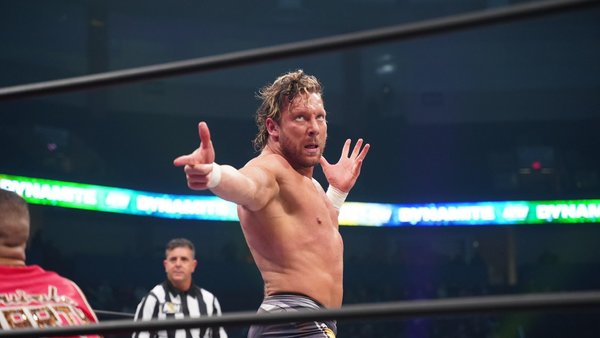
Popular modern storytelling franchises - Game of Thrones, the Marvel Cinematic Universe - build and build the heft and meticulously arrange the moving parts so that the events form this incredible emotional core. The intricate booking through which AEW has arrived at Omega and The Young Bucks capturing gold - leaving Hangman shattered enough by his failures that he seeks solace in the Dark Order - transcends most everything ever seen in wrestling. There's a deft majesty to the long-term picture. Just consider those moving parts, and how AEW has arrived at this chapter of the Elite saga without ever comprising the individual beats on the journey.
If pro wrestling is a growth industry, and it is, analysing pre-pandemic data beyond WWE - the gains are marginal. The wrestling we grew up on - and persevered with - is an echo of itself. The industry needs new noise, and AEW are making it. AEW might not become this mainstream concern that changes the perception of professional wrestling.
But if any promotion ever does, it will borrow heavily from this new set of blueprints.