Vince McMahon's 20 Biggest Real-Life Feuds

Who had the grapefruits to take on Vince McMahon?
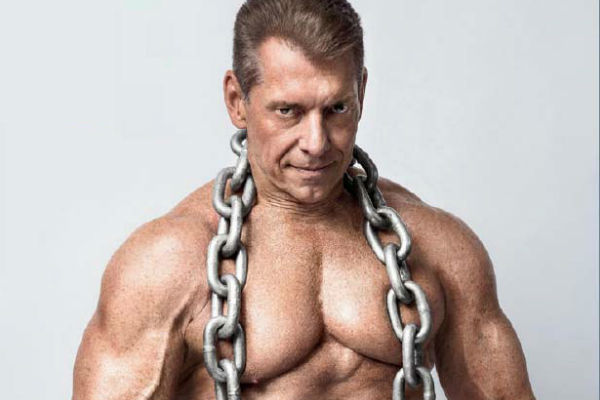
In his rise to global dominance in the world of sports-entertainment, Vince McMahon encountered many challengers and many opponents. Opponents that wanted nothing more than to knock the promoter off his self-made mountain. Whether McMahon's enemies grew as a result of a business relationship gone sour or as the target of a competitor, the narrative goes that Vince McMahon has conquered all. While there are some exceptions to that story, there's almost nobody who has taken on Vinnie Mac without regretting it. We'll not even stop to consider the figurative squash matches he's had; it takes two to have a rivalry and former foes like Lex Luger, Jeff Jarrett and Nailz just didn't have the leverage or resources to keep a feud up with Vince. Others took McMahon to court like Rena Mero (aka Sable), her husband Brock Lesnar (though on separate, unrelated cases), and Superstar Billy Graham, with mixed results. There are also men that were smart enough to let cooler heads prevail and in some cases, they realized where their bread was buttered. Jim Ross, Dusty Rhodes, Sgt. Slaughter and even The Rock come to mind, not so much because they all needed Vince equally, but because their careers were better off with the Chairman as opposed to without. Even without the aforementioned names, there have been numerous high profile conflicts that have escalated to the level of "feud" involving Vince McMahon over the years. This article takes a look at the top 20.

20. Paul Heyman

Heyman and McMahon have always had a love/hate relationship. The loving aspect involved Vince McMahon quietly funding Paul Heyman's ECW promotion during the mid-late 90s in the amount of $1,000 per month; Vince would use the Philadelphia based company as a pseudo farm system/training grounds for superstars he wasn't quite ready to put on his WWE programming. The hatred aspect started when Vince "borrowed" the adult-oriented, hardcore, edgy and risque' content that ECW was known for and branded it as "Attitude". The success of Vince's branding helped propel WWE back to the #1 wrestling company in the world, but did nothing to help ECW which eventually folded in 2001 and was gobbled up by Vince. Heyman would appear as a character in WWE's Invasion storyline and gave one of the most passionate, believable promos ever delivered on WWE television. While this was a scripted interview segment, the contempt and vitriol Heyman delivered the promo with showed that A) Heyman is an unbelievable talent and B) he was likely channeling some legitimate feelings. https://www.youtube.com/watch?v=wn9G3Onwjjg Paul was eventually made the head writer for SmackDown in which he often battled the Chairman over the proper direction of the show. He was also initially put in charge of the revived ECW brand that operated under Vince's final say. Since the two promoters were both very adamant and understandably stubborn in their ways, it was only a matter of time until their relationship soured and Heyman departed WWE in 2006. Since returning to WWE in 2012, Heyman has enjoyed his time playing Brock Lesnar's advocate and has stated that by being strictly on-air talent, the relationship with Vince is better. It is a fact that Paul Heyman has a brilliant wrestling mind; for WWE to not utilize that is foolish but expected given Vince and Paul's history.

19. Vince Russo

The WWE was in poor financial standing in 1996 and throughout most of 1997, but when Vince Russo turned from magazine writer to television writier, his fresh take on the product helped turn WWE's ratings back around. Vince McMahon empowered Russo as the head writer of WWE during the Attitude Era until Russo bolted for WCW in the middle of the night in late 1999. Citing multiple factors including an increased workload that the new SmackDown show brought without an increase in pay, Russo had negotiated an offer from WCW and left McMahon for the competition in October of 1999. McMahon viewed this as the ultimate betrayal while Russo viewed Vince as a cold-hearted, ruthless promoter who did not care about his employee personally. The straw that broke the camel's back for Russo, as he has claimed in multiple interviews since '99, is when McMahon did not appreciate nor accept Russo's concerns of additional stress being put on his family because of the additional workload. "Get a nanny," was McMahon's response to Russo. Since then, Russo has done some projects for WWE Network and other small affairs, but has not been welcomed back into the WWE family despite being a major influence in the company's turnaround from "financial peril" in 1997.

18. Shane McMahon

Once looked at as the unquestioned heir to the WWE throne, Shane McMahon began his career learning the company from the ground, including part-time duties as a referee before taking a bigger role on-screen as the son of the evil Mr. McMahon character. Behind the scenes, Shane was Vince's clear successor until Stephanie's role behind the scenes began to increase, aided by a marriage to main event talent Triple H. The story goes that Vince slowly began favoring his daughter's involvement over his son's and Shane felt marginalized. Instead of relying on his only son now more than ever, Vince has since taken Triple H under his wing and has made it all but official that The Game will be the man taking over Vince's empire. For the son who had always worked hard for WWE, including sacrificing his body in numerous classic PPV matches, the situation had to be a tough pill to swallow but used as fuel to his fire. Seeing the writing on the wall, Shane decided to form his own path in his own business ventures and left the company in 2010, a move that did not please his father. Shane made quite a statement by venturing into the relative unknown, leaving the company once thought to be his inheritance. Time will tell if Shane will ever find his way back to WWE, but for now it is clear that the father and son's relationship and succession plan did not turn out exactly as Vince would have liked.

17. World Wildlife Fund

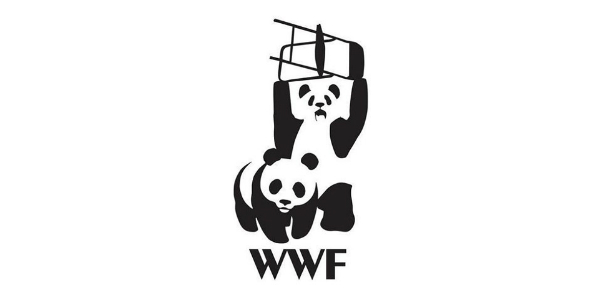
Three letters that you will not hear strung together on any new WWE broadcast are W-W-F. After being the three most important letters in company history, the WWF acronym was buried in 2002 after years of legal battles between Vince McMahon's professional wrestling promotion and the World Wildlife Fund, known as World Wide Fund For Nature outside the US and Canada. When Titan Sports first registered the WWF trademark in 1979, there was little opposition from the Fund. It wasn't until 1993 that the environmentalists filed an injunction in Switzerland that they threatened to take around the world, but the two sides came to an agreement the following year in which the wrestling company would limit its use of the W-W-F initials. McMahon seemingly violated this agreement as the initials were still utilized on his television programming just as they were prior to '94, but the likely catalyst for the Fund's 2001 London court victory came when McMahon registered the wwf.com domain. Vince fought and appealed but eventually submitted to the courts and changed his company's name to World Wrestling Entertainment (WWE) in 2002; it has since been renamed just WWE, with the letters no longer being an official acronym.

16. Mick Foley

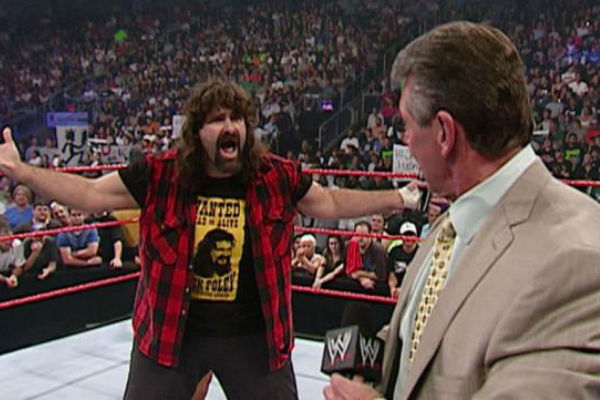
Mick Foley's struggle with Vince McMahon began before even entering the World Wrestling Federation in 1996. For years, Foley was trying to get a job with Titan Sports and even had Jim Ross trying to persuade McMahon from the inside as the head of talent relations. Eventually, Vince begrudgingly hired Foley and gave him the Mankind gimmick which included hiding Foley's face behind a mask. Eventually, Foley gained Vince's respect due to the Long Islander's willingness to sacrifice his body for Vince's company, but they would have their creative differences and Foley left the company in late 2001. Foley would make numerous returns, even attempting a gig as a SmackDown commentator, but McMahon's brash practices of berating the television announcers lead to Foley leaving the company again. Mick eventually took a job in rival promotion TNA for a few years, but ultimately returned to WWE and entered the Hall Of Fame in 2013. Foley and Vince have always been able to resolve their differences, but new differences seem to pop-up every so often. Foley is often critical of WWE and can be quite outspoken when the product is poor. While Foley is simply frustrated as a fan, the criticisms don't always sit well with the company officials, including Vince. These two men seem destined to have a roller coaster relationship for the rest of their lives.

15. Jim Cornette

Like many others on this list, Jim Cornette is a former employee of Vince McMahon. Cornette joined the World Wrestling Federation in 1993 as an on-screen manager and color commentator while still acting as the promoter of Smoky Mountain Wrestling in Tennessee. Eventually, Cornette would be phased off WWE television and transition into a front office position as a member of the booking committee and later as a talent scout and developer. As a booker, Cornette often disagreed with Vince's decisions but it wasn't until Jim began running Ohio Valley Wrestling where things began to turn truly sour. Cornette has claimed Vince would leave him high and dry as OVW's promoter when McMahon would pluck talent for WWE programming without any notice and without providing suitable replacements for OVW's shows. The constantly changing cards and unhappiness with Vince lead to Cornette selling his share of the company before ultimately getting let go from WWE due to several backstage conflicts. Since his release, Cornette has been rather outspoken regarding his time working for Vince McMahon. The two seem to have diametrically opposed ideas for what makes professional wrestling work that it often begs the question how did the two men work together for as long as they did.

14. Dana White

Whether he chooses to admit it or not, Vince McMahon is in competition with Dana White's UFC. The UFC has often been thought of as what the professional wrestling business could have evolved into (sans shoot fighting of course) if WWE focused more on a gritty, reality based product and less of the cartoony, hokey, variety show spectacle that Vince's company has become. Undoubtedly, the UFC cannibalized some of WWE's fanbase over the past few decades. The MMA promotion, and Dana White in particular, has borrowed several tactics from the Vince McMahon of the 80s by creating rivalries and building storylines around the MMA competitors. It is believed that McMahon views the UFC as too violent and a tragedy waiting to happen, yet refuses to acknowledge the company as competition. Though White has been respectful and complimentary of Vince McMahon, it is clear that the two men are in the same business competing for the same demograph. At its peak in the late 90s, professional wrestling was watched by 13 million viewers every Monday night. In 2015, WWE is lucky if they can capture 3 million viewers each week. If McMahon refuses to beleve in the UFC as its competitor, where did the rest of those 10 million former pro-wrestling fans go?

13. Phil Mushnick

The New York Post sportswriter has been a longtime opponent of Vince McMahon and WWE. Mushnick has made multiple criticisms against WWE over the past several decades ranging from the lifestyles of the performers, as well as both Vince and Linda McMahon, to calling WWE a "death mill". Mushnick has made a name for himself by often criticizing the use of sex and scandal in the media and has made Vince McMahon one of the many targets of his writing. Not one to take such open and direct criticism lying down, Vince even brought this feud to WWE programming in the Fall of '97 when he called Mushnick a "miserable son of a bitch" on an episode of Monday Night RAW. Mushnick's criticism heightened during the famed "Attitude Era", but the columnist was far from McMahon's only detractor. Still, Mushnick has carried the grudge with Vince for decades to the point that it appears to have become personal.

12. Verne Gagne

Verne Gagne was one of Vince McMahon's first main rivals upon taking over the WWF from his father in 1982. Vincent Kennedy had a vision that involved taking the local northeastern promotion into a national company through the rapidly expanding world of cable television. In order to create a product that would captivate viewers from all over the world, Vince needed to acquire top-level talent from all over the world. Vince's biggest coup came from Verne Gagne's AWA when Hulk Hogan left the promotion without notice. Vince offered to buy out the AWA, but Gagne refused, believing Vince would never succeed. After the refusal, McMahon successfully negotiated more stars away from Verne including integral AWA components (and future WWF cornerstones) Bobby Heenan, Mene Gene Okerlund and Jesse Ventura with Heenan being the only man to give Gagne any sort of notice. Verne's promotion limped on until 1991 when it closed its doors for good. A little more than a decade later, another competitor would successfully woo stars away from the company that first promoted them, but this time it was Vince McMahon that was losing the talent. Vince claimed it was strictly business and fair negotiation that allowed him to sway talents away from AWA, but when on the receiving end, Vince considered similar tactics to be a raid and unfair business practices but more on that later.

Contributor
Contributor

A former stuntman for Paramount Pictures, Matt enjoys sports, water skiing, driving fast, the beach, professional wrestling, technology, and scotch. At the same time, whenever possible. Having attended many famous (and infamous) shows including WrestleMania XV, In Your House: Mind Games, and the 1995 King of the Ring, Matt has been a lifelong professional sports and wrestling fan. Matt's been mentioned in numerous wrestling podcasts including the Steve Austin Show: Unleashed, Talk Is Jericho, and Something To Wrestle With Bruce Prichard. As a former countywide performer, Matt has been referred to as Mr. 300 for his amazing accomplishments in the world of amateur bowling. He is also the only man on record to have pitched back-to-back no hitters in the Veterans Stadium Wiffle Ball League of 2003.