Why WWE Are Losing Money On House Shows
WWE's live event business is plummeting, but can they stop the rot?
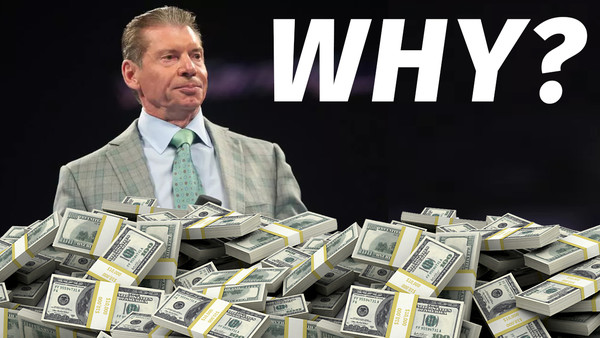
WWE's Q3 financials were published to much fanfare last week, as the company's decision to push forward with Crown Jewel, their controversial Saudi Arabian pay-per-view, came to light via the second bullet point in their 2018 Business Outlook:-
"Similar to other U.S.-based companies who plan to continue operations in Saudi Arabia, the Company has decided to uphold its contractual obligations to the General Sports Authority and stage the event. Full year 2018 guidance is predicated on the staging of the Riyadh event as scheduled."
Rarely has a single item from a WWE earnings report generated such interest, but how could it not? The promotion's Saudi deal has almost had a monopoly on wrestling headlines for weeks. As the answer to a question the world had been asking from the moment the Jamal Khashoggi situation first came to light, WWE's decision was always going to dominate, no matter which way it went.
As a side effect of the Crown Jewel news' enormity, the financials' remaining key points largely went untouched by major outlets, with only specialists like the excellent Wrestlenomics diving deep on a set of reports that included, among other successes, the promise of another record-breaking profit year. Critically, this forecast is largely dependent on the vast sum of money WWE will make from their ongoing business in Saudi Arabia.
But as indomitable as WWE's market share has become, the financials weren't without their worries. Referred to as "a barometer as to how well we're doing," by Vince McMahon himself during the accompanying conference call, the promotion's house show business is in decline, with average attendances and revenue both falling.
Q3 2017 saw WWE rake in $31.6 million of revenue from such events. In 2018, that figure fell by 15% to $26.7 million, generating profits of just $200,000. It's worth mentioning that SummerSlam weekend attracted 40,000 fans to New York during this quarter, and that Super Show-Down's crowd of 70,000 makes it the highest attended wrestling show to take place outside the USA in 25 years, but it's a worrying trend regardless.
Does Vince McMahon know how to solve it? He certainly thinks so...
CONT'd...

Per the Chairman on WWE's Q3 conference call, the company plan on "re-imagining" their live events (h/t: Brandon Howard of Fightful):-
"We know what’s wrong with our live events, and it’s somewhat of a-- I don’t necessarily want to call it [an] antiquated presentation, but we know to fix things. If something’s wrong and you don’t know how to fix things, you’re in trouble. We know how to fix that, and we’ll be re-imagining those live events very, very shortly. We’ll see a pretty good turnaround I think in short order."
What McMahon actually means by this is anyone's guess. He offered no further clarification, so we'll just have to wait to see what, if anything, his promotion will do the stop the rot.
Live event attendances declined by an average of 8.2% domestically and 17.6% abroad. It's too early to call it a crisis, but the company's old tactic of increasing their number of live events to boost revenue in the face of declining attendances isn't working anymore. "Re-imagining" is a necessity, and if Vince does indeed see such events as a performance barometer, it'll now become a priority.
By all accounts, his wrestlers enjoy the house show experience. Though the schedule is gruelling, and the travel punishing, they let performers score a nice, simple payday without the pressure of over-exerting themselves for television. They can cruise through these shows in second gear, preserving their bodies for bigger, more important events, while soaking in the buildings' light-hearted vibes, knowing the crowd just want to see them play the hits.
Unfortunately, this laid-back atmosphere could be part of the problem, and with this aspect of his business barely breaking even in Q3, McMahon may already be enacting changes to that effect.
CONT'd...

The idea of a $14.99 Network tier has been bandied ever since an October 2016 user survey first mentioned, and WWE Chief Financial Officer George Barrios spoke about it on the conference call, claiming it'll probably come to life in 2019. We've heard the company make statements like this before, of course, but their decision to tape a recent Boston house show came with the suggestion that they were doing so as trial run for the new price point. Such events would be a selling point, and it's thought that WWE were testing for viability.
"Special" nights like Boston and the upcoming Starrcade show (24 November) could form the basis of McMahon's re-imagined vision. They carry more significance than the average, throwaway live event, and that's critical. House shows are fun, but almost nothing that happens of them matters, and if you've seen one, you've seen them all. This is almost certainly part of the downturn.
The WWE live event experience is sterile and placid, and with little variation from show to show, there's no real incentive to attend more than one every couple of years. They're "fun," sure, and you might get a good atmosphere in the building, but you're parting with hard-earned cash to attend a show on which literally nothing matters.
Title shots end with predictable victories for the champions or on screwy finishes. Wrestlers will test out lesser versions of matches they're planning for television or pay-per-view. Most will work well below 100%, which makes sense, but doesn't exactly make for compelling viewing. Storylines won't be advanced in any tangible way. The list goes on.
CONT'd...

Oversaturation remains a colossal problem across the board, as WWE's focus on "super-serving" their audience sees them run more live events than ever before, on top of the absurd amount of original TV and Network content they produce every week.
Burnout is real. When WWE visit your city two or three times a year, house shows become less of an appointment event. Fans know the company will be back soon regardless of whether they attend or not. Thus, the fear of missing out has been cast into the same trash-pile as the idea that these events are special in any way, making overfed audiences increasingly like to save their money for something else.
Still, scaling back seems extremely unlikely. This is a promotion that has set (and will continue to set) new business records by squeezing its existing fanbase for every dollar, as opposed to actively pursuing new audiences. WWE's chronically declining TV ratings evidence this along with the live event numbers. Yes, consumption methods have evolved, but every reliable metric tells us that fewer people are consuming this company's output than ever before.
There's simply too much stuff to consume at once, and when the stuff we're actually told is important isn't delivering, why both with a house show's diet version?
CONT'd...
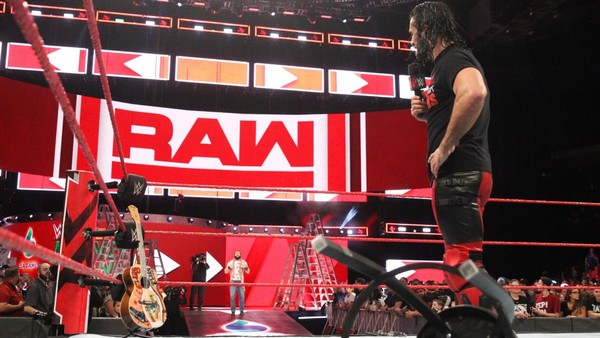
WWE use two primary assets to sell live event tickets: stars, and a strong TV product.
The overall TV product hasn't been anything close to "strong" for years.
SmackDown is consistently decent-to-good, and never a net negative, but WWE's rigid formulae prevent it from being better. Raw, meanwhile, is a bloated, jumbled mess of stunning highs and brutal lows one week, and a listless three-hour slog the next. Even NXT, long considered the standard-bearer, has fallen to the awfulness of the Johnny Gargano/Aleister Black whodunnit and Nikki Cross' unwatchable zany character.
A buzzing TV product usually equals a buzzing house show scene, though wholesale changes aren't likely before Triple H inherits the throne. Vince has been producing television like this for decades. Though his blueprint underwhelms creatively, it has just scored the biggest rights deal in the company's history, which will only reinforce his methods.
As far as "stars" go, WWE regularly send the message that conventional draws are out. Now, the brand is the draw, not the wrestlers, and while this does protect them in the event of a major injury or another form of departure, it has created a situation where 90% of the performers operate on the same bland level.
Only a handful of wrestlers are over. Those that are don't get pops like the old days, and no matter how many often WWE repeat the idea that "World Wrestling Entertainment is the draw," it's a major problem.
Seeing big, larger-than-life stars in the flesh used to be a considerable part of the house show appeal. That's no longer the case. Now, you're spending money to watch 20-30 dorks mingle with the handful of wrestlers the promotion actually present as worth caring about.
CONT'd...

But at the heart of all of this, and more important than any other reason behind the decline, is one simple truth: wrestling just isn't cool anymore.
The Attitude Era captured the zeitgeist. It was the perfect style of programming for the perfect time period, tapping into everything the audience wanted and needed from an escapist wrestling product in the late '90s. That, primarily, is why it can never be resurrected. The wider world has moved on from wrestling.
Once the mainstream decides what you're offering has had its day, it's impossible to become the cool thing again. Thus, any efforts to recapture Attitude's glorious business and creative highs may be for nothing, with the sport doomed to remain a niche interest eternally. That isn't to say the situation can't improve, but its ceiling is lower than ever before, with wrestling's decline in cultural significance a key driver not only in the ratings rot, but the demise of live events as well.
Sadly, there's little WWE can do to stop this. They can make house shows more exciting, revamp their product, and relearn how to make stars, but they'd be papering over the cracks. They have no control over how society's demands shift with time, and may just have to contend with the knowledge that their form of entertainment's time has come and gone.
WWE's team of sharp, creative business minds will likely find ways to make incremental improvements, but they'll never boom again, and like TV ratings, cratering live event numbers might be terminal.