WWE: 13 Worst Match Stipulations In The Past 15 Years

With only a week to go before WWE Payback and a high possibility of interference, stipulations have become more frequent since Wrestlemania XXX, as all matches on the card contain at least one wrinkle that stands out from a typical wrestling match. Some of the most memorable, referenced and iconic confrontations of pro wrestling history have been accompanied with an extra element of intrigue, ranging from a number one contendership to a bloody brawl in a brutal structure; however, with every risk taken that yields the WeeLC Match between Hornswoggle and El Torito at Extreme Rules a month ago, which some deemed the match of the night on Twitter, there is a misfired idea that makes one wonder what they were thinking and the utility of creating the bout in the first place. All of the four primary professional wrestling organizations have confused, stunned, and led fans to question, "Why is this happening again?" There have been 13 innovations that stand the test of time in the past decade and a half as the most infamous match types and outcomes that have plagued creative risks overall.

13. Beat The Clock Challenge

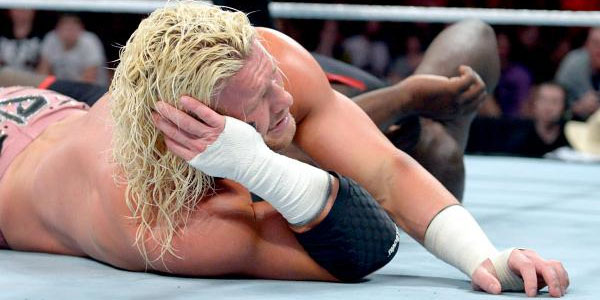
A common saying says that "in life, father time eventually wins in the end," and this match type demonstrates that fully as competitors have to defeat their opponent in the least amount of time compared to others', usually to determine the number one contender for a championship. In an emphasis of quantity over quality, it does not matter how lackluster a performance you have, whether you goad your opponent into a disqualification, or if you have the best match overall, but whether how FAST you win. This came to light on Monday Night RAW, where Dolph Ziggler may have stolen the show and had a dominant performance, but with seconds left on the clock--oh, he couldn't roll fast enough to cover a dazed Mark Henry after hitting the Zig Zag, meaning that his performance did not matter in the end, because he did not win quickly enough. If one pays close attention to a storyline scenario, the Beat the Clock Challenge gets dusted off and reused as filler matches in the middle of an arc toward a Pay Per View, with hastily booked matches of low-level rivals, taking away intrigue and leading to rushed spots and a large, distracting clock ticking away all substance. Finally, if you watch the Pay Per View following such a match type, there is little to no storyline reference during the event itself, because it's difficult to sell that Rob Van Dam will face Wade Barrett at Payback for the Intercontinental Championship because he won his match the fastest in an arbitrary filler match. Perhaps this concept needs to be smashed as one would respond to an annoying alarm clock, similar to how Barrett delivered a Bullhammer Elbow to a celebratory Rob Van Dam on RAW.

12. Sledgehammer Ladder Match

The cerebral assassin shows no shyness in using weaponry, and his favorite by far is the sledgehammer, a deadly weapon used at nearly every Pay Per View (and RAW Main Event Match) he has been in, and he seems to have a knack for finding the tool that no one else does under the ring. Triple H also became "The Game" through a series of ladder matches in which he, along with D-Generation X members in some cases, utilized a flurry of offense and weapons on the way to becoming a top powerhouse for years in WWE before taking his current post as an authority. So naturally, if the two match types could be combined, they should have been, right? The match made sense in terms of what Triple H is, but played slow, awkward, and had a feeling of delayed finality as he battled Kevin Nash in a ladder match that had a sledgehammer suspended above it, and the person who obtained the weapon could use it on their opponent. The violence and potential for destruction in this match was high, but in practice, the match led to several problems and inconsistencies with the COO's past tendencies. First of all, why was the weapon atop the ladder when Triple H could find endless sledgehammers under the ring? It had no point having the ladder in the match, especially if there's no reason that one could probably found under the ring on any other night. Secondly, the outcome of the ladder climb does not necessarily matter, because if one competitor seizes the sledgehammer, the win is not guaranteed because the opponent, in this case Kevin Nash, could have probably grabbed the weapon and used it if able to do so; finally, even if Triple H had the sledgehammer, if Nash pinned him somehow, the latter could still win. Sledgehammers are powerful and ladders are entertaining but the two together were just not meant to be.

11. "Stairway To Hell" Match (ECW)

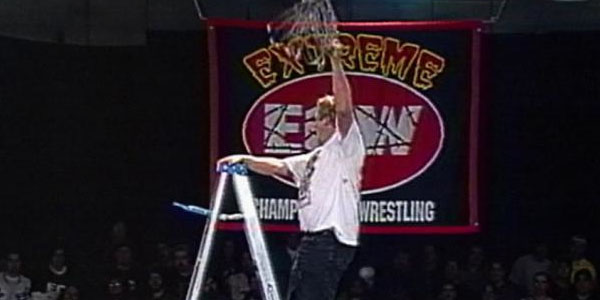
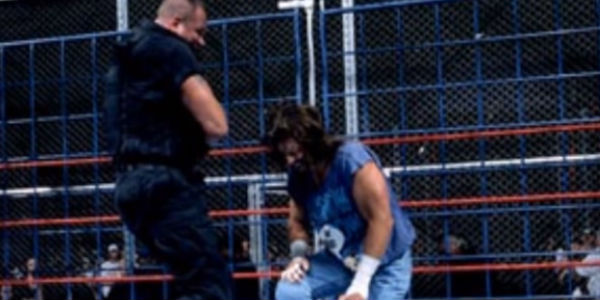
The title of this match evokes any number of images such as the one above, and one may think of blood, fire, and/or brimstone involving ladders, cages, and demonic structures such as the WWE Hell in a Cell. However, the concept involves a standard ladder match with barbed wire awaiting the one who attains it after climbing the ladder, providing a potential incentive but not guaranteed victory. While the barbed wire can create violent consequences, the match simply does not live nearly up to any expectations set by its name. Instead of Nosferatu and Lucifer, audiences get matches such as Sabu vs. The Sandman, which start out as wrestling matches, yet the wire does not even play as big a role as the sledgehammer in the aforementioned match. The incentive ends up being held by someone and perhaps used a few times by the person able to grab the item, but only after a grueling 10-15 minute match has nearly ended, such as when Justin Credible used the object for less than a minute before pinfall. This concept sounds great and lively on paper, but falls flat in practice, just as in the Sabu-Sandman match, where The Sandman grabbed the barbed wire while Sabu outsmarted this so-called "hell" and shoved his opponent off of the ladder, causing him to tumble through a table outside of the ring. Ultimately, the only hell comes for the fans who expect to see the underworld and get underperformance, with a roll of barbed wire at the end of the stairway to mediocrity.

10. Dixieland Match (TNA)

https://www.youtube.com/watch?v=A8bulvvg858 If you love the suspense of cage matches and the high-flying amazement of ladder matches, then you would likely be hooked by TNA's experimental Dixieland Match, where Magnus fought Jeff Hardy for the World Heavyweight Championship in a hybrid cage and ladder match; however, this match missed its mark for a number of reasons and will likely not be repeated as a result. TNA had the option of having a cell-like structure and placing a ladder in the middle, so that an individual would climb and obtain an object such as pliers or a key, then escape the cell without the opponent being able to get the object and do so first--but they opted for the least logical, nonsensical way to hold a match: cage escape first then ladders. The cage match was well fought and both individuals executed high powered moves in a nearly 10-minute bout, but when both escaped the cage at the same time, the sloppiness ensued, especially after Hardy left the cage from the far side of the stage, which would mean he would have to travel a greater distance than Magnus. The two not only waited for each other to start fighting outside of the cage, which had no bearing on the outcome of the match, but actually looked at each other and nodded before deciding to move up the ramp for the ladder portion of the evening. The ladder climbing only lasted about two minutes, including interference from TNA President Dixie Carter and her Chief of Staff, Rockstar Spud, so after Hardy was shoved off of the ladder, Magnus climbed the ladder and grabbed the title in anticlimactic fashion.

9. Punjabi Prison Match (WWE)

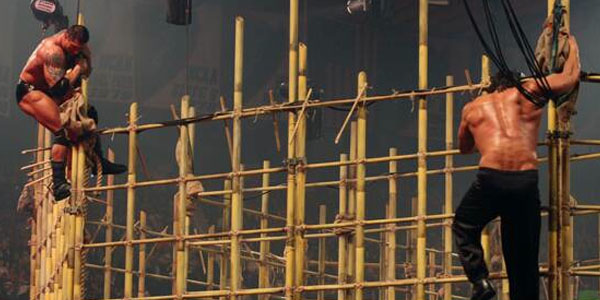
What could be stronger and deadlier than the unforgiving steel of a cage match? There's probably a definitive answer, but the wood-like bamboo used in the Punjabi Prison Match is probably not it The match was fought inside two differently sized cages that could be opened for a 60 second time period, and if all four sides were padlocked, there would be spikes jutting out in spots. Similar to the Dixieland format, there were too many elements enclosed in the match, as there was a cage inside a cage which led to visual challenges for the viewer. There were tables on the outer cage that allowed people to grab medieval weapons and those allegedly used in the Punjab region of India, where The Great Khali hails from. However, the match would drag on as individuals would leave one cage, then have to leave the other before becoming the winner. The takeaway from this is that the match was not better than a Cage Match, harder to see into the structure than a Hell in a Cell Match, and was literally a toy of an idea, as families could purchase the Punjabi Prison Playset, creating a makeshift structure that capitalized on the circus-like quality of the bamboo-inspired cage match.

8. Three Stages Of Hell Match

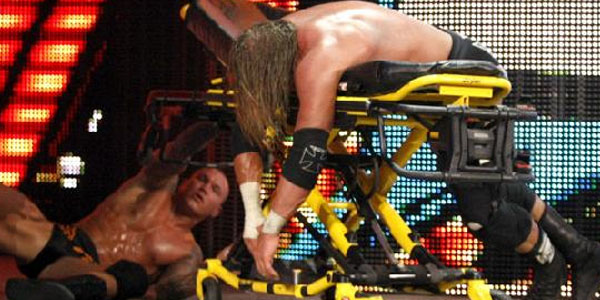
This match has unlimited potential, and as seen in WWE Video Games of the past, players can select any stipulations as part of this special two out of three falls match, where one has to win two different types of matches to capture victory, and if there are not two victories to start the bout, there is a third, usually more extreme stage of the battle to decide the winner. In the past, this has meant variations such as Submission Match, then Tables followed by an Ambulance Match, or Cage and Table Matches included in the 3 stages, but the end result has underachieved the ambition when the 3 stages barely even left the stage of the arena. This was the case when Triple H faced Randy Orton for the WWE Championship, which was two stages of near normalcy with one big push at the end: a wrestling match, followed by a Falls Count Anywhere Match, and lastly, a Stretcher Match, meaning that one would have to push their opponent over the line at the top of the stage while the person lies on a stretcher. This match ended in victory for Randy Orton, but only after Triple H was disqualified in the first match, won the second fall, and members of Legacy came out to help Orton and pushed Triple H over the final stage of "hell," if hell were a patient transport unit in a hospital. There have been far more violent matches on RAW, even in the PG Era.

7. Parking Lot Brawl

The WWE 2K14 Video Game provides all sorts of opportunities for backstage brawls and out-of-ring melees as part of a storyline or just for kicks, but that inspiration may have come from this thrown together New York City Parking Lot Brawl. John Cena and JBL literally threw down in a circle of cars and other vehicles, in a No Holds Barred Match that featured shattered windshields, jumper cable choking maneuvers, and backs hitting solid concrete. While the two battled for nearly 20 minutes and had some memorable moments, there are two things that stand out amid the snapshots of excitement and intrigue. First, what made this match happen in the first place? Although there is a vignette that played before the match and the two men agreed to this stipulation, there is little to no reason that caused this format. It's not as if JBL nearly ran John Cena over or rammed his car in the parking lot before, nor was there really a standard as to what would be acceptable in the match, especially as JBL nearly ran Cena over with a car. Finally, for a match that was supposed to be a parking lot brawl, there was surely a high level of structure, as cars were strategically placed in a circle, both men knew exactly how to stay within that circle, and rarely were there outside weapons used, besides a tire iron. Unlike this match there have been other fights that went anywhere with anything goes, and if one can hit the other with a car, movement should be a bit more liberal.

6. Child Custody Ladder Match

The title of this match tells the end of a twisted story, as Eddie Guerrero and Rey Mysterio had a grueling ladder match with the documentation guaranteeing the custody of a child named Dominick hanging in the balance above it. The match featured a high-flying arsenal of moves, several memorable moments, and many uncomfortable camera cuts to the worried young boy in the audience. How could such a stipulation come to be in the first place, or how could the creative team develop this storyline? It came from a love triangle that involved Guerrero and Rey's wife from years before, allegedly culminating in the birth of Dominick, but the former gave up his son after a time and pretended that he was actually Mysterio's child. The Latino Heat Superstar read raunchy bedtime stories in the presence of Mysterio, his wife, and in one case, Dominick before Rey had enough and opted to fight for custody of Dominick in this way. The two most unusual, stunning moments of the match involved the boy jumping the guardrail and getting into the ring, distracting Guerrero from ascending the ladder, and putting himself in harm's way before Vickie Guerrero came out to further distract her husband, and when Rey reigned victorious, as Michael Cole exclaimed, "Rey Mysterio wins custody of his son!" Never before and never again.

5. Thundercage (WCW)

Thundercage 1 Imagine if there was a way to take the pain of a steel cage and the size of a Hell in a Cell Structure and envelop it at an event as big as Superbrawl IV to create Thundercage, an unforgiving titan that could exceed all. Now imagine that the only way to win was by pinfall in a standard tag match, escaping the structure did not matter, and the cage was more of a prop than anything, and there would be a clearer idea of what really happened. The clash between Big Van Vader, Barry Windham, and others seemed like a colossal collision, but ended up being a tame match where the lack of a roof created an odd trapezoidal opening and the lights beamed into the ring, blocking visibility for viewers and audience members alike. The cage was never used, no one used moves from the cage or using the cage, and yet there was interference, as wire cutters were used to gain access to the massive structure, yet even the storyline opening of the cage took more than a minute and seemed like more of a struggle than a triumph. The match ended with a normal pinfall in the middle of the ring, without any tag team interference or challenge, and the cage invaders hit finishers on their prey, which has been seen and done dozens of times in these enclosed structures, ending the night with a blunder of a cage match.

4. Lions Den Match (WWE)
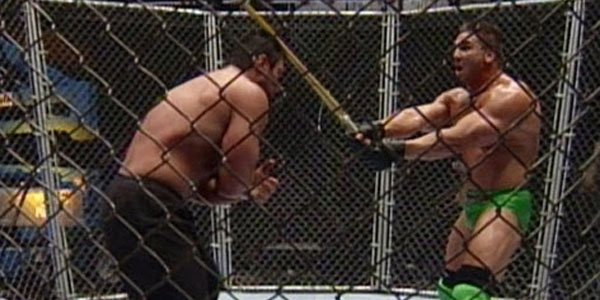
This match caught fire during the Attitude Era because WWE tried to connect with UFC Fans through the use of Mixed Martial Arts fighters and match styles such as the Lions Den Match, where two men entered a circular structure with high fenced walls and a referee stood atop the structure, calling the match and looking for submissions or knockouts, because these were not pinfall matches. While stars such as Ken Shamrock, Owen Hart, and Dan Severn showed their mettle in the Lions Den, the octagon-like shape was about half the diameter of the UFC ring and the high fences made it difficult for fans and even camera personnel to get good shots of the action occurring inside. Also, the Ultimate Fighting Championship was not even on Worldwide TV at this point and was known for its brutality and broken bones during bouts, so when stars such as Shamrock and Severn emerged from the UFC, the fans did not always take kindly to their appearance in WWE, so the Lions Den had only midcard relevance at best. The enclosure had to be brought into the arena from elsewhere and fights often took place aside of the entry ramp, so an odd overhead camera and limited movement made for technically sound, yet not exciting bouts for the most part, and this match type disappeared gradually over time, especially as stars such as Shamrock left the sport or merely WWE.

3. (Insert City Name) Street Fight

Every fan has a moment in an arena or stadium where he or she hears a star or team name the city the event is taking place in and cheers wildly in acknowledgement of that fact, but the increase in street fights involving everything from guitars to drum kits and ukuleles may leave these references for crowd pops better left unsaid. A street fight can bring out the brutal, unmitigated anger of a heel and ignite a crowd in horror or amazement, but not when the primary weapons of choice can be found in a high school band room or a Guitar Center. https://www.youtube.com/watch?v=O4qYBXtbdVk Some may deem any guitar or even a kendo stick a silly weapon to use, but the past year alone has seen people hit with violins, tambourines, and most fittingly, when Damien Sandow was struck with a bass drum, penetrating the cylinder entirely, where Ziggler covered him with a full drum piece, while Sandow had his shoulders off the canvas the entire time. A street fight can be legendary, but only if the combatants have something solid, literally solid to work with.

2. Kennel From Hell Match (WWE)

On paper this seemed like a sound idea: a cage match, surrounded by fierce rottweilers and large dogs, all enclosed within a Hell in a Cell. However, while the human element often has to be taken into account, the canine element took the cake in this one, as the dogs proved to be more like pampered, pooping pooches than gladiatorial guard dogs. The storyline lined up nicely with Al Snow holding a pet-related grudge to Big Boss Man, who had wronged Snow in the past, leading him to propose this match of Boss Man having to deal with his ferocious adversaries; however, once Boss Man ended up out of the cage, he needed to escape the cell to win, and the dogs were interested in peeing on the floor and getting a bit too close to one another, creating a smelly and uncomfortable situation for all involved. Snow won the match and used his mannnequin head, cleverly named "Head," and escaped the cage, but the dogs proved to be a non-factor in the physicality itself. Numerous people and lists of infamous events and moments deem this to be number one but there lies one far worse outcome and idea that no one saw coming...

1. Triple Cage Match (WCW World Heavyweight Championship)
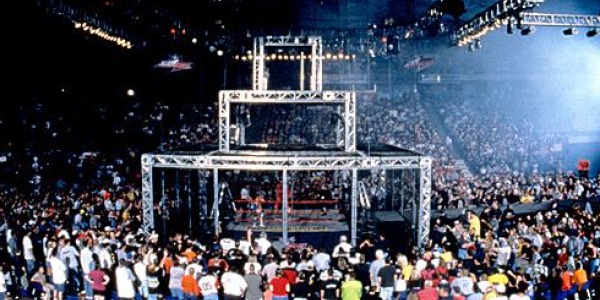
This was the most overly complicated, unnecessary idea in professional wrestling history, stacking a ten-foot cage on top of a wider 20-foot cage, all atop a standard Hell in a Cell structure with the WCW Championship Title suspended above the highest cage more than 40 feet off of the ground. It was a triple threat match between WCW Champion David Arquette (who surprisingly won the title on an episode of WCW Thunder on a Thursday), Diamond Dallas Page, and Jeff Jarrett, and the sheer layers of this triple cage made little sense to begin with. Most of the match occurred in the inner cell, with a ladder or two coming into the mix and two of the three men bleeding profusely from their foreheads. Strangely, there was no escape from the cage through a door or climbing the cage itself, but rather to get the advantage, an individual had to position a ladder in the middle of the ring and climb through an opening no larger than a square of air conditioning duct, all while opponents tried to knock him off. Then, combatants entered "Hardcore Hell," a flimsy chain link box replete with weapons from trash cans to full tables, so small in general that no one could successfully suplex another man without hitting the roof. After this, one would exit a door and climb the wall of the third cage, which inexplicably contained a "guitar room" where guitars were the only weapon. Ultimately, Arquette was able to ascend all three cages even though he was not attacked or involved in the match up to that point, yet he waited until the other two climbed the cage, where he and Jarrett attacked DDP with the guitars. It was also bizarre was when Mike Awesome and Kanyon attacked from the second cage with no plausible explanation to how they got there, and Kanyon was thrown off of the cage onto an obviously padded floor as announcers shouted, "We need help! We need help! Someone help here!" That last line may have been directed to WCW Creative as well as the EMTs that may have been in the arena that night. The best thing about these matches and unique ideas is that everyone has a take on what perished and what thrived in wrestling, so what do you think was the worst idea yet? Did this list miss the mark on anything? Also, what has been the best, most innovative idea so far?

 
Posted On: 
Contributor
Contributor

I'm a lifetime sports and entertainment fan, and have always made it a point to analyze things as they happen. I try to put new spins on popular things, ask questions others may not, and can always keep the conversation going. I just put my voice and ideas out there and have been published both in college and as a professional. Any idea I put out there is of course up for discussion.