WWE: 10 Biggest Lies In Pro Wrestling

An industry based on deception.

wrestlemania Pro Wrestling is in essence a lie. The industry is built on a foundation of con artist and gypsy travellers. These 'promoters' originally set out around 19th century Europe to trick local townsmen into losing money on match results and challenges. The perception was that the sport was real, and it was a happy coincidence of the fixes that the touring bouts actually ended up as being entertaining - sports entertainment was never the aim. The real aim was to convince people that the wrestling was as real as possible in order to trick them out of their money. It worked. Everyone thought the wrestling was real, and as it grew in entertainment value, the sport ended up being taken over to America by immigrants settling in the post American Civil War era. Fast forward one hundred years and Vince McMahon is still making money from these types of fixes. Wrestling is no longer about conning the audience, the crowd is now in on the fix, the aim has became all about entertaining in the same vein as theatre or performing arts. Wrestling stopped being viewed as legitimate sport during America's 'roaring 1920's', when wrestling promoters focused on making a buck by entertaining the depression hit crowds, but it would be another sixty years before the scripted matches were fully acknowledged as fake. Nowadays the business is pretty open and there is no need for lies, but that hasn't stopped some entertaining and shocking lies emerging in the last thirty years. They just can't help themselves at times, and here we take a look at ten of the biggest lies ever to appear in pro wrestling...

10. Wrestling Crowd Numbers

Hg To this day, wrestling promoters can not resist exaggerating crowd numbers. In the case of TNA, which struggles to draw a full paying crowd, you can perhaps understand that they are trying to save face. With WWE however, it borders on the bizarre when the company pulls impressive crowds of 70,000 plus, yet still can't resist adding some extra numbers to their count. The most recent example was WrestleMania 29, where WWE announced the crowd as 80,676 and stated that was a new attendance record for the MetLife stadium. This was complete rubbish, and the actual attendance came in at around 70-75K according to Power Slam magazine. Why WWE feels the need to exaggerate the number is anyone's guess. The claim that it was an attendance record is also rubbish - that honour belongs to the 93,000 jews in 2012 who crammed the stadium for the Siyum HaShas celebration. U2 and the NFL have also clocked more than 80,000 at the stadium, with U2 able to fill the stands and entire pitch. Perhaps the most famous stadium lie was at WrestleMania 3, when the WWF claimed a North American record attendance of 93,173 in Detroit's Pontiac Silverdome. Since this claim there have been several reports that this was a fiction, with the UK insider magazine 'Power Slam' reporting an actual attendance in the 72k region. The highest pro wrestling attendance of all time was a WCW event. At a controversial 1995 event in North Korea, in conjunction with New Japan Pro Wrestling, a crowd of 150,000 was pulled, with 190,000 coming on the second day of the 'Collision in Korea' show. But then, considering North Korea's track record with propaganda, it is a safe assumption that this number is a lie too.

9. Hulk Hogan Says That Elvis Presley Was A Big Fan Of 'The Hulkster'

Hulkhogan When it comes to talking himself up, Hulk Hogan is a real pro, and shows all the skills needed in self promotion. When you are constantly operating in a world of blurred reality, you sometimes lose sight of what is fact and what is fiction. The Hulk demonstrated this in a 2007 radio interview with his then friend Bubba The Love Sponge (before the pair eventually fell out when "somebody" leaked a sex tape of Hogan and Bubba's wife) when the Hulster made the claim that Elvis Presley used to come and watch him wrestle in Memphis. There was one problem with this: after the show had ended, it was quickly pointed out that Hogan's debut in Memphis at the Mid-South Coliseum was on July 16th 1979. Sadly, Elvis Presley died on August 16th 1977, two years before Hogan ever debuted in the famous Memphis territory, and Hogan hadn't even stepped in a wrestling ring until the summer of 77, around the same time that Elvis died. There's no doubt that Hogan in his mind did believe that Elvis really did come to watch him, and he must have been gutted to find out the truth.

8. The WWF President Jack Tunney
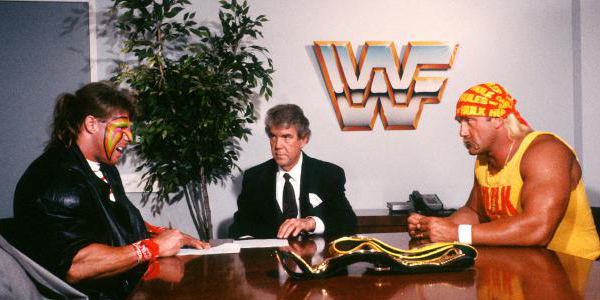
One of the big lies of the 80's and early 90's was the boss of the WWF being President Jack Tunney. It is hard to imagine nowadays, but Tunney really did seem to carry authority and convinced many casual fans that he really was the man running the ship. Tunney played the president role for over ten years, and carried himself like an actual boss unlike the chairman and general manager characters of today. Vince McMahon meanwhile was on commentary playing a Michael Cole style character. In reality, Jack Tunney was an important figurehead in Canadian wrestling, controlling the Toronto wrestling market, and his 1984 allegiance with New York promoter Vince McMahon saw both men make a lot of money. The WWF named Tunney as a storyline president in the summer of '84; presumably they thought that the conservative looking gentleman looked the part. He would go on to be the man "in charge" of the WWF throughout the Hogan era and wrestling boom, overseeing key moments such as stripping the WWF title from Ted Dibiase after Andre the Giant won it for him. In 1995, McMahon ditched Tunney and promoted Toronto by himself. He also cut Tunney from TV, and the president of the WWF quietly disappeared into history. Sadly he died in 2004 aged 68, with no one from WWE attending the funeral and no announcement on WWE.COM. A ten year WWF lie about the owner of the company was erased from wrestling history like it never happened.

7. Edge And Christian Are Brothers

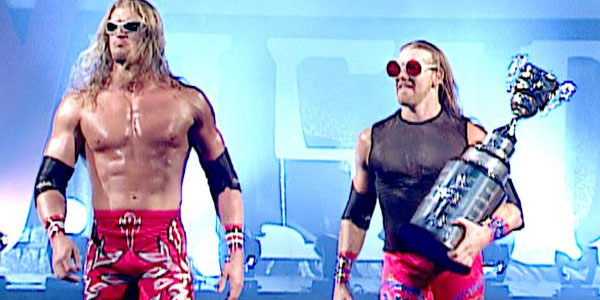
In 1998 two talented brothers debuted in the WWF. Edge and Christian were a pair of goths, who as brothers had arrived to shake up the tag team scene, and they quickly added energy to the division. They stopped being goths, but they remained brothers as they advanced through the WWF ranks to win tag titles and compete in some of the best matches in WWF history, including TLC classics at WrestleMania. When all was said and done, the pair ended up being WWE veterans who both became world champions. The truth however is that Edge and Christian were not brothers, which explains the decision by the WWF to quietly drop the brother tag along the way, and why in 2010 the WWE formally stated that the 'brothers' were actually best friends. The truth is that the pair were childhood best friends Adam Copeland and William Jason Reso, and the WWF had brought them in as brothers because they looked like each other and both had long hair. The relationship between the best friends probably really is close to that of brothers: it was Christian who inducted Edge into the WWE Hall of fame in 2012. Having gone through so many highs and lows together in the WWE, they will always have a special bond. Likwise Edge and Christian will never be forgotten as one of the greatest tag teams ever.

6. Vince McMahon's Death - WWE's Most Awkward Lie
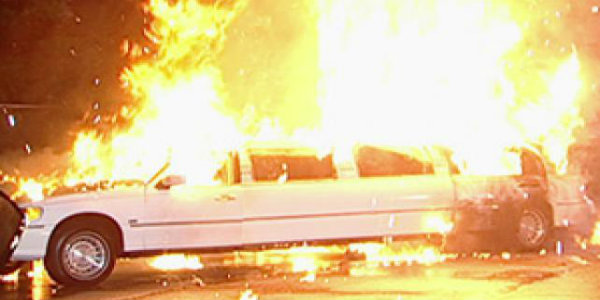
The most dramatic lie the WWE tried to get over came in June 2007 with an expensive and explosive ending to Raw. Vince McMahon had entered his limo, which then blew up in a ball of flames. Vince McMahon had died. WWE was eventually forced to quietly confirm that the death was faked, after CNBC questioned the death and the impact that the "passing" would have on WWE shareholders. Regarding the tragic demise of her father, Stephanie McMahon had this to say on WWE.com - "My dad wanted to leave this world the same way he lived in it, in the biggest way possible." It was a huge lie and also the most awkward lie in WWE history. The June 25th 2007 edition of Raw was scheduled to be a "Mr. McMahon" tribute show in which superstars would pay their respects to the dead chairman, but the show opened with a graphic of Chris Benoit and the dates 1967 -2007. The show then cut to an empty arena interior, with a shaken Vince McMahon standing in the ring. Chris Benoit and his family had been found dead, for real. Vince had the awkward job of revealing that the expensive death angle had been a lie, and then he had to tell the audience that Chris Benoit really was dead. The show then became a tribute to Benoit, which in itself became awkward when news channels reported the death as a murder suicide at the same time as WWE tributes aired.

5. Big Show's Weight

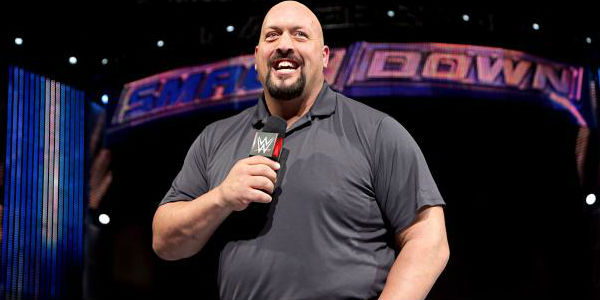
Promoters have always announced their talent as taller and heavier than they actually are; the logic being that it impresses the audience - but in truth it is an unnecessary lie. Guys like Big Show are clearly huge and impressive already, and it isn't really required to exaggerate his weight. Yet for most of Paul 'Big Show' Wight's career he was announced as the hilariously ridiculous weight of 500 pounds. There is no way that the Big Show was ever 500 pounds - he was in the 400's range certainly, but a 500 pound man was pushing the exaggeration even by WWE's standards. It has happened throughout wrestling history: Andre the Giant was billed as 7 foot 5 at some points when he was in fact just under 7 foot; Hulk Hogan was billed in height as 6'8 when he was in fact 6'6, and when Undertaker debuted who was an actual 6'8 the WWE made him a 6'10. Vince McMahon remains convinced that bigger and heavier men are the talent who will draw interest. He has mellowed on his giant crushes in the last decade and pushed smaller talents, but his preference is still for guys who are larger than life. Nevertheless, with smaller guys like Daniel Bryan having carved out success in the 'land of the giants,' weight and height are becoming more and more irrelevant to the audience.

4. Once In A Lifetime

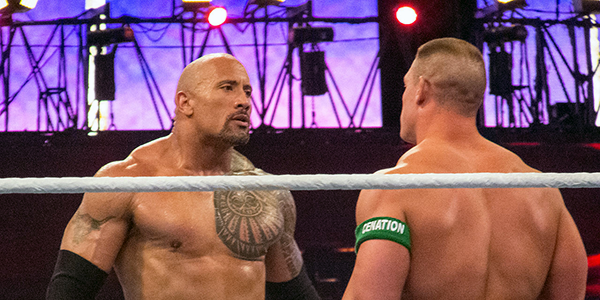
The Rock vs John Cena "Once In A Lifetime" was the tagline which WWE plastered all over John Cena vs The Rock at WrestleMania 28. The bout was announced a year in advance, and was a huge promotional effort by the WWE to create a special feel for the two entertainment icons clashing. They achieved their aim. Many casual fans who never really watch anymore, did buy this PPV just to see The Rock versus Cena. It was a one off, and one last chance to see The Rock in action. However, the "Once In A Lifetime" selling point was in fact a big lie: WWE had planned a three year feud between Rock and Cena. There was the initial angle of Rock beating up Cena at WrestleMania 27, and there would then be a match, which Rock would win at Mania 28, and Cena would get the win back at Mania 29. Despite knowing full well that the two would be wrestling again just one year later, WWE built the entire first Rock Cena match on a "Once in a lifetime" gimmick. Some fans didn't really like the fact that WWE did business in this manner. It didn't help that the Mania 28 bout wasn't really that exciting - some fans felt the match was once in a lifetime too many. For WWE to do it again was an unnecessary repeat. The second match was thankfully better, once or twice in a lifetime was the ironic tag that fans attached to the bout, and Rock put Cena over in what might have been the Great One's retirement match. In truth, you wouldn't be surprised if WWE actually does the match again in a few years time. A trilogy would work: both men have one win each, a rubber match would have the interest of seeing who really is the better man. Rock remains focused on Hollywood for now, but has stated "Never say never".

3. WCW Went Out Of Business Because Of Eric Bischoff
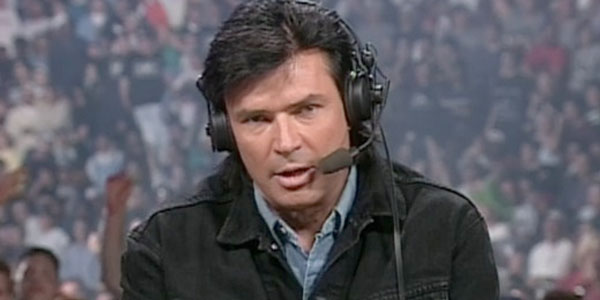
There is a group of people who believe that WCW went out of business because of Eric Bischoff's creative and financial folly, and WWE hasn't exactly been shy in quietly pushing the idea that Bischoff was responsible for the company going under. Various WWE talking heads have talked about Bischoff's contribution to WCW's demise as the key aspect that killed WCW, but in truth, Bischoff really wasn't that bad. Was he wasteful with money? Yes - but then again so is Vince McMahon. Did Bischoff use too many celebs? Yes, but again, Vince is also guilty of this: he has paid the likes of Z list celebrity Snooki to appear on his show. You get the point: there wasn't really anything that Bischoff did which was any more horrible than things Vince McMahon has done. Both have been guilty of terrible storylines, awful management, wasteful finances and questionable behavior. What really killed WCW was bad luck in corporate politics. The show was getting whupped by Raw, but it would have survived if it had not been for a bunch of suits turning their noses up at wrestling. It all went down as a result of Ted Turner selling his network in the merger of AOL and Time Warner in 2001; the new group bosses deemed wrestling to be out of image with their new operation, and without a network the show was dead. Eric Bischoff wasn't even in charge at that point, and hadn't been involved for well over a year. Eric would end up with most of the heat for the downfall, but it was more a case of Vince McMahon's genius which had damaged WCW. Nevertheless, WCW Nitro still had an audience. Eric Bischoff knew the company still had value, and tried to buy it, but corporate snobbery would ultimately kill the brand dead.

2. Vince Tells Bret That Montreal '97 Finish Will Be A "Schmozz"
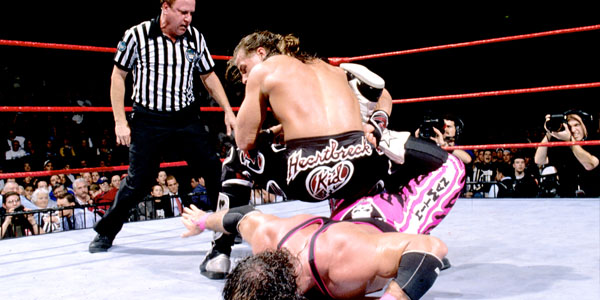
Vince McMahon showed no moral conflict when personally telling a lie to Bret Hart in 1997. It was a lie which would lead to one of wrestling's most infamous incidents, and a lie which kick started a wrestling boom. The lie was of course Vince telling Bret that he would not lose in Canada. Vinnie Mac pulled Bret into his office backstage at the Molson Arena on the night of the 'Montreal Screwjob', and the chat was audibly recorded. Vince lied to Bret's face: he informed the Hitman that his creative plans would involve a run in. They agreed they would do a DQ result. Bret would not lose in Canada. "I'm thinking we do a run in, some kind of schmozz", Vince informed Hart. A short while later, Vince was proved to be a liar. The WWE championship match progressed with Shawn Michaels putting Bret Hart into the sharpshooter. McMahon then informed the timekeeper "ring the fu**ing bell", despite Hart not submitting. It was a shocking occurrence, even by wrestling standards this lie was considered to be a low: the relationship between promoter and talent had been compromised by McMahon's lie. Would talent ever be able to trust Vince again? If he could do this to Bret, his friend and 14 year company veteran, then surely Vince could be telling fibs to anyone. The lie could have really hurt and undermined business. Instead it made the company millions of pounds, and was arguably one of the best decisions Vince ever made.

1. Wrestling Is Real

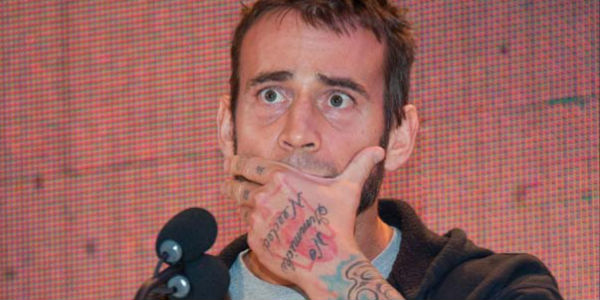
The biggest lie in pro wrestling has to be the very nature of the content itself - the whole thing is a lie. When you are watching John Cena and CM Punk have a great match you are witnessing a lie. You are listening to a commentary of lies from the broadcast team. But it isn't a bad lie. It is a deception which is an art in itself. There are layers of truth within the lie. The execution and absorption of 'moves' is all real. The athletic prerequisites are all real. The lie is now acknowledged. There is no need to maintain the deceit any longer, and WWE has openly stated that the product is staged. Wrestlers such as The Rock have commented about the nature of the lie, when asked about doing it for real, Rock is one of many WWE talents who admits he would not have a chance in real wrestling or fight based contests such as UFC. The industry has moved on from the days when people really believed what they were witnessing was real. Strangely enough, some fans still get flustered at accusations that wrestling is fake or a lie. There is an element of smart mark fans who grumble that pro wrestling is as real as anything because the guys are really doing the moves. But the truth is that the best wrestlers are the ones who never hurt their opponent. The most skilled wrestlers are the ones like CM Punk who can tell a lie so well that the audience really buy into what he is saying and doing. An example of this was the stunning 2011 promo in which Punk criticized Vince McMahon and Triple H. Fans loved it, Punk was saying what he really thought - but he wasn't. Punk finished that promo and went backstage to share high fives with McMahon and Hunter. The best wrestlers and best storylines will always be the best liars and lies, and to buy into believing something as real when it is fake is the true art of pro wrestling. Long may the deception continue.

 
Posted On: 
WWE Writer

Grahame Herbert hasn't written a bio just yet, but if they had... it would appear here.