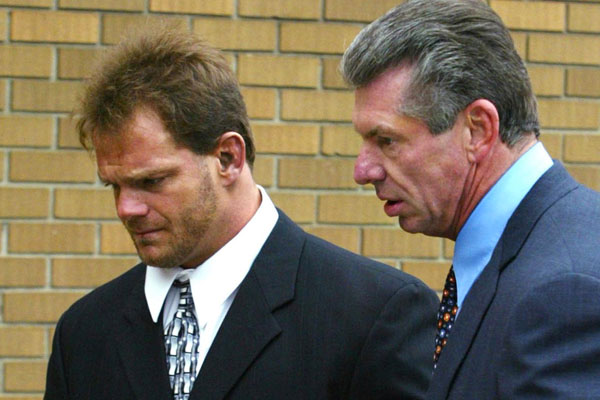
WWE: 10 Most Shocking Moments In Wrestling
God god almighty!

10. ECW Double Crosses The NWA
http://www.youtube.com/watch?v=_kpEjrKqf3s The National Wrestling Alliances version of the World Heavyweight Championship is the oldest surviving championship anywhere in the wrestling world. After WCW withdrew its membership in 1993, the NWA title quickly lost its sparkle. The title remained vacant for a year after Ric Flairs final reign. NWA President Dennis Coraluzzo saw the potential of the burgeoning NWA Eastern Championship Wrestling operated by Paul Heyman, which had the most television coverage of any NWA promotion, and negotiated a deal where ECW would host an 8 man tournament to crown a new champion, with Shane Douglas emerging as the new title holder. However, Coraluzzo had previously buried Douglas on a radio show for allegedly no-showing a booking for him (something which Douglas had no recollection of) and Douglas, Heyman and ECW owner Tod Gordon plotted a scheme that would result in huge publicity and a new era for ECW. Keeping it strictly between the three of them, as Douglas made an acceptance speech as new champion, he declared, I am not the man who accepts a torch to be handed down to me from an organization that died seven years ago. The Franchise, Shane Douglas, is the man who ignites the new flame of the sport of professional wrestling! I declare myself, The Franchise, as the new ECW Heavyweight Champion of the world! As a stunned Coraluzzo looked on, realising that he had been double-crossed and made to look a fool in front of the wrestling world, Eastern Championship Wrestling quit the NWA, rebranded itself Extreme Championship Wrestling and became the most controversial and polarising wrestling promotion of the 1990s.9. Sid Breaks His Leg On Live PPV
http://www.youtube.com/watch?v=WxKQOQmjigU Injuries happen all the time in wrestling. Its an occupational hazard given the nature of the activity. Sometimes, very graphic or gory injuries can occur, but usually, this happens on a house show, away from a mass audience. Very occasionally, a serious injury can occur during a televised show, but ordinarily, this will be edited off the broadcast. Having said that, these days, its more likely to be kept in: this is, after all, the reality era of wrestling. However, back in 2001, these things were usually kept to be seen by a very small audience and the public were shielded from such things. Unfortunately, if the accident happens on a live pay-per-view broadcast, theres very little you can do but have the whole world watch it. And thats what happened to Sid Vicious, as he was known in WCW, at the Sin PPV show in 2001. Vicious was wrestling in the main event in a four way match against Scott Steiner, Road Warrior Animal and Jeff Jarrett. Sid stood on the second rope, not a typical move for him, and jumped off to execute a front kick on Steiner. However, as he landed, his left leg gave way in the most graphic way imaginable. It snapped in two upon impact, leaving the bottom part of his leg, ankle and foot flopping around like a fish out of water, and leaving Sid writhing around in agony. To make matters worse, Animal was scheduled to come out midway through the match as the surprise fourth entrant. This left the commentators in the awkward position of trying to sell the surprise of Animals appearance while the match in the ring ground to an unscheduled halt as Sid got the urgent medical attention he needed. Legend has it that, as he was stretchered off backstage, Sid cried out, I want to go home, to be advised by agent Dave Finlay, Just click your heels together three times, though whether this is true or just part of wrestling folklore is anyones guess. Sid never wrestled full time again after the accident. His last major appearance was a cameo on Raw, squashing Heath Slater in 2012.8. Bruno Sammartino Loses The WWWF World Title To Ivan Koloff
http://www.youtube.com/watch?v=fNngXluEkRk As anyone who watched the 2013 WWE Hall of Fame ceremony will have learned, in the 1960s and early 1970s, Bruno Sammartino was the face of the promotion, then called the World Wide Wrestling Federation (WWWF). The promotion held major shows at the famed Madison Square Garden in New York City on a monthly basis, and Bruno still holds the record for the most sellouts of the famous building. Bruno was the MSG, and the MSG was Bruno. It was his home. With a large Italian-American population in the city, Bruno was their cultural figurehead, the man who survived the rigours of the Second World War as a child and emigrated to the States in the 1950s. He embodied the trials and tribulations that the Italian-Americans of New York had endured together. To illustrate what a big deal he was, Bruno was even granted a private audience with the Pope at the Vatican. On January 18th, 1971, Bruno stepped into the ring at the MSG, for a title defence against The Russian Bear Ivan Koloff. Koloff, a Canadian in reality, had been pushed to the top of the bill by the tensions of the Cold War, and Soviet heels were the in-thing at the time. However, Koloff was not considered to be a huge threat to the invincible Bruno and Brunos loyal fans packed the Garden, expecting to witness another triumph by their favourite son. However, it was not to be. Koloff held his own in the match, and then picked up Bruno for a bodyslam. With the champion prone on the floor, Koloff scaled the turnbuckles and came off the top rope with a kneedrop to Brunos midsection. Three seconds later, we had a new champion. Never before has the phrase stunned silence been so appropriate. The commentator said that you could hear a pin drop. It was so quiet that Bruno actually thought that his hearing had been damaged during the match because he couldnt hear anything. Koloff had his arm raised in victory and was quickly ushered out of the ring while Bruno stayed in the ring to provide a distraction for Koloff to make his escape. He was not presented with the belt in the ring for fear of causing a riot. Bruno held the WWWF World title for an astonishing seven and a half years, the longest reign in history and something that is unlikely to ever be broken. Koloff, however, enjoyed less success, losing the belt to Pedro Morales a mere 21 days later, acting as a transitional champion to move the belt from Bruno to Pedro without having to have the two babyfaces face each other.7. Undertaker Throws Mankind Off The Hell In A Cell
http://www.youtube.com/watch?v=NgYoYTbnPo4 Good God Almighty, they killed him! As God is my witness, he is broken in half! Jim Ross It wasnt even the main event of the 1998 King of the Ring PPV, but afterwards, there was only one match that people were talking about. The Hell in a Cell match with The Undertaker was the defining moment of Mick Foleys career and set an impossible standard for any future Hell in a Cell matches. As the deranged Mankind made his entrance, he climbed to the top of the Cell and waited for The Undertaker to arrive. Taker accepted the challenge, and climbed up to meet him. A few minutes later, after a brawl that saw the two of them wobbling as they tried to keep their footing on the mesh, Foley was flung off the top of the cage and through the announcers tables some 15 feet below. According to Foleys autobiography, Have A Nice Day, this was something that Foley had thought of while brainstorming ideas with his good friend Terry Funk. After a five minute delay while Mankind was given medical attention, the announcers (and the fans) assumed that the match was over. Then an unmasked Mankind came hobbling back down the aisle with a twisted grin on his face, and climbed to the top of the cage again. Undertaker followed. A few moments later, Foley was chokeslammed on top of the cage, which gave way, resulting in Mankind plummeting to the canvas several feet below, with a nearby chair striking him in the head as he fell. He was legitimately knocked out. Terry Funk, already at ringside, having checked on Foley after his initial fall, bought his friend some time by being attacked by Taker, who literally chokeslammed him out of his shoes. Foley eventually came around, with one of his bottom teeth piercing his upper lip and ending up inside his nostril, wondering what the hell a pair of somebody elses trainers was doing in the middle of the ring. The match continued, and two bumps into some thumb tacks later on almost seemed tame compared to what the crowd had already witnessed Foley endure. A Tombstone later and the 17 minute match was over. Never before had such a hardcore, graphic match been seen in the WWE. This was the epitome of the Attitude era. As Mick Foley left the ring, miraculously under his own steam, his legend had been secured forever.6. The Montreal Screwjob
http://www.youtube.com/watch?v=ZeTPQsBsE9Y Say the word Montreal to any wrestling fan, and there is only one thing that they think of: the infamous double cross on Bret Hart at the Survivor Series 1997. The WWF, as it was then called, was in the midst of a heated war with rivals WCW. Nothing seemed to be out of bounds. Top WWF stars were poached by WCW. Pre-taped WWF results were revealed on live WCW broadcasts. Vince McMahon was in trouble like hed never been in before. In an attempt to secure his top star, Bret Hart, he offered Hart an unprecedented 20 year deal in 1996. It would mean that Hart would be an active wrestler for another three years, before taking up a backstage role as an agent, sharing his wisdom with a new generation of stars. However, the WWF was struggling financially and could not afford to honour the contract any longer, meaning that Hart could negotiate with WCW. He came to an agreement with them, and his WWF contract was set to expire in December 1997. However, Hart was still the WWF Champion and McMahon needed him to drop the title before jumping to WCW. At Survivor Series 1997 in Montreal, he was defending his title against Shawn Michaels, a man he legitimately despised in real life. They had had a backstage brawl earlier in the year, and had both deviated from scripted promos to make veiled barbs at each other during the summer. McMahon wanted Hart to lose to Michaels. Hart didnt want to lose the title in his home country of Canada, and certainly didnt want to lose to Michaels, and with a creative control clause in his WWF contract, there was little McMahon could do if Hart didnt want to play ball. So he decided to conspire with Michaels and referee Earl Hebner to double-cross Hart. The internet was starting to be used by more and more people by 1997, and as Hart made his way down the aisle, a sizeable chunk of those in attendance and those watching on PPV were aware of the behind-the-scenes wrangles and contract issues that were happening away from the ring. The match played on the real life issues and was a disjointed, heated brawl with several WWF officials and McMahon himself at ringside. The result that Hart believed would happen, a disqualification, never occurred. Instead, while Michaels locked Hart into his own submission finisher, the Sharpshooter, Hebner signalled for the bell despite the fact that Hart had never submitted. Michaels feigned innocence and was rushed backstage. Hart realised what had happened, spat in McMahons face, wrote the letters WCW in the air with his fingers and smashed up the ringside area. As word spread about what had really happened, wrestlings thin veil of legitimacy was finally blown wide open. It soon became apparent to anyone who had ever questioned it, that wrestling was pre-determined, because at Montreal, there were two pre-determined finishes, one fed to Hart, and one to Michaels and Hebner. Anyone who wanted to understand the controversy would have to expose themselves to the pre-determined nature of the business. The heel Mr McMahon character was born out of this event, and the Vince Russo style of kayfabe-busting booking also came out of this. Montreal killed the magic of wrestling for a lot of people, but with the advent of the Internet, it was going to happen one way or another at some point in time.5. Brock Lesnar Ends The Undertakers WrestleMania Streak
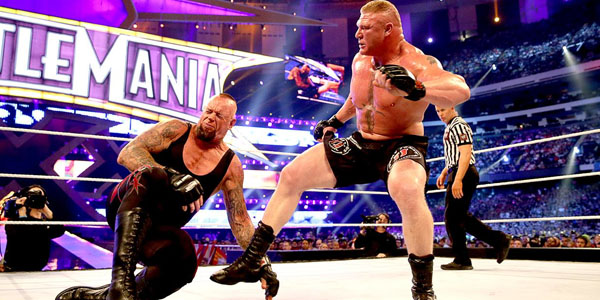
4. Hulk Hogan Turns Heel
http://www.youtube.com/watch?v=t6aRr9zhyM8 By 1996, Hulk Hogan had been the clean living, patriotic hero of the wrestling world for 12 years. He had won the World title in both WWF and WCW. The red and yellow outfit was iconic. But the routine was wearing a little thin. Wrestling was changing and many fans were turning their backs on the clean living babyfaces to turn their support to the edgier heels. Hogan, ever the brilliant business mind, realised this, and decided that it was time for a change, even if that change was unthinkable to many. It was the height of the war between WWF and WCW. Scott Hall and Kevin Nash had arrived in WCW to great fanfare with a controversial storyline which blended fantasy and reality (something which had evolved since the Montreal Screwjob). Inspired by a similar storyline that Eric Bischoff had personally witnessed in New Japan Pro Wrestling, Hall and Nash were portrayed as outside invaders, trying to destroy the foundation of WCW. At Bash at the Beach 1996, The Outsiders of Hall & Nash, promising that a mystery third partner would make his appearance, challenged the WCW trio of Randy Savage, Lex Luger, and that bastion of WCW himself, Sting. As the match started, Hall & Nash were on their own. It seemed like their bragging of a third man had been an empty promise. Lex Luger was knocked out and taken to the back, making the main event a regular tag match. 15 minutes into the match, all four remaining men were down on the canvas, and Hogan, clad in his familiar red and yellow, walked down the aisle, entered the ring and tore off his shirt. Hall & Nash fled to the outside, leaving just Hogans long time friend and foe, Savage, lying prone in the ring. And then it happened. Hogan dropped his famous legdrop on Savage. And then he did it again. The crowd were outraged. They werent silent, they were loud. Referee Randy Anderson held his heads in his hands in disbelief. Hall & Nash re-entered the ring and high-fived with Hogan. There was a third man in their war against WCW, and it was Hogan. Hogan threw referee Anderson outside and the match was declared a no-contest. The fans started pelting the ring with rubbish, something never seen before on a PPV show. One fan foolishly ran into the ring and was soon dealt with by both wrestlers and security. Gene Okerlund then entered the ring and Hogan cut his famous promo, announcing the arrival of The New World Order of wrestling. Hollywood Hogan and the NWO was born. I remember non-wrestling fans seeing WCW tapes on my TV at home being truly shocked when I told them that Hulk Hogan has turned bad. It was like Santa sticking a finger up to all the children in the world. The NWO storyline became the centre point of WCW for the next three years, leading to the evolution of Sting into a darker character based around The Crow. The NWO even reformed in WWE after they bought out WCW. And it all started with Hulk Hogan reinventing himself and shocking the wrestling world.3. The Death Of The Ultimate Warrior
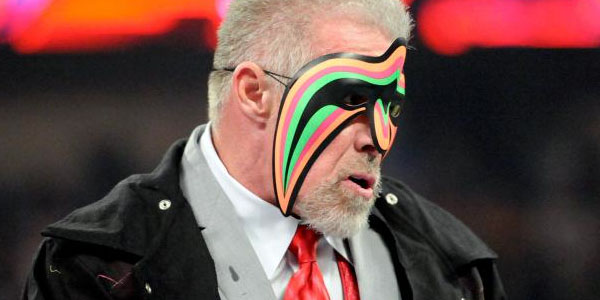
2. Owen Harts Fatal Accident On Live PPV
 While Bret Hart was the star of the Hart family, baby brother Owen was always regarded as the technical wizard of the family. His feud with Bret in 1994 revolved around the storyline jealousy that he had, stemming from living in his famous brothers shadow. In reality, nothing could be further from the truth. In 1999, Sting was on top of WCW, with his new Crow-inspired character. He would be seen lurking in the rafters of buildings and would then make a dramatic entrance, swooping down from the ceiling on a zip wire. In the era of WWF v WCW war, everything was fair game and Vince decided to make fun of WCWs top star. Owen Hart reprised his initial WWF character of The Blue Blazer. While the fact that it was Owen under the mask was never hidden or denied, the Blazer was a goofy character who was the polar opposite of the Attitude era, encouraging his little Blazers to drink their milk. Although supposed to be a heel, the comical execution of the role made Owen a cult babyface with the fans. At the Over the Edge live pay-per-view, the Blazer was scheduled to face The Godfather for the Intercontinental title. As a pre-taped interview played, Owen was supposed to step off a catwalk 80 feet above the floor and descend to the ring on a zip wire, which would then become stuck a few feet in the air above the ring. He would then use a quick-release mechanism on the shackle to release himself and comedically fall flat on his face in the ring. It was reported that Owen was reluctant to do it and his wife also discouraged him. But, being a professional, he did what was asked of him. However, two feet into his descent, the quick release mechanism let him go, and Owen free-fell 78 feet, landing chest first on a turnbuckle before falling lifelessly into the ring. As the live broadcast went back to the ring, the cameras went straight to a visibly stunned Jim Ross who informed viewers of what was going on. Fortunately, Owens accident never made it to broadcast due to the short delay that is installed on all live broadcasts in case of emergencies. Ross emphasised that this was not a storyline and was real as real can be. Jerry Lawler, who had leapt to ringside as soon as it happened, returned to the announcing desk, looking like hed seen a ghost. Owen was stretchered out of the building and rushed to hospital, but he was already dead, killed by blunt force trauma. Unbelievably, the show went on and wrestlers had to work in a ring that had Owens bloodstains in the corner. Later on in the broadcast, Jim Ross had the terrible task of informing viewers that Owen had died. However, fans live in attendance were not informed and had no idea. Owen Harts death, live on a pay-per-view event made the mainstream press all around the world. No wrestler ever made an entrance on a zip wire ever again after Owen Harts tragic accident. The next night, a special Raw is Owen episode aired, with storylines abandoned and wrestlers paying tribute to Owen in vignettes which sadly became a template for future broadcasts immediately after the deaths of active wrestlers.
1. Chris Benoit Murder/Suicide