WWE: 15 Wrestlers Who Should Have Been Top Guys
Even when they're clearly talented, not every wrestler fulfills their potential. And honestly, that's a damn shame.
"Be not afraid of greatness," the Bard tells us. "Some are born great, some achieve greatness, and some have greatness thrust upon 'em." It's a maxim as true in professional wrestling as it was on Shakespeare's stage. Not everyone gets to be the main attraction, though.
Sung or unsung, the wrestlers on this list had just as much charisma and in-ring ability as their more well-known counterparts, and often put many main eventers to shame. Some were held back by the tastes of fans and promoters. Others caved to their own excesses. All played a critical role in making wrestling the modern spectacle it is today.15. Marty Jannetty

14. Brian Pillman
If there's one thing wrestling fans and detractors can agree on, it's that wrestling is a work. A fan will tell you, "Of course. That's the point." A non-fan will say, "I don't want to watch fake stuff. Put on American Idol." That's why the infamous Brian Pillman/Steve Austin "gun angle" was so disturbing. It was an eye-roller, to be sure, a desperate attempt to get some attention away from then-ratings champ WCW. It was only unprecedented in the sense that it hadn't happened in wrestling. Bad guys have been brandishing firearms onscreen since "The Great Train Robbery." It was only a matter of time before a gun became a storytelling device on a wrestling show. Even so, the USA Network was livid after the incident, and it undoubtedly affected Pillman's career afterward. Austin went on to unprecedented heights of popularity. Pillman wound up wearing a dress. It was a sign that the writers had run out of things to do with the "Loose Cannon" character. He died of heart disease in 1997, an unfortunate loss of a great talent.13. Booker T
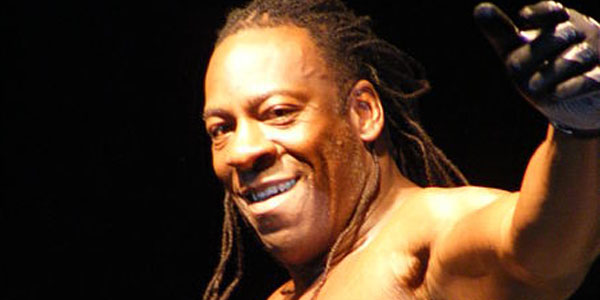 Booker T was one of the few wrestlers who could work a crowd as a babyface or a heel. As part of Harlem Heat with his brother Stevie Ray, Booker T immediately cut an impressive figure, taking on main eventers from the outset of his career. He later became the most decorated wrestler in WCW's history, and was WWE's King of the Ring and World Heavyweight Champion. He's a WWE Hall of Famer now, but for a while there, it looked like things weren't going so well. He was one of several names in the Signature Pharmacy affair, in which several wrestlers were linked to the use of anabolic steroids. WWE's Orwellian-named "wellness policy" reared its ugly head, and Booker T soon left for TNA. Booker T has since patched up his relationship with WWE, but his tenure as champion was far too short for a man of his ability.
12. Rob Van Dam
11. Rick Rude
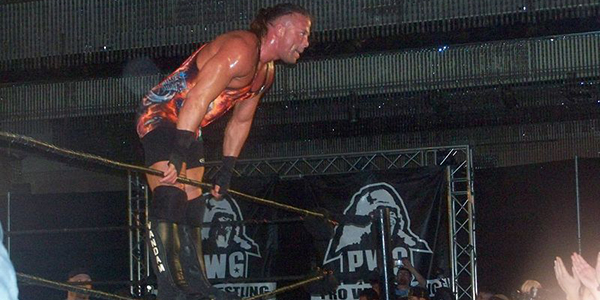
First, there was the whole reworking of "The Stripper." The silly mustache helped, as well. Best of all, though, was the in-ring promo before the match. Who knew you could refer to anyone as a "Pennsylvania p*ss ant," let alone on television, let alone in Pennsylvania? "Ravishing" Rick Rude was a perfect example of what the WWF could do with an already-established wrestler. Gimmicks come and go, and sometimes they feel forced (see: Bastion Booger). Yet every once in a while, a wrestler will turn a gimmick into an essential part of his character. It's one of the things the WWF did best in the eighties: turning established wrestlers into icons. Now recognized by WWE for having the greatest physique in the history of professional wrestling, Rude was better known for his promos. If you were a tad pudgy or had overactive sweat glands, you were guaranteed to be offended. And even if you weren't, there was that creepy hip-grinding thing. Rude's unique ring work and innate sense of timing set him apart from most of his contemporaries. He was a genius at selling moves, and his Rude Awakening finisher was the most painful-looking neck-breaker in the business. He was briefly in the WWF's main event picture, finalizing a feud with champion the Ultimate Warrior in 1990, but it was a short-lived stint. When he retired from regular ring work in 1997, his generation's "methodical pace" was phased out in favor of a faster in-ring style, more Michael Bay than Alfred Hitchcock. He is now perhaps most famous for appearing on both the taped WWF Raw and the live WCW Nitro on the same night, as well as appearing on ECW's Hardcore TV later that week. Even in retirement, "Ravishing" Rick Rude, one of the best villains of the eighties, was breaking new ground. Had he not died of heart failure in 1999, he undoubtedly would have continued to innovate.10. Tito Santana

9. Ron Simmons
No matter where he worked, Ron Simmons had more strength, ability, and charisma than most of his better-pushed contemporaries. During his five months as WCW Champion (the first African-American World Heavyweight Wrestling Champion in history), he was new, innovative, a champion youths of any color could look up to. It was disappointing to see Simmons him turn heel shortly afterward. Simmons's WWF gimmicks ranged from strange (that weird, blue gladiator-looking costume) to controversial (the original Nation of Domination), to iconic (the Acolytes/APA). He was always a mid-card guy in the WWF, but he was still fun to watch. He also had a single-word signature catch phrase years before Daniel Bryan's. He still shows up now and then, and every time the crowd goes insane. He's a Hall of Famer now, and deservedly so. Still, he could have been champion at least one more time. Damn.8. Kerry Von Erich
It's hard for people who weren't living in Texas back then to understand just how important World Class Championship Wrestling was, not just to wrestling, but to the culture at large. At the center of this was the feud between the Von Erichs and the Freebirds. ZZ Top's "La Grange" would hit, and the screams would practically crack your television set. Before the Rockers, before John Cena, the Von Erichs were a huge hit with wrestling's fledgling youth market. Considering how not only wrestling, but every facet of popular media is now youth-driven, the Von Erichs were certainly innovators in this regard. In classic WWF fashion, Kerry was nicknamed the "Texas Tornado" when he joined the Federation in 1990. He was quickly thrust into the Intercontinental Championship scene. Holding the IC title was an honor in itself, as always, but at the time it was becoming a bridge to attaining the WWF title. Sadly, this didn't happen for Kerry Von Erich. Like many wrestlers, he became addicted to painkillers. After two drug arrests and the threat of jail time hanging over his head, he shot himself in the heart in 1993. It was a shock to fans, but to the Von Erich family, Kerry was only the latest tragedy; they had already lost three of the legendary brothers. It's impossible to say whether a main event push would have sent Kerry Von Erich's life in a different direction. Taking the later deaths of Eddie Guerrero and Chris Benoit, both top guys, into account, it's not likely. The champion of a major wrestling promotion has all eyes on him at all times. It's a high-pressure gig, and the last thing Kerry Von Erich needed was more pressure.7. Bruiser Brody
Brawlers are a dime a dozen these days, but Bruiser Brody was the original. Even Mick Foley, the hardcore legend himself, says that his Cactus Jack character was a ripoff of Brody's in-ring style and demeanor.
Brody was immensely popular with fans, but wasn't the best locker room politician. He was famously uncooperative with wrestlers he didn't like. Brody once stopped working in the middle of a cage match with Lex Luger, just before Luger was to leave NWA Florida for Crockett Promotions. The reasons are unclear, but one thing is for sure: guys in a real fight don't just stand around, which is exactly what Brody did, making Luger look like a chump in the process. Brody is still talked about by old school wrestling fans to this day. His terrifying presence, solid promo work, and feuds with Kamala and Abdullah the Butcher are highlights of a career that ended far too soon. He was stabbed to death by another wrestler, Jose Huertas Gonzalez, in 1988.6. Curt Hennig
Curt Hennig, a second-generation wrestler and all-around gifted athlete, had already made a name for himself as the AWA Champion by the time he reached the WWF in the late eighties. Under his new moniker Mr. Perfect, Hennig held a winning streak for nearly two years, a gimmick borrowed by Kurt Angle a few years later. He was a two-time Intercontinental Champion, and the first to make that title synonymous with technical wrestling. While Bret Hart and Shawn Michaels went on to become WWF Champions after their respective IC reigns, Hennig remained a mid-card guy. He could out-talk and out-wrestle anyone on any roster, but a series of injuries left him unable to perform regularly. He had a memorable run in WCW as member of the Four Horsemen, the NWO and, best of all, the West Texas Rednecks. He had a brief return to WWE in 2002, but was mainly there to put over other guys, and was released after a legitimate fight with Brock Lesnar. He died of a cocaine overdose in 2003.5. Jake Roberts

4. Owen Hart

3. Davey Boy Smith

2. Ted DiBiase
"Million Dollar Man" Ted DiBiase was, hands down, the Rock n' Wrestling era's best villain. Infamous for his trickery, as well as his harsh treatment of his bodyguard Virgil, DiBiase was equally celebrated as the WWF's most gifted technical wrestler. He was a staple player during the eighties and nineties. If you turned on a WWF program, you were guaranteed to hear his maniacal laugh and "Million Dollar Rap" theme song, which he performed himself. You were also guaranteed an outstanding match. DiBiase could elevate a Saturday morning squash match to high art, all while being persistently booed. He obviously enjoyed playing the bad guy, but his moves were smoother-looking than most babyfaces'. DiBiase was briefly in the main event picture during the late eighties, but it didn't last nearly long enough. He tried to buy the WWF title, which led to a title tournament at the over-long WrestleMania IV. He wrestled three times that night, eventually losing to Randy Savage. He later appeared with his own iconic Million Dollar Championship, and became a Tag Team Champion along with Irwin R. Schyster in the legendary Money, Inc. A neck injury took him out of action, and he became a commentator and manager.1. Scott Hall
