5 Wrestling Match Types That Should Have WWE PPVs Geared Around Them
A ridiculous number of different matchtypes, from the excellent to the terrible and short-lived, have been devised by the minds behind professional wrestling over the years to complement simple one or multi-fall offerings. Some of these incorporate objects, such as tables or ladders (or poles, if Vince Russo is on the writing staff), whilst others are more objective-focused. Of the traditional (and oldest) 'big four' pay-per-view events offered on an annual basis by the WWE, two are geared around a specific match type. The Royal Rumble always incorporates a melee that sees men enter the ring at intervals and attempt to become the last man standing by throwing their opponents over the top rope, whilst Survivor Series always features at least one elimination tag match, usually with two teams of five squaring off against one another. Subsequent pay-per-view offerings that have been added to the line-up over the years have also tended to focus on a specific type of match or stipulation, such as Extreme Rules, in which most matches are ostensibly fought under 'hardcore' rules, or Money In The Bank, in which the main event is a ladder match that sees participants attempt to secure a briefcase that is suspended above the ring. If a match type is not the focus of an annual pay-per-view event, however, it is often seen very rarely on company programming - the likes of tornado tag and strap matches are featured once in a blue moon, for instance. Whilst these may not be engaging enough to warrant their own event, the following five certainly are, and the use of them could certainly help to make 'gimmick-less' events such as Battleground much more memorable.

5. Tournament

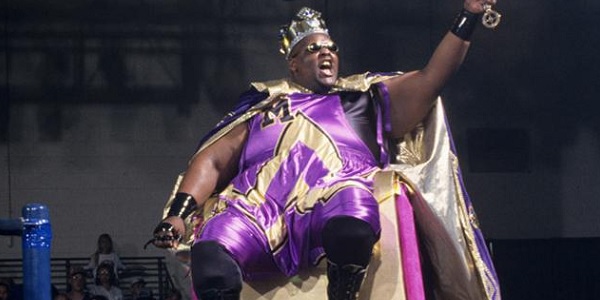
First held in 1985, the WWE's King Of The Ring tournament was made into a pay-per-view event in 1993, and typically featured sixteen wrestlers competing in knockout matches until a winner was crowned. Discontinued in 2002, three revivals took place in 2006, 2008 and 2010, but the event has not taken place since, despite widespread calls for its reinstatement to the pay-per-view roster. Though it could be argued that a one-fall tournament is no longer engaging enough to be the centrepoint of a pay-per-view, the modification of tournament stipulations could make things much more interesting, as each match or round of the tournament could be contended under a different set of rules. Imagine, for instance, a battle royal to initially determine the contenders and seeding, followed by makeshift tag matches that result in the winning teams having to then face one another to proceed further towards a final contested within a steel cage - the creative possibilities are endless.

4. Championship Scramble

Championship Scramble matches are frantic affairs, as the winner of the match is not the man who gains the first pinfall or submission, but the man who scores the last one before the predetermined time limit runs out. Participants can either come out at set intervals (as they did in the matches billed as 'Championship Scrambles' at Unforgiven 2008) or all at once for full-blown mayhem (as they did in the 'Hardcore Battle Royal' at Wrestlemania 16). Whilst such a match might be considered too 'gimmicky' for the WWE Championship, it would certainly be a refreshing way to have the Intercontinental, United States or even the Tag Team championships defended on a yearly basis, rather than having them forgotten about or defended at pay-per-view events as an afterthought (how many times recently has a match been hastily put together by having somebody defeat the champion in a non-championship match?). Much like the annual Money In The Bank ladder match does, a Championship Scramble event would be a fun way to give mid-carders the opportunity to shine in a fast-paced and frenzied match that would keep the crowd on its toes as a result of its unpredictability.

3. Iron Man

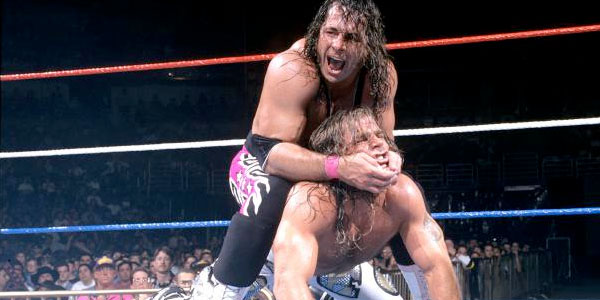
Because of time constraints and the need to feature a multitude of performers each week, the matches featured on WWE's television shows rarely last longer than ten minutes. Pay-per-view matches often extend to twenty or thirty minutes, but even these pale in comparison to the length of 'Iron Man' matches, which are not contested in flying suits of armour (WCW would've probably tried that by now if they were still in existence, mind), but as high-endurance affairs that go on for sixty minutes or even longer. The winner is the man who scores the most pinfalls or submissions over the time period, with sudden death arising if there is no winner after time runs out. This was the case in perhaps the most well-known Iron Man bout, contested between Bret Hart and Shawn Michaels at Wrestlemania 12, which is widely regarded as one of the best matches in the company's history. Though a staple of independent events, Iron Man bouts are rarely seen on WWE programming. Given the indie backgrounds of performers such as Daniel Bryan however, the introduction of an Iron Man themed pay-per-view would allow for the creation of some exhilarating matches (especially if they had a falls count anywhere stipulation), even if some may argue that the audience may struggle to maintain their attention throughout a contest lasting an hour or even more.

2. Gauntlet

http://www.youtube.com/watch?v=3lwF_gJetvE Gauntlet matches in the WWE are typically used to have a performer 'overcome the odds', as they usually feature one man taking on a number of different opponents in quick succession. Ostensibly, however, participants are meant to take place in a series of one-fall matches, with the winner of each then facing a fresh opponent until a final winner is declared. The addition of an annual Gauntlet match to a pay-per-view event would allow a championship (or championships) to be defended in a fashion that sees the champion at a disadvantage, much like the Elimination Chamber match does. It could also be used to determine a new number one contender for a championship, with new participants entering at timed intervals to make the match more than a one-fall after one-fall affair, though this could be deemed too similar to the Royal Rumble in terms of premise. Regardless of this, a Gauntlet match is never a predictable affair, and the opportunities for its use in the current WWE climate are widespread - imagine, for instance, The Shield having to defend themselves against a constantly-changing team of three opponents until they are finally beaten, or a large-scale Tag Team Turmoil to facilitate the creation of new tag teams to reignite the division.

1. WarGames

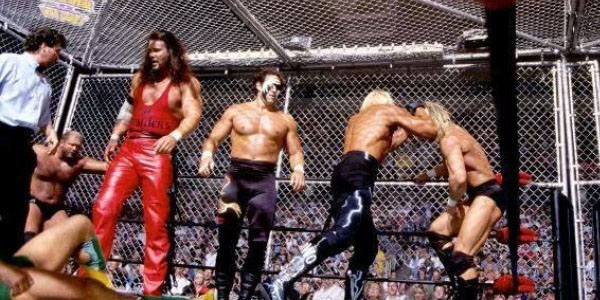
During its existence, WCW introduced a ludicrous amount of different match types to their audience. The vast majority of these were horrendous (Judy Bagwell on a pole, anyone?), but one that they inherited from the NWA stands out miles above the rest - WarGames. Pitting two teams of four wrestlers against each other, the matchtype features two rings covered by a cage, with participants from each team entering at staggered intervals until everybody is present. Chaos then erupts as the two groups engage in a brutal brawl that ends only when somebody submits, surrenders or is knocked out, with pinfalls counting for nothing. Such a match provides a violent yet exciting environment to bring feuds to an end, and could easily complement Survivor Series either on the same pay-per-view or under its own banner. Many other wrestling companies have introduced their own WarGames variations. from TNA's Lethal Lockdown to CZW's Cage Of Death. The WWE has never opted to use one of its former rival's best ideas for its own benefit, however, despite releasing DVD of the NWA and WCW's finest offerings last year. Triple H is heavily rumoured to be a fan of the matchtype, however, so never say never as his control over the company continues to increase.

In this post: 
War Games
 
Posted On: 
Contributor
Contributor

Alex was about to write a short biography, but he got distracted by something shiny instead.