WWE: 5 Reasons Why Zack Ryder Is An Underwhelming Superstar
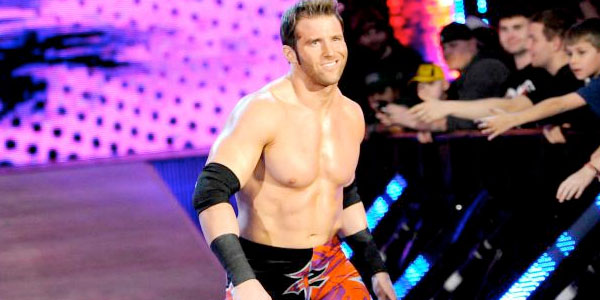
There are times when all WWE sees when they sign someone to a contract is a body. It's a good looking body for the purposes of pro wrestling. It has a full head of hair, tanned skin, six-pack abs, defined glutes, calves, deltoids, and so on, and so forth. It's more-than-likely possible that when Long Island, New York natives Zack Ryder and Curt Hawkins were signed by WWE in 2006, both were bodies that the company expected to groom into superstars fitting a typical mold of what WWE performers have looked like for the better part of five decades. However, in the case of Zack Ryder in particular, this has absolutely not been the case. He's become a star, and at a time where it's inherently beneficial to do so, even one that doesn't fit a traditional mold. But in being different yet falling short, there are some lessons that Ryder teaches that deserve to be learned from. In his last eight years in World Wrestling Entertainment, Zack Ryder has gone from being an Edgehead to a WWE Tag Team Champion, the company's groundbreaking social media engagement leader, a YouTube pioneer, Internet Champion, United States Champion and top-selling merchandiser. However, by the end of 2012 (continuing to the current day), Ryder has found himself sliding as a top merchandiser, without the US Championship, still holding a now-meaningless Internet championship, not-so-pioneering on Youtube, one of many WWE social media engagement leaders, and a singles wrestler not even able to re-team with Curt Hawkins, now largely not a part of WWE broadcasting. How does a WWE superstar get so close to the top of the mountain yet seemingly suddenly precipitously tumble to the bottom? There are five solid reasons why Zack Ryder has tumbled, and is thus, underwhelming.

5. Sometimes, Being A Good Wrestler With Great Charisma Just Isn't Enough
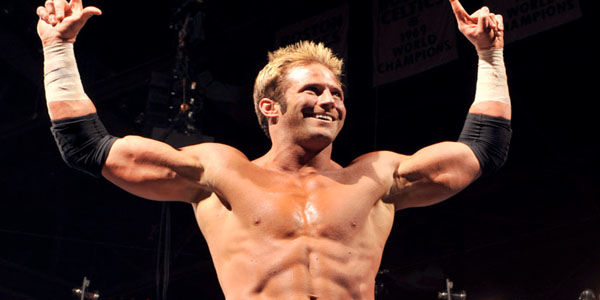
World Wrestling Entertainment's in a strange place right now. Whereas for years, the company could negate the influence of independent wrestling in its rings by pushing heavyweight grapplers with impressive physiques who could get over with a crowd oftentimes by force of charisma alone, this is no longer the case. The one reality about WWE's purchase of World Championship Wrestling is that is effectively shut the door to the idea of smaller American wrestlers having to meet an ideal set by other similarly sized American wrestlers who succeeded in WWE and WCW. Now, without that filter, WWE's direct access to smaller wrestlers who are dynamic and technically gifted to degrees largely more in line with the lineages of Mexican and Japanese wrestling have changed the expectation of wrestlers of Ryder's size. It's intriguing to consider what the influence of Daniel Bryan and CM Punk as main eventers has done to wrestlers like Zack Ryder. If you're not an independent wrestler signed to WWE that's spent considerable time synchronizing your experience as a childhood North American pro wrestling fan with top-tier and beneficial in-ring experiences in Mexico, Japan and other foreign locales that have added to your arsenal, it's tough. Fans like things that are bright, shiny and new. However, with this new standard of influence, you need not just be fresh, but you need to be continental in your style, too. In absolutely in no way whatsoever meeting that standard, Ryder has stalled.

4. It's Not Enough To Be First, But You Absolutely Have To Be Best

https://www.youtube.com/watch?v=MoZUqeSQpoM Zack Ryder was WWE's first social media kingpin. Stalled in a career where he was deemed too good for ECW/NXT but not better than being first or second match material on Smackdown, Zack Ryder took to social media in order to engender support for his career. Between being successful at adding a significant number of Twitter followers to his massively successful Z! True Long Island Story Youtube show (and being a leader in getting WWE to embrace both Tout and Instagram), Ryder's "revolution" ultimately became bigger than him. Ultimately, one can look at Ryder's success and point to everything from WWE's re-tooling of WWE.com, to the full incorporation of Twitter into all broadcasts, the the development of the WWE App, to even the successful (and game changing) roll-out of the WWE Network. At the point when the company is embracing social at an incredible clip (and Ryder is noticing his in-ring stock plummeting), why did he not decide to invest time and money into his own social media presentation, and maybe go to Digital Royalty's Amy Jo Martin? Martin' the mastermind who has been hired by The Rock, WWE, Dana White and UFC to increase the impact of their social media footprints. Consulting with the absolute best in the field (and likely being able to afford said consulting with merchandise residual checks alone) could have give him a leg up in learning how to better apply techniques to excel at social media. As well, if not wanting to go that route, there's always being willing to assist WWE in understanding rolling out development plans in new social spaces. Ryder as a crash-test dummy for WWE attempts at working with, Spotify, for instance, could have been amazing. WWE is in the midst of evolving far past wrestlers just having to be in the ring to be of value. Ryder as a talking head who can showcase pro wrestling as being a progressive space in which to judge how a community engages with new media could make him incredibly valuable to WWE and not so underwhelming at all.

3. It's Not Called The "Wrestling Friends," It's Called The "Wrestling Business"
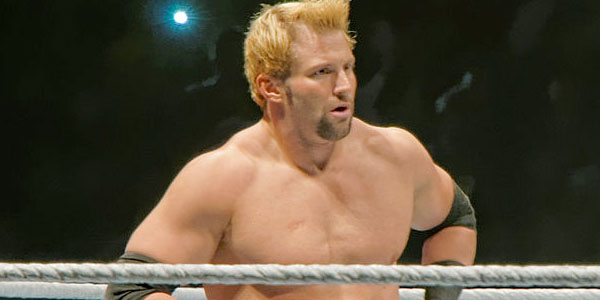
The biggest key to winning at social media is being able to create sustainable streams of wealth from continued, quality engagement. The second that either the media itself stops or the quality level of the engagement dips, the sustainability fades immediately. The aforementioned Amy Jo Martin has excelled because of her abiding belief in a single mantra. "Provide value when, where and how your audience wants to receive it." The thing that she doesn't mention though is that as your value increases, your audience likely wants a value from your engagement greater than the value that you have achieved. As Ryder's social value grew, his level of interactivity with his market did not grow in depth or value past what was already being delivered. As an example, let's look at McDonald's, a company that has expanded its menu offerings at a clip matching its level of societal awareness and economic growth. For 14 years, McDonald's only offered hamburgers. However, by 1962, they introduced the Filet-O-Fish. By 1968, the hamburger and cheeseburger were improved upon with the Big Mac, and by 1972, the company moved into breakfast with the Egg McMuffin. By 1975, the full breakfast menu was made available, and by 1980 there was the McChicken, with the Chicken McNugget rolled out by 1983. Similarly, Zack Ryder started with tweets, Facebook posts, Z! True Long Island Story, and then a full line of merchandise on WWE Shopzone. How that didn't turn into Ryder more proactively monetizing his fan engagement for WWE online programming, and maybe even a home studio for the web program, etc. is beyond me. If you're going to live by social media, you have to always be cognizant of improved ways to create heightened worth. If not cognizant of that, then you end up dying by social media, too.

2. The Internet Championship Should Absolutely Be An Official WWE Championship
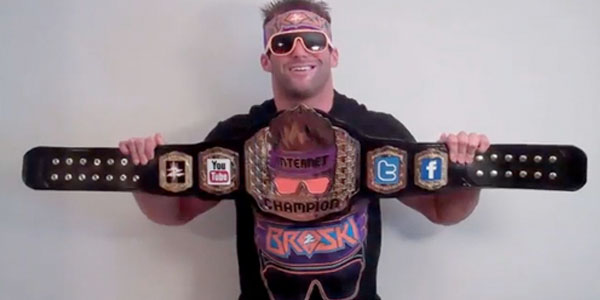
When the WWE wanted to create value for its long-time European fans, the company created the European championship, a belt first won by the British Bulldog as the culmination of a tournament contested during a tour of Germany. Similarly, WWE should want to create value for it's rapidly increasing number of online supporters, and when Zack Ryder introduced the Internet Championship on an April 2011 episode of Z! True Long Island Story, it should have been the beginning of a longer story that eventually led to the title becoming an actual WWE Championship. Imagine competitors engaging with their online followers to tweet or FB post or post Instagram pics of support for them for weekly Internet title defenses on say, WWE Main Event. The level of intrigue that could be raised for wrestlers who, similar to Ryder in 2010, aren't being actively involved in creative, would be massive. As well, possibly being able to use the app to choose from the top three online finalists every week would give WWE the "second screen experience" they clearly place a marketing premium on us having. Furthermore, from an in-ring standpoint, the types of matches we could potentially see would be fresh and, if entertaining, gain the combatants access to a deeper look from creative. Ryder losing the US Title and then returning to TV the next week wanting to defend the Internet title, and losing it to someone who would also want to defend it (and then maybe that person losing it to someone ELSE who wanted to defend it) would create a fun situation that the crowd could feasibly get behind, leading to the Internet Championship having a space for permanence. Of the suggest notions, this is the one that likely is the easiest to still pull of and have game-changing impact not just for Ryder, but for WWE overall.

1. Zack Ryder Once Booked And Executed A Great Angle With Dolph Ziggler That In No Way Helped WWE's Financial Bottom Line

https://www.youtube.com/watch?v=Cg_seRtpPxw Once "over" as a WWE wrestler, the first thing I suggest that any WWE wrestler consider is exactly how their character can be of greatest financial benefit to the company. "Over" wrestlers are draws, aka when a guy is over, they create a desire for a fan to spend money, which in turn helps the product, which in turn allows some of that money (and moreover, future monies) to head into your pocket. When the first thing Zack Ryder did when he was over involved advancing his online show-based feud with Dolph Ziggler over the love of his "girlfriend" Princess Leia, it should have been the handwriting on the wall regarding his ability to break through to the next level. The idea of booking a full feud that involves run ins, catchphrases, promos, cliffhangers, fake blood, and yet, NO IN-RING MATCH, is completely ridiculous. It's the equivalent of backyard wrestling, or worse, e-wrestling . Not that either of those gambits are negative, but when you're a signed WWE superstar - and well, have access to eight hours of broadcasts over five programs that air on a weekly basis - the idea that your well conceived and inherently entertaining feud can't have an in-ring finish is stupid. While I get that the idea may have been a "rib" to "pop the boys," if you're a star, an unwritten rule of wrestling once rule often discussed in the Memphis territory applies. "Funny, no money."

In this post: 
Zack Ryder
 
Posted On: 
Contributor
Contributor

Besides having been an independent professional wrestling manager for a decade, Marcus Dowling is a Washington, DC-based writer who has contributed to a plethora of online and print magazines and newspapers writing about music and popular culture over the past 15 years.